Opening The Rift
therift
© 2026 The Rift. All Rights Reserved.
Beyond Technology Adoption: Why India Must Build the Systems Behind Industrial Competitiveness
India’s next phase of development must move beyond technology acquisition towards building the systems that make technological progress economically meaningful.

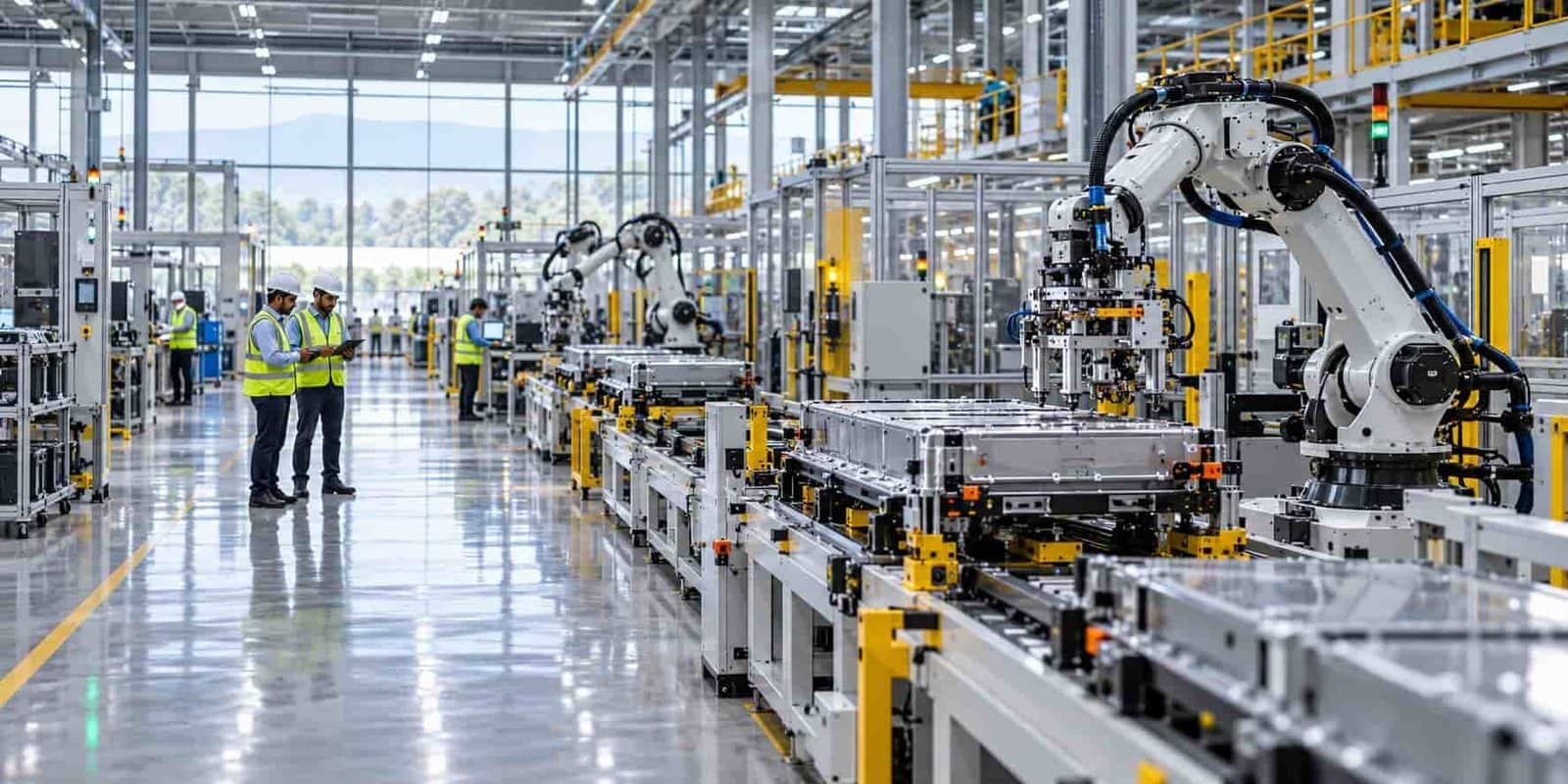
Representative Image
Key Takeaways
1 of 3
Automatically generated. Read full article for complete context.
Introduction
India’s economic transformation is often discussed through the language of technological adoption. Artificial intelligence, renewable energy, biotechnology, advanced manufacturing, and digital infrastructure are increasingly presented as engines of future growth. Yet, the ability to adopt technology is not the same as the ability to build competitive industries around it. This distinction will increasingly determine which countries capture the economic value of technological change.
For India, the challenge is no longer simply to introduce new technologies into existing systems. It is to develop the industrial capabilities, institutional arrangements and economic incentives that allow those technologies to generate sustained productivity, employment and strategic independence.
The next phase of development must therefore move beyond technology acquisition towards building the systems that make technological progress economically meaningful.
The Difference Between Adoption and Capability
A country can deploy sophisticated technologies while remaining dependent on foreign suppliers for critical components, intellectual property, specialised machinery and production systems. It can establish advanced factories without developing domestic supplier networks. It can encourage digital transformation without building the workforce required to maintain and improve the underlying infrastructure.
These gaps reveal a fundamental weakness in technology-led development strategies. Purchasing technology creates immediate access to its benefits, but building Technological CapabilityTechnological CapabilityA nation’s or firm’s capacity to generate, adapt, and effectively use technology, encompassing R&D, engineering, manufacturing, and organizational learning, beyond mere adoption. requires sustained investment in research, engineering, manufacturing, maintenance and organisational learning.
India’s renewable energy sector illustrates this distinction. Expanding solar and wind capacity is essential to the energy transition, but the broader economic opportunity extends into manufacturing equipment, developing storage systems, improving power electronics and building recycling capabilities. Each additional layer creates opportunities for domestic enterprises to participate in higher-value activities.
The same principle applies to biotechnology, healthcare technology, aerospace and defence. Technological progress becomes economically transformative when it generates connected industries rather than isolated projects.
Industrial Ecosystems Matter More Than Individual Successes
Competitive industries rarely emerge from the efforts of individual companies alone. They depend on networks of component manufacturers, research institutions, testing facilities, logistics providers, skilled workers, financial institutions and specialised service businesses.
When these supporting systems are weak, even promising enterprises face high costs and uncertain growth. A manufacturer may possess an effective product but struggle to obtain precision components. A research institution may develop a promising innovation without access to industrial testing facilities. A small enterprise may have the technical expertise to serve a global market but lack the financing required to meet certification requirements.
This is particularly important for India’s micro, small and medium enterprises. Large companies can often establish dedicated research teams, negotiate with international suppliers and absorb the costs of experimentation. Smaller businesses usually operate under tighter financial constraints.
Industrial policy should therefore focus not only on attracting large investments but also on reducing the costs of participation for smaller firms. Shared testing infrastructure, accessible technical training, common research facilities and stronger supplier-development programmes can help distribute the benefits of industrial expansion more widely.
The objective should be to create ecosystems in which smaller enterprises can become increasingly sophisticated participants in domestic and international value chains.
Artificial Intelligence and the Reorganisation of Industry
Artificial intelligence adds another dimension to this challenge. Its significance extends beyond automating office tasks or improving customer service. AI can influence industrial design, predictive maintenance, supply-chain planning, quality control, energy management and research productivity.
However, the economic benefits will depend on how effectively organisations integrate AI into their operational systems.
A factory that introduces AI software without improving its data collection, equipment integration or workforce capabilities may achieve limited results. By contrast, an enterprise that combines reliable industrial data, experienced engineers and intelligent decision-support systems can improve production planning, reduce downtime and identify inefficiencies that were previously difficult to detect.
This distinction has implications for public policy. Digitalisation programmes should not measure success exclusively through the number of enterprises adopting software or deploying AI tools. They should also examine improvements in productivity, product quality, resource efficiency and export performance.
India has an opportunity to connect its strengths in software and digital services with its ambitions in manufacturing. Achieving this will require deeper collaboration between technology companies, industrial firms, engineering institutions and public agencies.
Governance as Economic Infrastructure
Industrial Competitiveness is frequently treated as a matter of investment, labour costs and technological sophistication. Yet governance itself is a productive resource.
Businesses depend on predictable regulations, reliable land records, efficient approvals, enforceable contracts and accessible public infrastructure. When administrative processes are fragmented, firms spend time and money navigating uncertainty rather than developing products and markets.
Digital Governance can reduce these costs, but digitisation alone is insufficient. A poorly designed administrative process does not become efficient merely because it is moved online. Effective reform requires institutions to reconsider how decisions are made, how responsibilities are distributed and how information moves between departments.
Land administration provides a useful example. Reliable digital land records can improve transparency and reduce information asymmetries in property transactions. When connected with appropriate verification procedures and interoperable public systems, they can also support infrastructure planning, investment decisions and more efficient dispute resolution.
The larger principle is that public institutions should be designed to reduce friction across the economy. Better governance can improve the operating environment for businesses just as directly as better transport, electricity or communications infrastructure.
Connecting National Strategy with Regional Development
India’s industrial transformation must also account for regional differences. States and districts possess different combinations of skills, infrastructure, natural resources, educational institutions and entrepreneurial networks.
A uniform development strategy may overlook these differences. Regional economic planning should instead identify where local capabilities can support larger industrial objectives.
Kerala, for instance, has opportunities to connect its educational institutions, healthcare capabilities, international networks and entrepreneurial resources with selected areas of manufacturing, biotechnology, medical technology and knowledge-intensive services. Its future competitiveness will depend partly on whether these advantages can be translated into productive enterprises and stronger employment opportunities.
Regional development should not mean that every district attempts to build every industry. It should mean identifying realistic areas of specialisation and connecting them to wider domestic and international markets.
Such an approach can also help smaller cities participate in economic growth without requiring every ambitious entrepreneur or skilled professional to relocate permanently to a handful of metropolitan centres.
Measuring Industrial Progress Differently
India’s next phase of development requires a broader understanding of economic success. Investment announcements and technology deployments are important, but they do not reveal the full extent of industrial capability.
Policymakers should also examine whether domestic suppliers are becoming more competitive, whether research is reaching commercial production, whether smaller firms are moving into higher-value activities and whether technological adoption is producing measurable productivity gains.
These indicators would encourage a shift from counting projects to evaluating the systems those projects create.
Export performance is another important measure. A country that develops products capable of competing in international markets demonstrates more than its ability to manufacture. It demonstrates that its enterprises can meet demanding requirements for cost, quality, reliability and innovation.
Strengthening export competitiveness therefore requires coordination between industrial policy, trade facilitation, technical education, research institutions and infrastructure development. Each contributes to the ability of businesses to compete beyond their domestic markets.
Conclusion
The central question for India is not simply whether the country possesses advanced technologies. It is whether India can continuously develop, manufacture, maintain and improve them while creating competitive businesses and productive employment.
Technology creates possibilities. Industrial ecosystems turn those possibilities into economic value, while effective institutions allow that value to spread across the economy.
India has substantial opportunities across artificial intelligence, renewable energy, biotechnology, advanced manufacturing and digital governance. Realising these opportunities will require a shift in emphasis from isolated technological achievements towards the development of connected economic systems.
The countries that lead the next phase of industrial transformation will not necessarily be those that adopt every new technology first. They will be those that learn to integrate technology with manufacturing capabilities, skilled labour, effective institutions and competitive markets.
India’s long-term competitiveness will depend on building all these elements together.
Disclaimer:The views and opinions expressed in this article are those of the author(s) and do not necessarily reflect the official policy or position of The Rift.
*Industrial CompetitivenessAIEconomic DevelopmentGovernanceIndiaMSMEsRenewable EnergyTechnology Adoption