Opening The Rift
therift
© 2026 The Rift. All Rights Reserved.
The Foreigner Thesis Devours Itself: A Constitutional Wrong Against Indian Muslims
The demand that Indian Muslims “go back” is therefore not a demand for repatriation : it is a demand for expulsion from the only home their ancestors have ever known.

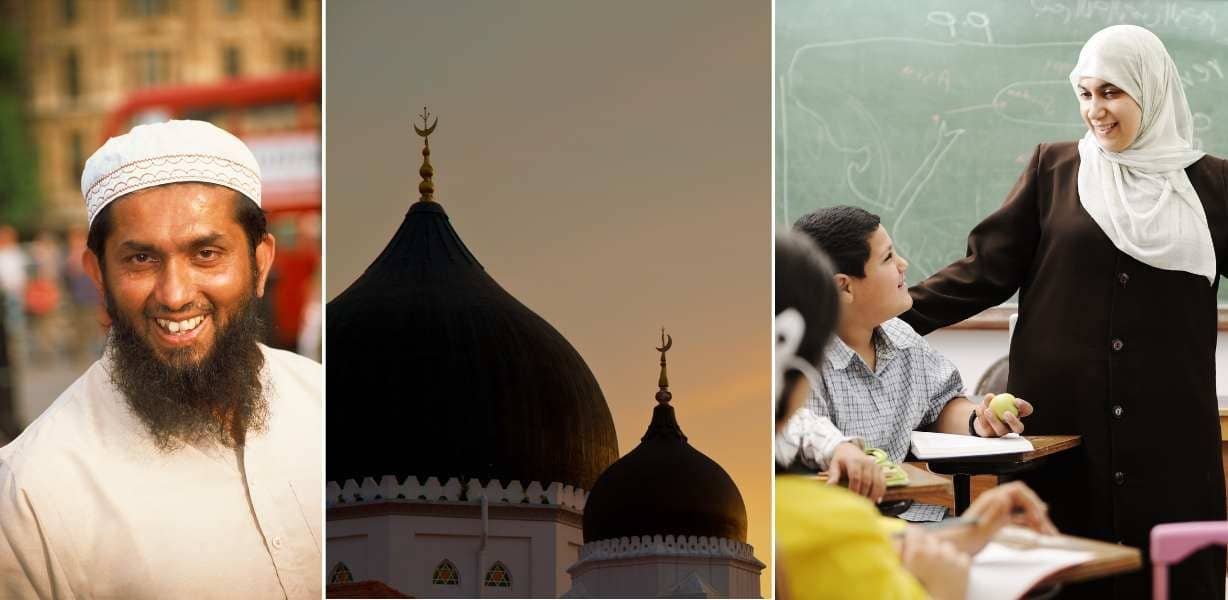
Image | Only Representative
Key Takeaways
1 of 3
Automatically generated. Read full article for complete context.
There is a particular species of political argument that carries within it the seed of its own destruction. The claim that Indian Muslims are foreigners, descendants of invaders, bearers of an alien loyalty, guests who must earn their welcome or face expulsion, etc., is precisely such an argument.
It has animated decades of majoritarian mobilisation, sustained the emotional architecture of the Hindu Rashtra project, and been deployed to justify everything from institutional discrimination to communal violence.
Those who prided themselves for demolition of Babri masjid have now to pick up the debris of the demolished “Babar ki aulad” claim. That claim too has now been demolished, not by its critics, but by its own architects. The demolition is not a matter of liberal interpretation or adversarial spin. It is a matter of public record, stated from the highest institutional seat of the Sangh Parivar.
Mohan Bhagwat is not a peripheral figure in Indian politics. As Sarsanghchalak of the Rashtriya Swayamsevak Sangh, the ideological fountainhead of the entire Hindu nationalist project, the organisation whose alumni populate the Cabinet, the judiciary, the media, and the street, his words carry the weight of doctrinal pronouncement. When Bhagwat speaks, he speaks as the supreme custodian of the very ideology under examination.
In September 2023, Bhagwat stated publicly and unambiguously: “Muslims are the people of this soil. They have always been here. Their ancestors were Hindus.” He went further, explicitly rejecting the foreignness narrative : “Islam came from outside, but the people who embraced it are our own.”
This was not a slip of the tongue, not a diplomatic aside at an interfaith event, and not a statement made under political pressure. It was a considered articulation from the ideological command of the Sangh.
Nor was it unprecedented within his own record. In 2019, at an RSS training camp, Bhagwat had already stated that the organisation considers Indian Muslims to be “born of this soil.” In 2021, he reiterated that Muslims and Christians in India are part of the same national family, sharing ancestral stock with the Hindu population.
Taken together, these statements constitute an official, repeated, and authoritative acknowledgement of a historical truth that demographers, genetics specialists, and historians have long established : the overwhelming majority of India’s Muslims are not the descendants of Central Asian or Arab invaders.
They are the descendants of people who have inhabited the subcontinent for millennia and whose ancestors, at some point across the long arc of Indian history, embraced a different faith. They are, therefore, in the most literal and biological sense, indisputably indigenous.
Once this concession is made, as it has been made, on the record, by the RSS chief himself, the entire architecture of the foreigner argument collapses. The argument depended on a chain of propositions : that Muslims arrived from elsewhere, that their presence represents a demographic displacement of the original population, that their loyalties are therefore owed to an external civilisational centre, and that the Hindu Rashtra project is therefore a restoration of the rightful order rather than a displacement of a co-equal community.
Every link in that chain is severed by Bhagwat’s own words. As Muslims are “people of this soil” whose “ancestors were Hindus,” then there was no demographic replacement. The people are the same people. Only their faith changed. An Indian Muslim whose family converted five or three centuries ago in a village in Uttar Pradesh or Tamil Nadu has exactly the same ancestral claim to that soil as their Hindu neighbour. The genetic, cultural, and civilisational inheritance is shared. This is not a contested claim : it is the RSS chief’s own position.
The Hindu Rashtra cannot be a restoration. A restoration implies the return of something that was displaced. If the Muslims of India are the blood relatives and in many cases the literal descendants of the Hindus alongside whom they live, then establishing a state that privileges Hinduism as the defining national identity is not a restoration of anything. It is the imposition of a sectarian hierarchy upon an indigenous population, on the sole ground that they chose a different religion at some point in their history. That is discrimination, not restoration.
There is nowhere to “go back” to. The “go to Pakistan” demand, that staple of majoritarian street politics, presupposes that there is an elsewhere to which Indian Muslims belong. But if their ancestors were Hindus of this subcontinent, then Pakistan is no more their homeland than it is the homeland of any other Indian. Pakistan was carved from the same land. The demand that Indian Muslims “go back” is therefore not a demand for repatriation : it is a demand for expulsion from the only home their ancestors have ever known.
The demand that Indian Muslims “go back” is therefore not a demand for repatriation : it is a demand for expulsion from the only home their ancestors have ever known.
The RSS chief has, categorically and unequivocally, confirmed that there is no “back.” There is only here.
There is also a constitutional dimension here. This is not merely a historical or polemical argument. It carries direct and weighty constitutional consequences. The Constitution of India is premised on the equal citizenship of every Indian regardless of religion.
Article 14 guarantees equality before law. Article 15 prohibits discrimination on grounds of religion. Article 25 protects freedom of conscience and the right freely to profess, practise, and propagate religion. The Preamble secures to every citizen, whether Hindu or Muslim or any other, justice, liberty, equality, and fraternity. Article 51A(e)Fundamental DutiesA constitutional provision imposing a moral obligation on all citizens to promote harmony and the spirit of common brotherhood. imposes on every citizen the fundamental duty to promote harmony and the spirit of common brotherhood transcending religious, linguistic, and regional diversities.
The foreigner narrative is a standing, systematic violation of that constitutional order. It constructs a religious community as disloyal aliens, undermining the fraternity promise of the Preamble and the brotherhood duty of Article 51A(e). It provides the ideological fuel for discrimination that Articles 14 and 15 forbid. And now, its own progenitors have conceded that its factual foundation is if not false, at least baseless.
The political deployment of an admitted falsehood to mobilise hostility against a religious community is not a constitutional exercise of free speech. International human rights law (the ICCPR, to which India is a party) prohibits under Article 20(2) any advocacy of national, racial, or religious hatred that constitutes incitement to discrimination, hostility, or violence. A narrative that tells one-sixth of the Indian population that they are foreign interlopers with no legitimate claim to the soil of their ancestors is precisely such advocacy, which its own chief propagandists have now repudiated through their public admissions.
The implications become even sharper when the logic is applied symmetrically.
Dr. B.R. Ambedkar and millions of Dalits embraced Buddhism through the historic conversion of 1956. Their ancestors were Hindus. By the foreigner logic, should Buddhists of Ambedkarite descent also be considered less than fully Indian? The Goan Catholics whose ancestors were Saraswat BrahminsSaraswat BrahminsA Hindu Brahmin sub-caste, many of whom were subjected to mass conversions during the Goan Inquisition under Portuguese rule. before the Inquisition : are they foreigners? The Sikh community, whose faith emerged from the religious ferment of the subcontinent : do they owe a lesser allegiance?
The answer, of course, is no, and no serious politician in India would dare make that argument openly for those communities. The selective application of the foreigner thesis exclusively to Muslims exposes its character : it is not a principled position about religious conversion, but a targeted political weapon aimed at a specific community.
When the same logic would indict communities that the Hindu nationalist movement does not wish to target, the logic is quietly abandoned. This is the hallmark not of a constitutional argument but of a false narrative deployed as an instrument of persecution.
The Hindu Rashtra project, in its constitutional dimension, requires the construction of Indian Muslims as the other : as those who do not fully belong, whose presence must be accommodated rather than affirmed, whose citizenship is conditional rather than equal. The foreigner thesis is the load-bearing wall of that construction. Without it, the project stands exposed as what it is : a programme to establish the supremacy of one religion over all others in a land where the Constitution explicitly forbids precisely that.
That wall has now been brought down by the chief engineer’s own hand. Mohan Bhagwat’s acknowledgement that Indian Muslims are “people of this soil” whose ancestors were Hindus is not a footnote in the political record. It is a permanent constitutional exhibit. It stands as proof that the foreigner narrative is a deliberate falsification, maintained not because those who propagate it believe it to be true, but because it is useful.
The deployment of a known falsehood to incite discrimination against two hundred million co-citizens is not politics. It is a constitutional wrong.
The deployment of a known falsehood to incite discrimination against six hundred million people’s co-citizens is not politics. It is a constitutional wrong.
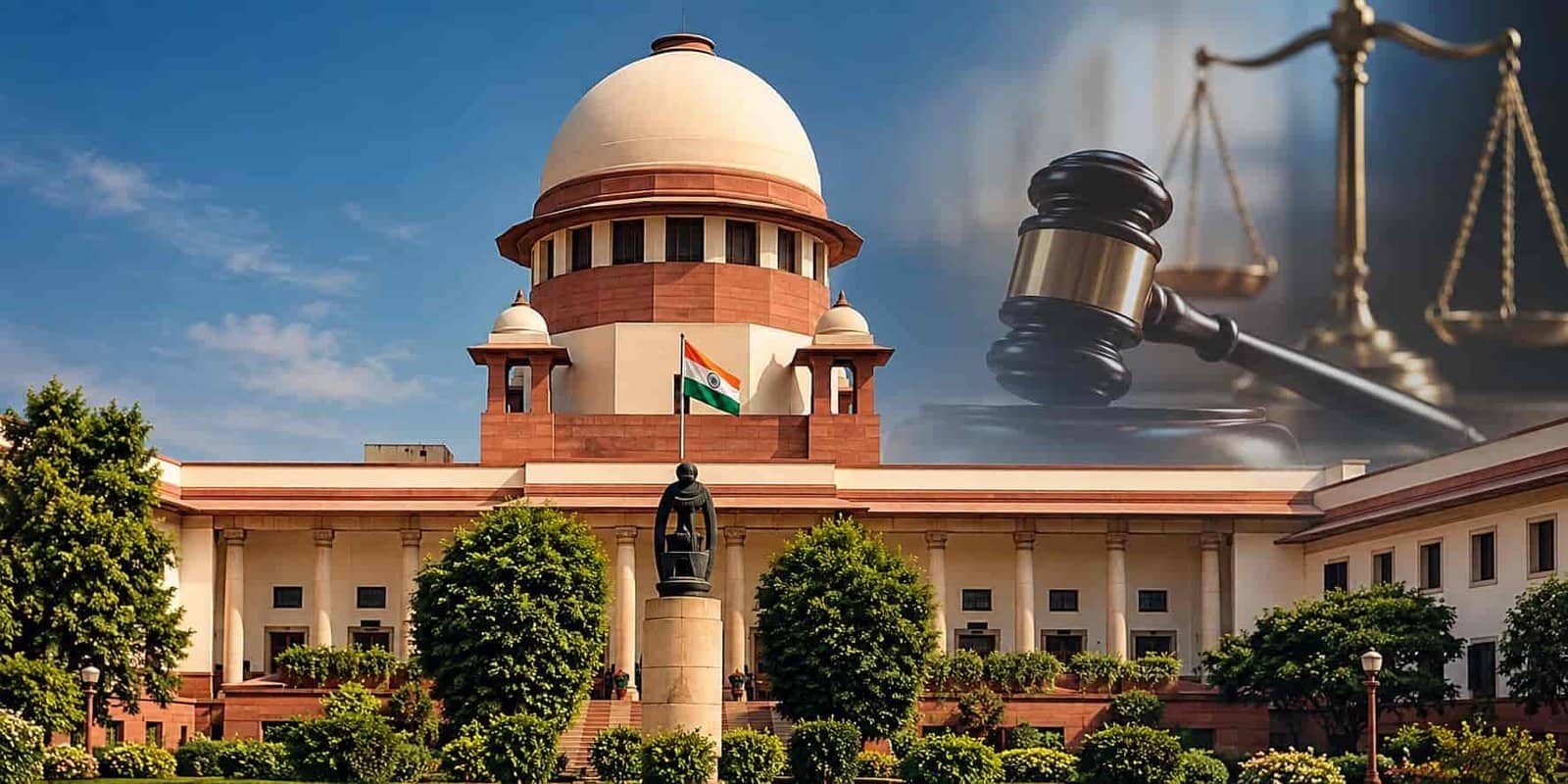
The Supreme Court, as guardian of the basic structure, has held that the secular character of the Indian state is unamendable. A project founded on the deliberate misrepresentation of the origin and identity of a religious community, for the purpose of establishing the political supremacy of another, attacks that secular character at its root.
The RSS chief has spoken. The constitutional tide, as it turns out, is indeed rising. And the architects of the edifice have finally admitted they built it on sand. Shifting sand.
Jai Hind
Disclaimer:The views and opinions expressed in this article are those of the author(s) and do not necessarily reflect the official policy or position of The Rift.