Opening The Rift
therift
© 2026 The Rift. All Rights Reserved.
The Supreme Court Banned a Class 8 Textbook. The Real Lesson Is About Power
A chapter on judicial corruption in an NCERT school book provoked a blanket ban, contempt notices, and a constitutional confrontation that tells us more about institutional insecurity than about protecting children.

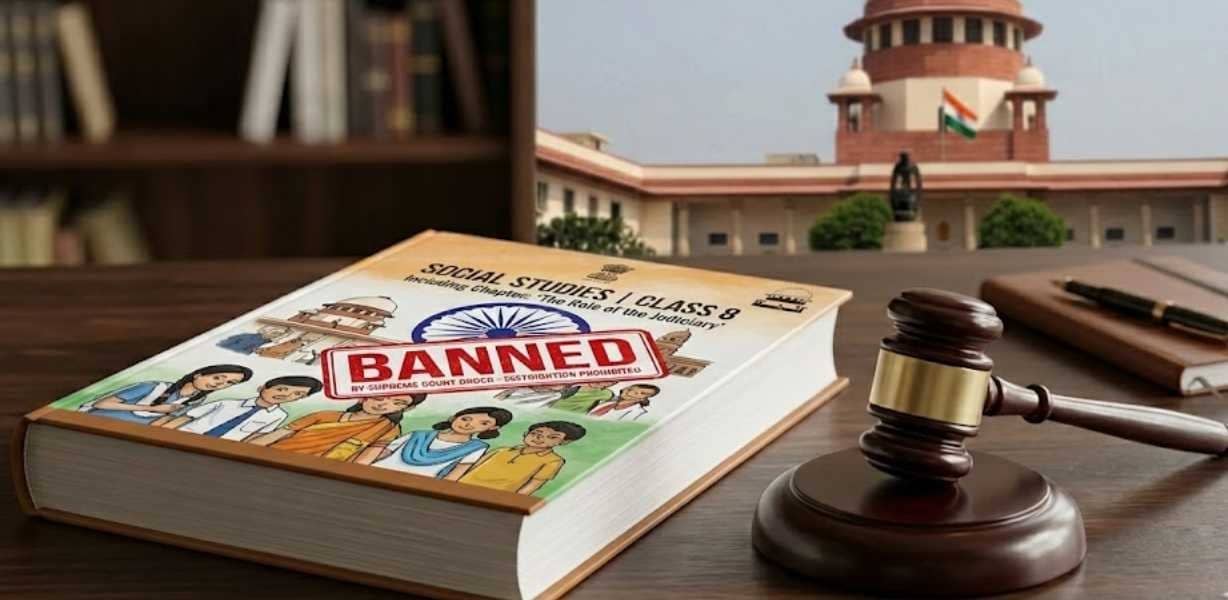
AI Generated
Key Takeaways
1 of 3
Automatically generated. Read full article for complete context.
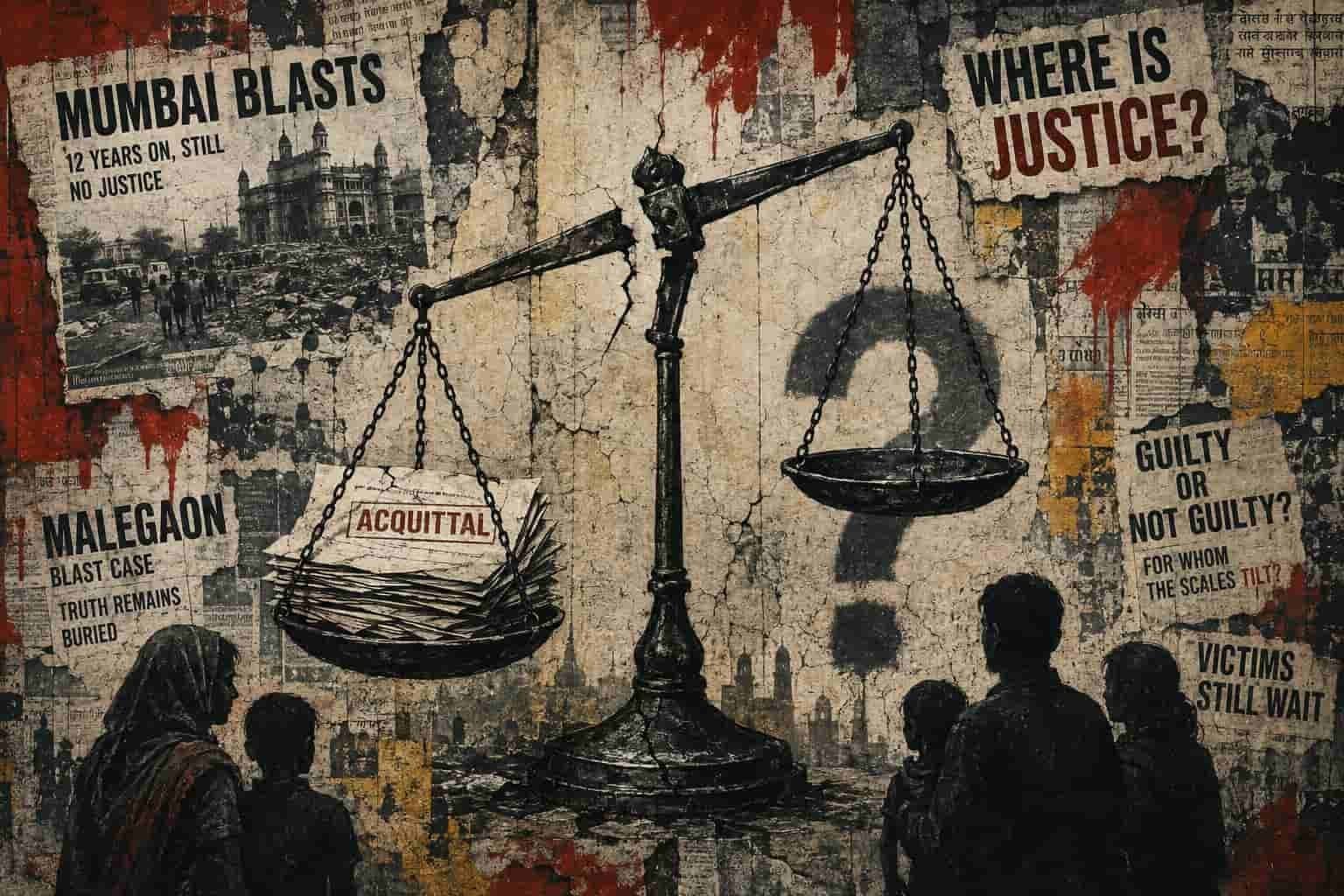
Two days. That is all it took for a Class 8 social science textbook to go from freshly published to nationally banned, its copies ordered seized, its authors facing contempt of court. The offending material? A passage in Chapter 4 of Exploring Society: India and Beyond, published by NCERT on February 24, 2026, which identified corruption, case backlogs, and a shortage of judges as challenges confronting India’s judiciary.
The facts stated in that passage are not in dispute. As of late 2025, over 92,000 cases were pending before the Supreme Court alone, with the national total exceeding 54 million across all tiers. The government itself is the single largest litigant, responsible for roughly half that backlog. Judges, including former Chief Justices, have publicly acknowledged problems of probity within the institution. None of this is secret. None of it is contested.
Yet on February 26, a three-judge bench led by Chief Justice Surya Kant registered a suo motu case, imposed what the court called a “complete blanket ban” on the textbook, and ordered every physical and digital copy seized nationwide. The bench issued show-cause notices under the Contempt of Courts Act to NCERT Director Dinesh Prasad Saklani and the Secretary of the Department of School Education. CJI Kant declared the chapter evidence of “a deep-rooted, well-planned conspiracy to defame the judiciary” and added, with unmistakable force.
The Scramble to Comply
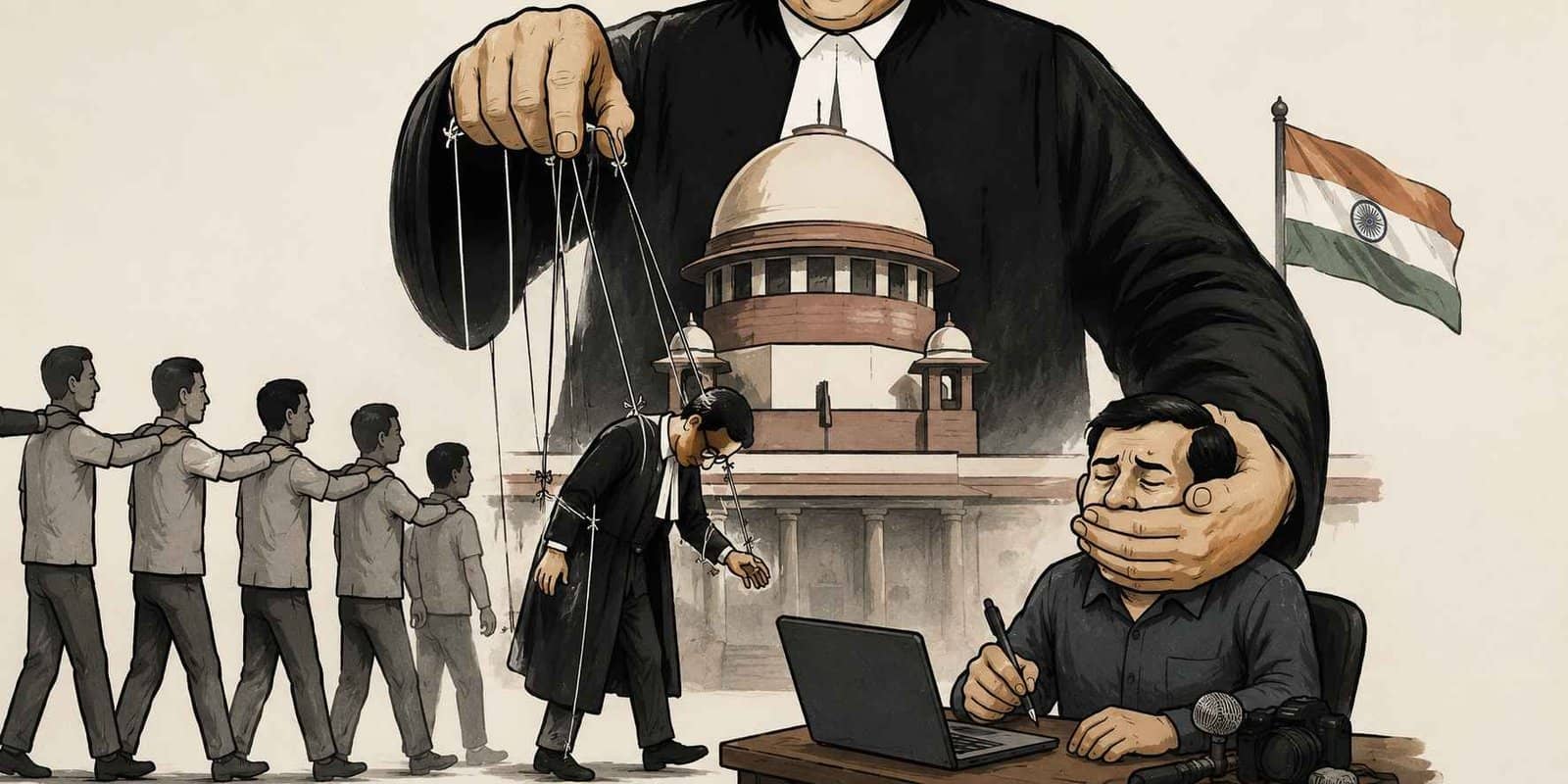
The executive branch fell into line with startling speed. Within hours, NCERT pulled the textbook from its website and halted circulation, calling the chapter an “error of judgement.” Education Minister Dharmendra Pradhan expressed regret, promised full compliance, and vowed action against those responsible for what he termed an “unpardonable mistake.” Solicitor General Tushar Mehta tendered what he described as an unconditional apology on behalf of the Ministry. Even Prime Minister Narendra Modi weighed in, reportedly stating that “accountability should be fixed.”
The court was unimpressed. Reviewing NCERT’s official press note, CJI Kant observed that it contained no actual word of apology. The bench reserved judgment on whether the contrition was genuine or, as it put it, “merely a ruse to evade the consequences.” Of the approximately 38 copies that had reached the market, NCERT managed to retrieve 31. Principal Secretaries of Education across all states and union territories were directed to file compliance affidavits within two weeks, while school principals were made personally responsible for seizing any remaining copies.
The matter is scheduled next for hearing on March 11.
What the Chapter Actually Said
It is worth pausing over the substance of the material that provoked this response. The chapter, titled “The Role of the Judiciary in our Society,” discussed the judiciary’s function within Indian democracy and then turned to its shortcomings. It cited corruption at various levels of the court system, the massive backlog of pending cases, and structural inadequacies including insufficient judges and poor infrastructure. It invoked the principle that “justice delayed is justice denied.”
These are not fringe arguments. They appear in Law Commission reports, parliamentary debates, the Supreme Court’s own annual data, and the National Judicial Data Grid. The textbook was not alleging specific judicial misconduct. It was summarizing, in language suitable for 13-year-olds, a set of well-documented systemic problems.
The Constitutional Friction
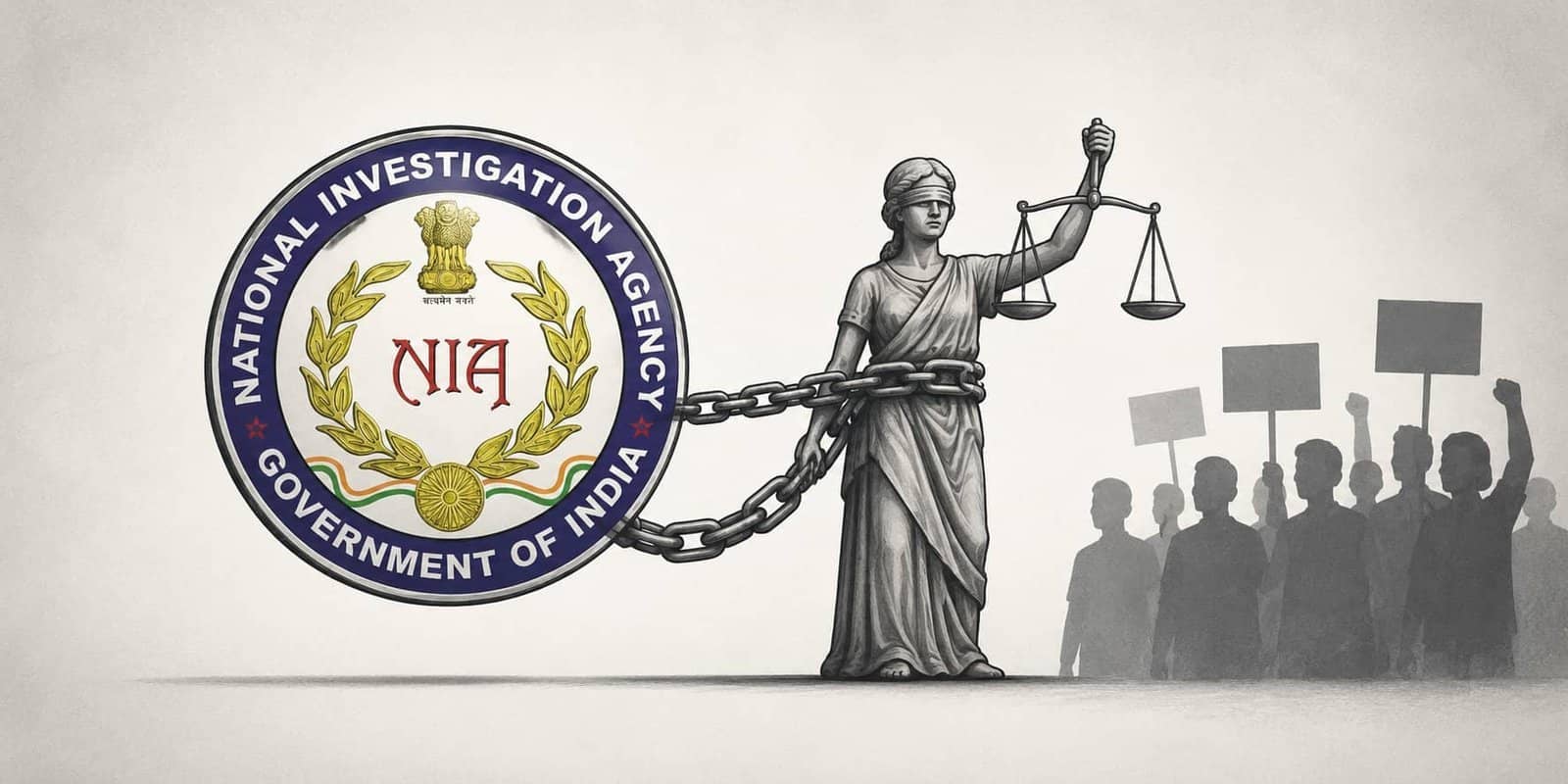
The strongest criticism of the court’s intervention centres on what legal scholars have identified as a conflation of two distinct ideas: judicial independence and judicial immunity from discussion. The Supreme Court Observer noted that the order effectively transforms “decisional independence” into “reputational insulation,” then protects that insulation through coercive suppression. A blanket ban on a textbook goes well beyond correcting a factual error or withdrawing a defamatory publication. It communicates that certain truths about public institutions cannot be taught to children because the institution in question finds them inconvenient.
Article 19(1)(a) of the Indian Constitution guarantees freedom of speech and expression. The Contempt of Courts Act provides a carve-out, criminalizing speech that “scandalises” or “tends to scandalise” the authority of any court. But the scope of that provision has long been debated. In 2006, the Law Commission itself recommended abolishing the offence of scandalising the court, arguing it was a colonial relic incompatible with democratic values. The United Kingdom, from which India inherited the provision, abolished it in 2013.
Opposition parties have seized on the episode to demand a comprehensive review of recent NCERT curriculum changes, with Congress leaders describing it as part of a broader pattern of controversial textbook rewrites. Kerala’s Education Minister called for an independent expert review of all recent NCERT revisions.
A Textbook Case of Institutional Anxiety
What makes this episode so revealing is not the content of the chapter but the ferocity of the response. Thirty-eight copies of a schoolbook reached the market. Within 48 hours, the highest court in the land had imposed a nationwide ban, initiated contempt proceedings, demanded a probe into conspiracy, and extracted apologies from the executive branch. The language deployed by the bench itself tells a story: “deep-rooted conspiracy,” “gunshot fired to bleed the institution,” “heads must roll.”
This is not proportionate to a textbook passage summarizing publicly available data. It reads, instead, like an institution that perceives any critical examination as an existential threat.
The question this confrontation leaves unanswered is simple but discomforting: if a school textbook cannot state, in measured language, that India’s courts face challenges including corruption and case backlogs, then where exactly is that conversation permitted? And if the answer is “nowhere that children can hear it,” what kind of civic education are we offering the next generation of Indian citizens?
The next hearing will determine whether NCERT officials face formal contempt charges. But the larger verdict has already been delivered, not by the bench, but by the ban itself.