Opening The Rift
therift
© 2026 The Rift. All Rights Reserved.
P&H HC Rules Decisively In Favour Of Right Of Social Media Users To Get Copy Of Government’s Takedown Intimation
The Punjab and Haryana High Court has ruled that authorities must give social media users a copy of any notice they send to a platform to block their content.

Key Takeaways
1 of 3
Automatically generated. Read full article for complete context.
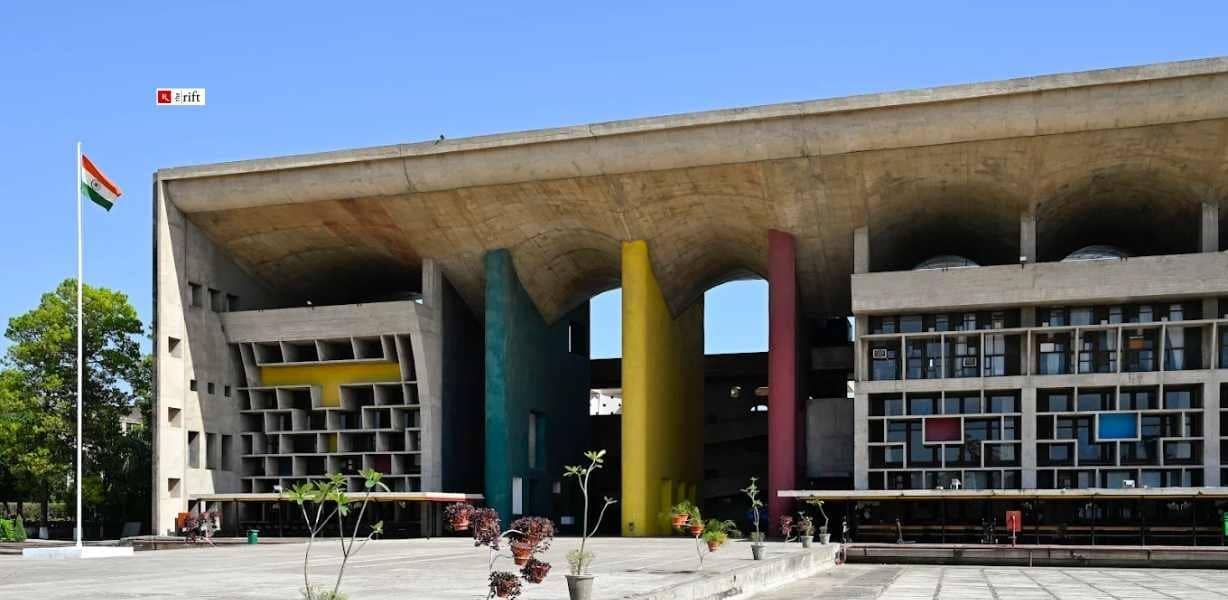
It ostensibly is entirely in order that while taking the most pragmatic step in the right direction, the Punjab and Haryana High Court at Chandigarh in a most learned, laudable, landmark, logical and latest oral judgment titled Haryana 24 News Network Private Limited Vs Union of India and Others in CWP No.30190 of 2026 and CNR No.: PHHC011569382026 and cited in Neutral Citation No.: 2026:PHHC:184438 that was pronounced as recently as on October 5, 2026 has been most straightforward in ruling most decisively in favour of right of social media users to get copy of government’s takedown intimation. We thus see that the Chandigarh High Court has deemed it fit to quash a Superintendent of Police’s notice blocking a news network’s Facebook page and mincing absolutely just no words to hold decisively that only an officer of DIG rank or above can issue it. Very rightly so!
By all accounts, the Chandigarh High Court most commendably took the most pragmatic step of setting aside a Haryana Police notice under which Meta had blocked the Facebook page of news outlet Haryana 24 News Network in India since August 21. Who was entitled to ask Meta to block it and was the page’s owner owed a copy of that request? It merits noting that the Single Judge Bench comprising of Hon’ble Mr Justice Tribhuvan Dahiya explicitly held that the notice came from an officer who lacked the power to issue it. So it was definitely in the fitness of things that the Chandigarh High Court in its order while explaining and dwelling on it directed restoration within 24 hours of the Superintendent of Police receiving a certified copy of its order.
At the very outset, this brief, brilliant, bold and balanced judgment authored by the Single Judge Bench comprising of Hon’ble Mr Justice Tribhuvan Dahiya sets the ball in motion by first and foremost putting forth in para 1 that, “The petition has been filed inter alia seeking a writ of certiorari setting aside the intimation given by respondents no.1 to 5 to the sixth respondent/Meta Platforms Inc. under Section 79(3)(b) of the Information Technology Act, 2000 (for short, ‘the 2000 Act’), pursuant whereto the petitioner’s Facebook page “Haryana 24 News Network Private Limited” has been blocked within geographical limits of the country. Further, a direction has been sought to the said respondents to forthwith restore access for public use and viewing in India to the aforesaid verified Facebook page which remains blocked since 21.08.2026.”
To put things in perspective, the Bench envisages in para 2 that, “Learned counsel for the petitioner contended that no notice was issued to the petitioner company before blocking its Facebook page, nor has a copy of the intimation/notice issued to the sixth respondent been furnished at any stage. It has been kept in complete darkness about the entire exercise which led to blocking of the Facebook page, causing business losses and adversely affecting its reputation. He also contended that its directors came to know about the blocking through the following notice posted on its Facebook page: We restricted access to your content in India pursuant to a notice from the Government of India/Law Enforcement under Section 79(3)(b) of the Information Technology Act, 2000. You can learn more about our approach to content restrictions based on local law in our Transparency Center by visiting https://transparency.meta.com/reports/content-restrictions/contentviolating-local-law/. You may reach out to The Government of India/Law Enforcement to find out more information about this notice and take appropriate legal action (as you may deem fit).
It indicates that the blocking was pursuant to some notice issued by the respondents under Section 79(3)(b) of the 2000 Act and the Rules framed thereunder – Information Technology (intermediary Guidelines and Digital Media Ethics Code) Rules, 2021 (for short, ‘the 2021 Rules’). Such a direction to block the page can be given to an intermediary only by the officers authorised under the Rules, and in case of police administration the same cannot be by an officer below the rank of Deputy Inspector General of Police (DIGP), specially authorised by the Government for the purpose. This mandatory procedure has not been followed; therefore, the page could not have been blocked.”
As it turned out, the Bench enunciates in para 4 that, “Service of notice on the sixth respondent has been dispensed with since no order adverse to its interests is being passed. The only issue being decided is the legality of instructions issued to it by the Government.”
Most significantly, most forthrightly and so also most rationally, the Bench encapsulates in para 6 what constitutes the cornerstone of this notable judgment postulating precisely that, “Considering the submissions aforementioned, it is apparent that the intimation/notice dated 21.08.2026, blocking access to the petitioner’s Facebook page, has been issued to the sixth respondent by the Superintendent of Police for the reasons assigned therein, viz., threatening/intimidating the victim/witnesses of the case in which one of the Directors of the petitioner company is an accused. This notice is under Section 79 of the 2000 Act, which grants exemption from liability to an intermediary with respect to any third party information, data or communication link hosted by it, provided on being notified by the Government or its agency the said information, data or communication link, is removed or access to that material is disabled without vitiating the evidence.
6.2. Clause (d) to sub-rule (1) to Rule 3 provides that an intermediary, on whose computer resource the objectionable information prohibited under any law for the time being in force (as detailed therein) has been stored, hosted, displayed or published and is used to commit an unlawful act, upon being notified by appropriate Government or its agency under clause (b) to subsection (3) to Section 79 of the 2000 Act, shall remove or disable access to such information within thirty-six hours of the receipt of actual knowledge. Such knowledge shall only arise either from an order of a court of competent jurisdiction or a reasoned written intimation by an officer authorised for the purpose by the Government or its agency, being not below the rank of Joint Secretary or an officer equivalent in rank et al. In case such intimation is to be issued by the police administration, the authorised officer shall not be below the rank of DIGP, especially authorised by the Government in this behalf. It has also been provided that all such intimations shall be subject to periodical review, once in every month, by an officer not below the rank of Secretary of the concerned Government, to ensure that such intimations are necessary, proportionate and consistent with the statutory provisions. Further, the reasoned intimation should clearly specify the statutory provision invoked, the nature of the unlawful act, and the specific uniform resource locator, identifier or other electronic location of the information, data or communication link required to be removed or disabled.
6.3. In the instant case, the intimation to the intermediary/sixth respondent for blocking access to the petitioner’s Facebook page, dated 21.08.2026, has been sent by the Superintendent of Police, who is concededly below the rank of DIGP. Accordingly, it is in violation of clause (d) to sub-rule (1) to Rule 3 of the 2021 Rules requiring that the authorised officer shall not be below the rank of DIGP. Also, once an officer not below a particular rank has been prescribed as the empowered officer under the statutory rules to issue the intimation, there cannot be delegation of such power to any other officer of a lower rank. Therefore, the contention by learned State counsel that the Superintendent of Police has been delegated the power to issue the intimation, cannot be accepted being unsustainable in law. He has not been able to show any provision in the Rules permitting such delegation, nor has any reference been made in the intimation to the order delegating the power. Thus, it is evident that the Superintendent of Police usurped the power not vested in him in issuing the said intimation in flagrant violation of statutory provisions; this is sheer highhandedness and arbitrary exercise of power. It further needs a mention that in terms of clause (d) to sub-rule (1) to Rule 3, the Government is required to review every month all intimations issued to intermediaries to ensure that the same are necessary, proportionate and consistent with the provisions of Section 79(3)(b) of the 2000 Act. It has also not been shown that any such review was carried out with respect to the intimation issued in the instant case as more than a month has lapsed since it was issued. Accordingly, this Court has no hesitation in holding that the intimation, dated 21.08.2026, issued by the Superintendent of Police is without jurisdiction, and was not required to be acted upon by the sixth respondent.
6.4. The argument by learned State counsel that the petitioner has a remedy of approaching the grievance redressal mechanism of the intermediary under sub-rule (2) to Rule 3 of the 2021 Rules, can also not be a ground to relegate it there. Under sub-rule (2) it is provided that the intermediary shall publish on its website the name of Grievance Officer and his contact details as well as mechanism for a user to complain against violation of the provisions of this rule or with respect to other matters pertaining to computer resource made available by the intermediary. The Officer has been enjoined upon the duty to acknowledge the complaint within twenty-four hours and resolve it within fifteen days from the date of receipt. In the scheme of things under this Rule, there is no provision for affording any hearing to the user prior to issuance of intimation to the intermediary under clause (d) to sub-rule (1) to Rule 3, though such user will be adversely affected by removal of data or information or blocking access to his page by the intermediary based upon that intimation. Whether not providing pre-decisional hearing to the user is justifiable, is not an issue arising for consideration before this Court as it has not been challenged by the petitioner. Nevertheless, the aspect of providing post-decisional hearing before the Grievance Officer is under consideration. Any such hearing would essentially require that the user, who has been proceeded against under clause (d) to sub-rule (1) to Rule 3, has knowledge about the action that has been taken; he is to be made aware of the intimation, its contents and the material relied upon to issue the same. In its absence, he cannot defend himself and the very purpose of providing the grievance redressal mechanism under sub-rule (2) to Rule 3 gets defeated. Every procedure established by law has to be fair and reasonable, which can only be when it has not violated the basic tenets of natural justice, which includes the right to a fair hearing. This has been reiterated time and again by the Supreme Court, and more recently in Madhyamam Broadcasting Ltd. v. Union of India, (2023) SCC OnLine SC 366, which is as follows:
- This Court held in Maneka Gandhi that principles of natural justice infuse reasonableness into the procedure. However, the Court noted that the principles of natural justice are not set in stone and are by their very nature modifiable. So, the violation of every conception of natural justice will not necessarily render the procedure unreasonable and violative of Articles 21 and 14. The Court held that the test that must be followed to determine if non-compliance of natural justice has led to an unreasonable procedure is whether the procedure that was followed (or the procedure that was not followed) violates the core of the primary tenets of natural justice—the right to a fair hearing and the right against bias.
Although sub-rule (2) to Rule 3 does not explicitly lay down the requirement for the Government or its agency to notify the user/person responsible for uploading the data or information on the social media page before sending the intimation, it is an essential obligation ingrained in the principles of natural justice and has to be read into the Rule. Accordingly, a copy of the intimation must be furnished to the user when it is sent to the intermediary. This will make the procedure of sub-rule (2) to Rule 3 compliant of the primary tenets of natural justice and constitutionally valid. In the instant case, the petitioner has not been furnished a copy of the intimation dated 21.08.2026, either by the Superintendent of Police or the intermediary and has been kept completely in dark about the whole exercise. In such a situation, approaching the grievance redressal mechanism by it will be a futile exercise and seriously impair its right to defend. Therefore, this Court finds no justifiable ground to relegate the petitioner to the Grievance Officer for resolution of grievance against blocking of its Facebook page.”
Resultantly and far most significantly, the Bench then concludes by directing and holding in para 5 that, “In the light of discussion, the intimation/notice dated 21.08.2026 is hereby set aside, and the petition is disposed of with the following directions:
i) The Superintendent of Police/fourth respondent shall instruct the sixth respondent/Meta Platforms Inc. within twenty-four hours of receiving a certified copy of this order, to restore the petitioner’s Facebook page to its original status, which shall be urgently complied with by the latter.
ii) In case the Government finds that any information, data or communication link on the petitioner’s Facebook page is prohibited under law and is used for illegal activities, regarding which an intimation is required to be sent to the intermediary by the authorised officer under clause (d) to sub-rule (1) to Rule 3 of the 2021 Rules, a copy of such intimation shall be furnished to the petitioner immediately after it has been sent.”
In a nutshell, we thus see that the Punjab and Haryana High Court has made it indubitably clear in this robust judgment that authorities must give social media users a copy of any notice they send to a platform to block their content at the same time as they send it to the platform. It was thus quite palpable that the Bench held indubitably that, “Accordingly, a copy of the intimation must be furnished to the user when it is sent to the intermediary.” Thus we see that the Chandigarh High Court very rightly set aside a Haryana Police notice under which Meta blocked the Facebook page of news outlet Haryana 24 News Network in India. No denying or disputing it!
Disclaimer:The views and opinions expressed in this article are those of the author(s) and do not necessarily reflect the official policy or position of The Rift.
*Constitutional LawContent TakedownDigital RightsInformation Technology ActNatural JusticePunjab and Haryana High CourtSocial Media