Opening The Rift
therift
© 2026 The Rift. All Rights Reserved.
A Fatal Strategic Trap: Why Entering the War Against Iran Could Destroy the Gulf Monarchies
While Gulf leaders may deeply resent Tehran, actively joining an American and Israeli military campaign is a catastrophic miscalculation. It fundamentally transforms a regional rivalry into a defense of neo-colonialism, risking unprecedented domestic uprisings.

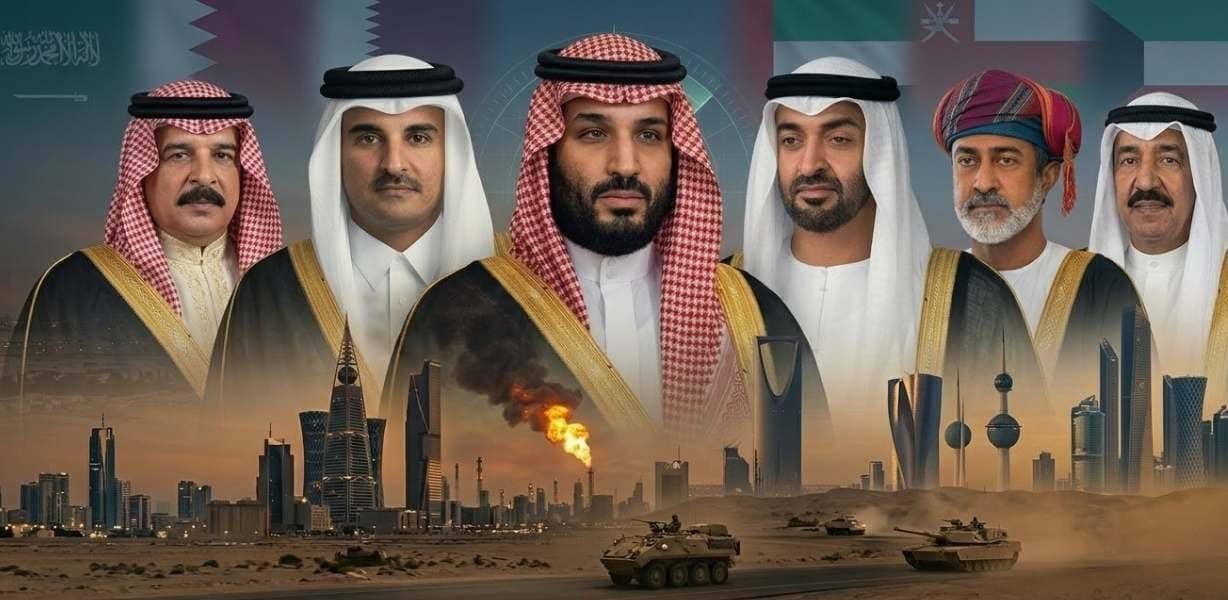
Illustrative
Key Takeaways
1 of 3
Automatically generated. Read full article for complete context.
When Saudi Arabia’s foreign minister declared that the Kingdom reserves the right to take military action against Iran, it signaled a dangerous shift in calculation across the Persian Gulf. For years, Riyadh, Abu Dhabi, and their neighbors have relied on strategic ambiguity, managing backchannel diplomacy with Tehran while counting on the American security umbrella. But as the brutal illegal war by America and Israel against Iran intensifies, the temptation to actively assist in dismantling their primary regional rival is growing.
Gulf monarchs are weighing the perceived benefits of a crippled Iranian military apparatus against the hazards of overt involvement. Yet, for Gulf monarchies entering Iran war operations at this exact historical moment is not merely a risky geopolitical gambit, it is a fatal strategic trap. There is a profound difference between a bilateral Gulf-Iranian conflict and joining an ongoing assault spearheaded by Washington and Tel Aviv. The former can be managed. The latter threatens to unleash forces that will permanently shatter the domestic peace of the Arabian Peninsula.
The question of Ideological Legitimacy
A fundamental miscalculation by Western defense intellectuals is the assumption that the Arabs view this war solely through the lens of old sectarian rivalries. If an exclusive, bilateral war were to break out strictly between Saudi Arabia and Iran, or the UAE and Iran, state media could attempt to frame the conflict to their domestic populations as a necessary defense of Arab sovereignty or Sunni orthodoxy against Shia expansionism.
But entering a war initiated and waged by Israel and America is an entirely different proposition. The Arab and Muslim street does not view this conflict as a sectarian dispute; it views it as anti-imperial resistance. The deep, visceral resentment toward imperial and neo-colonial powers is identical among both Sunni and Shia populations. To the domestic public across the Gulf, aligning with Tel Aviv and Washington instantly transforms the monarchies from defenders of the faith into proxy enforcers for Western imperialism.
This shift obliterates the ideological legitimacy of the Gulf regimes. For Saudi Arabia, as the custodian of the two holiest sites in Islam, to formally join this fray or even actively facilitate offensive strikes from US bases within its borders brands the kingdom as an enabler of the very violence that has radicalized the broader Islamic world over the past year.
Iran emerging as representing the Global South
The Gulf monarchies must also grapple with a rapidly shifting global reality. The war seems to be elevating Iran’s standing far beyond its traditional sphere of influence. Because Tehran is perceived as the only actor physically challenging Western dominance and the Israeli military machine from the front absorbing immense loss, it has gained unequivocal support and unprecedented legitimacy across the Muslim world. Crucially, this admiration seems to transcend the old divides, embedding itself deeply within Sunni populations who are exhausted by neo-colonial dictates.
Furthermore, Iran is rapidly emerging as a major challenger to the imperial Western order, positioning itself as a vanguard for the broader Global South. While many leaders in the developing world are too constrained by Western financial and security dependencies to state this openly, their populations view Tehran’s defiance with profound respect clearly visible in op-eds, TV Studios and Social platforms . If Gulf states align with the US and Israel, they are not just fighting a familiar neighbor; they are siding against an emerging champion of the Global South. By doing so, they align themselves with an aging, violent imperial order that their own citizens desperately want dismantled.
Adding to the ideological suicide is the delusion of a cost-free, surgical intervention. This fantasy has already been catastrophically shattered by the ongoing war. Just as Israel and America falsely assumed they could easily contain the conflict and neutralize retaliatory capabilities from the air within few days, Gulf leaders who entertain the idea of “reserving military action” are making the same fatal miscalculation. The uncontainable reach of Iranian drones and ballistic missiles has repeatedly bypassed advanced defense systems, proving that American air supremacy cannot seamlessly shield the region’s cities.
The core promise of Gulf governance over the last decade has been stability, modernization, and rapid economic diversification. The realization of Saudi Vision 2030 and the UAE’s standing as an impregnable global financial hub depend entirely on the perception of the Peninsula as a safe sanctuary for global capital. Entering the war instantly paints a target on the domestic economic and civilian infrastructure that underpins these grand visions. The assumption that the Gulf can participate in bombing Iran on Tuesday and host international investment summits on Thursday is a lethal miscalculation.
The Internal Breaking Point
Beyond shattered skylines, the most profound danger of entering the war is domestic uprising. The implicit social contract of the Gulf is a localized trade-off: citizens forfeit political participation in exchange for absolute physical security and vast economic subsidy. However, this fragile contract cannot be analyzed in a vacuum. Israel’s occupation and massacre of Palestinians—a death toll surpassing 70,000 in very recent memory—has left a visceral, unflinching scar on the collective consciousness of the Arab street and Muslims globally.
The moment a state enters a wildly unpopular neo-colonial war alongside the United States and Israel, it fails spectacularly on both ends of its internal bargain. Citizens will immediately question why their safety is compromised and their economy risked for a conflict launched by outside powers currently committing mass atrocities next door. Dissent, usually suppressed effectively by the state, easily finds critical mass when national pride is offended by the perception of endless subservience to the West. The restive protest movements historically seen across the region will violently reawaken as the geopolitical blowback strikes home.
Escaping the Strategic Trap
The Gulf states are standing on a precipice. The desire to see Tehran contained may be overwhelming for the ruling elites, but the price of active intervention is simply too high. Attempting to piggyback on an American and Israeli war does not secure the Gulf; it delegitimizes it.
For Arab and Muslims, aligning militarily with the US and Israel against an Islamic neighbor is politically radioactive. It transforms the Gulf states from prosperous powers into proxy enforcers for the West. Rather than leaning into a catastrophic intervention against the rising tide of anti-imperial and Global South solidarity, their ultimate survival depends on a rapid, unflinching pivot toward total neutrality while taking hit on their soils by Iran on the military bases of America. If the monarchies fail to see the imperial trap laid before them, the war burning in the skies over the Khaleej will inevitably ignite the streets below.
Disclaimer:The views and opinions expressed in this article are those of the author(s) and do not necessarily reflect the official policy or position of The Rift.