Opening The Rift
therift
© 2026 The Rift. All Rights Reserved.
Sustained World Campaign Needed on Accident Reduction to Avoid Millions of Deaths and Disabilities
A sincere and sustained campaign at a global level can save millions of lives in the next decade and create very creative avenues for international learning and cooperation.


Key Takeaways
1 of 3
Automatically generated. Read full article for complete context.
We all are distressed to hear almost daily about serious accidents in various parts of the world, especially if some of these happen closer to home. A quick review of even a day’s accidents in a single region can be very distressing yet also revealing of the great potential for preventing accidental deaths and serious injuries that exists.
I recently saw newspaper coverage of some of the accidents that took place on September 24, 2026 in or close to the India’s National Capital Region. A night sleeper bus traveling from Delhi to Mahoba caught fire near NOIDA, likely due to AC related problems, resulting in 9 passengers burned to death and others traumatized by the tragedy. Night sleeper buses have been reporting high accident risks but in this case this was compounded by the fact that the bus was not stopped despite several passengers complaining of burning smell, according to reports. 6 people were killed and 10 were injured when the tractor-trailer they were travelling in overturned in Kurukshetra district. They were part of a group going on long distance pilgrimage on a vehicle not suitable for this purpose. Four workers were killed near Sirsa when a tractor trailer carrying them was hit by a tractor. Several workers particularly women were very seriously injured. A motorcycle was caught in the middle of the bigger vehicles and its rider died too. A motor cycle clash in Hansi led to the death of three men in the prime of their youth. In Sunam, Sangrur, several assembled persons were burnt badly by electric current, two of them perished immediately.
These were some accidents in one region I could trace in a single day’s newspapers. Of course many, many domestic, road or other accidents resulting in fractures or other injuries are not reported but nevertheless cause distress to many people in this or any other region. The large number of occupational accidents taking place routinely in factories, workshops, construction sites and other workplaces are often underreported and underestimated.
While all deaths and serious injuries are painful, by their very definition the deaths and injuries or disabilities caused by accidents come very suddenly without any pre-warning and hence these can be even more traumatic and disruptive for victims as well as their near and dear ones.
The life of entire families can change dramatically in a few minutes or even seconds by an accident that may have been caused entirely by the fault of others. Even if there is no death, adverse effects including disabilities and serious injuries can last an entire lifetime for the victim as well as for at least some of the family members, particularly in countries where medical facilities, social security and compensatory arrangements are deficient.
Unfortunately at the level of research, data collection and policy making there has been a failure to take a comprehensive view of all kinds of accidents. So the huge potential that exists for avoiding human life and preventing painful injuries and disabilities by reducing accidents significantly has not received the kind of attention this deserves. If on the other hand a comprehensive view of the challenge of reducing all kinds of accidents is taken up firmly and policy is formulated on this basis then it will be able to achieve very significant progress in most countries. Further if there can be a worldwide campaign for reducing accidents on the basis of such a comprehensive understanding, and if there can be adequate funding and international cooperation for this, then at world level truly significant prevention of deaths and injuries, including serious injuries and disabilities can be achieved. Millions of individuals and families can be saved from highly distressing situations and conditions every year.
According to WHO data 3.2 million deaths annually are caused by non-intentional injuries or accidents. (WHO—Injuries and Violence, 2021). It may be a surprise to many people to know that the number of deaths caused by various other accidents (falls, fire, poisonings, drowning, others) is almost one a half times the number of deaths caused by road accidents (1.9 million compared to 1.3 million).
What is more, the distress related to injuries caused by accidents may be even higher than accident related fatalities, given the very large number of serious injuries, many of which result in disabilities. According to the International Labour Organization, while the number of deaths caused by occupational accidents in a year is 350,000, the number of workers involved in non-fatal injuries in a year is 313 million (ILO–Global Trends on Occupational Accidents, 2015). The injuries caused by road crashes annually are estimated at 20 to 50 million by the WHO. The total number of accident related injuries (including those from falls and fires) is over 400 million in a year.
Many accidental injuries can disable victims in very serious ways for almost their entire lives. Several accidental injuries can be extremely painful, for the victims as well as those very close to them. This is particularly true of accidents involving burn injuries and accidents involving babies. As many as about 400,000 people die in burn injuries in a year. In the age group 0-4 years, 47,000 children die in a year from burn injuries, about 57,000 die in road crashes and 58,000 die in drowning accidents. In the age-group 5-14, about 110,000 children die in a year in road crashes, 77,000 in drowning accidents, 27,000 from burning. Among those in the prime of their youth, in the age-group 15-29, around 336,000 die in road accidents and 85,000 in fires in a typical year (WHO factsheet on accidents)
As many accidents are caused by glaring negligence and violation of known safety norms, it should be possible by continuing, thoughtful, determined efforts to reduce accident related deaths and injuries by one-half. Hence this writer’s estimate is that it should be possible to save 1.6 million human lives and prevent over 200 million injuries in a year on this basis, apart from avoiding economic loss worth billions. I have made this estimate by first taking the total number of accidental deaths and injuries in a year from the various data sources given above, and then calculating on the basis of the assumption that by a very well planned and efficiently implemented effort, it should be possible to reduce accidental deaths and injury by about 50% or so.
In fact there is hardly any other campaign which can yield such high achievement in terms of reducing deaths, distress and pain with a high chance of success compared to the campaign for reducing accidents. What is more, it is easier to achieve cooperation and to avoid disagreements among various countries in such a worldwide campaign, compared to other campaigns on more controversial issues. There is thus clearly the need for a very well-organized worldwide campaign to reduce all kinds of accidents.
The financial costs of accidents are also immense. This includes financial costs to the victims as well as financial costs to the authorities. Many families are ruined by accidents. Governments often incur very high expenses in providing medical care and other relief to victims, and in legal cases relating to accidents, apart from loss of any infra-structure. The economic losses reduced by an effective campaign to reduce accidents can also be many times more than the costs incurred in such a campaign, although of course its biggest gains would be in terms of saving human lives and reducing human injury, pain and distress.
The worldwide campaign being suggested here should seek to enhance the reach of those existing efforts which have already shown promise, while at the same creating a wider framework for integrating various sides of the effort, filling in the gaps, promoting learning from best practices and overall leading to a comprehensive worldwide accident prevention effort. While prevention of accidents should be the main focus of such a campaign, at the same time this campaign should also aim at significantly improving the availability of timely and proper medical care to accident victims.
Such a campaign should seek a mobilization of people on accident prevention and at the time also seek to influence government policy on prevention issues. One priority can be to try to ensure that the government allocates more resources for accident prevention and uses it carefully to achieve best possible results, something that would be important in several countries having tight budget constraints. A specific proposal which can be useful in many countries may be to press for the creation of a National Accident Prevention Authority at the country level with provincial chapters. A national campaign can have linkages with other such campaigns in various countries with the spirit of sharing best practices and experiences. Media can play a very useful role in the success of such a campaign.
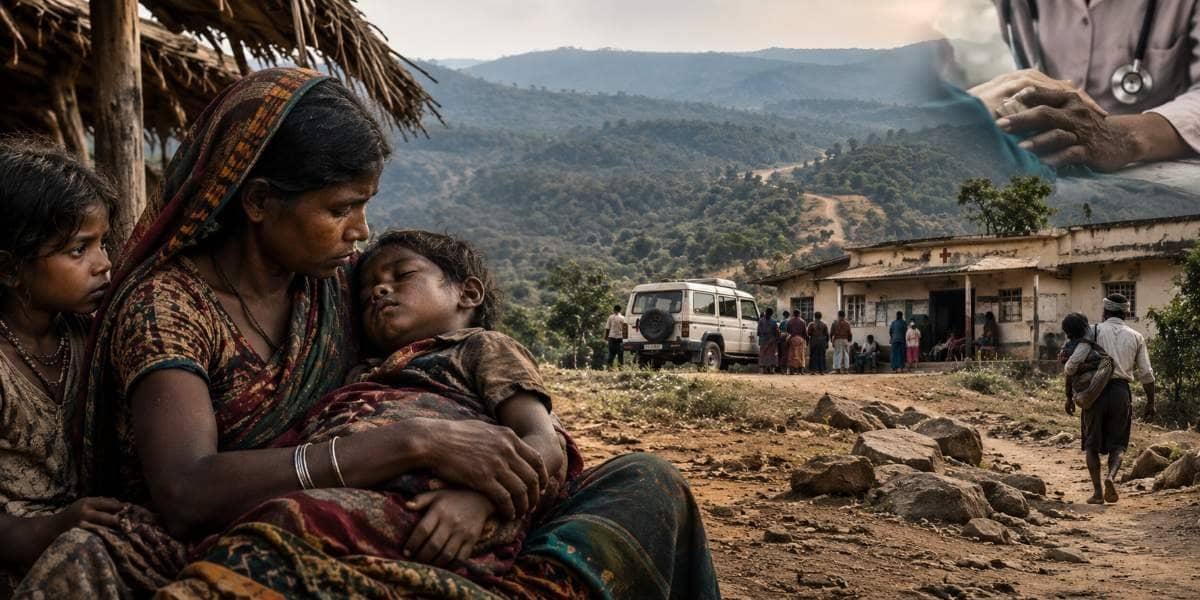
Such a campaign should make a special effort to help the poorer sections of society as they are much more at risk. A child from the lowest social class in the UK is 16 times more likely to die in a house fire than one from a wealthy family. Pedestrians, homeless people and footpath dwellers are often highly exposed to injury and death from speeding vehicles.
Perhaps the only good news to share about accidents is that these can be reduced to a very significant extent by careful planning and consistent efforts. As the WHO says, “Evidence from many countries shows that dramatic successes in preventing injuries (including accident related injuries) and violence can be achieved through concerted efforts that involve, but are not limited to the health sector.” A sincere and sustained campaign at world level can save millions of lives in the next decade and create very creative avenues for international learnings and cooperation.
Disclaimer:The views and opinions expressed in this article are those of the author(s) and do not necessarily reflect the official policy or position of The Rift.