Opening The Rift
therift
© 2026 The Rift. All Rights Reserved.
Past Estimates of Mortality in Humanitarian Emergencies and Present Situation
Mortality rates in humanitarian emergencies can surge dramatically, underscoring the critical need for adequate and timely international assistance.

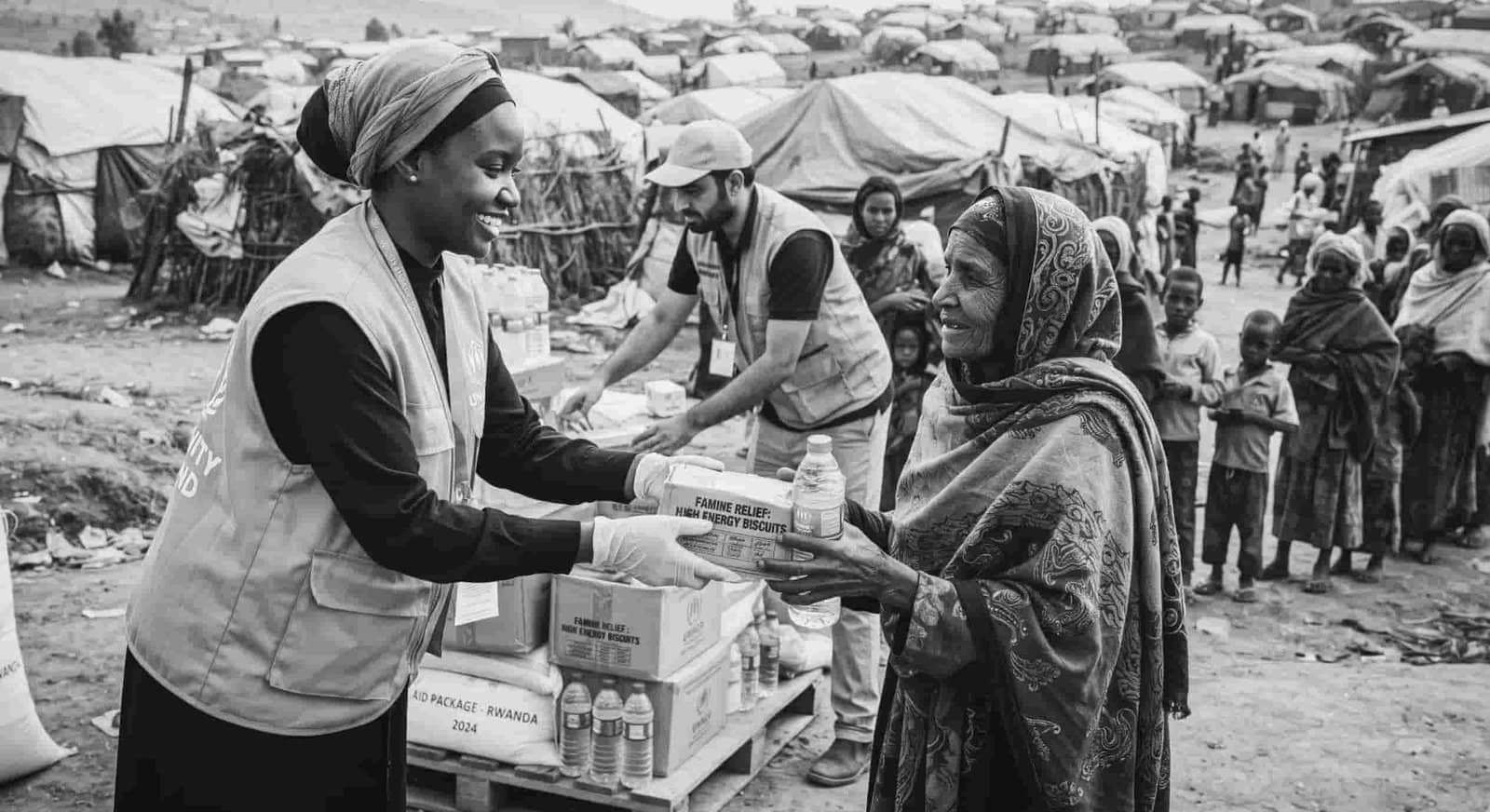
Representative Image
Key Takeaways
1 of 3
Automatically generated. Read full article for complete context.
One of the most important concerns for reducing extreme human distress relates to providing timely and adequate assistance in humanitarian emergenciesHumanitarian EmergenciesSituations involving widespread human suffering and distress, typically caused by natural disasters, conflicts, or other crises, requiring significant external assistance.. Unfortunately such crisis situations have remained with us at a high level. Various studies indicate high mortality rates associated with these emergencies.
A lot of this significant information from several studies has been summarized in a paper written by Charles B. Keely, Holly E. Reed and Ronald J. Waldman (National Institutes of Health—National Library of Medicine, USA). While this paper uses the more familiar concept of annual crude death rate (CDR) per 1000 people, it also uses the concept of crude mortality rate (CMR) per day per 10,000 population for the sake of monitoring mortality on daily basis over a shorter crisis period. A crude mortality rate of 0.25 per day per 10,000 people may prevail in normal times in developing countries, but an increase to approximately 1 per day per 10,000 persons signifies the threshold for a humanitarian emergency. for a humanitarian emergency situation. This can also be mentioned as 365 deaths per year per 10,000 population, or 36 per year per 1000 population (easier to compare for those used to seeing death rates in terms of per 1000 per year—the average for most countries in normal times is around 8).
CRISIS MORTALITY COMPARISON
Mortality Rates: Normal vs. Emergency Situations
0.25
Per 10,000 / Day (Normal)
1.0
Per 10,000 / Day (Emergency Threshold)
36.5
Per 1,000 / Year (Emergency Approx.)
VISUALS BY THE RIFT
Crucially, the paper highlights how far beyond the emergency threshold of 1 death per day per 10,000 population mortality rates can climb during high-risk phases. Drawing from a table on mortality estimates from refugee groups in a paper by Toole and Waldman, the authors note that these crude death rates per day per 10,000 population, compared to the emergency threshold of 1, range from 1.2 in Malawi (1992) to as high as 19 to 31 in Rwanda (1994). In fact the high end estimate for Rwanda was so high that had this rate continued, then all the refugees in this group would have died by the end of a year!
EXTREME MORTALITY ESTIMATES
Peak Daily Mortality Rates per 10,000 Population
1.2
Malawi (1992)
7
Sudan (1992-93) / Angola (1995)
17
Baidoa, Somalia (1993)
19-31
Rwanda (1994)
VISUALS BY THE RIFT
Similarly some of the estimates for crude mortality rate among internally displaced peopleInternally Displaced Persons (IDPs)Individuals or groups who have been forced to flee their homes or places of habitual residence due to armed conflict, situations of generalized violence, violations of human rights, or natural or human-made disasters, but who have not crossed an internationally recognized State border. are very high. For Baidoa, Somalia we have an estimate of 17 for the year 1993 and 7 for both Sudan (1992-93) and Angola (1995).
Regarding age-specific mortality, children have frequently experienced higher death rates. A study estimated that among Iraqi displaced persons settled near the Iraq-Turkey border (March-May 1991), child deaths under 5 years of age comprised 63% of all deaths.
Fortunately some of the highest recorded death rates could be reduced once the displaced people or refugees could settle down at a place. In the context Mozambican refugees taking shelter in Zimbabwe, for instance, one study estimated that before a month was completed CMR of 8 was seen but this came down to about 2 after two months or so. However this welcome trend of declining mortality was not seen at all places.
MORTALITY TREND ANALYSIS
Mortality Rate Reduction Post-Settlement (Mozambican Refugees, Zimbabwe)
8
CMR (First Month)
2
CMR (After Two Months)
VISUALS BY THE RIFT
Therefore, a key lesson for the present is that while displaced individuals fleeing conflicts and disasters may find initial relief and some improvement upon finding shelter, the extent of recovery and mortality reduction varies based on the scope, timing, and quality of available humanitarian assistance.
This is highly relevant to our current times, marked by declining humanitarian assistance. Practically emphasizing the urgency of improving humanitarian assistance, my concern is to ascertain the potential increase in mortality and extreme distress when aid is significantly denied, versus a scenario where its adequacy is globally assured.
Based on the studies cited, beyond the emergency threshold, it is crucial to remember the significantly higher mortality rates during shorter periods, which proper humanitarian assistance can reduce but inadequate aid can prolong.
Read this Article as well to better comprehend the Article on the Screen.
Looking ahead, following the grim situations experienced in 2025 and 2026, what are the prospects for 2027? Given that conflict situations, disasters, wars, and the circumstances of refugees and displaced persons have remained grim and worsened in some contexts, we must be cautious to prevent the prolongation of the extreme mortality periods cited in the studies. In many locations, particularly previously neglected areas and rapidly emerging new sites of humanitarian crisis, it is urgently imperative for the international community to provide adequate humanitarian assistance as swiftly as possible.
Disclaimer:The views and opinions expressed in this article are those of the author(s) and do not necessarily reflect the official policy or position of The Rift.