Opening The Rift
therift
© 2026 The Rift. All Rights Reserved.
Defective Legislative Drafting and Curative Public Participation: The 2005 Communal Violence Bill & the Unfinished Task of Protecting India’s Minorities
A law intended to prevent communal violence must be designed for the worst-case scenario rather than the best, focusing on institutional independence and preventive intervention.

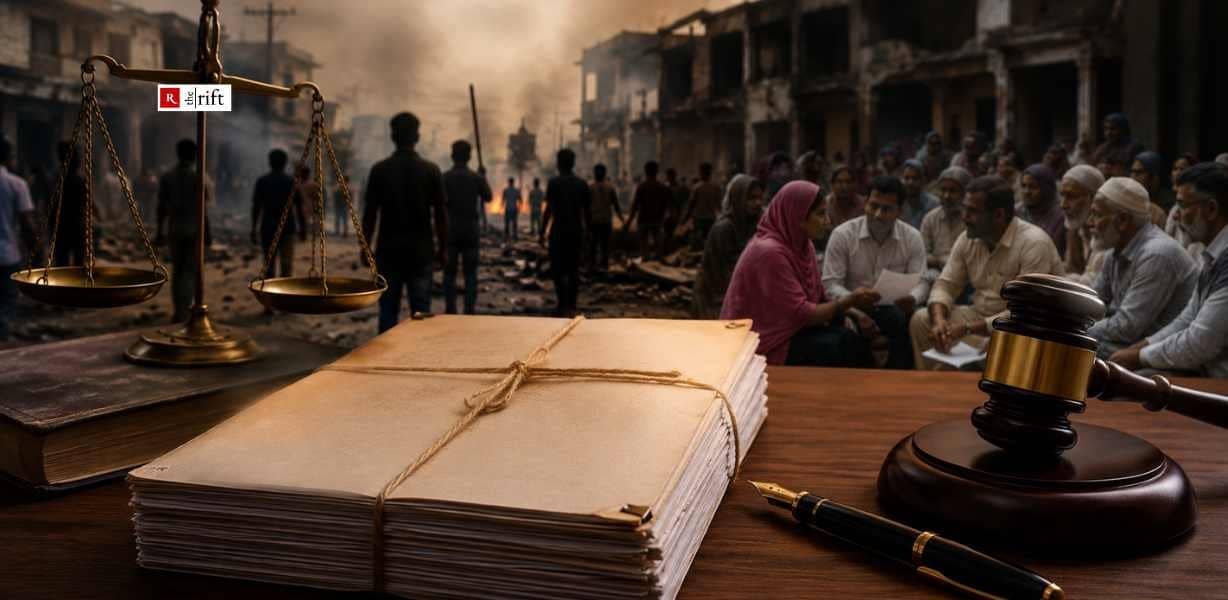
Image | Only Representative
Key Takeaways
1 of 3
Automatically generated. Read full article for complete context.
The history of communal violence in India is not merely the history of riots. It is also the history of institutional failures, delayed interventions, inadequate accountability, and the recurring inability of the legal system to provide effective remedies to those who suffer the consequences of targeted violence. Every major episode of communal unrest has generated demands for stronger legal mechanisms. It was in this context that the Communal Violence (Prevention, Control and Rehabilitation of Victims) Bill, 2005 was conceived.
The Bill represented an acknowledgment by the State that communal violence is not an ordinary law-and-order problem. It threatens the constitutional promise of equality, the secular character of the Republic, and the confidence of vulnerable communities in the rule of law itself. Yet despite this recognition, the Bill suffered from a fundamental weakness. It assumed that the governments entrusted with implementing its provisions would always act impartially, promptly and in good faith.
Experience demonstrates otherwise. The most difficult communal situations are often those in which allegations are directed not merely against private actors but against public authorities themselves. The central question therefore is not whether governments should possess powers to respond to communal violence. The question is whether governments alone should possess those powers.
A law intended to prevent communal violence must be designed for the worst-case scenario rather than the best. It must be capable of functioning even where governmental machinery has become ineffective, indifferent or compromised.
It is for this reason that any future legislation on communal violence should place far greater emphasis on institutional independence, preventive intervention, victim protection, accountability of public officials and meaningful compensation.
The Scope of Targeted Violence
The first weakness in the 2005 Bill lies in its conception of communal violence itself. The legislation is framed largely around acts involving criminal force, violence, death and destruction of property. Such an approach reflects an outdated understanding of how targeted persecution operates. Communal hostility frequently manifests long before physical violence begins. Organized campaigns of intimidation, systematic dissemination of inflammatory propaganda, economic boycotts, denial of housing, exclusion from employment opportunities, disruption of educational access, threats directed at witnesses, desecration of places of worship and sustained social ostracism may collectively produce consequences as devastating as physical attacks. Indeed, modern scholarship on genocide and mass violence demonstrates that the most serious atrocities are often preceded by prolonged periods of social, economic and psychological targeting.
A preventive statute should therefore focus not merely upon violence that has already occurred but also upon conduct likely to lead to such violence. Waiting for deaths, arson or widespread destruction before invoking statutory powers defeats the very purpose of prevention.
The Role of Independent Oversight
The second weakness concerns the role assigned to governments. Throughout the Bill, decisive powers are vested in State Governments and, in certain situations, the Central Government. This approach may be administratively convenient but it ignores a difficult constitutional reality. Allegations of governmental inaction or complicity have accompanied many episodes of communal violence in India.
A legal framework intended to protect vulnerable communities cannot be wholly dependent upon institutions that may themselves become subjects of complaint. A more effective model would involve substantially greater powers being vested in independent constitutional and statutory bodies such as the National Human Rights Commission and the State Human Rights Commissions. Such bodies are institutionally better positioned to act as neutral arbiters. They can provide oversight, initiate intervention, monitor investigations, supervise relief and rehabilitation measures, and ensure accountability of public authorities without being directly affected by immediate political pressures.
Independent oversight becomes particularly important in relation to decisions concerning deployment of security forces, establishment of special courts, protection of witnesses and prosecution of public officials accused of dereliction of duty.
Broadening the Definition of Victimhood
The Bill also adopts an unduly narrow understanding of who constitutes a victim. Victimhood is not confined to individuals who suffer physical injury. Those forced to flee their homes, deprived of livelihoods, denied accommodation because of their identity, traumatised by witnessing attacks on family members, or compelled to discontinue education are equally victims of communal violence.
Modern victimologyVictimologyThe psychological and sociological study of the victims of crime and the long-term impacts of mass violence. recognises that mass violence produces consequences extending far beyond immediate physical injuries. The law must therefore acknowledge psychological trauma, social displacement, economic losses and long-term disruption of family life. Compensation schemes must be calibrated accordingly. In fact, rehabilitation is not a charitable exercise. It is a legal obligation arising from the State’s constitutional responsibility to protect life, liberty and equality. Compensation that merely symbolically acknowledges loss is insufficient. Relief must seek, as far as possible, to restore victims to the position they occupied before the violence occurred.
Establishing Real Accountability
The provisions dealing with accountability of public servants also require significant strengthening. One of the recurring criticisms following communal disturbances has been the tendency to characterise serious failures as mere administrative lapses. Delayed registration of complaints, failure to deploy adequate forces, refusal to protect vulnerable localities, inadequate investigation and failure to preserve evidence are frequently explained away as errors of judgment.
Yet where public officials possess both the authority and the duty to prevent foreseeable harm, omissions can be as damaging as affirmative misconduct.
A meaningful communal violence law must therefore impose clear legal consequences for failure to perform statutory duties. Liability should not depend upon proving deliberate malice in every case. Gross neglect, reckless disregard of responsibilities and unexplained failure to act despite clear warning signs must attract legal scrutiny. Otherwise, accountability remains largely theoretical.
Witness Protection and Special Courts
The Bill’s treatment of witness protection similarly requires reconsideration. Witnesses in communal violence cases often face unique pressures. Threats may not be confined to bodily harm. Economic retaliation, social exclusion, denial of opportunities and intimidation of family members can be equally effective in silencing testimony.
A comprehensive witness protection framework must therefore address both physical and non-physical forms of coercion. Without credible protection mechanisms, successful prosecution of organized communal crimes becomes exceedingly difficult.
Another area requiring reform concerns the establishment of special courts. In highly polarised environments, local conditions may impede the fair administration of justice. Provision should therefore exist for transfer of trials outside affected regions where necessary to preserve public confidence in judicial impartiality.
Special courts must also possess flexibility to revisit proceedings where earlier investigations have been compromised. Mechanical continuation from the stage at which a defective proceeding stood transferred may perpetuate injustice rather than cure it.
A Preventive Philosophy
Perhaps the most significant omission in the Bill is the absence of a truly preventive philosophy. Prevention must become the organising principle of any future legislation. District authorities should possess powers to intervene where communal tensions are likely to arise rather than only after violence has commenced. Dissemination of inflammatory material, organised intimidation campaigns, provocative mobilisation around places of worship and other precursor activities should attract immediate legal attention. The objective should be to prevent escalation rather than merely manage consequences.
This preventive approach is entirely consistent with constitutional values. The Constitution does not require the State to wait until lives are lost before acting. It imposes positive obligations to protect life, dignity and equality.
Comprehensive Rehabilitation and Immunities
The rehabilitation provisions likewise require substantial expansion. Relief cannot be limited to temporary camps and modest monetary payments. Victims require housing, education, livelihood support, medical treatment, psychological counselling and assistance in rebuilding community life.
Particular attention must be paid to children. Displacement and communal violence often produce long-term educational and psychological consequences that remain invisible in conventional compensation frameworks. Effective rehabilitation must therefore extend beyond immediate relief and address future opportunities.
Equally important is the need to remove excessive immunities enjoyed by public authorities. Legal protection for actions undertaken in good faith serves an important purpose. However, blanket immunities can become barriers to accountability where allegations involve deliberate inaction or hostile conduct. The burden should not fall entirely upon victims to establish mala fidesMala FidesActions undertaken in bad faith or with malicious intent. in circumstances where relevant information is often exclusively within governmental control.
A carefully structured accountability framework can preserve protection for honest officials while ensuring remedies against abuse. These issues acquire even greater urgency today than they did when the Bill was drafted in 2005.
Contemporary Relevance and the Role of Courts
Over the last two decades, India has witnessed repeated controversies concerning attacks upon Muslims, destruction of Muslim-owned properties, demolition exercises alleged to be selectively directed against members of the community, inflammatory public rhetoric, and incidents involving places of worship. Whether one agrees with every allegation or not, it is undeniable that substantial sections of the population perceive themselves as increasingly vulnerable.
Law exists not merely to punish wrongdoing but also to preserve confidence in constitutional institutions. When significant communities begin to doubt whether ordinary mechanisms will adequately protect them, the need for specialised legal safeguards becomes more compelling rather than less.
Simultaneously, another development has altered the constitutional landscape. For many years, citizens often looked to constitutional courts for immediate intervention in matters involving grave public concern. More recently, courts have displayed greater restraint in exercising suo motuSuo MotuA legal term where a court takes up a matter on its own motion, without a formal petition being filed. jurisdiction. Such restraint may be justified by considerations of institutional discipline and separation of powers. However, its practical consequence is that vulnerable communities cannot assume that judicial intervention will automatically occur at the earliest stage of every crisis.
The answer to this development is not criticism of judicial restraint. The answer is stronger legislation. I provided such an alternative when I suggested extensive amendments, detailing precisely what they would achieve and why the Bill in its stated form was an eyewash. This publication can provide access to that analysis.
Analysis of the 2005 Communal Violence Bill
Read my detailed critique and suggested amendments regarding the 2005 Bill.
Download PDF AnalysisWhere courts choose, appropriately, to exercise restraint, legislatures must ensure that statutory mechanisms are sufficiently robust to operate without waiting for extraordinary judicial intervention. Human rights commissions, special courts, independent investigative structures and mandatory accountability provisions become all the more important in such circumstances.
A modern communal violence law should therefore be conceived not as an emergency response measure but as a constitutional safeguard. Its objective should be to prevent persecution, protect minorities and vulnerable groups, ensure accountability of public authorities, compensate victims fully and restore public confidence in the rule of law.
India’s constitutional commitment to secularism does not require indifference to communal realities. On the contrary, it requires institutions capable of responding effectively when those realities threaten equality, dignity and social cohesion.
The Communal Violence Bill of 2005 represented an important attempt to confront a difficult national problem. Its shortcomings should not obscure its significance. The challenge before contemporary lawmakers is not whether such legislation is needed. The challenge is to enact a stronger, more independent and more preventive framework capable of functioning even when ordinary institutions fail.
The true test of constitutional governance is not how the State treats secure majorities. It is how effectively it protects vulnerable minorities when public passions run high.
A communal violence law worthy of a constitutional democracy must be judged by that standard.
Jai Hind
Disclaimer:The views and opinions expressed in this article are those of the author(s) and do not necessarily reflect the official policy or position of The Rift.