Opening The Rift
therift
© 2026 The Rift. All Rights Reserved.
Growing Inequality in the Name of Development: Debt, Billionaires, and the Question of Democracy
Debt and overwhelming billionaire wealth create a single feedback loop, draining public resources and eroding democracy, a political choice, not economic destiny.

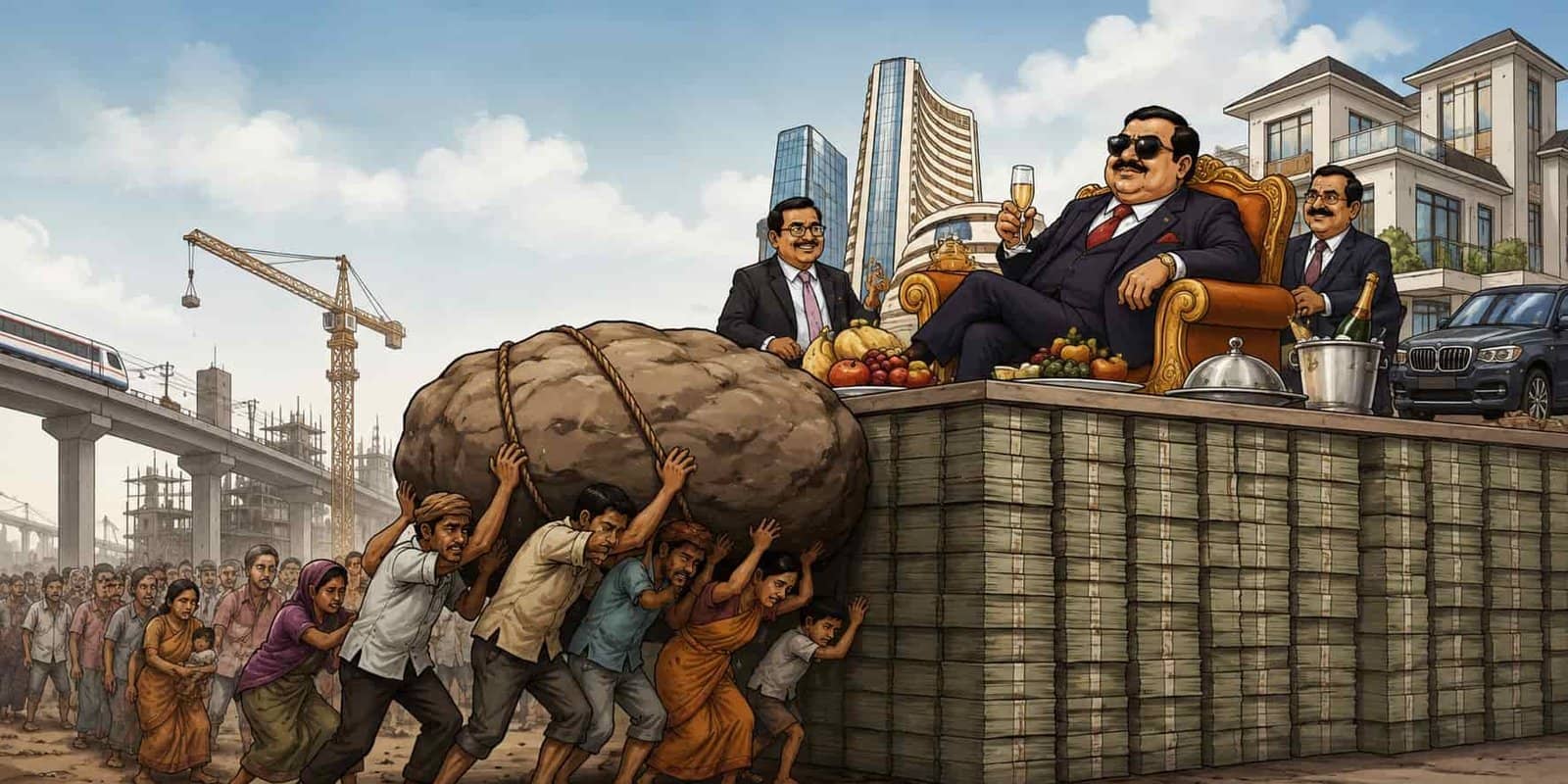
(Representative Image)
Key Takeaways
1 of 3
Automatically generated. Read full article for complete context.
Somewhere between a UN trade agency’s ledger of debt and a charity’s tally of billionaire fortunes lies the clearest picture we have of the world in 2026: a planet where governments are too poor to educate their children and too weak to stand up to the men who could, with a fraction of their wealth, end that poverty many times over. Two reports released this year, one from the United Nations Conference on Trade and Development and the other from Oxfam International, arrive at this same unsettling junction from opposite directions, and together they read less like separate studies than two halves of a single indictment.
Start with the debt. In its 2026 edition of “A World of Debt,” UNCTAD found that roughly 3.4 billion people, nearly half of humanity, now live in countries that spend more servicing interest on their debts than they spend on health or education combined. That number has not been static; it has been climbing, up by some hundred million people in a single year, as debt-service payments by developing countries surged by tens of billions of dollars. Global public debt has swollen past a hundred trillion dollars, with developing nations carrying nearly a third of that burden while paying a cost for their money that wealthier economies never have to. UNCTAD’s Secretary-General Rebeca Grynspan has put the human meaning of these figures bluntly: behind every interest payment sits a skipped meal, a school that was never built, a hospital ward that stayed empty. Between 2018 and 2026, ninety-nine developing countries, home to five and a half billion people, watched their fiscal space shrink year after year as creditors were paid before citizens. Debt, UNCTAD insists, is not the enemy; debt that costs more than a nation can bear, that forces a government to choose between a creditor in Washington or London and a child in its own capital, is.
Now turn to the other report, and the ledger flips from what governments cannot afford to what a handful of individuals possess in overwhelming excess. Oxfam’s January 2026 study, “Resisting the Rule of the Rich: Protecting Freedom from Billionaire Power,” released to coincide with the World Economic Forum’s gathering in Davos, documented that global billionaire wealth had reached a historic 18.3 trillion dollars, having grown three times faster in 2025 than in the five years before it and by eighty-one percent since 2020. The number of billionaires crossed three thousand for the first time in human history. Their combined fortunes grew by roughly two and a half trillion dollars in a single year, a sum Oxfam calculated would be enough to eliminate extreme poverty across the globe twenty-six times over. It is against this backdrop that Elon Musk briefly became the world’s first trillionaire in June 2026, after SpaceX’s stock listing sent his net worth past one trillion dollars in a single day, before market swings pulled it back down to somewhere between six hundred and eight hundred billion dollars by August. Volatile as that fortune has proven, it still dwarfs the combined assets of the poorest forty-six percent of humanity, nearly three and a half billion people, almost the same population that UNCTAD found trapped paying more in interest than in classrooms or clinics.
What makes the Oxfam report more than an accounting exercise is its argument about what all that wealth converts into. Money, it warns, buys not just yachts and rockets but political office, media ownership, and the machinery of law itself; a billionaire, the report finds, is thousands of times more likely than an ordinary citizen to hold political power. More than half the world’s largest media companies are now billionaire-owned, and virtually every major social media platform sits in similar hands, Musk’s ownership of X being only the most visible example. Oxfam’s researchers found that highly unequal countries are roughly seven times more likely to suffer democratic backsliding, the erosion of the rule of law, the hollowing of elections, than more equal societies. Nearly half the respondents in a survey spanning dozens of countries said outright that the wealthy in their nation buy elections. And 2024, Oxfam noted, marked the nineteenth consecutive year in which ordinary people’s basic freedoms shrank somewhere on earth, with a quarter of all countries now restricting free expression in some form. Oxfam’s executive director Amitabh Behar has summarised the mechanism in a single, cutting line: being economically poor creates hunger, being politically poor creates anger, and it is that anger, spilling into more than a hundred and forty major protests across dozens of countries last year alone, that governments are increasingly choosing to police rather than address.
Read side by side, the two reports describe a single feedback loop rather than two unrelated crises. UNCTAD shows the mechanism by which public wealth is drained upward and outward, through debt structures that developing nations did not design and cannot easily escape, leaving governments without the resources to invest in their own people. Oxfam shows where that drained wealth pools: in the accounts of a shrinking class of billionaires who then use it to entrench the very policies, on taxation, on regulation, on the rules of global finance, that keep the drain running. Neither report treats this as accidental. Both, in their own language, describe it as a matter of political choice rather than economic destiny.
This is also the argument at the heart of the “Roadmap to End Poverty: Beyond Growth,” the framework presented by UN Special Rapporteur Olivier De Schutter and endorsed by economists including Joseph Stiglitz, Jayati Ghosh, Thomas Piketty and Kate Raworth, which insists that poverty cannot be solved by GDP growth alone so long as that growth’s proceeds keep flowing to the very top. It is telling that this framework, the UNCTAD debt report and the Oxfam wealth report all converge on the same prescription: fairer taxation of extreme wealth, a genuine separation between money and political power, protection for press freedom and civil society, and international financial reform that stops treating the poorest countries’ debt as simply the cost of doing business with the rich world.
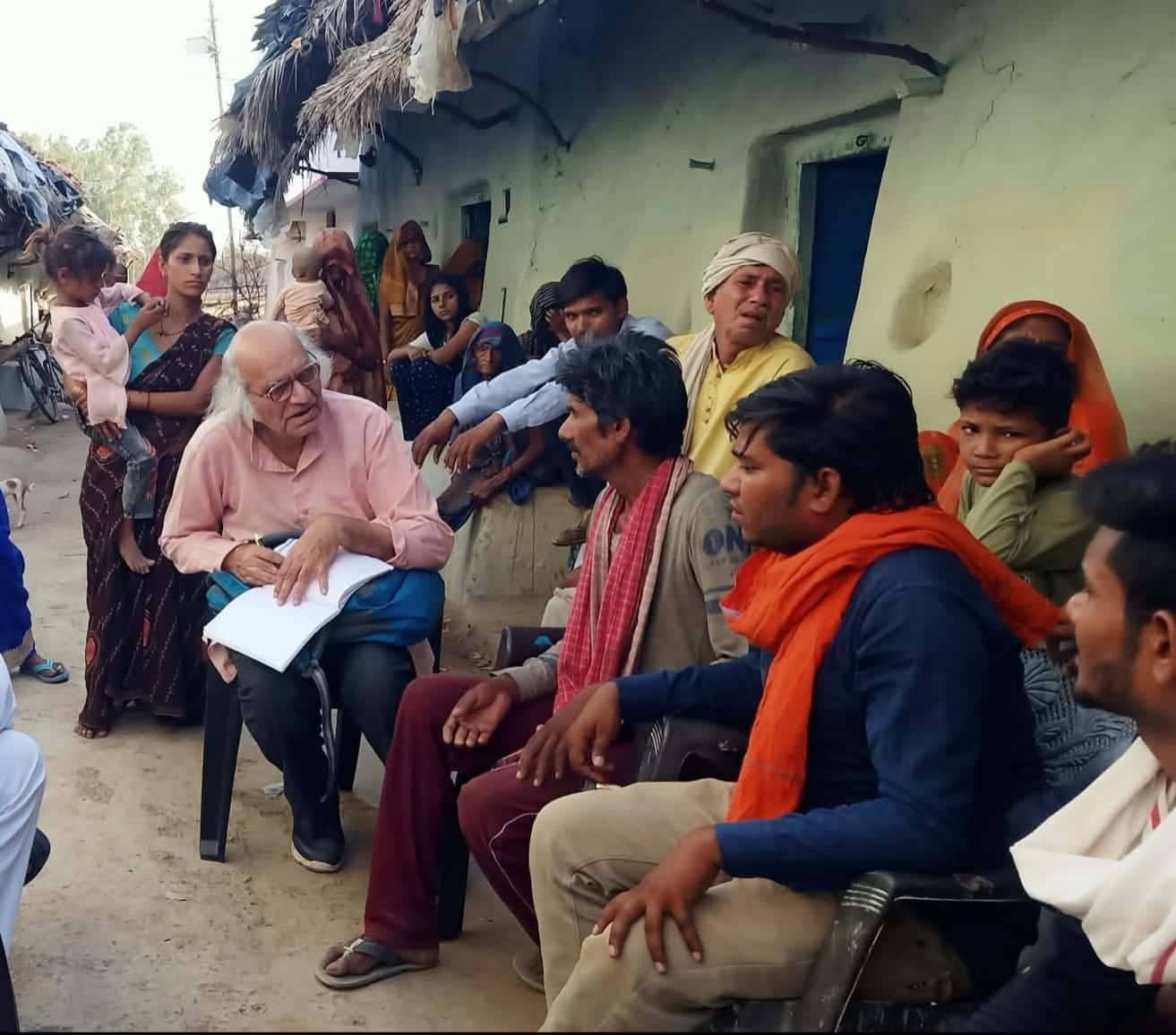
For countries like India, none of this is a distant statistic. The same pattern that UNCTAD documents at the level of national treasuries, public money diverted from classrooms and clinics toward debt service, is visible on the ground in falling real wages for agricultural labour, in health and education budgets that never keep pace with need, and in the deepening precarity of rural and informal employment. The same pattern that Oxfam documents at the level of billionaire wealth is visible in the concentration of media ownership and political access among an ever-smaller circle. Seen together, the two reports offer more than a warning; they offer a diagnosis, and implicitly, a choice. Development that measures itself only by aggregate growth, while leaving the questions of who owns that growth and who governs its rewards untouched, will keep producing exactly the world these two reports describe: one trillionaire and one debt crisis, standing on either side of the same three and a half billion people.
Disclaimer:The views and opinions expressed in this article are those of the author(s) and do not necessarily reflect the official policy or position of The Rift.