Opening The Rift
therift
© 2026 The Rift. All Rights Reserved.
Concentration of Wealth, the Shrinking of Democracy, and Deepening Economic Inequality
Excessive concentration of wealth and corporate power distorts democratic decision-making and weakens the equal enjoyment of people’s rights.

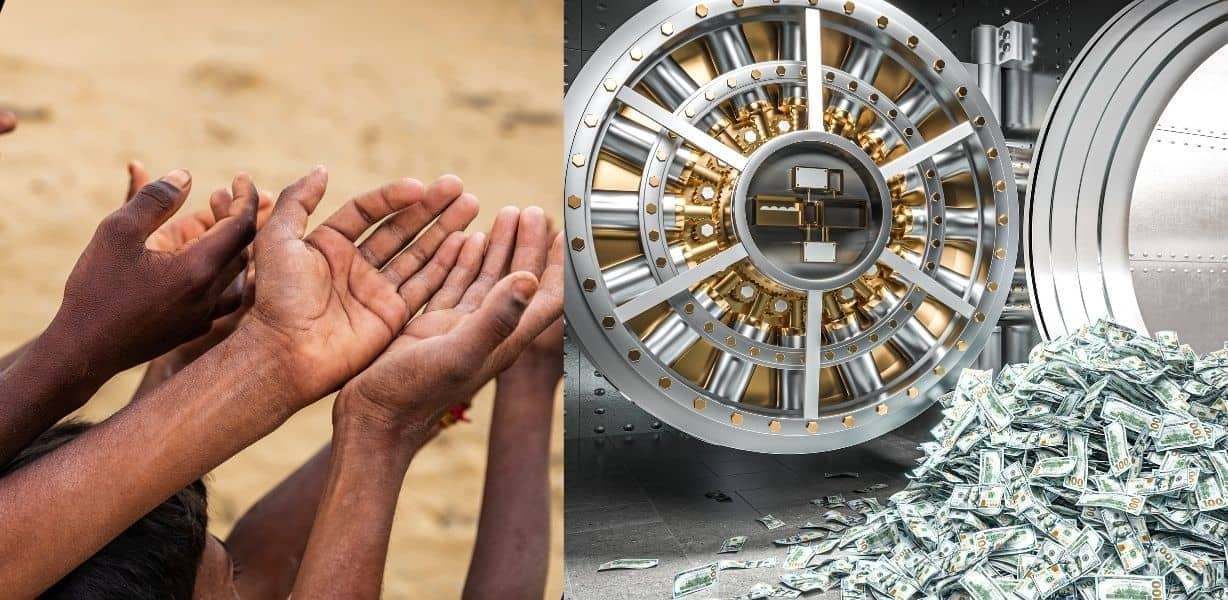
(Representative Image)
Key Takeaways
1 of 3
Automatically generated. Read full article for complete context.
The world recently witnessed a milestone that had been anticipated for years, yet instead of being celebrated as a symbol of global progress, it became a stark reminder of the widening economic chasm. On 12 June 2026, Elon Musk became the world’s first trillionaire. Following SpaceX’s stock market listing, Musk’s wealth surged past one trillion dollars in a single day. According to Forbes estimates, his total net worth that day reached around 1.1 trillion dollars, while within days the Bloomberg Billionaires IndexBloomberg Billionaires IndexA daily ranking of the world’s richest people, tracking their net worth based on market and economic changes. put the figure at 1.23 trillion dollars. By the end of June, the number had briefly touched as high as 1.4 trillion dollars. No individual in human history had ever held such wealth alone.
To grasp just how extraordinary this leap was, it helps to trace the arc of Musk’s fortune. In January 2020, his total net worth stood at a mere twenty-eight billion dollars, placing him thirty-fifth on the list of the world’s wealthiest people. Within five years he became the richest person on the planet, and within six, the world’s first trillionaire. In recent years his wealth grew, on average, by a million dollars every minute yet this rise proved just as volatile. In July, SpaceX shares took a heavy hit, and Musk’s fortune fell by as much as 363 billion dollars. By early August 2026, various estimates placed his wealth somewhere between 690 billion and roughly 750–800 billion dollars meaning he is, for now, no longer a trillionaire, though he remains the richest person in the world. This volatility reveals something important: how swiftly today’s extreme wealth is built, and how just as swiftly it can waver, even as the uncertainty in an ordinary person’s life does not ease by even a fraction.
Elon Musk’s Wealth Trajectory (2020-2026)
Jan 2020:
$28 Billion
June 2026:
$1.1 – $1.4 Trillion
Aug 2026:
$690 – $800 Billion
VISUALS BY THE RIFT
Across the world during this same period, the pace of wealth creation has reached unprecedented levels. The number of billionaires is rising at a record pace, crossing three thousand in 2025. According to figures from OxfamOxfamA confederation of 21 independent charitable organizations focusing on the alleviation of global poverty and injustice., over the past decade from 2015 to 2025 the real wealth of the world’s richest one percent has grown by more than thirty-three trillion dollars. Even as this enormous wealth accumulates on one side, the grip of poverty is tightening on the other. Today, one in every ten people on Earth lives in extreme poverty. Notably, the total number of people living in extreme poverty has barely declined since 1990 — it has remained nearly stagnant. According to a report by the United Nations Conference on Trade and Development (UNCTAD), as many as three and a half billion people live in countries whose governments spend more on servicing debt interest than on health and education combined. Elon Musk alone is wealthier than the combined assets of the poorest forty-six percent of the world’s population nearly three and a half billion people. Many experts now argue that today’s inequality has become even more extreme than that of the colonial era.
Global Wealth Disparities: Key Figures
1.1-1.4T USD
Elon Musk’s Peak Wealth (June 2026)
3.5 Billion
Poorest 46% of World’s Population
33+ Trillion USD
Wealth Growth of Richest 1% (2015-2025)
1 in 10
People Living in Extreme Poverty
VISUALS BY THE RIFT
Nabil Ahmed, Senior Director of Oxfam America’s Economic and Racial Justice programme, has called this a trillion-dollar alarm bell one that should be enough to wake governments from their slumber. He argues that the need to halt the relentless concentration of wealth has never been more urgent, and that this will require fundamental changes to the very economic policies that have produced not just a single trillionaire but a growing army of billionaires, alongside the stark inequality visible today. While the world, on one hand, views Musk’s milestone as a symbol of the success of the current model of economic growth, on the other hand it raises an equally pressing question: why does poverty persist, so deeply and so stubbornly.
Against this backdrop, a group of economists, civil society organisations and various United Nations bodies has released a significant framework titled ‘A Roadmap to End Poverty: Beyond Growth’. The document was prepared under the leadership of Olivier De Schutter, the UN Special RapporteurUN Special RapporteurAn independent expert appointed by the UN Human Rights Council to examine and report on a country’s human rights situation or a specific human rights theme. on extreme poverty and human rights, and was presented on 25 June at the sixty-second session of the UN Human Rights Council. The framework was the product of more than eighteen months of in-depth deliberation, drawing on the views and suggestions of over four hundred individuals — including representatives of institutions, social movements, UN agencies, and communities directly affected. The document seeks to answer a fundamental question: can poverty be eradicated and inequality reduced without treating the growth of Gross Domestic Product, or GDPGross Domestic Product (GDP)The total monetary or market value of all the finished goods and services produced within a country’s borders in a specific time period., as the primary condition for progress.
In an accompanying essay, prominent economists including Olivier De Schutter, Joseph Stiglitz, Jayati Ghosh, Thomas Piketty, Kate Raworth and Jason Hickel argue that the world today is passing through an era of manufactured scarcity. For decades, they note, a single formula was accepted uncritically: that expanding the economy would automatically reduce poverty. But the promise that the benefits of economic growth would reach everyone equally was never fulfilled. National income kept rising, while wages stayed frozen in place. Employment grew steadily less secure, and public services faced continuous cuts. Wealth at the top of society grew rapidly, while families at the bottom were left dependent on food-assistance centres just to get by.
At its core, this framework challenges the very development model that treats economic growth as the sole foundation of progress. The document states that genuine equity can only be achieved through a fair and equal distribution of the resources, opportunities and benefits tied to the economy and to development. It states plainly that poverty cannot be eliminated without reducing inequalities in income, wealth, power, social status, and voice in decision-making. Excessive concentration of wealth and corporate power, it further notes, distorts democratic decision-making and weakens the equal enjoyment of people’s rights. The framework urges governments to use fiscal, monetary, economic, competition and regulatory policy to redistribute resources and curb the runaway concentration of economic power. It is regarded as the most widely supported document to date on the need to rethink inequality and the global development model. Its central message is unambiguous: the world’s development model must be one in which no one is left behind. Over the past year alone, the combined wealth of the ultra-rich grew by two and a half lakh crore dollars — a staggering sum that, remarkably, exceeds the combined wealth of the poorer half of the world’s population. This increase is so vast that it would be enough to eliminate extreme poverty across the globe twenty-six times over.
Oxfam’s report, in an essay titled ‘Resisting the Rule of the Rich: Protecting Freedom from Billionaire Power’, states that the ultra-wealthy are seizing political power and reshaping the rules of the economy and society to their own advantage — with direct consequences for the rights and freedoms of ordinary people. Billionaires, it notes, are far more likely than ordinary citizens to reach political office. In a global values survey conducted across sixty-six countries, nearly half of respondents said that wealthy individuals in their country often buy elections, and that the widening gap between the rich and the rest is fuelling a serious and dangerous political crisis. Civil liberties and political rights, the report warns, continue to erode. According to the report, 2024 marked the nineteenth consecutive year in which ordinary people’s freedoms shrank worldwide. A quarter of the world’s countries imposed some form of restriction on freedom of expression. Most troubling, the report finds that democracy is seven times more likely to weaken in countries struggling with high inequality. Last year alone, more than one hundred and forty-two major anti-government protests took place across sixty-eight countries, many of which were met with violent suppression.
Governments, the report argues, are allowing the ultra-rich to dominate media and social media companies which is why more than half of the world’s largest media companies are now billionaire-owned, as are virtually all major social media platforms, most visibly illustrated by Elon Musk’s acquisition of Twitter, now X. The report also alleges that authorities in Kenya have used the X platform to track and suppress critics. A study by the University of California, meanwhile, found that incidents of hate speech on X have risen by nearly fifty percent since Musk took over the platform.
Against this backdrop, Oxfam has called for concrete, time-bound national plans to reduce inequality. Its demands also include effective taxation of the ultra-rich, building a firm wall of separation between politics and wealth, safeguarding media freedom, and strengthening protections for the rights of ordinary citizens. Experts in the field observe that economic poverty breeds hunger, while political poverty breeds anger — and warn that unless governments address people’s basic needs, from healthcare and climate action to fair taxation, the world will grow only more unstable than before.
These developments carry no less weight for developing countries such as India. Activists and researchers working in rural and tribal regions can see clearly that this global inequality is mirrored just as sharply at the local level. Falling incomes for agricultural labourers, shrinking public spending on health and education, and growing insecurity of employment are all symptoms of the very same global pattern that the UN framework warns against. Rather than viewing billionaire wealth figures merely as objects of curiosity, then, the real need of the hour is to examine the policy choices behind them and to take concrete steps towards redistribution. The development model the world has followed so far has treated growth as the sole measure of progress; going forward, equity, dignity and sustainability must be given equal weight at its centre only then can development that truly leaves no one behind become possible.
Disclaimer:The views and opinions expressed in this article are those of the author(s) and do not necessarily reflect the official policy or position of The Rift.