Opening The Rift
therift
© 2026 The Rift. All Rights Reserved.
Flowers Transformed Priyanka Devi’s Life
A woman’s courage, group support, and trust in the land transformed a family’s fortunes, turning losses into golden blooms.

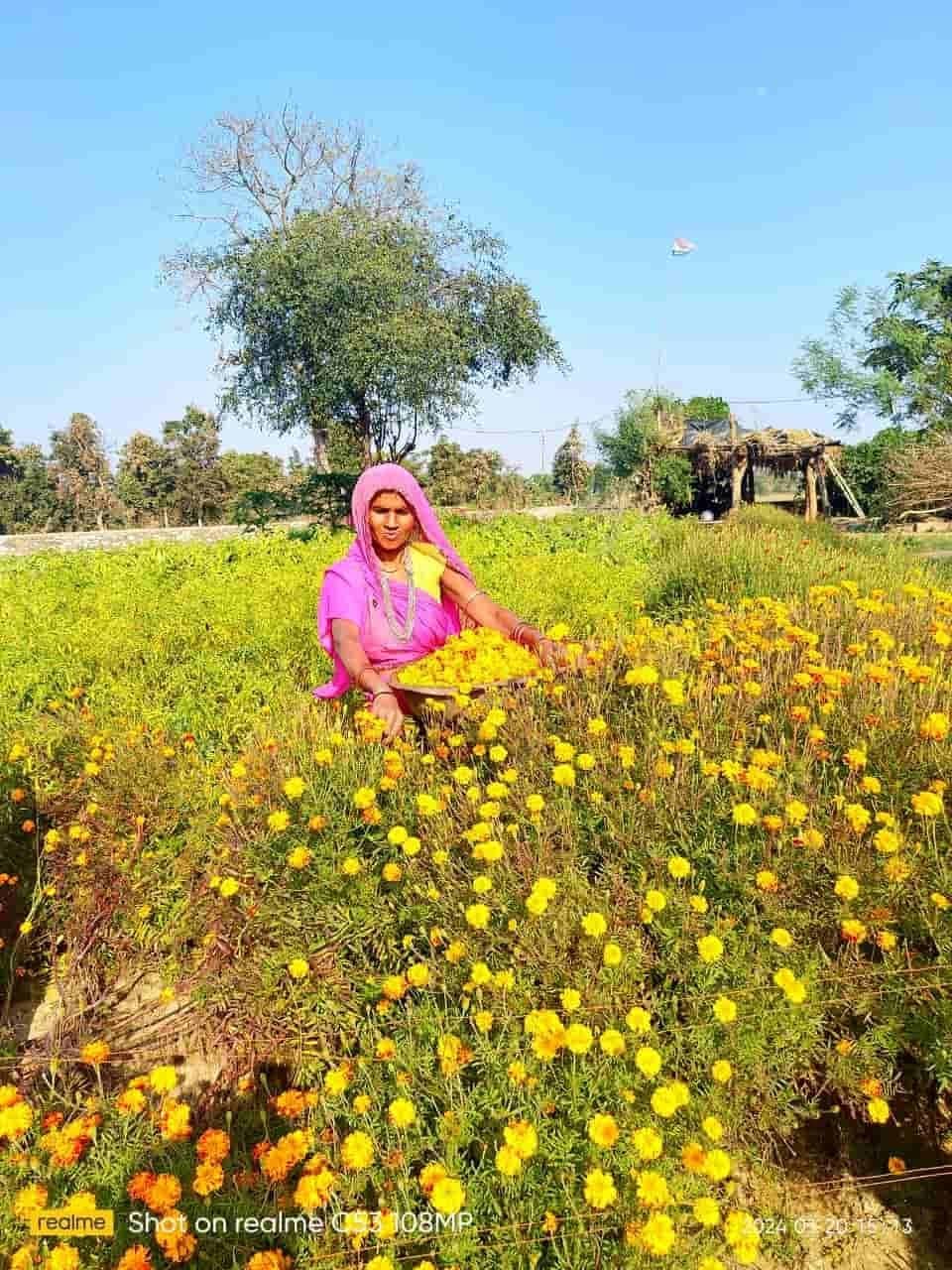
Priyanka Devi finds new purpose and livelihood amidst a colorful array of flowers.
Key Takeaways
1 of 3
Automatically generated. Read full article for complete context.
Mathphala is a village in the Sagot block of Dungarpur district. In the Bamania family here, the burden of feeding seven people had come to rest on the shoulders of Priyanka Devi, the family’s daughter-in-law. Children’s schooling, the elders’ medicines and the daily ration all depended on the maize grown on four bighas of land. Maize is an old companion in this region, but on its own it had never managed to feed the family through the whole year. The family thought that if they also sowed vegetables in the field, a second source of income might open up. But courage without knowledge often proves costly. Sometimes insects devoured the plants, sometimes the accounting for seed and fertiliser went awry, and at the end of the season what they held in their hands was not profit but a slip showing a loss. Sitting on the edge of her field, Priyanka understood one thing clearly: there was no shortage of effort, only a shortage of the right information, and without filling that gap her family could not break out of this cycle.
Giving up was not in her nature. The women of the village often sit in courtyards in the evening, sharing their troubles with one another. Through one such conversation, Priyanka came to join the Dashamata Saksham Group, formed through an initiative of VAAGDHARA . At its monthly meetings, simple, straightforward talks were held on soil health, seed identification and the need for organic farming. It was in these meetings that she learned for the first time that farming dependent on chemical fertilisers and pesticides does not merely burden the pocket; it also slowly drains the life out of the soil. For her, organic farming meant more than returning to old ways. It meant making compost from cow dung and leaves, keeping pests away with neem and cow urine, and treasuring her own land as her greatest asset. What had lain buried in the memories of grandmothers came alive again in the group’s discussions and awakened a new confidence within her. In her own words: “Earlier, I used to sow seeds without knowing anything. Now, having come to the Dashamata Saksham Group, I understand that farming runs not on hard work alone, but on knowledge too.”
The group introduced her to VAAGDHARA’s experts. Keeping the soil of her field, the availability of water and market demand in view, they discussed which crop could survive in her circumstances. Priyanka decided to plant marigold in one part of her four bighas and brinjal in the other. There was careful calculation behind this decision. Brinjal is an everyday kitchen need and brings in cash every week, while marigold is tied directly to weddings, worship and the splendour of festivals. One crop could support daily expenses, while the other offered a chance at big earnings in the festive season. Farming experts say that marigold begins to flower roughly sixty to seventy days after transplanting. The wait, in other words, is not long, and for a small farmer that matters a great deal.
After transplanting the seedlings, Priyanka put everything she had learned to the test. She laid well-rotted cow dung manure in the beds, kept proper spacing between the plants, weeded and hoed on time, and, instead of rushing to chemical sprays at the first sight of pests, tried organic remedies. Within days the plants grew dense and so many buds appeared that the beds looked like a golden carpet. The quality of the flowers was such that buyers in the market snapped them up immediately.
For Priyanka, the biggest change was not merely the money that came in. For the first time, she held earnings over which she had her own right and her own say. From that income she paid the children’s fees, got essential repairs done on the house, cleared debts and set aside some money for the next crop’s seed. She says, “Now my four bighas of land are my support. Today I pay my children’s fees from my own earnings, and the peace I feel in saying this is something I cannot put into words.” In the group’s meetings too, her voice now carries a new confidence, because she is no longer only a learner but a teacher as well.
Today the women of Mathphala come to Priyanka’s field to look over the beds and ask how she prepares her seedlings. She has no textbook, only her own experience, which she shares freely. She tells them that organic methods have reduced costs, softened the soil and given the flowers a distinctive glow. This story inspires precisely because there is no miracle in it. It holds a woman’s courage to learn, the support of a group, and an honest trust in the land.
The marigolds blooming in Priyanka Devi’s field are now more than ornaments in market baskets. They are symbols of the change that comes when women of a community are given knowledge, organisation and opportunity. The Bamania family, once bent under the weight of losses, now plans ahead with confidence. The faith sown in the soil of Mathphala will, in the seasons to come, fill many more courtyards with a golden glow.
Disclaimer:The views and opinions expressed in this article are those of the author(s) and do not necessarily reflect the official policy or position of The Rift.
*Rural EmpowermentLivelihood TransformationMarigold CultivationOrganic FarmingRajasthanVAAGDHARAWomen Farmers