Opening The Rift
therift
© 2026 The Rift. All Rights Reserved.
From Halligudi to France: The Untold Story of Hatha Yogi Mahesh Ghatradyal
That neglect reflects our collective failure to preserve, celebrate, and pass on the legacy of remarkable individuals who emerged from our soil.

Key Takeaways
1 of 3
Automatically generated. Read full article for complete context.
When I think of Halligudi village in Gadag district (Karnataka), what immediately comes to mind is the struggle against the POSCO projectPOSCO ProjectA controversial proposal by a South Korean steel company to build a plant in Karnataka, which faced massive local agitation. during 2011–12. When this South Korean company moved to establish a steel plant in the foothills of Kappatagudda, the agitation led by Tontadarya Siddhalinga Swamiji drew national attention. But what I am about to narrate here is not about that struggle. Rather, it is about Mahesh Mahalingappa Ghatradyal, a man who carried the glory of Karnataka across Europe, from the village of Halligudi to France and Belgium, through his mastery of Hatha Yoga.
Until recently, my familiarity with Halligudi was limited to the anti-POSCO movement and the France-Karnataka Hospital located there. However, when I began learning more about Mahesh Ghatradyal, one thought repeatedly struck me: whether in India, Karnataka, or even in his native district of Gadag, there exists a remarkable lack of awareness about him. Looking at this reality, one cannot help but wonder whether we lack a sense of history or pride in our heritage or have simply failed to preserve and present it for future generations.
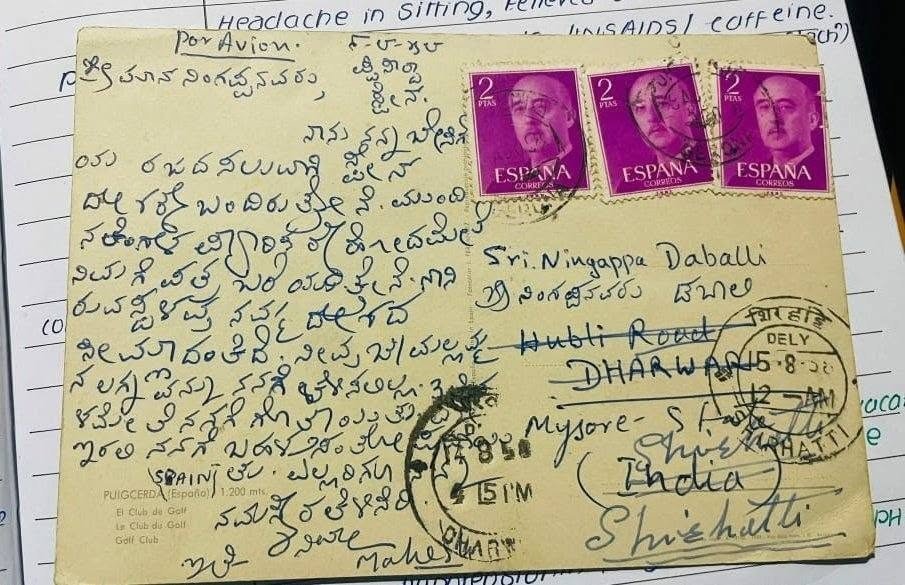
A few days ago, when I shared a brief note about him on social media, my friend Manjunath Arakasali from Shirahatti sent me copies of letters that Mahesh Ghatradyal had written in Kannada to Ningappa Dabali from France and Spain during 1957–58. Those letters left me with a troubling question: Why have we failed to bring such a remarkable individual into public memory? Driven by that curiosity, I travelled from Gadag to Halligudi, a village located about 25 kilometres away on National Highway 67.
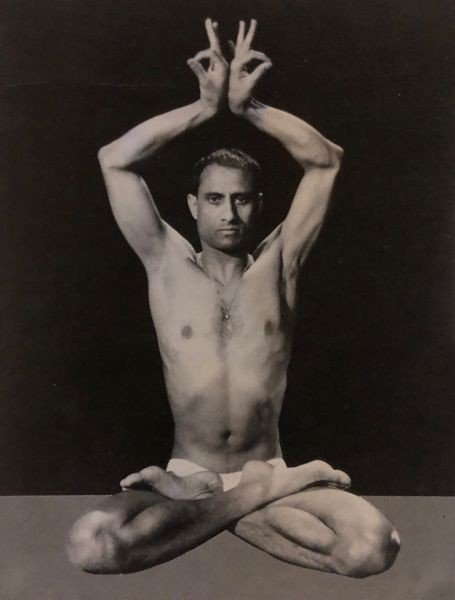
Today, yoga has not only become commercialised on a global scale but has also emerged as one of India’s most effective instruments of soft power. The United Nations now observes International Yoga Day every year across the world. Within the history of yoga, figures such as T. Krishnamacharya, B.K.S. Iyengar, and K. Pattabhi Jois occupy an exalted place. They have received the recognition they deserve both within India and internationally, and abundant literature exists about them in Kannada and English alike. Yet why has Mahesh Mahalingappa Ghatradyal remained neglected? This question continued to haunt me throughout my search for information about him. So, who exactly was Mahesh Mahalingappa Ghatradyal?
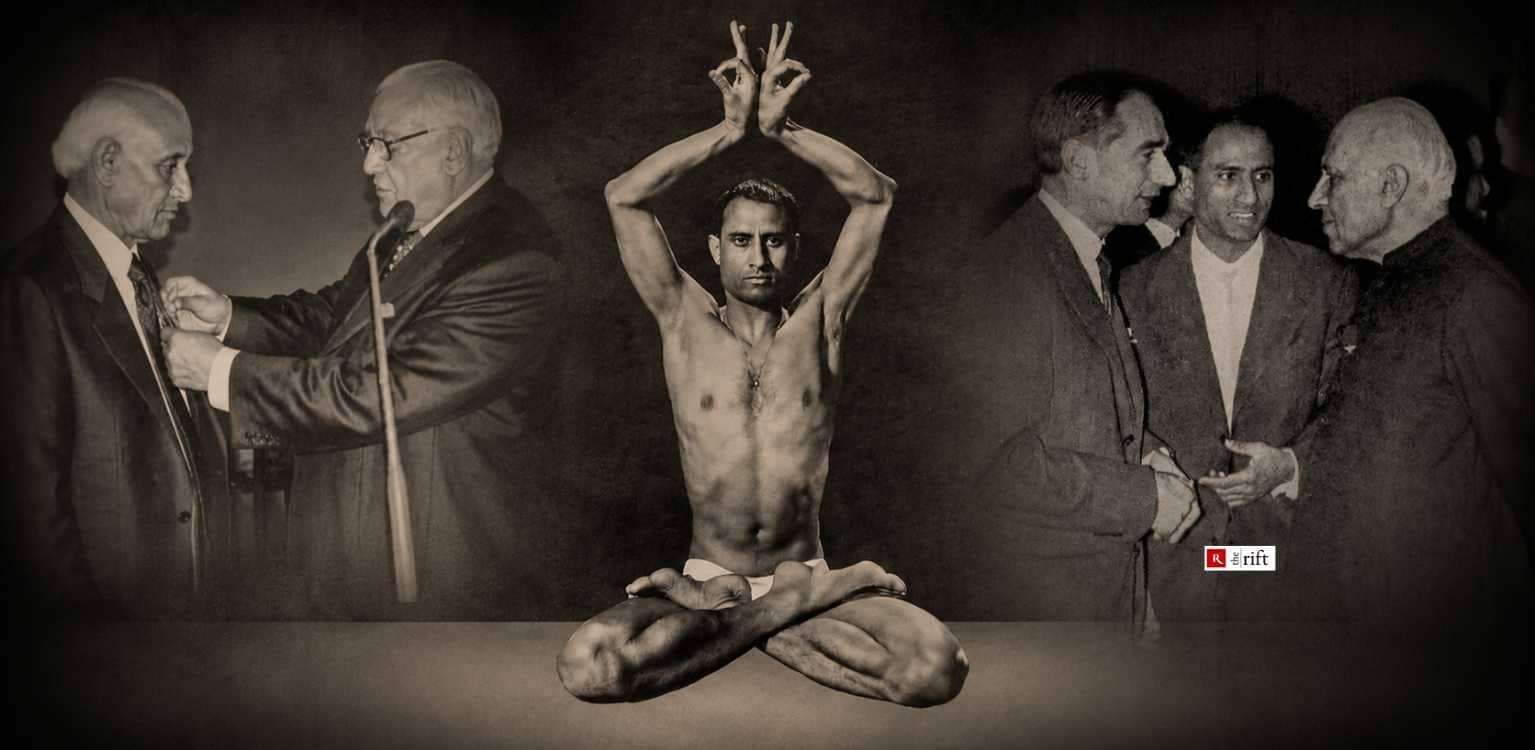
As I began tracing his life, I discovered that during the 1950s he not only introduced Hatha Yoga to France, Belgium, and several other European countries, but also received France’s highest civilian honour—the Legion of HonourLegion of HonourThe highest French order of merit, both military and civil, established in 1802 by Napoleon Bonaparte., established by Napoleon Bonaparte in 1802. Through this achievement, he carried not only the pride of Karnataka but also India’s cultural reputation across Europe.
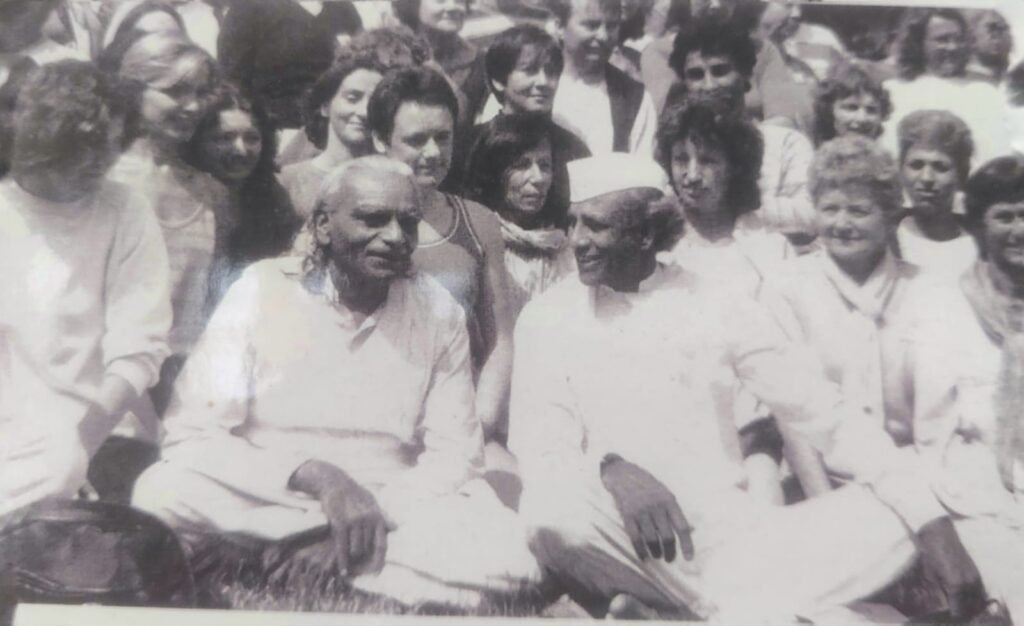
The Journey of Mahesh Ghatradyal
Gadag and its surrounding region, especially during the 19th century, produced several great practitioners of Hatha Yoga. Figures such as Huchchirappajja of Kodikoppa, Rangavadhuta of Betageri, Boodishwara Swamiji of Hosahalli, and Hatha Yogi Kottureshwara of Harlapur continue to occupy a permanent place in public memory.
It was in this land of yogis that Mahesh Mahalingappa Ghatradyal was born on July 11, 1924, in Timmapur, a village of the present-day Gadag district. Having lost both parents during childhood, he was raised by his grandmother. At the age of five, he was sent to Shivayoga MandirShivayoga MandirA prominent Lingayat spiritual and educational center in Karnataka. for spiritual education. Under the guidance of Mrutyunjaya Swamiji, he acquired deep knowledge of the Vedas, Yoga, and the Upanishads. By the age of fourteen, he had already earned a reputation as a skilled yogi and had also emerged as an outstanding runner.
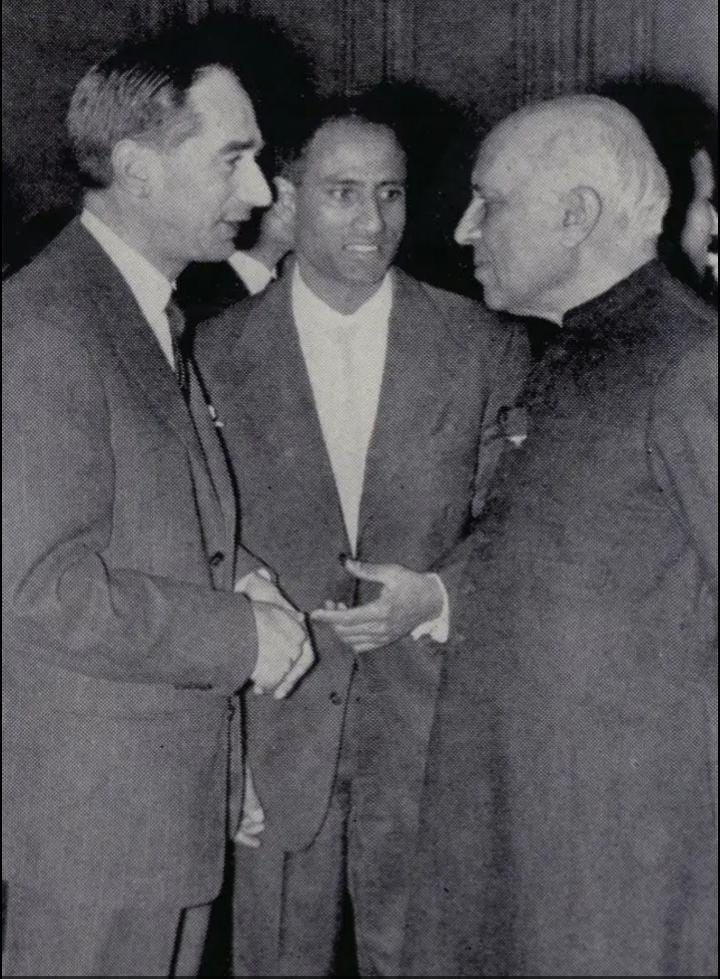
The Yogi Who Introduced Hatha Yoga to France
Mahesh Ghatradyal first travelled to France as an athlete. In 1947, the very year India attained independence, he participated in the World University Games held in France and earned the distinction of carrying the flag of newly independent India.
His interest in sports later opened the doors to higher education. He received a scholarship to study at the École Supérieure d’Éducation Physique in Joinville, near Paris. During this period, he became acquainted with the Russian-born physiotherapist Boris Dolto and his wife, Françoise Dolto. Over time, they came to regard Mahesh almost as a member of their own family.
Boris Dolto was deeply interested in respiratory processes as part of his physiotherapy research, and Mahesh’s expertise in yoga made their association particularly meaningful. Their relationship grew stronger through a mutual exchange of Indian and Western cultural ideas.
Later, Mahesh pursued medical studies in Geneva under Professor Baumann and worked in physiotherapy laboratories between 1947 and 1955. During this period, he participated in experiments exploring the human body’s resistance to cold through yogic techniques. Between 1954 and 1960, he also worked with wounded soldiers and physically challenged children at Percy Hospital and children’s hospitals in France.
A major turning point came when he met Swami Siddheshwarananda of the Ramakrishna Vedantic Centre in France. Although originally from Kerala, the Swami had served at the Ramakrishna Mission in Mysore and spoke fluent Kannada. This common linguistic bond helped foster a close relationship between the two men.
At a time when Mahesh was contemplating a return to India, Swami Siddheshwarananda advised him to remain in France and continue spreading Indian culture. Before his passing in 1957, he encouraged Mahesh to dedicate himself to this mission. Influenced by this guidance, Mahesh abandoned his plans to return home and decided to settle permanently in France.
During this period, he came into contact with influential personalities such as André Malraux (Minister of Culture), Jeanine Auboyer (curator of the Guimet Museum), scholars Jean Filliozat and Paul Mus, child psychiatrist Françoise Dolto, nutritionist Françoise Kaeff, and Robert Salmon, director of the France-Soir newspaper. Drawing upon these connections, Mahesh Ghatradyal founded the Franco-Indian Cultural Relations Centre (CRCFI) in 1959.
The institution played an important role in promoting Indian culture throughout France by organising conferences, dance performances, and music programmes that encouraged cultural exchange between the two countries.
In 1969, he established the Fédération Française de Hatha Yoga (French Federation of Hatha Yoga), becoming one of the first individuals to give yoga education an organised institutional structure in France. Through this organisation, he sought to expand the practice of Hatha Yoga across the country.
In 1971, he founded the Ligue Francophone de Hatha Yoga in Belgium and later extended his influence to Guadeloupe and French Polynesia. In 1974, he launched the journal Yoga et Vie, through which he promoted ideas related to Hatha Yoga throughout France. In 1981, he also established the International School of Traditional Yoga (EIDYT) to train yoga teachers.
A Man Who Never Forgot His Roots
Although he spent most of his life in France, Mahesh Ghatradyal never forgot his roots.
Recognising the lack of adequate healthcare facilities in his native region, he founded an organisation called France Inde Karnataka in France in 1994 to establish a hospital in Halligudi. With the support of this organisation, the foundation stone for the hospital was laid in 1995, and in 1997 the fully equipped France-Karnataka Public Hospital was inaugurated.
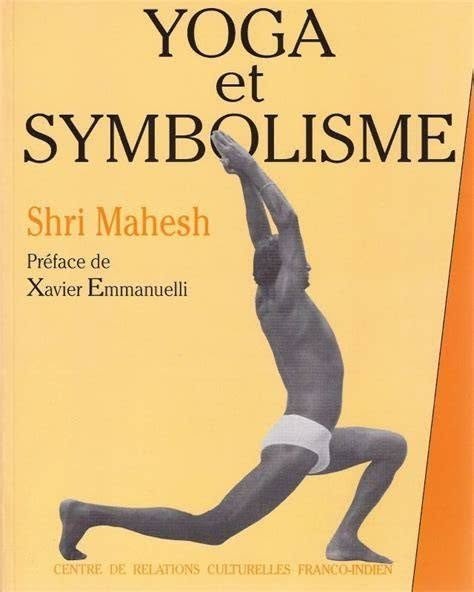
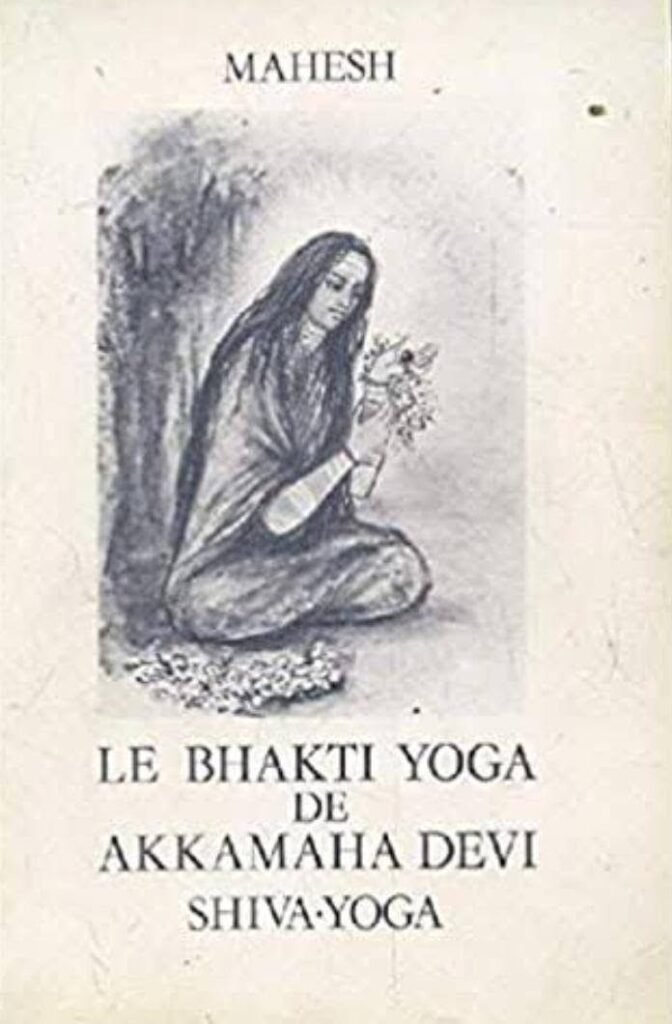
Beyond yoga and social service, Mahesh also devoted himself to literary pursuits. He authored several works in French dealing with yoga philosophy and Indian culture. Among his notable books are Naître en Yoga, La Bhakti Yoga de Akkamaha Dévi, Rêverie de Basava, Atma Bodha, Vedanta, Pardonne-moi, Yoga et Symbolisme, and Le Souffle, Parole de Vie.
Honours and Recognition
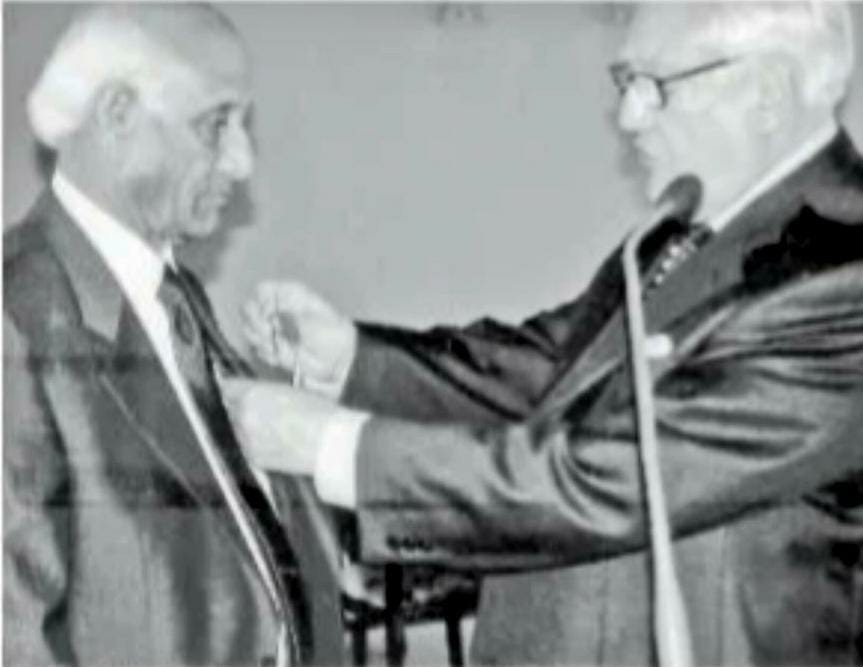
In recognition of his cultural and educational contributions, Mahesh Ghatradyal was awarded the National Order of Merit on December 18, 1996.
Later, on March 25, 2005, he received France’s highest civilian honour—the Legion of Honour.
The fact that Mahesh Ghatradyal stands among the small number of Indians to have received this distinction is a matter of immense pride.
The Forgotten Hatha Yogi
From the small villages of Halligudi and Timmapur to the cultural landscape of France, Mahesh Mahalingappa Ghatradyal played a significant role in introducing both Hatha Yoga and Indian culture.
Though he spent his entire life in France, he never forgot his connection with his homeland. The hospital he helped establish in Halligudi remains a testament to that bond. One may safely say that among those familiar with the history of Hatha Yoga in France, Mahesh Ghatradyal’s contribution is well recognised. Yet, sadly, there remains a striking lack of awareness about his achievements in Karnataka itself. That neglect reflects our collective failure to preserve, celebrate, and pass on the legacy of remarkable individuals who emerged from our soil.
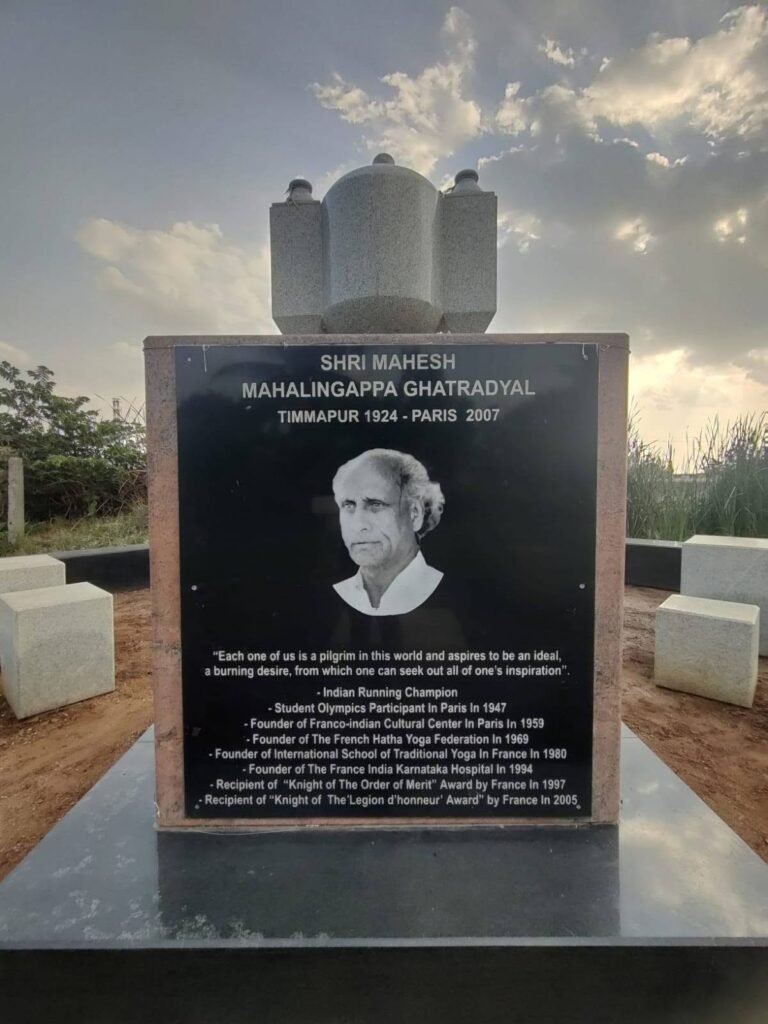
After a life spanning eighty-three years, Mahesh Ghatradyal passed away in Paris in August 2007. His ashes were later brought back to India, and a memorial was erected in his honour within the premises of the France-Karnataka Public Hospital at Halligudi Village in Gadag district.
Disclaimer:The views and opinions expressed in this article are those of the author(s) and do not necessarily reflect the official policy or position of The Rift.
*Mahesh GhatradyalHatha YogaIn-focusIndian CultureKarnatakaLegion of HonourMahesh GhatradyalYoga History