Opening The Rift
therift
© 2026 The Rift. All Rights Reserved.
The Contemporary Relevance of Halma, Sarvodaya, and Gandhi’s Swaraj
Halma presents an entirely different economic model—one that functions without money, where relationships are not measured in currency.

Key Takeaways
1 of 3
“Halma is not merely an agricultural practice; it is a philosophy of life that weaves together community, environment, and self-reliance.”
Automatically generated. Read full article for complete context.
The world today is grappling with complex challenges such as climate change, food insecurity, land degradation, and water scarcity. Despite technological solutions and policy reforms, both the planet’s ecology and human society are moving toward imbalance. Environmental destruction, excessive exploitation of resources, and social fragmentation have become inevitable outcomes of modern development. At a time when humanity is searching for answers, Indigenous (Adivasi) communities through their traditions, lifestyles, and collective wisdom offer an alternative path: one rooted in sustainability, collectivism, and balance.
For centuries, Adivasi communities have maintained a harmonious relationship with water, forests, land, and wildlife. Their traditions, especially HalmaHalmaAn indigenous tradition of collective, voluntary labor for community benefit., the practice of collective voluntary labour, provide powerful inspiration for contemporary development. Halma is not merely an agricultural practice; it is a philosophy of life that weaves together community, environment, and self-reliance.
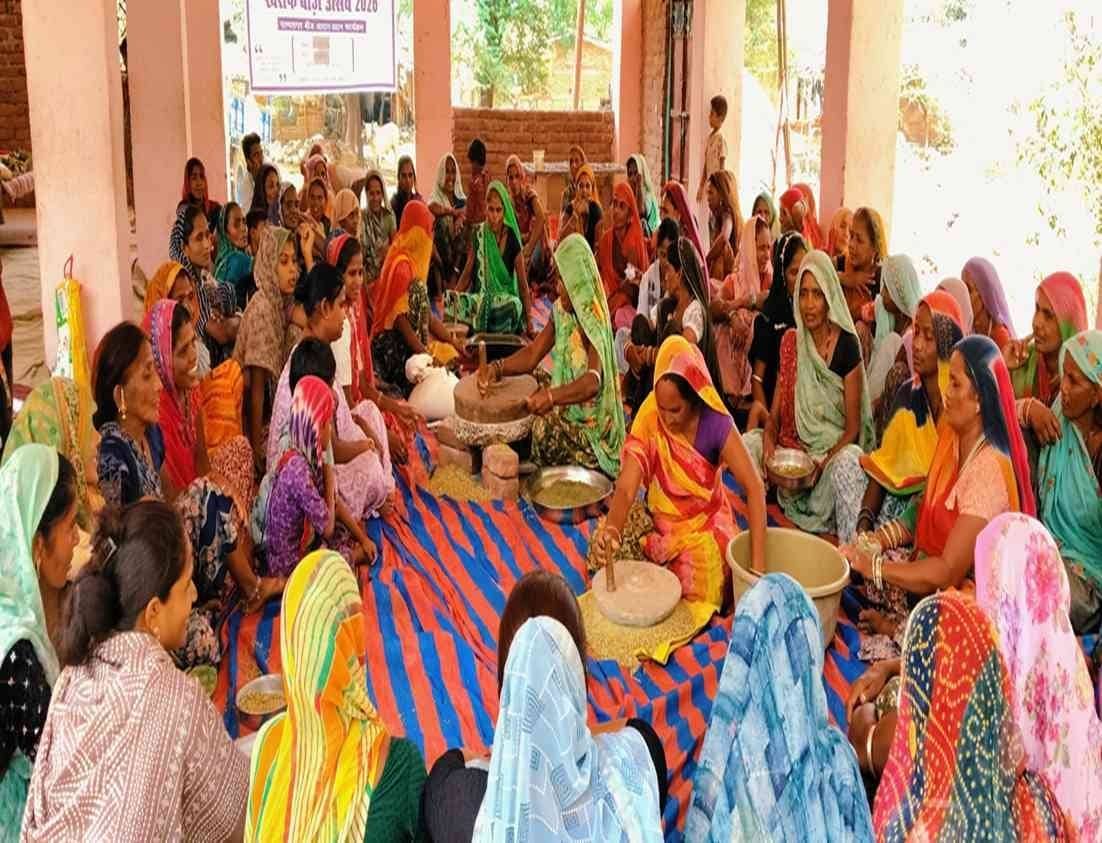
Halma is an ancient Indigenous tradition that has long been practiced among Adivasi communities. It is a unique example of collective effort, where community members help one another, particularly in agricultural activities. There is no monetary transaction involved; instead, everyone contributes their labour. During sowing, weeding, hoeing, harvesting, and other farm activities, all members of the community gather to work on one person’s field.
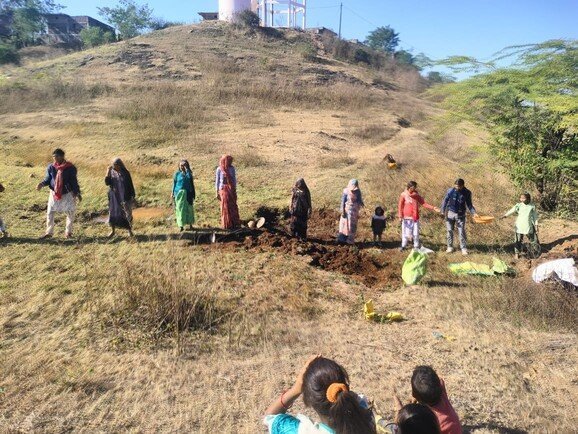
The core objective of Halma is to promote community prosperity and self-reliance through mutual support and cooperation. This tradition demonstrates that with collective consciousness and cooperation, a community can not only secure its economic well-being but also strengthen its social fabric.
The Halma system operates at two important levels, reflecting its flexibility and depth. The first is individual cooperation. When a farmer faces a heavy workload during sowing or harvesting, other villagers voluntarily step in to help. There is no accounting or formal agreement, only trust: the belief that when one is in need, the community will stand by them.
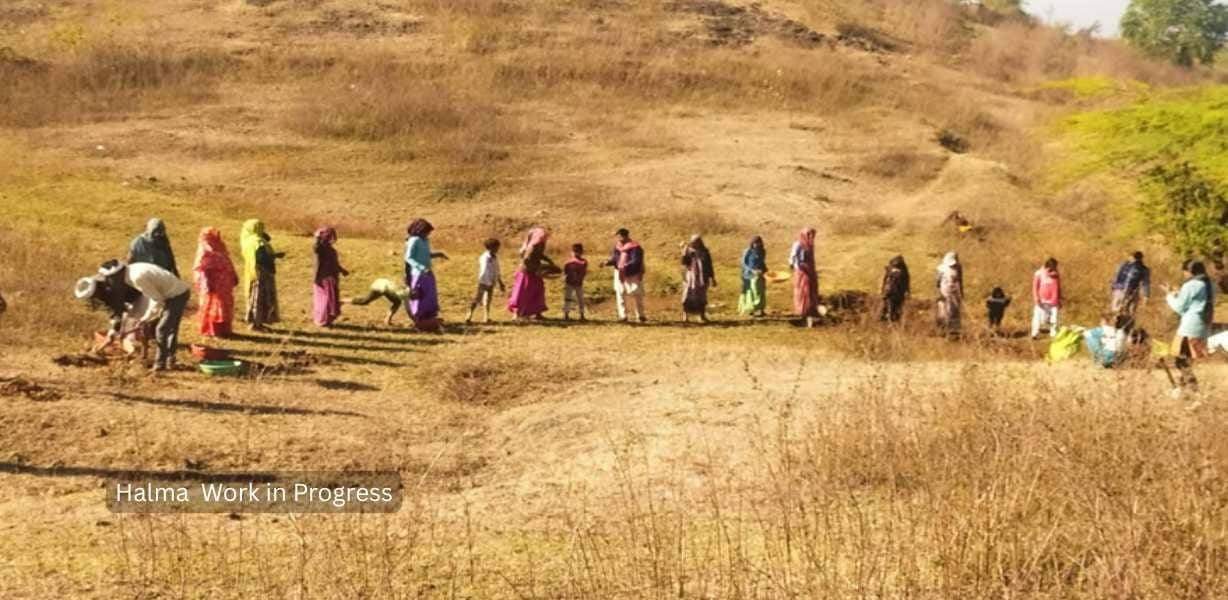
The second level is collective community development. When work is undertaken for the benefit of the entire village (such as digging ponds, building roads, or constructing water conservation structures), everyone contributes labour without wages. This reflects a deep commitment to collective assets and shared development. This two-tier structure makes Halma a comprehensive social system that addresses both individual and collective needs.
The Two Tiers of the Halma System
Level 1
Individual Cooperation
Voluntary help during heavy workloads like sowing or harvesting based entirely on community trust, with no formal accounting.
Level 2
Collective Assets
Labor contributed without wages for the entire village’s benefit, such as digging ponds and constructing water conservation structures.
VISUALS BY THE RIFT
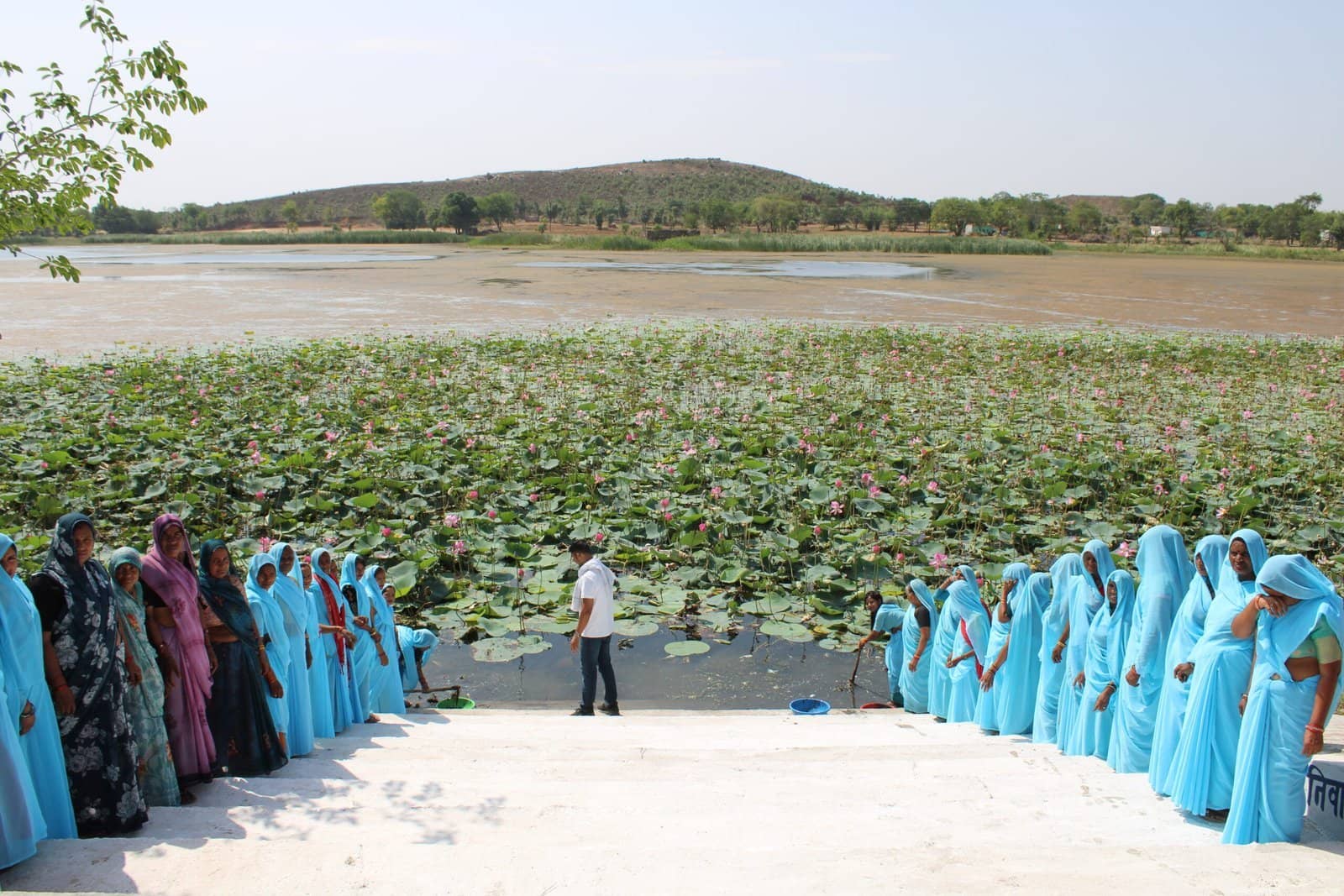
In an era marked by severe water scarcity, the village of GodadiyaGodadiyaA village in the Petlawad block of Jhabua district, Madhya Pradesh. in the Petlawad block of Jhabua district has set a remarkable example by reviving this age-old tradition. Drawing upon their rich Indigenous heritage, villagers came together through Halma to undertake an inspiring water conservation initiative.
At Katara Faliya, located on a high ridge of the village, villagers worked shoulder to shoulder to control water runoff and improve groundwater levels. Using the traditional Halma method, they constructed a gully plug, a small check dam. This effort will ensure water availability not only for daily household use but also for livestock.
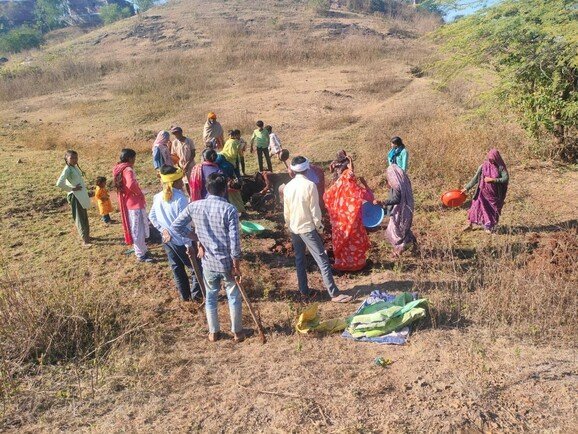
What made this initiative special was its festive spirit. Villagers did not treat water conservation as a burden but celebrated it as a community festival. More than forty families from Katara Faliya participated enthusiastically. Accompanied by the beats of drums, metal plates, and traditional instruments, villagers danced while contributing their labour. Dinesh Katara of the Vagdhara-supported Gram Swaraj Group remarked that if society unites in collective effort, even a crisis as severe as water scarcity can be significantly reduced. Block facilitator Mukesh Porwal emphasized that unity simplifies difficult tasks and leads to more effective outcomes.
The programme was successfully coordinated by community facilitator Deepak Mayda. Many individuals actively contributed to this noble effort, including Dinesh Katara, Poonamchand, Kailash, Hira Dodiyar, and women leaders such as Premlata Damar, Lalita Katara, and Leelavati Singad.
A crucial moment in Godadiya’s water conservation journey came when villagers realized that without immediate follow-up work, the achievements would not be sustainable. Stones were required to prevent leakage from the pond, and these had to be transported from distant locations. This demanding task was collectively undertaken by villagers, with women playing a particularly significant role.
According to Lalita Katara, a member of the Saksham Group, “The work was difficult, but the spirit of unity and cooperation kept us moving forward.” Her words capture the essence of Halma: the power of collective resolve and solidarity even in the face of hardship. Women’s active participation also highlights that Halma is not a male-dominated practice; it is a shared responsibility of the entire community.
From an economic perspective, collective labour reduces dependence on external resources in agriculture. By avoiding wage expenses, farmers save money. Moreover, by completing agricultural and community tasks together, communities reduce their reliance on outside assistance. This self-reliance paves the way for economic freedom and empowerment. When communities meet their needs through their own resources and labour, they gain not only economic strength but also dignity, pride, and self-respect.
Halma also serves as a vital medium for preserving traditional knowledge and techniques. As community members work together, they share agricultural expertise and Indigenous practices, enabling natural and effective intergenerational knowledge transfer. It plays a crucial role in strengthening cultural identity, helping preserve Adivasi traditions and ways of life. Practices like Halma become sources of cultural pride and self-esteem.
Modern economies are currency-centric. Everything is valued in monetary terms, and relationships are increasingly reduced to economic transactions. Labour is treated as a commodity to be bought and sold. Halma, however, presents an entirely different economic model—one that functions without money, where relationships are not measured in currency.
In Halma, there is no transaction, only exchange. Today I work in your field; tomorrow you work in mine. This is not a contract, but trust. Not an account, but a relationship. A person participating in Halma is not merely a labourer; they are a respected member of the community. Their labour enhances their dignity.
Mahatma Gandhi’s concept of Swaraj is deeply connected to the spirit of Halma. For Gandhi, Swaraj was not merely political independence but economic self-reliance, community empowerment, and village self-governance. His constructive programmes emphasized village industries, voluntary labour, and collective action, all embodied in Halma.
When the people of Godadiya come together for water conservation, they bring Gandhi’s vision of Swaraj to life. During India’s freedom struggle, voluntary labour was a powerful tool: people collectively built roads, established schools, and served society. Halma keeps this tradition alive today. Vinoba Bhave’s SarvodayaSarvodayaA philosophy advocated by Vinoba Bhave meaning “Universal Uplift” or “Progress of All”. movement also emphasized collective labour and cooperation. Halma gives practical expression to Sarvodaya’s ideals, ensuring upliftment of all without exploitation.
The role of women in Godadiya’s story is particularly noteworthy. Women such as Lalita Katara, Premlata Damar, and Leelavati Singad not only participated but also provided leadership. In Halma, women and men contribute equally. Women gain a dignified space in the public sphere, participating not only in labour but also in planning and decision-making. Lalita Katara’s statement reflects organized, confident women who assert their voices. When women engage in the creation and management of community resources, their economic rights and empowerment are strengthened.
Halma is not merely an agricultural practice or a system of voluntary labour. It is a way of life that integrates collectivism, cooperation, environmental stewardship, and self-reliance. The example of Godadiya village shows that solutions to modern challenges are embedded in traditional wisdom.
As nations across the world both developing and developed struggle with water scarcity, environmental degradation, and social fragmentation, traditions like Halma offer an alternative path. This path is neither capitalist nor state-controlled; it is one of community-based Swaraj and cooperation.
Today, as we speak of Sustainable Development Goals and strategies to combat climate change, we must look toward Indigenous communities. In their traditions, lifestyles, and practices like Halma, the solutions for a sustainable future are quietly but powerfully embedded.
Disclaimer:The views and opinions expressed in this article are those of the author(s) and do not necessarily reflect the official policy or position of The Rift.