Opening The Rift
therift
© 2026 The Rift. All Rights Reserved.
Kulua—A remote village leads with hope giving initiatives
Kulua village is transforming through community-led initiatives, from water conservation and oxygen gardens to digital libraries, inspiring hope and welfare.

Key Takeaways
1 of 3
Automatically generated. Read full article for complete context.
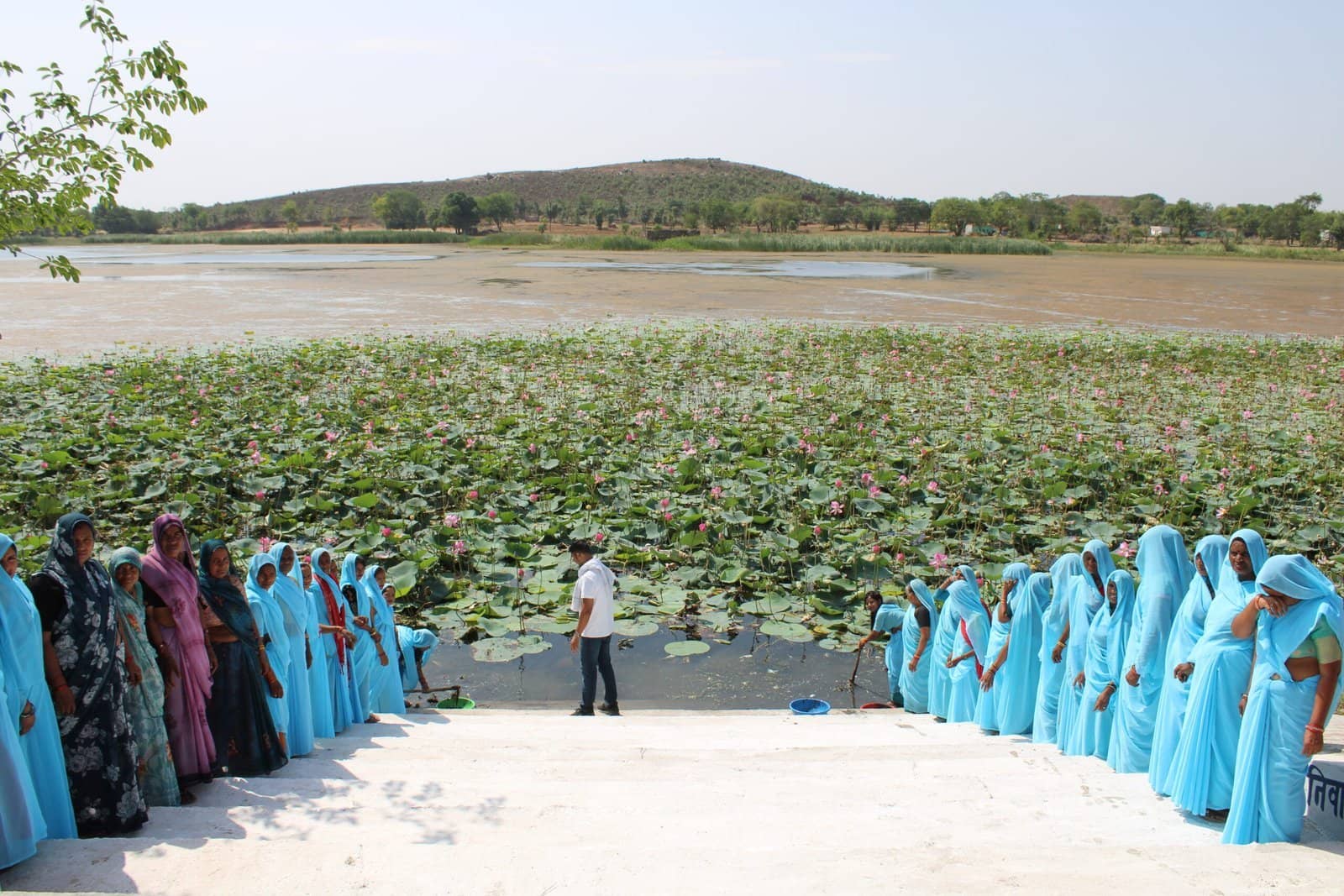
Kulua village in Niwari district (Madhya Pradesh) has an ancient and famous water tank which was once known for its great water collection potential as well as the beautiful lotus flowers growing in the tank. However, in recent years, this had deteriorated due to a lack of repairs, causing almost half of the water to be lost.
Recently a leading voluntary organization of the area Parmarth with the cooperation of the panchayat of Kulua village took up the task of repair and renovation of this tank. This task was undertaken in close cooperation with the village, ensuring that lessons learned from past damage guided the use of appropriate methods and materials in the repair work. As local people explained, it was important to use a specific type of soil for the lower repair work to create stability, while a different kind was needed for the upper surface to prevent slipping. The jal sahelis or women water volunteers associated with Parmarth helped to obtain the support and participation of people for this as well as related work. A good gathering place has been created on one side of the tank so that women who gather here at the time of festivals can have a secure and convenient place. Manoj Pal, who supervised the repair work, said that community involvement helped achieve good results at a relatively lower cost.
Another aspect of this restoration that has attracted considerable attention relates to the planting of trees near the water tank for creating a garden. This is being visualized as an ‘oxygen garden’. Explaining this concept, Himanshu Nayak of Parmarth says, “Generally, the planting of fruit and utility trees is emphasized in such efforts. However in this effort trees which are locally associated with providing fresh air and having health benefits have been given the most priority. Thus, out of the 125 trees planted, nearly half are peepal trees.. The second priority has been given to Pakhar trees, which are similar to bargad or banyan trees. which are like the bargad or banyan trees. Next, we have fruit trees like mango, blackberries, Indian gooseberry, and guava. So this garden will be good for people as well as animals and birds. With a water body located close to the garden, very favorable microclimate conditions can be created. More migratory birds can also start coming here, given the conducive conditions for them.”
Some villagers added that if the big cities can have their gardens, why should not villages also aspire to have their own gardens where they can come for walks and exercise? In fact, officials who came here for the inauguration also suggested—no doubt impressed by the beautiful lotus flowers growing in plenty in the tank—that as the trees grow, this place will become known for its scenic beauty and healthy conditions, attracting many visitors apart from villagers.
This may be for the future, but even more immediately, villagers can hope to gain considerable livelihood support in the form of increased irrigation opportunities and the availability of more lotus products. Prospects of improved fisheries are also being considered, particularly by introducing fish that help to keep water clean, as discussed by some officials during the tree planting work.
The village sarpanch Jaipal Yadav has expressed his appreciation of the many-sided contributions these efforts will make to the welfare of the village, including improving the water table. Water conservation like this forms the base of improved water supply in villages, he said.
The efforts to improve the water situation in this village are also evident in its school, where Parmarth has helped to install a model system of water and sanitation. The local well has been repaired, water coolers are available to provide cold water to children and teachers, and modern toilet facilities have been created. Sanitary napkins are readily available here for girl students.
Another initiative, helpful not only for students but also for village youth in a somewhat higher age group, relates to the creation of a digital library. This is a well-equipped, air-conditioned room with internet connectivity where senior students can take turns for digital study. There are about 20 cabins in this room, each with its own storage facility for students’ notebooks or bags. As the teachers at this school told me, the current idea is that during school hours, students can use this facility, but before and after school, other village youth, particularly those preparing for various competitive examinations, can also utilize it. At present, many of them feel hampered by the absence of proper study conditions at home, and this facility can be one way of meeting their needs.
Kulua Digital Library Capacity
20
Study Cabins Available
100%
Cabins with Storage
VISUALS BY THE RIFT
Disclaimer:The views and opinions expressed in this article are those of the author(s) and do not necessarily reflect the official policy or position of The Rift.