Opening The Rift
therift
© 2026 The Rift. All Rights Reserved.
REOPEN JANTAR MANTAR: The people’s right to protest is not a favour granted
Jantar Mantar belongs in India’s democratic imagination because dissent belongs in India’s democracy.

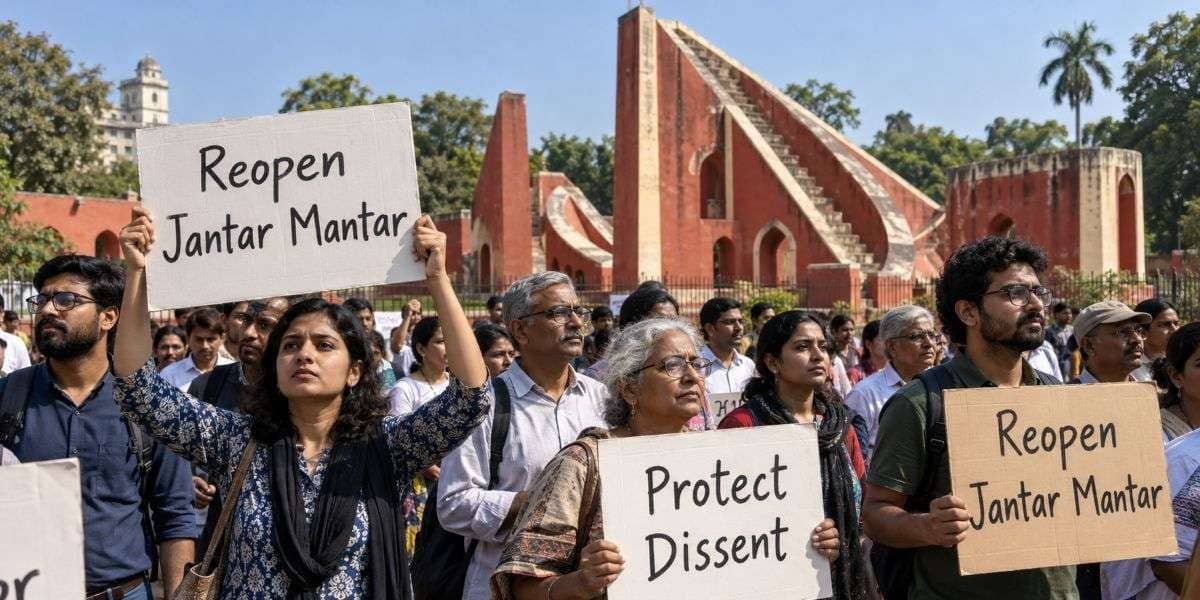
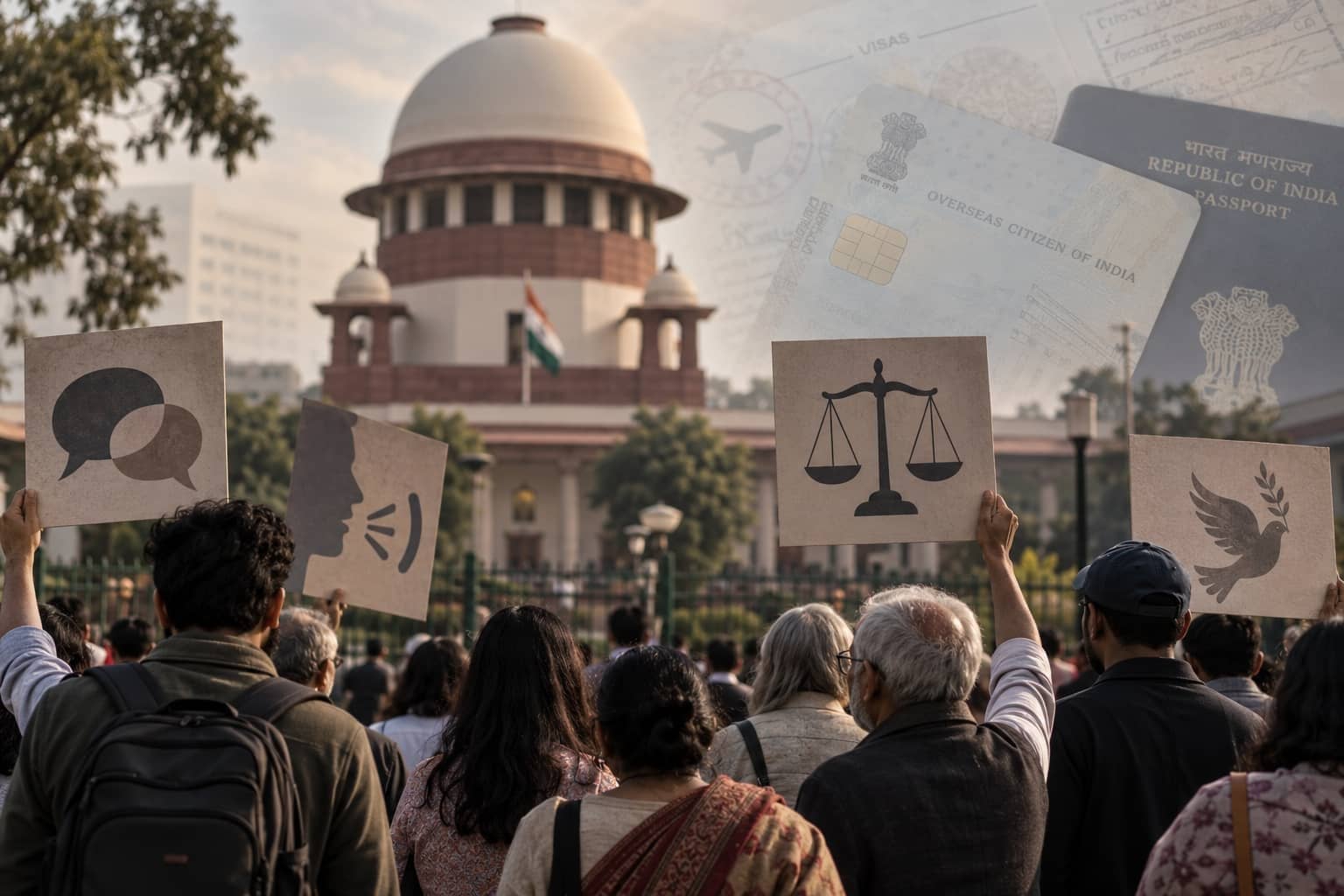
Representative Image
Key Takeaways
1 of 3
Automatically generated. Read full article for complete context.
Unilateral decisions are undemocratic. Jantar Mantar is not merely a location in the heart of New Delhi; it is a symbol of the Indian people’s right to question authority, demand accountability and challenge injustice. For decades, citizens, workers, farmers, students, women, social activists and families seeking justice have used public protest to bring neglected grievances into the national conversation. To restrict access to such a historic space without meaningful public consultation raises serious questions about democratic accountability, constitutional freedoms and the relationship between the government and the people it serves.
Jantar Mantar belongs in India’s democratic imagination because dissent belongs in India’s democracy.
THE CONSTITUTION PROTECTS THE RIGHT TO DISSENT
The Constitution of India guarantees freedom of speech and expression under Article 19(1)(a) and the right to assemble peacefully and without arms under Article 19(1)(b), subject to the reasonable restrictions permitted by the Constitution. These freedoms are fundamental to democratic participation. Citizens are not required to agree with the government, remain silent about injustice or wait for an election before expressing their grievances.
Peaceful protest allows people to draw attention to failures that might otherwise remain unaddressed. It enables communities with limited political influence to question powerful institutions, demand explanations and seek remedies. It also reminds elected representatives that public office is a responsibility entrusted to them, not a licence to govern without scrutiny.
These constitutional rights are not unlimited. Authorities may impose lawful, reasonable and proportionate restrictions to protect public order, safety and the rights of others. But restrictions must have a legitimate basis and cannot simply be justified by the inconvenience that criticism causes those in power.
The essential question is therefore not whether public protest can ever be regulated. It is whether restrictions are lawful, necessary, proportionate and applied without unfairly suppressing dissent.
JANTAR MANTAR IS NOT AN OBSTACLE TO DEMOCRACY
A public protest site is more than a patch of pavement. It offers citizens a recognised place to make collective grievances visible. For people who lack access to influential politicians, wealthy donors or powerful media platforms, such spaces can provide an essential route to public attention.
Jantar Mantar has become associated with movements that have sought justice, institutional reform and political accountability. Its importance lies not in whether every protest succeeds, nor in whether every demand is accepted. Its importance lies in the opportunity it represents: ordinary people can gather peacefully and make their voices heard.
A democracy cannot measure the value of protest only by the government’s response to it. Some demands may be rejected, some allegations may require investigation, and some movements may face legitimate criticism. Nevertheless, the right to express a grievance must not depend on whether the authorities agree with the people expressing it.
Closing or severely restricting a recognised protest space can create a chilling effect. Citizens may conclude that speaking out is futile, that inconvenient demands will be pushed out of public view, or that access to democratic participation depends on official approval of their message.
That is why decisions affecting Jantar Mantar deserve public scrutiny, transparent reasoning and meaningful engagement with the people whose constitutional freedoms are affected.
THE SUPREME COURT MUST UPHOLD CONSTITUTIONAL FREEDOMS
The Supreme Court of India has a vital constitutional responsibility to protect fundamental rights and ensure that executive power remains within constitutional boundaries. The judiciary must examine restrictions on peaceful assembly through the Constitution, applicable law and established legal principles, rather than allowing public protest to be treated as an administrative inconvenience.
In Mazdoor Kisan Shakti Sangathan v. Union of India (2018), the Supreme Court considered the competing interests of peaceful protest, residents’ rights and public order in the context of demonstrations at Jantar Mantar and Boat Club. The judgment recognised the importance of balancing the right to protest with the rights of others and the need for appropriate regulation.
That balance must not become an excuse to extinguish the very freedom it is meant to protect. Regulation and prohibition are not interchangeable. Authorities must consider whether less restrictive arrangements can protect public safety while preserving meaningful opportunities for peaceful assembly.
The Supreme Court must remain vigilant wherever constitutional freedoms are affected by executive decisions. Judicial independence requires neither automatic opposition to the government nor automatic acceptance of its position. It requires impartial scrutiny, reasoned judgments and the protection of constitutional guarantees.
GOVERNMENT CANNOT TREAT CRITICISM AS DISLOYALTY
Those who protest are not enemies of the nation. Questioning government decisions is not an attack on democracy; it is one of democracy’s essential functions. Citizens have the right to demand explanations, expose alleged wrongdoing and challenge policies they consider unjust.
Governments change, political majorities shift, and today’s ruling party may become tomorrow’s opposition. Constitutional freedoms must therefore be protected consistently, regardless of which political party holds power or whose supporters are demonstrating.
A democratic government should have the confidence to hear criticism, respond to evidence and explain its decisions. Silencing dissent does not resolve grievances. It risks deepening public distrust and pushing legitimate concerns away from constructive democratic engagement.
Nor should the right to protest depend on wealth, influence, political connections or access to television studios. A farmer demanding fair prices, a worker seeking unpaid wages, a woman seeking justice and a citizen challenging official misconduct deserve equal consideration under the law.
If authorities have concerns about traffic, noise, security or public convenience, they should address those concerns through clear rules, appropriate facilities and proportionate restrictions. The answer should be to manage peaceful protest fairly, not to make it practically impossible.
TRANSPARENCY, ACCOUNTABILITY AND PUBLIC CONSULTATION
Any decision affecting access to Jantar Mantar must be explained openly. What legal authority supports the restriction? What specific public interest does it serve? What evidence establishes the need for it? Have protest organisers and affected citizens been consulted? What alternative arrangements are available?
These are legitimate questions in a constitutional democracy, not acts of hostility towards the government. Transparent decision-making allows the public to assess whether a restriction serves a genuine public purpose or imposes an unnecessarily broad burden on fundamental freedoms.
Authorities should publish clear procedures for obtaining permission, establish fair and consistent criteria, provide accessible alternatives where necessary, and ensure that decisions can be challenged through appropriate legal channels. Peaceful protesters should not face arbitrary treatment simply because their message is politically uncomfortable.
REOPEN JANTAR MANTAR
Jantar Mantar must remain accessible for peaceful democratic expression under a lawful and workable framework. The people should not have to choose between accepting official decisions in silence and struggling to find a place where their grievances can be heard.
The demand to reopen Jantar Mantar is a demand for democratic space, constitutional accountability and respect for citizens’ voices. It is a call for the government to justify restrictions transparently and for the judiciary to scrutinise them independently.
India’s democratic strength cannot be measured merely by elections, parliamentary proceedings or official declarations. It must also be measured by how the country treats those who disagree with its leaders.
Reopen Jantar Mantar. Protect peaceful protest. Defend the Constitution. No government is above public accountability, and no citizen should be made to feel that questioning authority is a crime. Jantar Mantar is a symbol of the people’s voice. That voice must not be silenced.
HANDS OFF OUR DEMOCRATIC RIGHTS!
Disclaimer:The views and opinions expressed in this article are those of the author(s) and do not necessarily reflect the official policy or position of The Rift.