Opening The Rift
therift
© 2026 The Rift. All Rights Reserved.
Minority Rights in Crosshairs: Eyes on Our Future
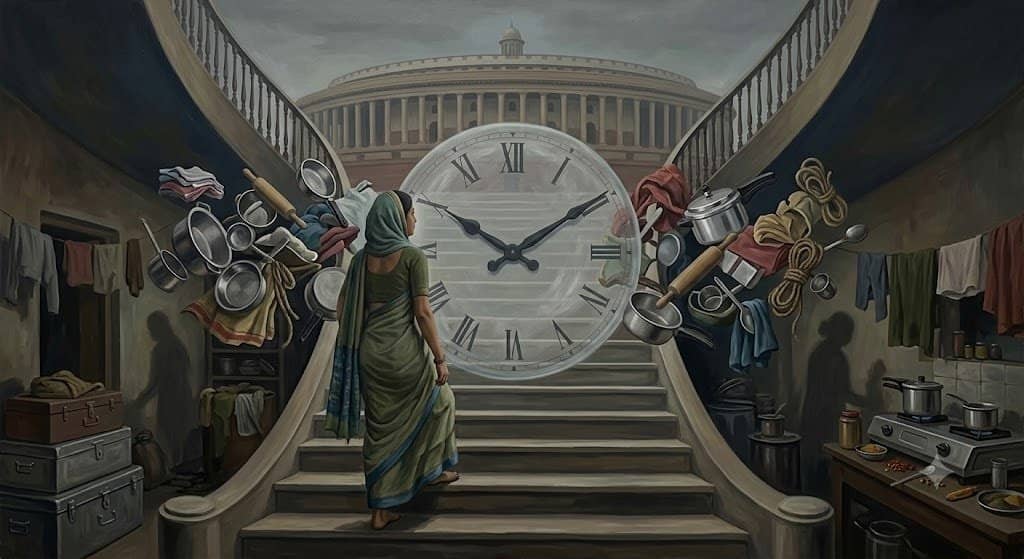
Transforming Article 30 into an ordinary occupational right would convert protective rights into instruments of forced assimilation.

Key Takeaways
1 of 3
Automatically generated. Read full article for complete context.
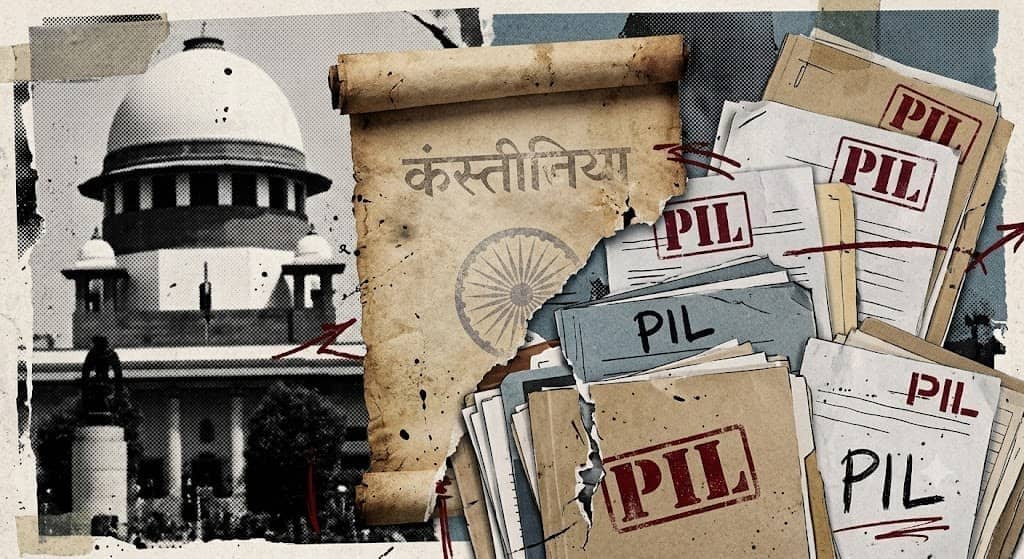
A Public Interest Litigation filed under Article 32 by an advocate is stated to have sought directions to mandate the state registration, recognition, supervision, and monitoring of all institutions imparting education or religious instruction to children under 14 (invoking Articles 21A, 39(f), 45, and 51-A(k)). Crucially, it urged the Court to declare that Article 30 (minority educational rights) does not grant any special privileges beyond Article 19(1)(g) (the general right to practice a profession/trade). Whatever the petitioner’s own purpose, I perceive the reliefs sought as operating directly against the Constitutional rights of minorities in India.
When the petition originally came before the Supreme Court (around May 11), the Court disposed of it by directing the petitioner to submit his demands as a representation to the Union Government to decide upon. According to a report in [name of publication, date], the petitioner has thereafter filed a contempt petition seeking to compel the Government to act on that representation.
The contempt plea, as reported, is constructed in a manner that directly challenges the administrative autonomy and constitutional shelter currently enjoyed by madrasas (and other religious seminaries) under Article 30 of the Constitution. If the Supreme Court accepts the petitioner’s interpretation or directs the Centre to formulate regulations based on these grounds, the impact on madrasas would be substantial across several areas.
Dilution of Article 30 Protections
- Parity with Article 19(1)(g): The petition seeks a declaration that Article 30 confers no special status or privileges beyond Article 19(1)(g) (the fundamental right to practice any profession, occupation, trade, or business).
- Subject to General State Restrictions: Article 19(1)(g) is subject to reasonable restrictions in the interest of the general public under Article 19(6). Stripping Article 30 of its distinct, stand-alone protection would make minority-run institutions vulnerable to broad state interference, reducing their administrative and management immunity.
- The False Dichotomy of Article 26 vs. Article 30: The petition seeks to relegate theological seminaries exclusively to Article 26(a) (religious denominations) : thereby subjecting them to broad state overrides on “public order, morality, and health” : while arguing that Article 30(1) protects only modern, secular educational institutions. This directly defies eleven-judge and seven-judge Constitution Bench rulings, which established that the word “choice” in Article 30(1) is absolute, encompassing institutions imparting purely religious education, secular education, or a blend of both.
Compulsory Registration and Secular Curriculum
- Mandatory Recognition: The plea requests that all institutions imparting education : secular or religious : to children under the age of 14 be registered, recognized, supervised, and monitored.
- RTE Act Compliance & Circumvention of Statutory Exclusion: Under Sections 1(4) and 1(5) of the Right of Children to Free and Compulsory Education (RTE) Act, 2009, madrasas, Vedic pathshalas, and institutions primarily providing religious instruction are expressly exempt. Seeking judicial mandamus or executive fiat to bring them under standard school mandates would circumvent an explicit statutory bar enacted by Parliament. If the Court aligns regulation with Article 21A (Right to Education) over Article 30, madrasas would likely have to implement standard secular subjects (mathematics, sciences, social studies), adhere to prescribed teacher-student ratios, and obtain state recognition. Where qualified B.Ed./M.Ed. teachers from within the community are not available for these subjects, they will be taught by others. Imposing standardized external cadres in this way risks eroding the distinct cultural character and pastoral autonomy of these seminaries.
Curbs on Purely Theological Education for Under-14s
- Age-Based Restrictions: The petition specifically targets children under 14 years of age. A ruling in favour could bar or heavily restrict full-time, exclusively religious or hifz (Quran memorization) programs during compulsory schooling years. Whatever the intention behind it, the effect on a core religious practice of the community would be severe.
- Dual Curriculum Requirements: Madrasas catering to primary and middle school-aged children would either have to integrate a recognized formal schooling syllabus into their daily hours or function solely as after-school/part-time institutions. In practical terms, the burden of this would fall squarely on Muslim institutions and families.
Heightened State Surveillance and Standard Setting
- Infrastructure and Inspection: Recognition brings statutory inspections, infrastructural norms, teacher qualification mandates, and financial auditing by education departments : each a further point of entry for state control over institutions the Constitution meant to insulate.
- Closure of Unrecognized Entities: Standalone or community-funded maktabs and madrasas that cannot meet such statutory school infrastructure criteria could face derecognition or closure. The poorer sections of Muslim society would be the hardest hit.
At this stage, the Supreme Court has only issued notice on a contempt plea seeking the Union Government’s response. However, contempt jurisdiction under Article 129 is strictly confined to willful disobedience of a specific court direction; it cannot be converted into a substantive vehicle to rewrite constitutional doctrine or adjudicate Article 30 rights. The earlier disposal of the writ petition with a direction to the Union to “consider and decide a representation” creates a procedural risk that deserves attention. If the executive were to frame sweeping regulatory guidelines under the pretext of disposing of that representation, the resulting policy would bypass adversarial judicial scrutiny entirely, without any court having actually adjudicated the constitutional question.
This petition, moreover, cannot be assessed in isolation. When read alongside the petitioner’s other filings on record, it forms part of a body of public interest litigation whose cumulative effect, if the reliefs were granted, would be to substantially erode the constitutional autonomy, cultural protections, and community institutions of religious minorities, particularly Muslims.
A Pattern in the Petitions
The petitioner is a prominent political-legal activist who has authored a large number of PILs bearing on the constitutional position of minorities, framed in the language of “uniformity,” “secularism,” and “child rights.” Whatever the sincerity of those framings, the petitions must be judged by what they would do if granted. Read together, they point in one direction:
- Minority Status and Protections: The same petitioner has filed pleas challenging the National Commission for Minority Educational Institutions (NCMEI) Act, challenging the National Commission for Minorities Act, and seeking state-wise redefinition of “minorities” : each of which, if allowed, would dilute federal minority protections.
- Islamic Institutions and Endowments: The petitioner has brought actions challenging the constitutional validity of the Places of Worship (Special Provisions) Act, 1991, challenging the statutory framework governing Waqf properties, and demanding a blanket Uniform Civil Code.
- Redefining Article 30 Out of Existence: By seeking a declaration that Article 30 is merely an echo of Article 19(1)(g) (the commercial right to carry on trade/occupation) rather than a distinct, standalone fundamental right for minorities to establish and administer educational institutions of their choice, this litigation seeks to undo settled constitutional jurisprudence dating back to In Re: The Kerala Education Bill (1958) and T.M.A. Pai Foundation (2002). Its structural effect would be to strip religious institutions of their constitutional shield and expose them to broad state surveillance and discretionary closure.
A reasonable observer, looking at this sequence of petitions, is entitled to ask whether their combined thrust is consistent with the protective purpose of Part III of the Constitution. That question, and not any individual’s motive, is what the Court must confront.
Violations of International Treaties and Conventions
If implemented as prayed, the sweeping state intrusion, forced secularization of theological institutions, and restriction on community-run education would place India in direct violation of several core international conventions to which it is a signatory.
International Covenant on Civil and Political Rights (ICCPR)
- Article 27 (Minority Rights): Expressly guarantees that persons belonging to ethnic, religious, or linguistic minorities shall not be denied the right to enjoy their own culture, profess and practise their own religion, or use their own language. Forbidding or crippling community-run primary theological education violates this positive duty of non-interference.
- Article 18(4) (Freedom of Thought, Conscience, and Religion): Obligates States to undertake to have respect for the liberty of parents and legal guardians to ensure the religious and moral education of their children in conformity with their own convictions. Mandating that children under 14 cannot receive focused religious instruction directly breaches parental rights under Article 18(4).
- Article 26 (Non-Discrimination and Equality Before the Law): Guarantees equal protection and prohibits discrimination on grounds of religion. Regulatory overreach whose burden falls predominantly on institutions serving a marginalized minority offends this baseline equality standard.
UN Convention on the Rights of the Child (UNCRC)
- Article 14(2) & 14(3) (Religious Freedom of the Child): Mandates that States respect the rights and duties of parents to provide direction to the child in the exercise of their right to freedom of religion. Freedom to manifest one’s religion may be subject only to such limitations as are prescribed by law and are strictly necessary : not used to dismantle religious schooling outright.
- Article 30 (Minority Children’s Rights): Explicitly protects children of religious minorities: “A child belonging to such a minority… shall not be denied the right, in community with other members of his or her group, to enjoy his or her culture, to profess and practise his or her own religion…”
- Article 29(1)(c) (Aims of Education): Declares that the education of the child shall be directed to the development of respect for the child’s parents, their cultural identity, language, and values.
International Covenant on Economic, Social and Cultural Rights (ICESCR)
- Article 13(3) & 13(4) (Educational Liberty): Expressly obligates States to respect the liberty of parents to choose for their children schools other than those established by the public authorities, to ensure religious and moral education, and guarantees the liberty of individuals and bodies to establish and direct educational institutions.
1981 UN Declaration on the Elimination of All Forms of Intolerance and Discrimination Based on Religion or Belief
- Article 5(2): Affirms that every child shall enjoy the right to have access to education in the matter of religion or belief in accordance with the wishes of their parents.
- Article 6(e): Expressly recognizes the right to “teach a religion or belief in places suitable for these purposes,” directly encompassing seminaries, madrasas, and religious schools.
The Fundamental Contradiction
The constitutional architecture conceived by the Constituent Assembly gave special status to Article 30 precisely because minorities required an explicit guarantee against majoritarian legislative encroachment. Transforming Article 30 into an ordinary Article 19(1)(g) occupational right, while using Article 21A to shut down or criminalize primary religious instruction, would convert protective rights into instruments of forced assimilation : a result fundamentally antithetical to both Indian constitutionalism and international human rights law.
Litigation of this kind sits uneasily under the label of “Public Interest Litigation.” Where the ostensible or seemingly innocuous relief masks far-reaching constitutional consequences : where one constitutional principle is deployed to effectively undermine another : the proceeding might more accurately be described as a Minority Rights Dilution Litigation, or a Forced Cultural, Religious, Ethnic and Linguistic Homogenisation & Assimilation Litigation (an MRDL or FCRELH&AL), whatever the subjective intent of the person who files it. This is a category of proceeding the Supreme Court ought to actively discourage, as it does in certain instances by imposing heavy exemplary costs.
The Supreme Court would do well to appreciate that the rules of Constitutional interpretation require full effect to be given to all provisions, read harmoniously, and that interpreting one in a manner that negates, dilutes, or destroys guarantees provided by another is not acceptable at all.
In fact, in such cases, the Court must strictly insist on the impleadment of all primary stakeholders : madrasa federations, statutory state boards, stakeholder NGOs, parent associations : and must direct an audit of what the consequences of its order can lead to.
The importance of this audit stems from the fact that when a disinterested State or acquiescent departmental officials simply look away, the risk is that a far-reaching precedent takes shape through executive concession rather than adjudication, affecting the rights of crores of citizens. Community stakeholders cannot remain spectators; they must actively intervene through caveats and counter-petitions to ensure that policy cannot be shaped by unrepresented executive concessions.
Constitutionally guaranteed rights are not to be treated lightly, or eroded. Justice Krishna Iyer’s notable statement : “Legislative futility is to be eliminated so far as interpretative possibility permits” : is a classic, and applies with even greater force to the Constitution than to statutes.
The Supreme Court should refuse to entertain so-called public interest litigations of this nature on foundational grounds of constitutional jurisprudence, separation of powers, and the established rules governing PIL maintainability, recognizing these as proceedings whose structural effect runs contrary to settled constitutional guarantees, operating as an indirect curtailment of minority autonomy under the guise of child welfare, or an indirect abuse of due process.
Separation of Powers and Policy Preemption
- Exclusively Legislative Domain: Deciding how educational systems are structured, harmonizing religious instruction with secular curricula, and setting administrative standards are matters of complex social policy and legislative judgment. Under Article 32, the Court does not possess the institutional capacity or mandate to draft broad educational codes or legislate from the bench. If an overwhelming majority of citizens are of one faith, or if state officials turn a blind eye to consequences, the institutions of state may not be reliable watchdogs on their own, and the balance must be struck with consequence audits by non-State stakeholders, bringing to bear on the sensitive subject expertise from around the world. The minds of future generations are the nation’s greatest asset, and their education cannot be allowed to be steered in directions that minorities themselves find unacceptable.
- Impermissible Judicial Mandamus: Settled law dictates that a writ of mandamus cannot be issued to direct the legislature to enact a law or amend existing statutes (such as the RTE Act, 2009, or minority board frameworks). Directing the executive to formulate regulatory frameworks for thousands of non-formal religious institutions usurps functions constitutionally reserved for the Union and State legislatures.
Subversion of Settled Constitutional Jurisprudence
- Rewriting Article 30 Contra Larger Bench Precedent: Eleven-judge and seven-judge Constitution Benches : most notably in In Re: The Kerala Education Bill (1958), St. Xavier’s College (1974), and T.M.A. Pai Foundation (2002) : have repeatedly affirmed that Article 30(1) is an independent, specialized fundamental right designed as an armour of security for minorities, not a redundant extension of Article 19(1)(g).
- Limits of Article 32 Jurisdiction: A two-judge bench cannot be invited via PIL to whittle down, dilute, or conflate distinct fundamental rights established by Constitution Benches. Entertaining pleas that effectively demand constitutional re-interpretation through PIL sits ill with judicial discipline and the doctrine of stare decisis.
The Court’s Own PIL Guidelines
- The Balwant Singh Chaufal Caution: The Supreme Court’s landmark rulings on the PIL mechanism : such as State of Uttaranchal v. Balwant Singh Chaufal (2010) : laid down strict checks against “publicity interest litigation” and private or political agendas disguised as public causes. Sequential, omnibus petitions on sensitive minority affairs are exactly the kind of filings those checks were meant to be applied to, and the Court should apply them here.
- Lack of Adversarial Balance and Affected Parties: Petitions of this kind typically fail to implead the real stakeholders : minority education boards, parent representatives, and community-run institutions : offending basic principles of natural justice by seeking sweeping declarations behind the backs of those directly affected.
Mischaracterization of Constitutional Harmony
- Harmonious Construction vs. Erasure: Fundamental rights under Part III must be read harmoniously, not used to cannibalize each other. Parliament explicitly enacted Sections 1(4) and 1(5) of the RTE Act to exclude madrasas and Vedic pathshalas, and institutions primarily imparting religious instruction, from the operation of the Act. Those exemptions, introduced by the 2012 amendment, reflect a deliberate legislative judgment that the mandate of Article 21A (Right to Education) was not to extinguish the religious freedoms guaranteed under Articles 25, 26, 29, and 30. Using Article 21A to eliminate primary religious instruction destroys that constitutional balance and overrides the very accommodation Parliament chose to make.
- Disruption of Federal Architecture: Education falls under the Concurrent List, and madrasa administrations are governed primarily by State-level statutory boards (such as the UP Board of Madarsa Education, Bihar State Madarsa Education Board, etc.). Broad petitions before the Supreme Court seeking blanket Union-level mandates ignore the federal distribution of powers.
Entertaining such petitions risks transforming Article 32 from a mechanism designed to protect marginalized groups into a forum for eroding established minority protections.
Jai Hind
Disclaimer:The views and opinions expressed in this article are those of the author(s) and do not necessarily reflect the official policy or position of The Rift.
*Constitutional LawArticle 30Education PolicyIndiaMinority RightsPublic Interest LitigationReligious FreedomSupreme Court