Opening The Rift
therift
© 2026 The Rift. All Rights Reserved.
Why Plan Prepared by Top Rice Scientist Dr. Richharia Has Increased Relevance Now
Dr. Richharia’s plan, based on indigenous varieties and decentralized farming, offers a vital alternative to corporate control and climate threats, promising a silent rice revolution.

Key Takeaways
1 of 3
Automatically generated. Read full article for complete context.
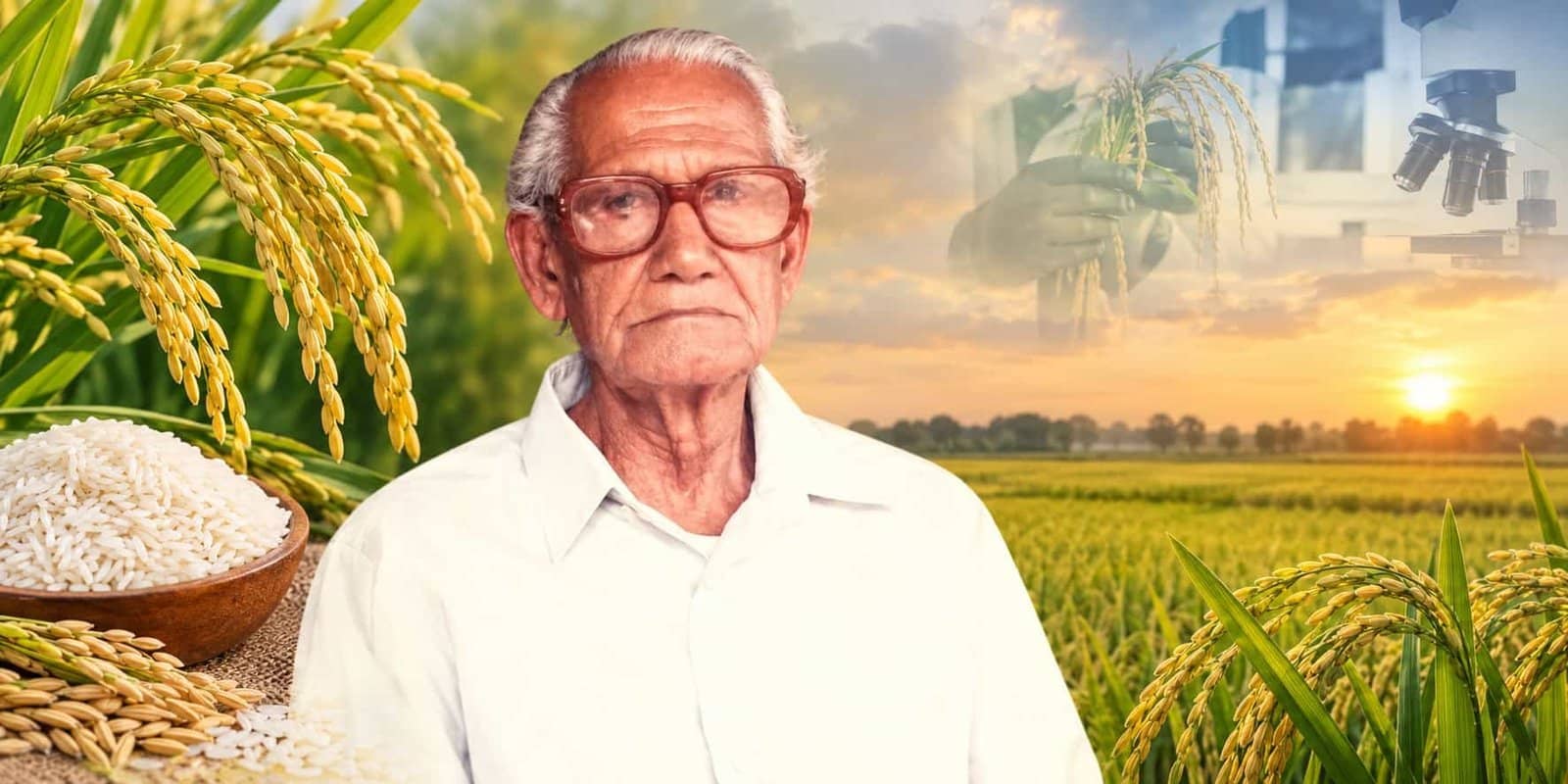
The name of Dr. R.H. Richharia, India’s top rice scientist, is invariably remembered whenever there is a discussion on protecting small farmers and family farms as well as heritage of seed diversity saved by generations of small farmers. He was willing to sacrifice his top official positions and jobs for protecting the interests of farmers and farming. A brilliant student who got his doctorate from Cambridge in record time, he was blessed by his teacher to serve the farmers of India, and he did this with great dedication all his life. Rising fast on the basis of his brilliance to become the director of top rice research institutes, he left an indelible impact on the most important work of protecting and utilizing the immensely rich heritage of indigenous rice varieties. Dr. Richharia himself catalogued thousands of rice varieties and cultivars with their characteristics in a rice encyclopedia, a work he pursued for years and which he showed me during my visit to his home. with their characteristics in a rice encyclopedia on which he was working for years and which he showed me at the time of my visit to his home.
He also kindly shared with me a copy of a plan for rice suited best to conditions of India which he titled ‘A silent rice revolution – a specific plan of action for increase in productivity of rice’. With his permission I also included this plan as well as its summary in a book I wrote soon after meeting him titled The Work and Life of Dr. R.H. Richharia. While this plan was prepared in the context of India, a lot of what it says has a wider relevance for several other countries which grow rice as a leading crop. This specific plan of action was formulated by Dr. Richharia at the request of the Prime Minister’s office in 1983-84. However, following the tragic assassination of Mrs. Indira Gandhi in 1984 somehow the plan got neglected. This is a particularly suitable time to revive this plan keeping in view new emerging risks.
Dr. Richharia, who lived and worked independently in Bhopal at that time, soon suffered great health deterioration due to the Carbide gas leak disaster and could not follow up the matter on his own. However when this writer met him well before his death, he still had hopes that one day this document will prove very helpful for rice farmers and farming. In any case this will always remain an invaluable document for all sincerely concerned with this task and there should be wider information about this.
An idea about the stature of Dr. Richharia can be had from the fact that even though in the era of spreading the false hopes of the so-called green revolution the government victimized him while he was holding the top rice scientist job in the country, his learning was considered so important that the government was constrained on three occasions to recall him from his retirement to seek his advice and give him important responsibilities. He was for several years the Director of Central Rice Research Institute (CRRI-Indian’s more important center of rice research), a post which he left in the early days of the green revolution in stormy conditions in the mid-1960s. He was first recalled to head a national task-force on rice breeding, then to set up a rice research institute in Raipur (Chhattisgarh (at that time a part of Madhya Pradesh)) and then finally he was contacted by the Prime Minister’s office to prepare a plan for improving rice yields.
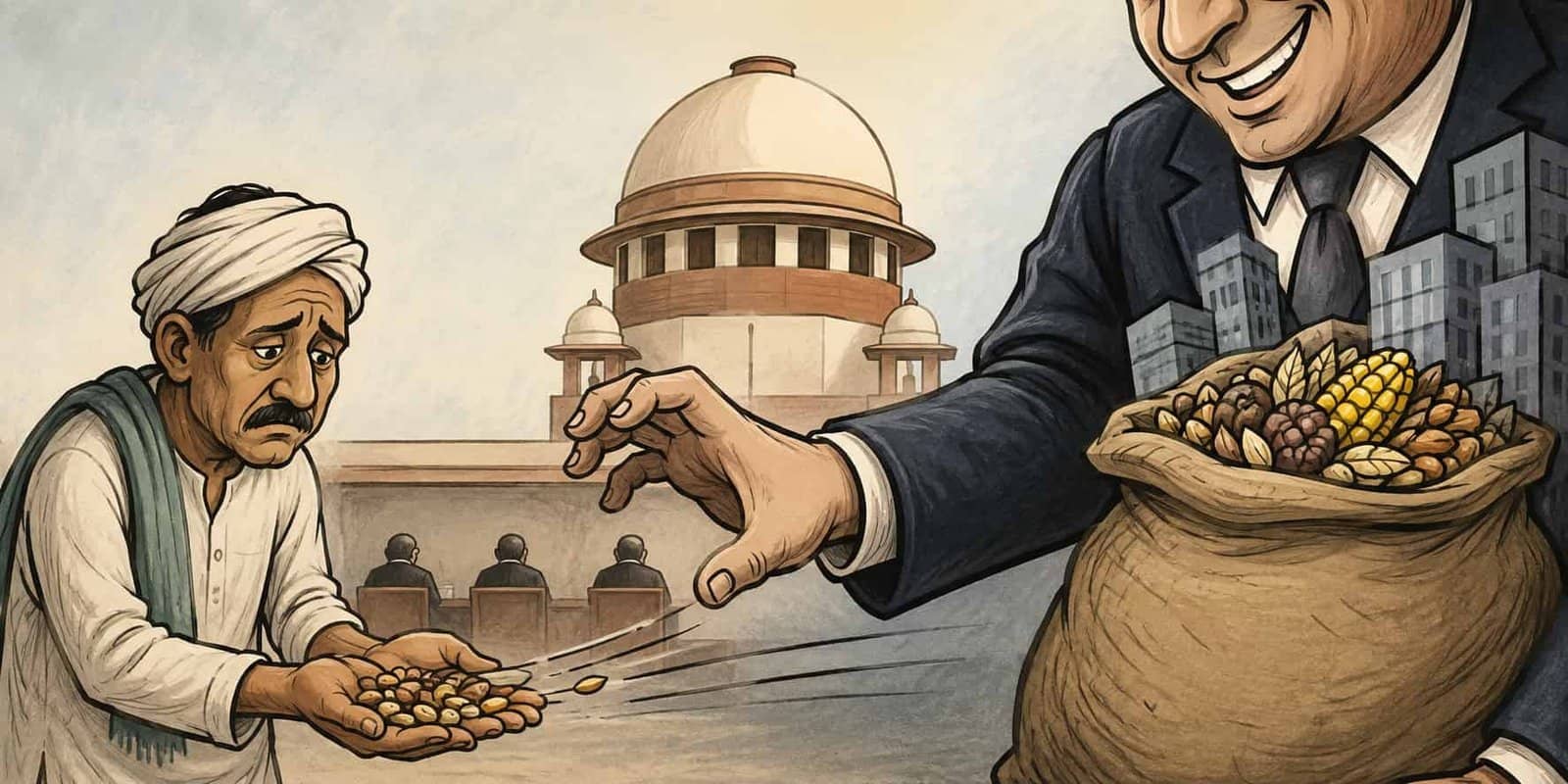
The rice plan prepared by Dr. Richharia has become even more relevant in recent times due to three factors. Firstly, as the threat of climate change has increased, it has become even more important to adopt natural farming, avoiding chemical fertilizers, pesticides, and herbicides. As an original resistor of Green Revolution technology, particularly in the context of rice, Dr. Richharia’s ideas and plans are more relevant today, given the increased need to reduce the fossil fuel burden of farming. Secondly, as indigenous varieties, which evolved over several generations through farmers’ efforts, are most important for natural farming, Dr. Richharia’s ideas and plans—based on protecting these varieties—have become even more important. This becomes even more important given the highly disastrous efforts to impose and spread gene-edited rice varieties. varieties. Thirdly, the present times are times of big business interests and multinational companies trying very aggressively to seize control of world food and farming systems at the cost of small farmers and family farms, in the process also causing grave harm to rural communities as well as to health and environment. The more their technologies, like GM and GE crops, are exposed through legal cases relating to serious health hazards, the more desperate these entities become to seize increasing control (learning from mistakes is not in their dictionary). Due to these three factors, the ideas and work of Dr. Richharia, who stood up so bravely against big business pressures, have become of increasing importance not just in India but in the entire world, particularly the global south.
Now we come to Dr. Richharia’s ‘specific plan for action for increase in productivity of rice’. First he identifies the factors which have retarded the increase in rice productivity despite so much increase in investments in the form of fertilizers, pesticides, irrigation, research, extension etc. Then he gives his plan. In brief Dr. Richharia’s plan has four basic components –
- Rice development to be based on the rich diversity of indigenous rice varieties which should be saved on farmers’ fields and a lot of priority and attention should be given to this aspect;
- A highly decentralized extension approach;
- Large scale adoption of clonal propagationAsexual Plant ReproductionA method of plant reproduction that creates genetically identical copies (clones) of a parent plant from a single cell, tissue, or organ. technique to spread improved indigenous varieties and
- Very high levels of involvement of rice farmers with special emphasis on encouraging those farmers who have special skills and interest in protection and promotion of diverse indigenous varieties.
According to Dr. Richharia (all quotes from the plan) “The main constraint has been the hurried introduction of undesirable new rice material—the HYVs or High Yielding Varieties (dwarfs)—on which we based our strategy, simultaneously overlooking unexpected drought situations under which HYVs lowered yields. or High Yielding Varieties (dwarfs) on which we based our strategy, forgetting at the same time unexpected drought situations, under which the HYVs lowered the yields. In addition, under heavy fertilization and irrigation the HYVs proved to be susceptible to diseases and pests, which cannot be controlled easily, thus again pointing towards a reduction in yield. Further, unlike wheat and sugarcane, the concept of ‘wider adaptability’ in rice has a limited scope for application (not exceeding 10 per cent of the rice area). This has naturally led to local preferences of different types of rice and socio-economic adjustments, developed in course of time.” So, Dr. Richharia concludes, when the base itself is weak (referring to the new rice material), a mansion built on it must collapse. In other words what he was stating was that rice development should not take place on the limited genetic base of exotic green revolution varieties.
Fortunately, indigenous high-yielding varieties adapted to local environment are available in the country. In a survey carried out in Madhya Pradesh (which then included Chattisgarh) between 1971-74, 8 per cent of the indigenous rice types were observed to fall under the category of high yielding types, with a minimum yield of 3705 kg/Ha. In view of this there is a need to redefine ‘HYVs,’ which hitherto have been officially identified only with exotic dwarf, fertilizer-responsive varieties, so that indigenous high-yielding seed varieties can be recognized more clearly. Many of these varieties are also widely appreciated for their other distinctive traits such as better cooking quality of various kinds, aroma, fragrance etc.
Dr. Richharia recommends strongly, “It is high time that the country’s 1964-65 breeding program, which nearly stands suspended, is resumed to exploit indigenous rice germplasm. This is especially pertinent given the observations recorded above, as about 445 improved varieties—bred for specific stress situations and showing environmental resistance to diseases and pests—were available and would still be available in the country., is also resumed in the light of the observations, recorded above, when about 445 improved varieties, bred for specific stress situations, showing environmental resistance to diseases and pests were available, and would be still available, in the country. It is not too late and the strategy formulated in this program, mainly based on our rice genetic resources may be accepted which also contemplates that the indigenous germplasm in its hybridized form (hybrid rices) has also bright future to enhance rice productivity.”
Selection work (genetic upgrading) with indigenous rice types was resumed by Dr. Richharia in 1968 after leaving Cuttack “About 1500 improved types (improved versions) and eleven composites were developed and made available by 1978 selected from about 7800 principal indigenous rice cultivars. The approach was to release this hidden production force, which remains unnoticed, unrecognized, and confined to certain localities with individual growers.”
“For high yield potential, genetic upgrading of adapted rice varieties (indigenous rice germplasm) with certain manipulations—such as the evolution of new hybrids and exploiting hybrid vigor using pure material of local types—is the only course left for speedy recovery of loss and to stabilize rice production at a higher level. This approach is preferable to waiting to replace our rice with other rice material of doubtful nature, which may or may not adapt to stabilize yields in India’s variable rice-growing environments.”
In the area of research as well as extension, Dr. Richharia recommends a highly decentralized approach. This, he emphasizes, is inherent in the nature of the rice plant: To quote, “If we were to think of a single characteristic feature of the rice plant, which yields food for millions, it cannot be anything other than its variability in the form of thousands of its cultivars, spread across India and other rice-growing belts of the world. This is because of the rice plant’s flexible genetic make-up and mutational power of adaptation.” So he recommends the establishment of a wide network of “adaptive rice centers” in all rice growing areas.
“The adaptive rice centers will be the custodians of all local rice cultivars in their respective localities, assembled immediately and supplemented, if necessary, by already available local materials at different research centers. They will be maintained in their natural habitat to safeguard the future. They will be known as local treasuries of rice germplasm, (a term suggested by Dr. Frankel of Australia).”
The function of the centers will be : –
(a) To maintain the evolved rice genetic material for future studies and use, as it is practically impossible to retain it in its original form at a central place in India or abroad. It can only be maintained in its original condition in its natural habitat, seeking help from the rice growers themselves.
(b) To educate young farmers to appreciate the value and importance of their own material, adding new ones as a hobby.
On the basis of his wide experience Dr. Richharia says “Invariably, I found several rice growers in rice areas taking keen interest in their local rice varieties; they are very much absorbed in them and have all praise for them, tracing back the history of individual rice varieties to their ancestry and utility. Such selected and devoted rice farmers will be put in charge of the centers. I also observed that some of them identify their rice varieties in their own way (not in terms of modern botanical knowledge), amounting to thousands. This inherent and intuitive facility for the selection and maintenance of thousands of rice cultivars, gradually accumulated and passed down for unknown centuries since rice first originated, must be preserved and exploited for the advantage of the present generation and to ensure the safety of those still unborn.”
“On the practical side, a beginning may be made in M.P. (the state of Madhya Pradesh, which then included the Chhattisgarh region where much of Dr. Richharia’s work was done), where upgraded material already exists in the form of about 1500 improved types derived from growers’ own rice cultivars. These can be distributed to different centers for work to be started immediately, to obtain advantages as early as possible and to prepare hybrid material for the next season.” On the basis of his experience in Madhya Pradesh, Dr. Richharia stresses that women will prove to be the most important link in introducing this technology. At the Adaptive Rice Research Centre in Baronda, Dr. Richharia noticed that women workers absorb new methods and ideas very quickly. Here he had specially promoted some women workers as supervisors for managing the germplasm of over 17000 rice cultivars in the field and the practice of clonal propagation.
For rapidly spreading improved, upgraded varieties and for exploiting their hybrid vigor, the clonal propagation technique can yield very good results. “It will also be demonstrated that healthy seeds, obtained by clonal propagation for a full crop of rice to follow, give nearly 20% higher production for any rice variety.” Further, hybrid clones for exploiting hybrid vigor can be obtained. Hybridization work will be carried out by the trained field workers of the adaptive centers.
“Clonal propagation in rice, as a means of raising pure seeds to offer 20 percent higher production, and the extension of this technology to exploit hybrid vigor to obtain 50 percent increased yields, remain unexploited. This great discovery of immense value is left unheeded, despite the existence of 19 thousand rice cultivars coupled with their 1500 improved versions, representing intense variability, assembled from the least understood rice areas of M.P. (Chhattisgarh, Bastar, Abhujmal tracts, etc., inhabited mostly by tribals).”
In a big part of the country the rice crop is ruined by drought conditions and in another significant part by flood conditions. In this context Dr. Richharia’s plan is all the more invaluable as it incorporates resistance to floods as well as drought conditions, not to mention disease and pest invasions.
Dr. Richharia’s documents from his work at Raipur mention several drought-resistant indigenous varieties discovered during fieldwork in the Chhattisgarh region, and above all, the immense diversity of the rice varieties grown. A special advantage of this in distress situations such as drought is that while some varieties suffer, some survive and so yield doesn’t go below a certain level. Regarding flood situations, the clonal propagation method offers special advantages. It has been demonstrated that rice clones show resistance to submergence.
Dr. Richharia further expressed his support for organic farming and several local practices of farmers. He wrote that under this plan, “the agronomic practices such as biasi, rotation of crops, and mixed cropping will remain common and will not be disturbed, with emphasis being on the use of organic manures, such as compost, green manure, neem cakes, and oil cakes, etc.”, rotation of crops, mixed cropping will remain common and will not be disturbed ,emphasis being on the use of organic manures, such as compost, green manure, neem cakes and oil cakes etc.”
Dr. Richharia attached 17 documents based on his earlier research to support his plan while submitting it to the then Prime Minister. In addition he mentioned his Encyclopedia of Rice Cultivars on which he was still working. He also offered his services on an honorary basis for implementing this plan.
However, the collections of improved rice varieties he mentioned (mostly arising from his own work and that of his colleagues) may not be available to the same extent today compared to when this plan was prepared. Similarly, the knowledge of indigenous varieties in villages may be comparatively less now. However, this is all the more reason why the implementation of this plan should not be delayed any further, as with the passage of time, the neglect and loss of indigenous varieties may make such tasks and initiatives even more difficult.
This plan also shows the great importance of the work being done sincerely and quietly by those who are quietly and sincerely protecting indigenous rice varieties and other seeds in various parts of the country.
All these issues are also very important in the context of the ongoing debate on the disastrous efforts to spread gene-edited rice. Hence, those activists who are resisting this should also try to share these ideas and Dr. Richharia’s plan regarding the alternative approach that is needed.
Disclaimer:The views and opinions expressed in this article are those of the author(s) and do not necessarily reflect the official policy or position of The Rift.
*Rice CultivationAgricultural PolicyClimate ChangeDr. R.H. RichhariaGreen RevolutionIndiaIndigenous VarietiesSustainable Agriculture