Opening The Rift
therift
© 2026 The Rift. All Rights Reserved.
The Seed Mother of Seranagla , How Kankudevi Is Sowing Hope Back into the Fields
When a seed is lost, an entire cultural vocabulary disappears with it. Kankudevi is restoring the pride of her traditional crops, which are her identity.

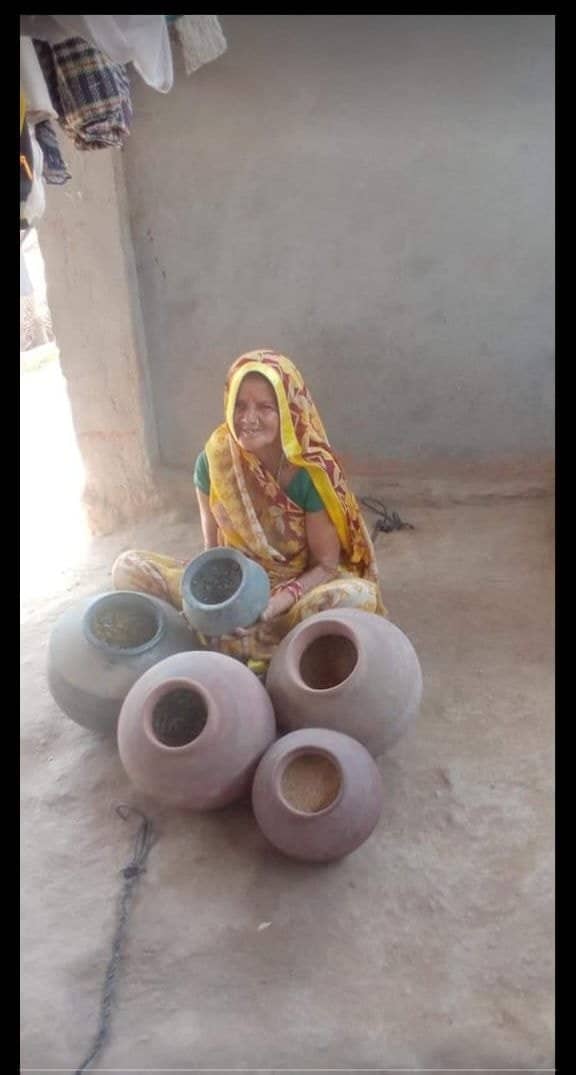
When a seed is lost, an entire cultural vocabulary disappears with it. Kankudevi is restoring the pride of her tradition
Key Takeaways
1 of 3
Automatically generated. Read full article for complete context.
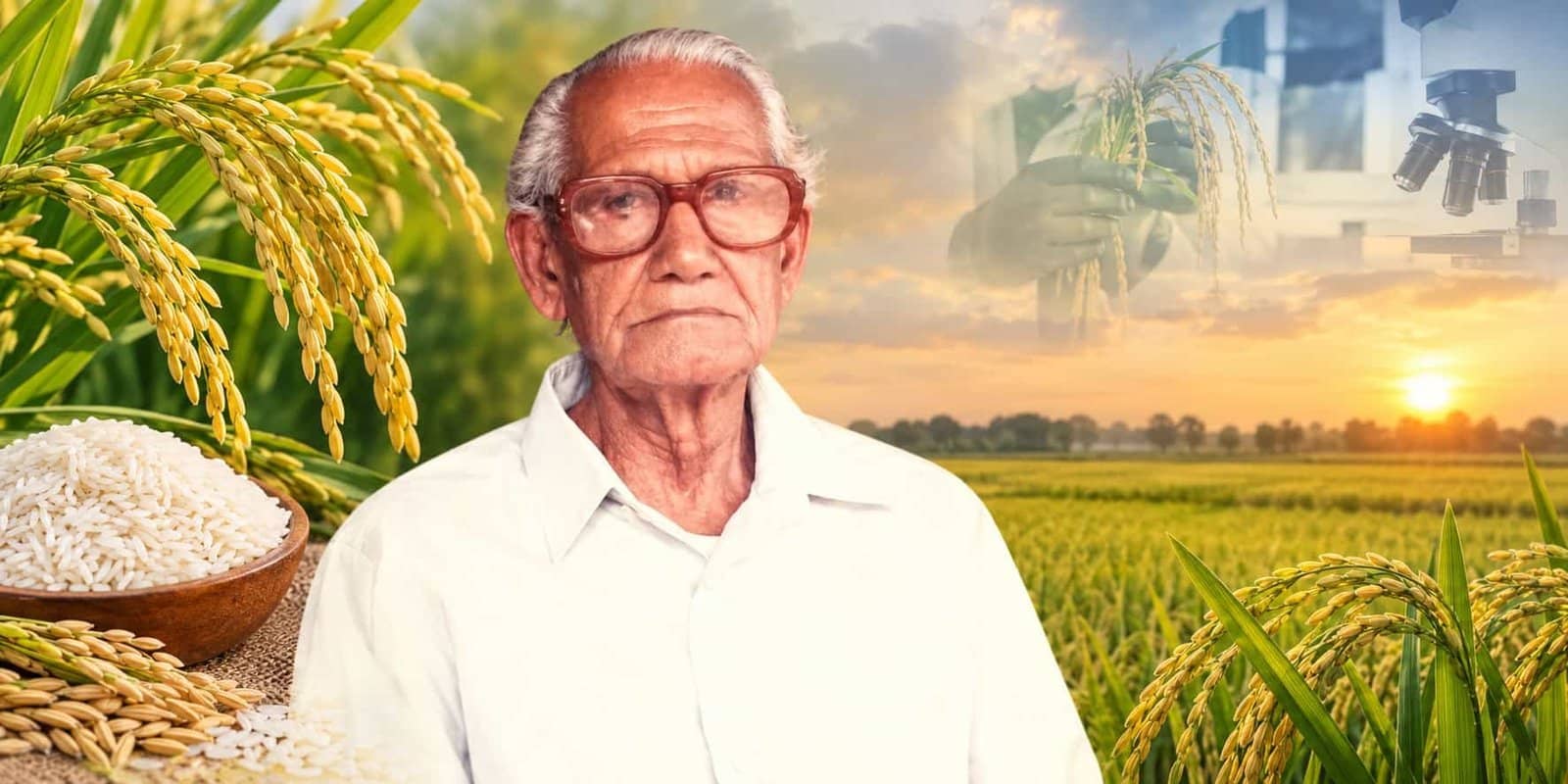
In Anandpuri tehsil of Banswara district, in southern Rajasthan, lies a village called Seranagla, where smoke rises in the mornings, small fields dot the slopes, and earthen pots sit in the houses. One of these homes belongs to 65-year-old Kankudevi Kama Damor; people in the area respectfully call her “Beej Mata,” the Seed Mother. She is the keeper of a legacy of native seeds, which she saved, nurtured, and passed on to others through years of hard work. Recalling her childhood, Kankudevi says these hill villages were once rich with dense forests, but have now lost them. Everyone in the village belongs to the Bhil community, and they practise rain-fed farming.
Speaking of those bygone days, she says that young Kankudevi would walk with her parents and two brothers to the fields on the hill slopes. They carried lapsi, a porridge of ragi and kuri, along with boiled vegetables from home. Today, that simple food has almost vanished from people’s plates. The best thing about the old way of farming, she says, was its diversity. Her father sowed seeds before the monsoon, growing more than thirty varieties across sixteen kinds of crops. Each crop ripened at a different time, so harvesting continued one crop after another. Even if one crop failed, the family never went hungry, because something was always ready in the field. Millets such as ragi, kuri and kangni were the backbone of this mixed system.
She describes ragi as her main food, eaten at least three or four times a day. She says the strength to work in the fields comes from it. Science confirms this in its own way. Ragi and other millets are considered rich in calcium, fibre and minerals. They grow even with little water and in poor soil, which is why they have sustained people in hilly and dry regions for centuries.
This diversity, however, slowly began to shrink. According to Kankudevi, she once had ten varieties of millets and fifteen of pulses, but in the last few years many traditional seed varieties have been lost. “I was worried that we were losing our traditional seeds, which are precious,” she says. That worry showed her the way forward.
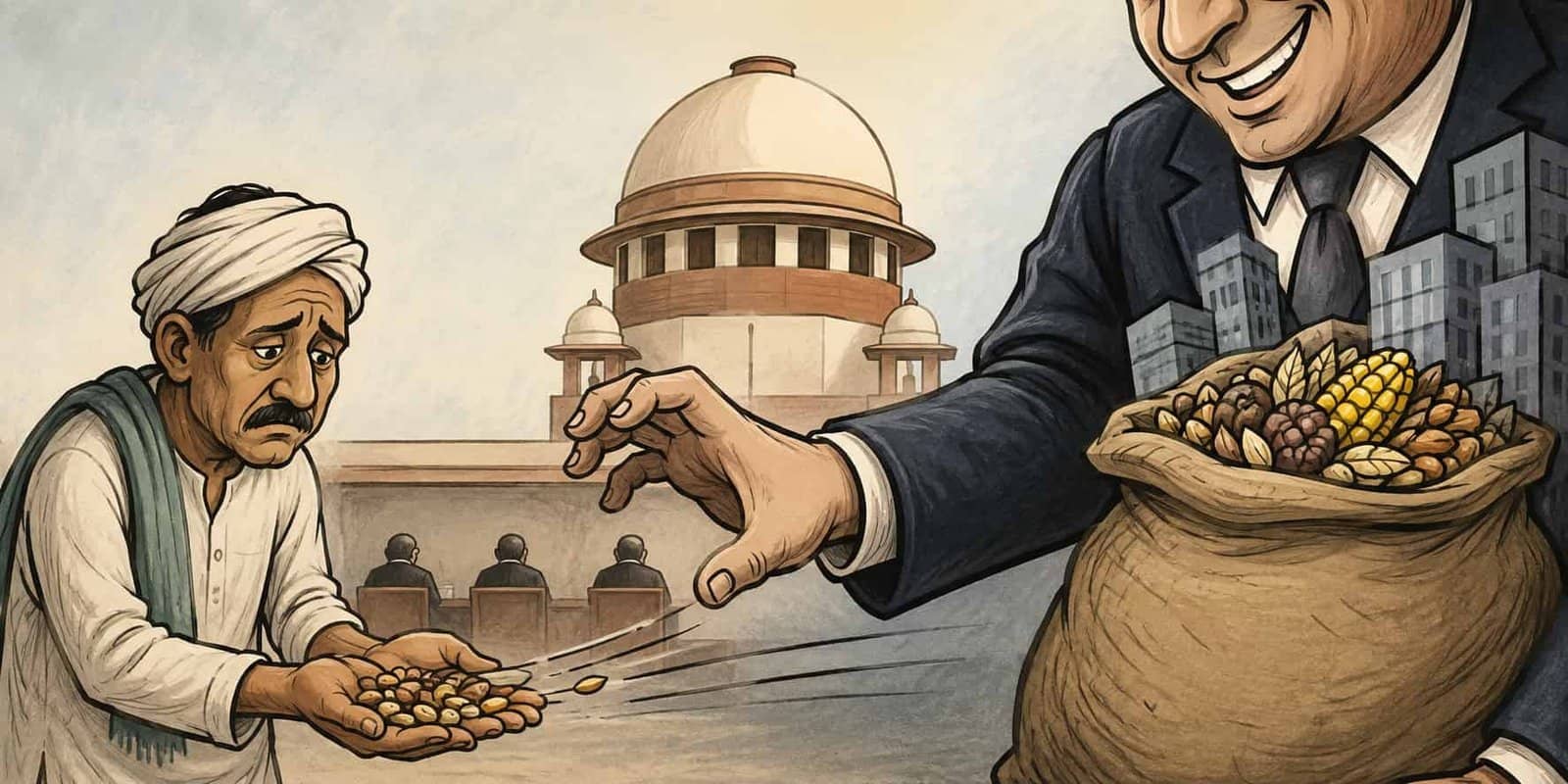
The loss did not happen suddenly. There were many reasons behind it, which Kankudevi explains in simple words. Joint families broke up and smaller family units emerged. Families with fewer hands, less time and less land turned quickly to high-yielding hybrid seeds. But she believes policy also fanned this shift. Government procurement centres in the mandis do not buy every variety, because they fail to meet the standard of “fair average quality” that has been set. When a crop does not sell, why would a farmer grow it?
The figures bear this out. According to a policy report by the World Food Programme, the area under millet cultivation in India fell from about 36.9 million hectares in 1965-66 to roughly 14.7 million hectares in 2016-17, a decline of nearly sixty percent. The same report also says that, apart from ragi, the smaller millets get almost no protection such as a minimum support price, and this is one major reason for their shrinking. What Kankudevi says from her own experience, policy studies repeat in the language of statistics.
India’s Millet Cultivation Area Decline
Area in 1965-66
36.9M
Hectares
Area in 2016-17
14.7M
Hectares
Decline
~60%
Over 50 Years
VISUALS BY THE RIFT
The other side of hybrid seeds is cost. Kankudevi says hybrid seeds are expensive and need expensive fertilisers and pesticides. Over time the soil begins to lose its life. Traditional seeds, by contrast, thrive on little water, need only cow-dung manure for a good yield, and can be stored for a long time. A farmer who has to buy new seed every season gradually becomes a hostage of the market. One who has his own seed remains the master of his field.
Kankudevi does not consider seed conservation an extraordinary act. For her it is the continuation of an old tradition. She says that in her community, saving seeds has traditionally been women’s work, so protecting them felt like her own responsibility. With this thought she joined the “Saksham Mahila Samuh” (Capable Women’s Group) formed by Vaagdhara, and inspired other women to save seeds as well.
For traditional methods of seed conservation, Vaagdhara gave her a \\matka kit. This method of storing seeds in earthen pots has been tested over generations. The women of the group exchange seeds among themselves, so that if one household loses its seed, another still has it. Of all the farming activities, which include sowing, growing, collecting, storing and sharing, Kankudevi likes sharing the most. “If I lose what I have, it will be safe with someone else,” she says. This thinking teaches us that a seed bank is not grain locked away in a vault. It passes from hand to hand, grows and stays alive.
She also says something that goes straight to the debate on rights. In her view, a seed succeeds only when it is used continuously in the fields, season after season. This means the real way to preserve a seed is to keep sowing it. India’s Protection of Plant Varieties and Farmers’ Rights Act, 2001, recognises this very spirit, that a farmer is not merely a consumer of seed but also its custodian and breeder. Countless women like Kankudevi may not be familiar with this legal language, but they live it every day in the fields.
The most beautiful aspect of Seranagla is the way seeds are exchanged. If a farmer wants a particular native seed, Kankudevi and her companions give it free. The only condition is that in return he shares one of his own varieties. Someone who has no other variety, or who has lost their own, is encouraged to return double the quantity of seed they were given. It is a mutual exchange built on trust, in which each side gives something and receives something. Kankudevi says she has revived this traditional practice of the tribal community.
Kankudevi knew that seeds would survive only if growing them stopped being a losing proposition for farmers. She says millets were long regarded as food for tribals or the poor, and fetched low prices in the market. So she explained to the people around her the cultural and spiritual bond with traditional seeds, and how beneficial they are for health. People now understand that crops like bajra and ragi are nutritious and can also fetch good prices.
The change is beginning to show in the numbers. Kankudevi says that farmers in the area recently sold ragi at 3,700 rupees per quintal, while for maize they get only 2,000 rupees per quintal. This difference shows that returning to millets and leaving maize is now a sensible choice economically, not just emotionally.
At the government level, too, millets are now getting more importance. For the Kharif marketing year 2025-26, the central government raised the minimum support price of ragi by 596 rupees per quintal. This was counted among the biggest increases of that season, and according to experts, ragi saw the highest jump in percentage terms. Adding this increase to last year’s price of 4,290 rupees brings the price to roughly 4,886 rupees per quintal. In other words, the ragi that Seranagla’s farmers sold at 3,700 rupees now has a much higher level of government protection. What remains to be seen is how many small farmers this benefit reaches, and how easily.
Millet Economics: Prices & MSP
Local Selling Price (per quintal)
₹3,700
Ragi
₹2,000
Maize
Ragi Minimum Support Price (MSP)
₹4,290
Previous Year
₹4,886
2025-26 (New)
Increase: ₹596/quintal
VISUALS BY THE RIFT
The national picture of millet production is also encouraging. According to government documents, the country produced roughly 180 lakh tonnes of millets in 2024-25, with Rajasthan first in production, followed by Maharashtra and Karnataka. It is also worth noting that Rajasthan’s top position rests largely on bajra. Ragi accounts for only around half a percent of the country’s total cropped area and is grown mainly in Karnataka, Tamil Nadu and Maharashtra. Seen this way, the revival of ragi in tribal areas like Banswara carries special meaning, because it is an attempt to root a crop in a new place that has so far remained on the margins. Schemes such as the Nutri-Cereals Sub-Mission also provide support for seed production, demonstration and training, but their real benefit comes only when such support reaches farmers like Kankudevi.
For Kankudevi, the significance of this whole journey goes beyond money. She says that as a woman, this progress means more to her than financial gain. She is restoring the pride of her traditional crops, and these crops are her identity. A great lesson is hidden here. In our country, development is often measured in income, output and statistics, but for communities, farming is not just a livelihood. It holds songs, festivals, deities, relationships and memories. When a seed is lost, an entire cultural vocabulary disappears with it, such as which grain should be sown when, and which dish is made for which festival. When Kankudevi says that these crops are our identity,
Meanwhile, she also admits that this campaign cannot go on alone. She says Vaagdhara’s various trainings inspired her, and that the organisation has supported her in promoting millets in farming. But she also expects something from the government. She says that protecting their seeds with government support will take a long time, and she requests the government’s help in conserving native varieties for the future. This appeal is an invitation to partnership.
At the end of the whole conversation, Kankudevi remembers her father, who gave her the most important lesson about seeds. She still remembers his words clearly: “Seeds are living beings. They are our ancient roots. We need to nurture and protect our traditional seeds, because they keep our customs alive.” And Kankudevi adds simply, “And that is what I am doing.”
In this age of climate change, Kankudevi’s work becomes even more relevant. Amid erratic rains, droughts and rising temperatures, only those crops will endure that can grow with little water and in harsh conditions. Native seeds carry centuries of adaptation, which no laboratory can produce in a day. That is why, at India’s initiative, the United Nations declared 2023 the International Year of Millets. But the real honour will come when policy announcements reach the matka kits of villages like Seranagla.

Kankudevi reminds us that tradition and modernity are not enemies of each other. The market too can give value to traditional crops, provided someone takes the initiative to recognise their worth. The “Seed Mother” of Seranagla has taken that initiative. When the ragi ears sway on the hills of Seranagla after the next rains, they will show both Kankudevi and the labour behind her matka seed kit. Seeds will keep surviving, because someone will keep sowing, sharing and saving them.
Disclaimer:The views and opinions expressed in this article are those of the author(s) and do not necessarily reflect the official policy or position of The Rift.
*Seed ConservationAgricultural PolicyBhil CommunityClimate ResilienceMilletsRajasthanTraditional FarmingVAAGDHARA