Opening The Rift
therift
© 2026 The Rift. All Rights Reserved.
The Promised Gift and the Fine Print: A Close Reading of India’s Delimitation Bills 2026
The 2026 Delimitation Bills shift the authority to redraw India’s political map from a constitutional auto-trigger to executive discretion, effectively moving the power to decide state representation from the Constitution to the Cabinet.
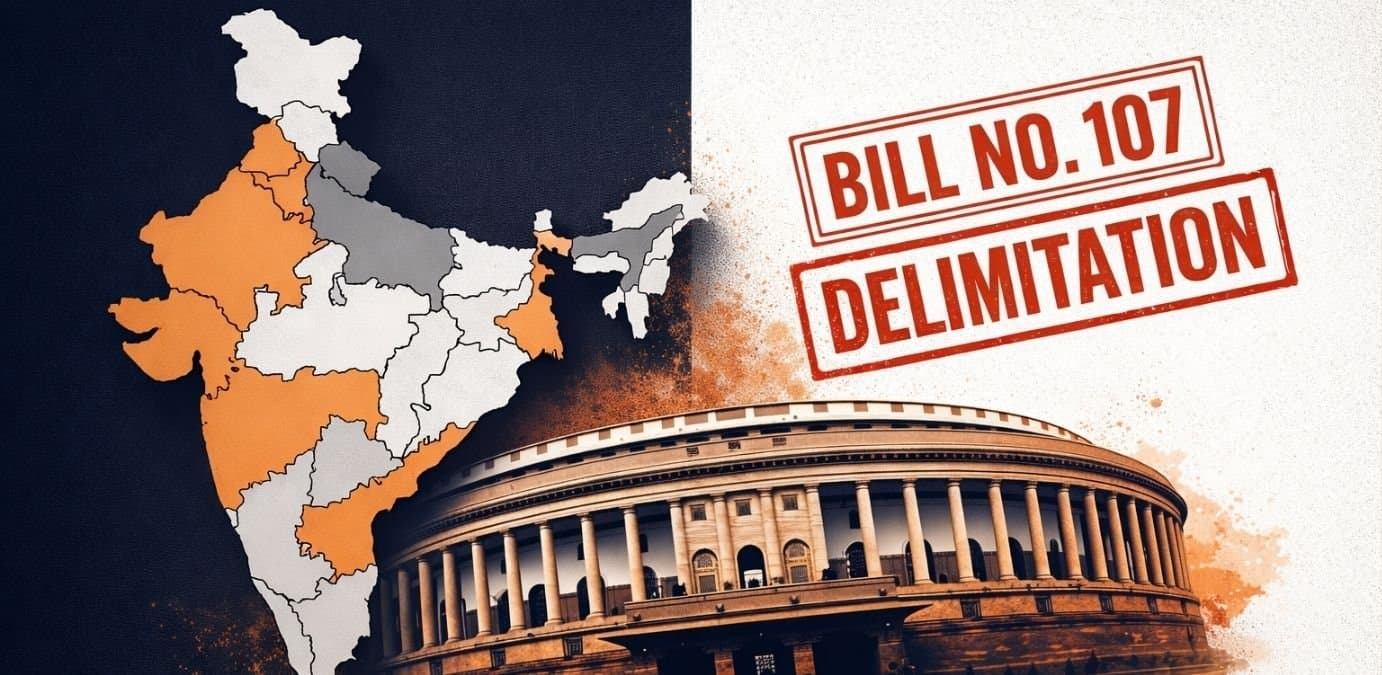
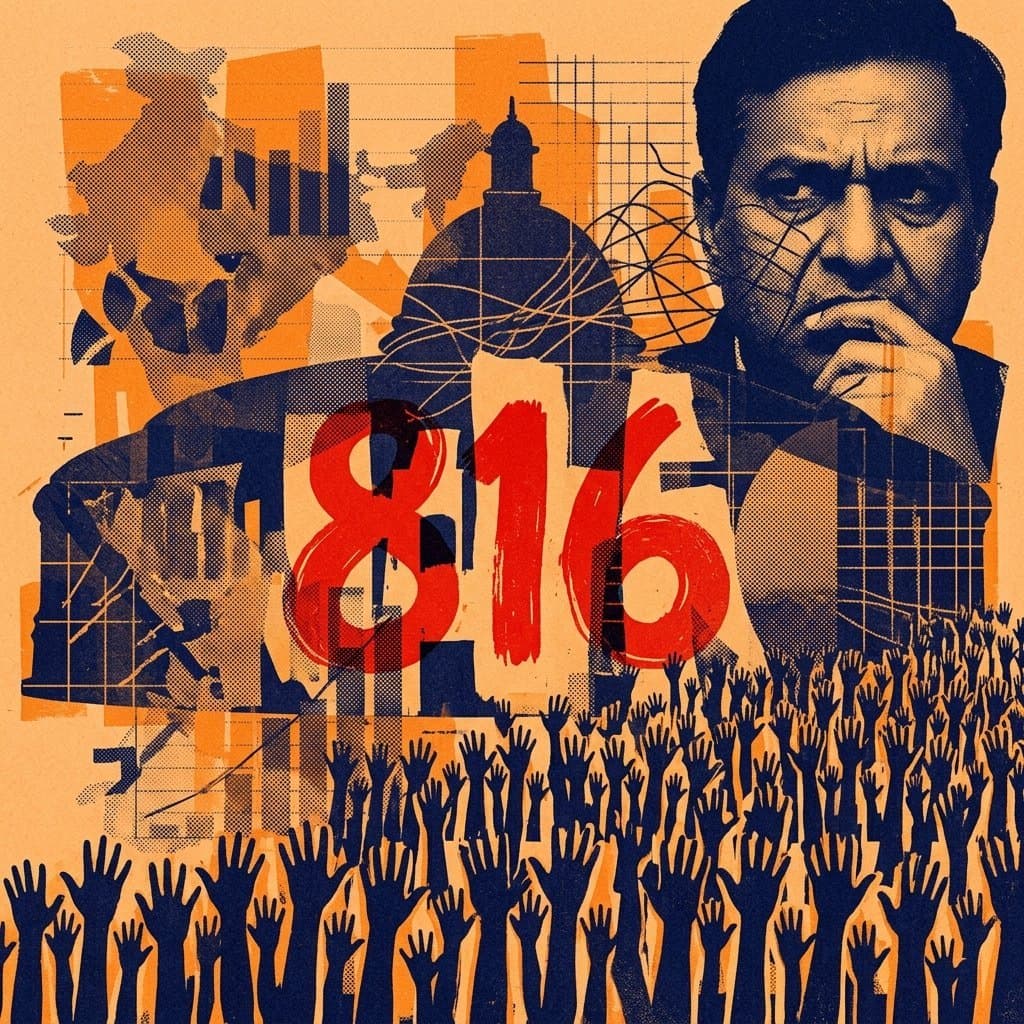
India’s delimitation bill 2026 landed in the Lok Sabha on April 16 today, during a special session convened with less than a week’s notice. Three bills. The Constitution (131st Amendment) Bill, the Delimitation Bill, and the Union Territories Laws (Amendment) Bill. Together, they promise to expand the Lok Sabha from 543 to 815 seats, redraw every constituency, and finally activate the one-third women’s reservation that Parliament unanimously passed in 2023 but left hanging on a precondition: delimitation first.
The pitch sounds decent. India has 1.4 billion people and a Parliament sized for a country of 550 million. Women deserve a third of the seats. Both are real problems.
So why this seismic exercise is very concerning and alarming? Because the promises the government is making and the text it actually wrote are two different things.
The Freeze is Broken
Since 1976 India’s seat allocation has been frozen to 1971 census figures. That freeze was a deal: states that had controlled their population, mostly in the south, would not be punished by losing seats to states that had not.
The 131st Amendment Bill kills that freeze. The new Article 81(3) replaces the locked 1971 reference with a single phrase where population means “such census as Parliament may by law determine.” That is not an update. It is a blank cheque to the party in power controlling Parliament now picks the census data that decides how many MPs each state gets, whenever it wants.
The government has been propagating a uniform 50 percent increase for every state. The Prime Minister, the Home Minister, and the Law Minister have all said it: no state loses. But that promise is nowhere in either bill. Not a single clause guarantees any state a minimum share of seats.
The text reveals something that is significantly more disruptive than the government’s public rhetoric suggests. While the Prime Minister and senior ministers have repeatedly assured the nation of a uniform 50% increase in seats for every state to ensure no state loses,these assurances are entirely absent from the legislative text. There is nothing in Bill No. 107 or 108 that mandates the maintenance of the current proportion of seats.
Simulating the proposed 850-seat House based on 2011 Census population shares—the first dataset likely to be triggered—reveals a seismic shift in representation. Because the total number of seats is rising, every state technically receives more raw seats, but the critical metric is the Gain/Loss in relative political voice.
Also Read: Weaponizing Privacy: Is the RTI Dead?
According to calculations projected by Yogendra Yadav on X for an 850-seat House based on the 2011 Census, states like Kerala would receive 23 seats (an absolute gain of 3), but they should have received 31 if their present share of representation were protected in the larger House. This constitutes a net loss of 8 seats in political influence. Tamil Nadu faces a loss of 11; Andhra Pradesh a loss of 5. Conversely, the gains are concentrated in the Hindi heartland: Bihar gains 9 seats beyond its current proportional share, and Uttar Pradesh—already the hinge of Indian democracy—jumps to 138 seats, a net gain of 13 over its current share. The political pattern of winners and losers aligns with surgical precision along the geographic lines of the ruling party’s electoral strength versus its weakness, observed Yogendra Yadav.
The Constitutional Trigger They Deleted
This is the shift that constitutional lawyers are most focused on. Article 82 formerly acted as an automatic democratic clock. By rewriting its core text, the 131st Amendment Bill effectively removes that clock.
Original Article 82
“Upon the completion of each census, the allocation of seats… shall be readjusted by such authority and in such manner as Parliament may by law determine.”
131st Amendment Rewrite
“The allocation of seats… shall be readjusted in such manner and on the basis of such census, by the Delimitation Commission, as Parliament may by law determine.”
Three critical words have been deleted: “upon the completion of each census.” Additionally, the proviso that would have triggered fresh delimitation automatically after the first census post-2026 has been omitted entirely.
Under the old Article 82, delimitation had to happen after every census; under the new Article 82, it happens only when the government wants it to happen, based on the census data the government selects. The trigger moves from the Constitution to the Cabinet.
A Commission That Answers to No One
The Delimitation Bill creates a three-member Commission to redraw every constituency. A Supreme Court judge (or retired judge) as chair, appointed by the Central Government, not the collegium. An Election Commissioner. A State Election Commissioner. It looks independent on paper.
Look closer. The government picks the judge. The Election Commission, whose appointment process was changed in 2023 to give the executive greater control, provides the second member. Ten associate members per state, MPs and MLAs, are brought in to assist. But Section 5(4) says explicitly that none of them can vote or sign any decision. They are witnesses, not participants.
Also Read: Why the US-Iran Ceasefire Had to Fail
And then the ouster clause. Section 10(2): once the Commission publishes its orders in the Gazette, they “shall not be called in question in any court.” This is not new. Every delimitation act since 1952 has contained identical language, and the Supreme Court upheld it in 1966 on the logic that allowing individual challenges would let a single voter stall elections nationwide.
What is new is the combination. Earlier ouster clauses shielded a commission that was constituted at arm’s length, with the census trigger written into the Constitution itself acting as an independent check. The 2026 package removes that constitutional automaticity, hands the government control over when delimitation happens and on which data (Art. 81/82), and then adds the same judicial insulation that past acts used in a very different institutional context. The result is a Delimitation Commission that will redraw India’s political map on grounds on which the Constitution is now effectively silent, producing orders that cannot be challenged in any court.
Women’s Reservation as Cover
This is the most politically sophisticated part of the package. In 2023, Parliament passed the Nari Shakti Vandan Adhiniyam reserving a third of seats for women. Unanimously. But with a catch that it would only kick in after a future delimilation following a census. Critics called it a delay tactic. They were right.
Now the government offers to remove that delay, but only as part of a bundle that includes the irreversible restructuring of India’s electoral geography. Vote against the delimitation bills and you are voting against women getting their seats. That is the political trap.
Here is what makes the trap visible. If the government genuinely wanted women in Parliament, it could pass a one-line amendment repealing the census-delimitation precondition in Article 334A. Women’s reservation could start in 2029 in the existing 543-seat House. No new constituencies needed. No redrawing of maps. Karnataka CM Siddaramaiah made exactly this point in writing: the two issues are entirely separate.
The government chose not to separate them. That bundling is the strategy.
There is a significant legal trap hidden in the phrasing of the 15-year sunset clause in Article 334A. The constitutional text states that women’s reservation will come into effect only after a delimitation based on a new census, but it will cease to have effect fifteen years from such commencement.
In standard legislative interpretation, such commencement refers to the date the 106th Amendment Act itself began on September 28, 2023. This means the 15-year clock is already ticking, even though the reservation hasn’t started. If the delimitation process proposed in these 2026 bills isn’t completed until 2029, six years of that 15-year guarantee will already have been exhausted. Women would finally enter the House only to find their reservation scheduled to expire in 2038, potentially covering only two full parliamentary terms before requiring a fresh vote for extension.
Why the South Said No
The political reaction from the South was not just immediate, it was defiant. Hours before the special session began on April 16, Tamil Nadu CM MK Stalin stood before a crowd of supporters in black and burnt a copy of the proposed legislation. Calling it a “black law,” Stalin warned that the bill threatened to turn Tamils into refugees in their own land by systematically diluting their parliamentary weight.
Invoking the spirit of the 1960s anti-Hindi agitations, Stalin’s protest complete with black flags and slogans—served as a signal for wider resistance across the state. The core of the dissent remained the mathematical reality: even if raw seat counts rise, the proportional loss of power constitutes a subtler form of disenfranchisement. In Kerala, CM Pinarayi Vijayan called for the immediate withdrawal of the bills, labeling them an “anti-democratic move” and noting “serious suspicion” that the legislation is a calculated attempt to subvert the federal system. Telangana CM Revanth Reddy was equally blunt, writing directly to the Prime Minister to urge Southern states to unite against a “political onslaught” and arguing that women’s reservation and delimitation are fundamentally separate issues that have been artificially bundled.
Why Now?
The 2027 census is less than two years away. It would provide far more current data than the 15-year-old 2011 figures these bills rely on. The government’s own Statement of Objects acknowledges significant population shifts, rapid urbanisation and migration since 1971, yet proposes to use 2011 data rather than wait.
No state government was consulted. No standing committee reviewed the bills. No public comment period was held. The Pre-Legislative Consultation Policy, adopted by this government in 2014, requires thirty days of public notice for significant legislation. MPs got the text two days before the session.
The political context: the BJP fell short of an outright majority in 2024 for the first time since 2014. A delimitation exercise based on 2011 data, conducted by a commission under executive control, producing outcomes no court can review, locked in before 2029, consolidates a demographic advantage the ballot box alone may not guarantee.
The unavoidable conclusion of this structural shift is that the government is seeking to consolidate a demographic advantage by law that the ballot box alone may not guarantee. The bundling of this geographic restructuring with the long-awaited women’s reservation is a calculated political move making the bill’s passage look like democratic idealism while the fine print ensures a permanent shift in the federal balance. Without the safeguards the government has verbally promised but refused to write into the law. The package functions as a structural mechanism for concentrated power.
A Genuine Reform Needed
The problems are real. India’s Parliament is undersized. Women deserve a third of the seats. The 1971 freeze has created genuine distortions. But a reform motivated by democratic principle rather than electoral arithmetic would wait for the 2027 census. It would separate women’s reservation from delimitation. It would guarantee no state’s share of Parliament falls below a threshold. It would create a Commission whose chair is selected by the collegium, not the government. It would allow judicial review. And it would give the country more than two days to read the fine print.
None of those safeguards are in these bills. Each absence is a choice.