Opening The Rift
therift
© 2026 The Rift. All Rights Reserved.
High Fuel Taxes and Welfare Politics: A Warning for India?
The critical question is whether high, regressive taxation should continue to finance consumption-driven electoral politics, or whether those revenues should be strategically redirected toward building a resilient, modern, and globally competitive economy.

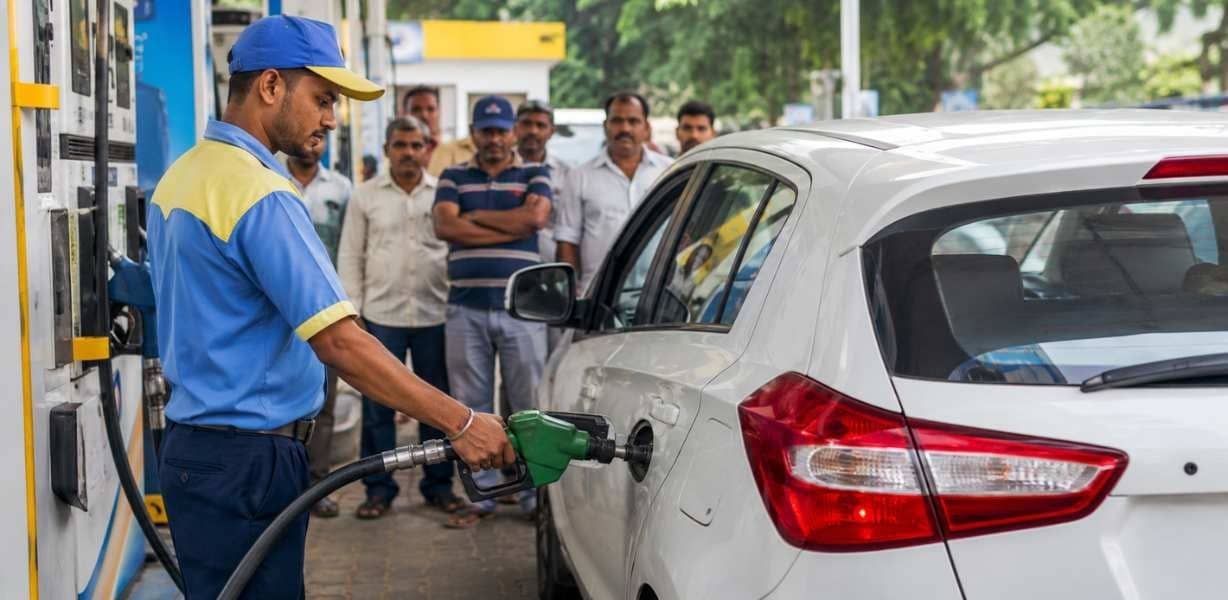
Representative Image
Key Takeaways
1 of 3
Automatically generated. Read full article for complete context.
The ongoing crisis in West Asia has once again exposed the vulnerabilities of India’s economic and fiscal structure. With crude oil prices reportedly rising from around $65 to nearly $125 per barrel in recent months, India—being dependent on imports for over 85% of its crude oil needs—faces serious economic consequences. The impact extends across inflation, transportation, industrial and agricultural costs, foreign exchange reserves, and ultimately the purchasing power and daily lives of ordinary citizens.
Global Crude Peak
$125 / bbl
India’s Import Dependency
~85%
Yet, despite repeated global shocks, India’s response continues to rely heavily on maintaining extraordinarily high taxes on petrol and diesel. Instead of reducing the tax burden to shield consumers and stabilise the economy, governments at both the Union and State levels have largely preserved fuel taxes as a major source of revenue. This raises a serious question: has fuel taxation evolved from an economic instrument into a political mechanism sustaining welfare-driven electoral politics? This article examines India’s fuel taxation regime, its connection with welfare expenditure, and its constitutional and economic implications.
India’s High Fuel Tax Burden
India today ranks approximately 10th globally in fuel-tax burden, a position typically occupied by developed European nations and Israel, which offer extensive social security nets and world-class public services in return for high taxation. During 2020–21, India reportedly became one of the highest-taxing countries in the world in terms of the share of taxes in petrol and diesel prices, with taxes accounting for nearly 69% of retail fuel prices at certain stages. Even today, the tax component remains extraordinarily high, placing an undue burden on consumers and businesses:
- Taxes constitute approximately 50–55% of petrol prices; and
- Nearly 45–50% of diesel prices consist of taxes and government levies.
A Tax Breakdown: Who Gets What? (approx.)
Actual Cost of Fuel
Excise Duty + VAT
Dealer Comm.
Excise Duty + VAT
Dealer Comm.
These revenues are collected through multiple levies, including excise duty, VATValue Added Tax (VAT) on FuelUnlike most goods in India, fuel is kept outside the GST regime. This allows State governments to levy their own fluctuating VAT or sales tax on top of Central duties., cess, surcharges, and customs duties. While many European countries also impose high fuel taxes, the revenues there are largely invested in quality infrastructure, healthcare, public transport, and social security. In contrast, Indian citizens continue to bear a heavy tax burden without receiving comparable public services, adversely affecting disposable income and quality of life.
Fuel Taxes as a Primary Revenue Source
The Indian government earns massive revenue from taxes on petrol and diesel, making petroleum products one of the largest and most dependable sources of income for both the Union and State Governments, with collections steadily increasing over the years.
2021-22
₹7.74L Cr
2022-23
₹7.48L Cr
2023-24
₹7.51L Cr
2024-25 (EST.)
₹7.57L Cr
These revenues include excise duty, VAT, customs duty, cess, royalties, and dividends from public sector oil companies. While taxation is a legitimate sovereign function, the growing concern is that high fuel-tax revenues are increasingly being used for welfare schemes and electoral freebies instead of long-term investments in infrastructure, employment, and economic growth, creating overdependence on fuel taxation as a revenue source.
Funding Welfare Politics Through Regressive Taxes
India has witnessed a rapid and unprecedented expansion of subsidy schemes and direct cash-transfer programs across states and at the national level. While targeted welfare support is undeniably essential in a developing country grappling with deep-seated economic inequality and widespread poverty, a serious distinction must be drawn between genuine, constitutionally mandated welfare designed to uplift the vulnerable and politically motivated populism engineered for short-term electoral gain. The latter often distorts market signals, creates dependency, and diverts resources from critical long-term investments.
Several welfare schemes, including the Ladli Behna Yojana, Gruha Lakshmi Scheme, Kalaignar Magalir Urimai Scheme, and PM-KISAN, consume substantial public funds, with estimates suggesting that the Centre and States together spend nearly ₹8–9 lakh crore annually on subsidies and freebies. A significant portion of this expenditure is indirectly financed through high fuel taxes, which disproportionately burden the poor and middle class. The resulting revenues are often redistributed through politically attractive welfare schemes aimed at specific voter groups, creating a cycle where rising fuel taxes fund welfare-driven electoral politics.
This effectively means that an inflationary tax on an essential commodity—one that impacts every segment of society and fuels broader inflation—is increasingly financing the political survival and expansion of incumbent governments, rather than fostering genuine economic empowerment and sustainable development. This approach prioritises immediate political gratification over long-term fiscal prudence and economic stability.
Constitutional Concerns of the Fuel Tax Regime
While the power to tax is an inherent attribute of sovereignty, it is not absolute and must conform strictly to the constitutional framework of India. The current fuel tax regime, characterised by its exorbitant rates and opaque structure, invites rigorous scrutiny on at least four significant constitutional grounds, potentially infringing upon fundamental rights and principles of governance.
A. Infringement of the Right to Livelihood under Article 21
The Supreme Court has repeatedly interpreted Article 21 expansively to include the right to livelihood. Excessively high fuel taxes directly affect farmers, transport operators, small manufacturers, and self-employed workers whose livelihoods depend upon diesel and transportation. When rising fuel costs make agriculture unviable, reduce small business profitability, or increase basic living costs disproportionately, it may be argued that fiscal policy begins to interfere with the constitutional right to livelihood.
B. Erosion of Fiscal Federalism and Article 270
A significant portion of fuel taxation today is collected through cesses and surchargesCess and SurchargesA Cess is a “tax on a tax” for a dedicated purpose, while a Surcharge is an additional charge. Both are exclusively retained by the Centre and not shared with states. rather than standard excise duty. Under Article 270, revenues from cesses and surcharges are excluded from the divisible poolDivisible PoolThe constitutionally mandated portion of the Central government’s gross tax revenue that must be distributed among State governments based on the Finance Commission’s formula. shared with states. This structure allows the Centre to retain a larger share of fuel-tax revenue, weakening the financial autonomy of states and undermining the constitutional principle of cooperative federalism.
C. Violation of the Doctrine of Proportionality
The doctrine of proportionality requires that state action should not be more excessive than necessary to achieve a legitimate objective. While raising revenue is a valid objective, imposing taxes exceeding 50% of retail fuel prices may arguably be disproportionate considering the widespread inflationary consequences. Alternative methods of revenue generation—such as widening the direct tax base, improving compliance, or monetising public assets—could potentially achieve fiscal goals with less economic hardship.
D. Opacity and the Challenge to Article 265
Article 265 mandates that taxes can be imposed only by authority of law. While fuel taxes are legally authorised, frequent changes through executive notifications and the opaque structure of fuel pricing reduce transparency and predictability. Citizens and businesses often remain unable to understand how prices are determined or anticipate future fluctuations. Such opacity weakens public accountability and undermines confidence in fiscal governance.
E. Arbitrariness and Discrimination under Article 14
Fuel taxes are regressive in nature. A uniform tax affects low-income households far more severely than wealthy consumers because fuel and transportation constitute a larger share of their expenditure. This unequal economic impact raises broader concerns under Article 14 regarding arbitrariness and fairness, particularly when essential commodities become instruments of revenue extraction.
Failure to Mitigate the Price Crisis
The current West Asia crisis, with its predictable impact on global crude oil prices, did not emerge overnight. Rising geopolitical tensions, disruptions in critical shipping routes, instability in oil-producing regions, and global energy insecurity had been visible and escalating for many months. Despite these clear warning signs, the Government of India failed to create or implement an adequate price-stabilisation mechanism for consumers. Instead of proactively reducing taxes to cushion the impact of rising crude prices, both the Union and State governments largely allowed retail prices to rise while meticulously preserving their extraordinarily high tax revenues. This reactive rather than proactive approach has left the economy vulnerable.
The consequences of this policy inertia are already visibly manifesting across various economic indicators:
- Stock markets have shown increasing volatility, reflecting investor apprehension and uncertainty.
- Investor confidence has weakened, as evidenced by the performance of oil marketing companies (OMCs)Oil Marketing Companies (OMCs)State-run entities like IOCL, BPCL, and HPCL. They technically set retail fuel prices but often absorb losses when global prices spike and the government restricts retail price hikes. whose profits have been impacted by the need to absorb some costs while taxes remain high.
- Inflationary pressures are mounting across all sectors, eroding purchasing power and increasing the cost of living.
- Transportation and logistics costs are increasing, threatening supply chains and the competitiveness of Indian goods.
- Gold demand has surged significantly over the last year as households seek safer assets amid pervasive economic uncertainty.
Historically, a sustained rise in gold demand reflects declining public confidence in economic stability and fears regarding inflation and currency depreciation. The recent surge in gold purchases is not merely cultural or seasonal—it is a potent barometer of growing economic anxiety among households and investors, signalling a flight to safety amidst perceived instability in financial markets and governance.
Diesel Inflation: An Economic Threat
Among all fuel products, diesel remains the most economically sensitive and impactful. While petrol prices primarily affect private vehicle users and urban commuters, diesel prices reverberate throughout the entire economic ecosystem. Diesel directly affects:
- Freight transportation, which is the backbone of India’s logistics.
- Agriculture, powering tractors, irrigation pumpsets, and other farm machinery.
- Industrial production, where it fuels generators and heavy machinery.
- Public transport, impacting bus fares and commuter costs.
- Supply-chain logistics, from raw material procurement to final product delivery.
India’s vast logistics network remains overwhelmingly dependent on diesel-powered trucking. Therefore, any increase in diesel prices triggers widespread and immediate cost-push inflationCost-Push InflationInflation driven by rising production costs (like fuel or raw materials) rather than increased consumer demand. When diesel prices rise, the cost of transporting all goods increases. throughout the economy.
⚡ DIESEL PRICE HIKE
↓
🚚
Freight & Logistics
🌾
Agricultural Inputs
🏭
Industrial Production
↓
🔥 WIDESPREAD COST-PUSH INFLATION
When diesel prices rise:
- Food prices increase due to higher transportation and agricultural input costs.
- Agricultural costs rise, impacting farmers’ profitability and consumer food bills.
- Manufacturing becomes more expensive, reducing competitiveness.
- Transportation costs escalate across all sectors, adding to the final price of goods and services.
- Public transport fares come under severe pressure, affecting daily commuters.
Thus, diesel effectively functions as a critical inflation benchmark for the broader economy. The continued imposition of extremely high taxes on diesel, despite full knowledge of these cascading consequences, underscores a policy choice that prioritises immediate revenue collection over macroeconomic stability and the welfare of the common citizen.
Governance Contradiction: Appeals vs. Action
The seriousness of the situation became undeniably evident when Prime Minister Narendra Modi recently urged citizens to reduce fuel consumption, adopt work-from-home practices, avoid unnecessary travel, and even postpone gold purchases for one year. The stated objective was to conserve foreign exchange reservesForeign Exchange ReservesIndia purchases over 85% of its crude oil in US Dollars. A spike in global oil prices rapidly drains the country’s dollar reserves, putting downward pressure on the Rupee. and reduce economic pressure arising from the West Asia crisis. The appeal itself reflects the magnitude of concern within the government regarding rising crude prices and external economic vulnerability.
However, an obvious and glaring contradiction emerges from this appeal. If citizens are being asked to make significant sacrifices, conserve fuel, and reduce consumption in the national interest, then why is the government unwilling to make a corresponding sacrifice by significantly reducing fuel taxes during a period of global crisis? Economic discipline and austerity cannot be a one-sided expectation imposed only upon citizens while governments continue to prioritise politically beneficial expenditure and maintain extraordinarily high tax revenues over providing structural economic relief. This apparent hypocrisy erodes public trust and undermines the credibility of appeals for national sacrifice.
Proposed Reform Agenda
A. The Need for a Dynamic Fuel Taxation Policy:
India urgently requires a fundamental structural reform in its fuel pricing mechanism. A dynamic, rule-based taxation policy must be implemented to insulate the economy from global volatility. Under such a system, if international crude oil prices rise sharply due to external crises, domestic fuel taxes should automatically and proportionately reduce to ensure that retail prices remain relatively stable for consumers. Conversely, when global crude prices decline significantly, governments may then rebuild their fiscal buffers through a moderate and pre-defined increase in taxation.
Such a dynamic mechanism would offer multiple benefits:
- It would effectively protect consumers and the broader economy from sudden global price shocks.
- It would significantly reduce inflationary pressure across all sectors and stabilise logistics costs.
- It would improve economic confidence and predictability for businesses, fostering investment and growth.
- It would prevent the excessive and arbitrary politicisation of fuel pricing, bringing transparency and rationality to the system.
At present, the entire burden of international crude price volatility is effectively transferred to consumers while governments insulate and preserve their extraordinarily high tax collections. This model has become economically and politically unsustainable and requires immediate overhaul.
B. Shifting From Populism to Productive Investment
India today urgently requires massive and strategic investment in productive, nation-building assets. This includes: modern roads and transport infrastructure; rail and freight modernisation; robust Research and Development (R&D) capabilities; enhanced energy security measures; high-value manufacturing; and significantly improved public healthcare and education infrastructure. Such investments are the bedrock of long-term productivity, sustainable employment generation, industrial competitiveness, and inclusive economic growth.
Instead, a substantial portion of public finance is increasingly being consumed by recurring subsidies and politically motivated distribution schemes, which, while offering short-term relief, do not build long-term economic capacity. This is perhaps the right moment for the government to gradually rationalise non-essential freebies and redirect these vast resources toward capital expenditure.
Contrary to political fears, there may not be widespread public outrage if such reforms are explained honestly and transparently. Citizens today understand the realities of inflation, unemployment, and economic instability far better than political strategists often assume. People may tolerate sacrifices if they perceive that the burden is being shared fairly and that tax revenues are genuinely being used for long-term national development rather than for electoral management.
Conclusion
India today stands at a defining economic and constitutional crossroads. The debate surrounding petrol and diesel prices is no longer merely about fuel—it is about the fundamental direction of India’s economic priorities and the constitutional limits of its fiscal policies. The critical question is whether high, regressive taxation should continue to finance consumption-driven electoral politics, or whether those revenues should be strategically redirected toward building a resilient, modern, and globally competitive economy through infrastructure, innovation, industrial growth, and human capital development.
The West Asia crisis has exposed how vulnerable India remains to external shocks and how heavily governments have come to depend on indirect taxation for political and fiscal survival. The current approach is not only economically imprudent but also constitutionally suspect, raising legitimate concerns about the right to livelihood, fiscal federalism, the doctrine of proportionality, and the principles of transparency and non-arbitrariness. If corrective reforms are not initiated now, the confluence of rising fuel prices, persistent inflation, weakening markets, increasing gold dependence, and declining public confidence may collectively create deeper and more intractable economic stress in the years ahead, jeopardising India’s growth story and the welfare of its citizens. The time for a fundamental re-evaluation and reform of India’s fuel tax policy is not merely opportune, but imperative.
Disclaimer:The views and opinions expressed in this article are those of the author(s) and do not necessarily reflect the official policy or position of The Rift.