Opening The Rift
therift
© 2026 The Rift. All Rights Reserved.
How the continuity of history has persisted in our times, and how it has disrupted
For the first time, human actions threaten to irreversibly destroy Earth’s basic life-nurturing conditions, marking a profound discontinuity in history.

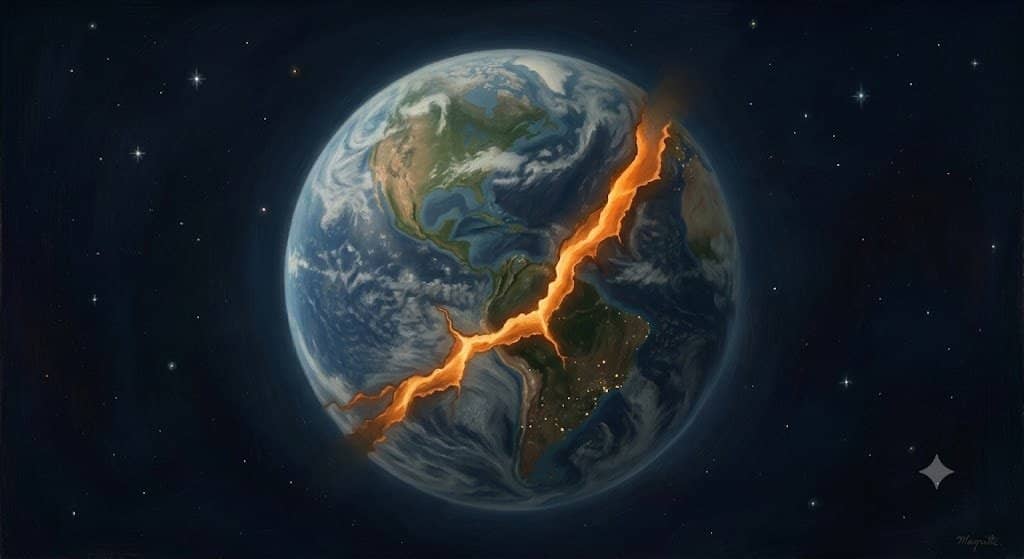
The thread of history weaves through the ages, influencing our present (Representative Image)
Key Takeaways
1 of 3
Automatically generated. Read full article for complete context.
Although there are different views regarding when exactly the journey of humanity started, we may consider here this journey in terms of the last about one hundred thousand years of our planet. Throughout this period there is one continuity in history. There are so many changes from time to time but in one respect there is a very remarkable continuity even to this day.
This continuity relates to the fact that the welfare of humanity and in fact all life is positively related to the extent to which humanity lives according to the preceptsGuiding PrinciplesA general rule intended to regulate behavior or thought; a moral principle. of justice and equality, peace and harmony, protection of environment and of all forms of life. The greater the commitment to these precepts, the more the happiness of people and the greater also the possibilities for distress to be minimized.
If this was true at the start of the journey of humanity, this is equally true today. In this respect indeed there is very remarkable continuity in human history.
Of course the extent of the commitment to these precepts differed widely from place to place and from time to time. Even when the record was not good, people could say—’Oh, we made big mistakes, we must improve in the future.
The possibility of improvement was always there because, whatever the mistakes were being made, the basic life-nurturing conditionsEssential Environmental FactorsThe fundamental environmental and ecological elements (e.g., stable climate, clean air/water, biodiversity) necessary for the sustenance and flourishing of life on Earth. were not seriously threatened.
If we assume the history of humanity to be about 100,000 years, then this was true for about 99,920 years. However, about 80 years ago, a very significant change occurred, namely, for the first time, humanity’s own actions made it possible to destroy the basic life-nurturing conditions of earth. While this started with nuclear weapons, it gathered strength with about a dozen serious and inter-related man-made environmental problems led by climate change, as well as with several disruptive and destructive technologies, evolving very fast weapon systems, autonomous and robot weapons, and steps taken towards space warfare.
Now what has happened with these changes of the last 80 years or so (about 0.08% of the history of humankind) is that, as the basic life-nurturing conditions are threatened and the factors causing these are accelerating and there are tipping points that should not be crossed which should not be crossed (at the risk of some very harmful changes in the planet perhaps becoming irreversible), so we cannot go on saying, ‘Sorry that we made mistakes, but we’ll improve later.’ This space for correction that was available earlier may not be available now in several respects. We simply cannot go on making serious mistakes as such mistakes made now can harm the basic life-nurturing conditions of the planet in irreversible ways, thereby causing grave harm to all of us in this generation, but even more to upcoming generations—our own children—as well as to entirely innocent other forms of life who must pay a very high price for humanity’s follies (supposedly the wisest species).
So, in this context, the last eight decades represent a significant discontinuity with the rest of human history, as it is the first time human actions have led to serious threats emerging for the planet’s life-nurturing conditions.
Both this continuity and discontinuity of history are present in these times of very high consequence for humanity. Hence, considering both these situations, the most important policy on which humanity should focus with great commitment is to protect the planet’s basic life-nurturing conditions within a framework of justice and peace. This is the most important task of our times and even though the present situation is deeply dismal and unfortunate in terms of humanity and its leadership so far astray from most essential responsibilities—it must be completely clear that future generations will judge us first and foremost by the extent to which we fulfill these most important responsibilities.
Disclaimer:The views and opinions expressed in this article are those of the author(s) and do not necessarily reflect the official policy or position of The Rift.