Opening The Rift
therift
© 2026 The Rift. All Rights Reserved.
India IT Rules Tech Censorship: Privatizing Authoritarianism
By outsourcing surveillance to corporate algorithms, the state has built a censorship machine that leaves citizens with zero legal recourse.

Key Takeaways
1 of 3
Automatically generated. Read full article for complete context.
The debate surrounding India IT Rules tech censorship is no longer about free speech in the philosophical sense. It is a terrifying mechanical reality. In early 2026, the Ministry of Electronics and Information Technology issued an amendment that compressed the mandatory timeline for social media platforms to remove “unlawful” content from thirty-six hours down to an impossible three hours. On paper, it sounds like an aggressive but necessary step to curb real-time digital risks. In practice, it is the deliberate privatization of authoritarianism. The government is natively outsourcing its censorship to private algorithms, creating a chilling reality where dissent is stifled by a Silicon Valley compliance team rather than a direct government order.
To understand why a three-hour window is so destructive, you must understand how international platforms like YouTube, Meta, and X operate. Historically, the bedrock of the modern internet has been the concept of “safe harbor.” Under Section 79 of the original IT Act, platforms held legal immunity for the third-party content posted by their billions of users, provided they acted expeditiously upon receiving a formal government notice. When a takedown notice arrived, the companies had thirty-six hours to deploy actual human lawyers and policy experts to review the demand. They could assess the context, differentiate between political satire and legitimate threat, and push back against government overreach when necessary.
Those days are over. Human review takes time, and the new three-hour mandate mathematically eliminates it. No global platform can mobilize a legal team, review the jurisdictional nuances of a vernacular post, and execute a takedown at scale within one hundred and eighty minutes.
It looks like a minor regulatory amendment buried in an IT Ministry gazette. It relies on the financial cowardice of massive tech platforms that would rather delete millions of legitimate posts than risk a single day of criminal prosecution in a lucrative emerging market.
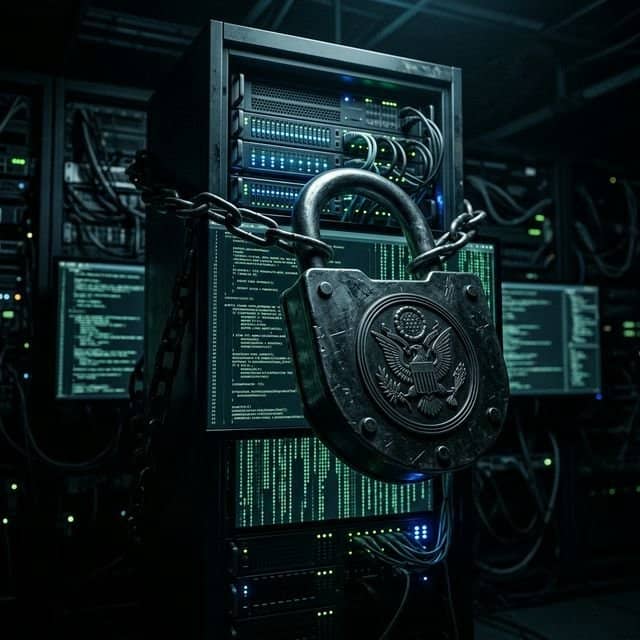
Faced with the threat of losing their safe harbor immunity and facing crippling criminal liability, tech companies have only one viable survival strategy. They must rely entirely on automated filters to pre-emptively scrub anything that even remotely resembles the government’s broad definition of unlawful speech. They over-censor to protect their profit margins. The state knows this perfectly well. By setting an impossibly fast timeline, New Delhi has successfully forced private corporations to build, fund, and maintain the government’s surveillance infrastructure.
This regulatory shift fundamentally alters the relationship between the citizen and the state. If a government agency directly orders a publisher to remove an article or block a journalist, the injured party can go to a High Court and file a writ petition citing a violation of their fundamental rights. There is a paper trail, a legal order, and a constitutional remedy.
But when an algorithm shadow-bans a political activist or deletes a critical documentary to comply with the new IT Rules, there is no government order to challenge. The censorship is executed by a private corporation interpreting vague state guidelines through a risk-averse machine learning model. The citizen is left fighting a faceless, automated appeals process housed entirely within the terms of service of an American corporation. You cannot ask a court to strike down a government action if the government technically never took action. The state keeps its hands clean while the private sector does the dirty work.
The situation is escalating rapidly. Recent reports suggest the government is already considering shrinking the compliance window even further to a staggering sixty minutes. Additionally, the push to grant blocking powers directly to ministries like Home Affairs and Defence means the volume of secretive, non-negotiable takedown requests will explode. When the military or the police can order an instant deletion without judicial oversight, we move from a heavily regulated internet into outright digital martial law.
We have fundamentally misunderstood the nature of modern censorship. We brace for explicit press gag orders or dramatic midnight raids on newsrooms. But the architecture of modern repression is much quieter and infinitely more efficient. It looks like a minor regulatory amendment buried in an IT Ministry gazette. It relies on the financial cowardice of massive tech platforms that would rather delete millions of legitimate posts than risk a single day of criminal prosecution in a lucrative emerging market.
By weaponizing the concept of safe harbor, the Indian state has created a frictionless machine that suffocates dissent automatically. The privatization of surveillance ensures that the next widespread crackdown on civil liberties will not require thousands of police officers. It will only require a software update.