Opening The Rift
therift
© 2026 The Rift. All Rights Reserved.
Decoding Mamata Banerjee’s Constitutional Standoff and the Protest Against a ‘Stolen’ Mandate
Articles 164(1) and 172(1) work in powerful tandem to ensure that absolutely no state government can outlive its democratic mandate by even a single day.


Via official X (formerly Twitter) account — @MamataOfficial
Key Takeaways
1 of 3
Automatically generated. Read full article for complete context.
The political landscape of West Bengal is currently locked in an unprecedented constitutional standoff. As the term of the West Bengal Legislative Assembly approaches its expiration date on May 7th, Chief Minister Mamata Banerjee has taken a defiant and highly controversial stance. She has categorically refused to tender her customary resignation to the Governor, leveling severe allegations of unfair practices, institutional capture, and the outright theft of the election mandate.
This refusal to step down gracefully at the end of an assembly’s term is uncharted territory in India’s modern democratic history. Banerjee’s explosive allegations paint a grim and alarming picture of the electoral process. She claims the Election Commission of India (ECI) has been fundamentally compromised, points to mass electoral deletions executed through opaque Systemic Information Reports (SIR), and condemns the deployment of massive central security forces, which she argues were used to intimidate voters rather than secure the polling booths.
To make sense of this escalating political crisis, we must view it through a strict constitutional lens, separating the rigid legal realities from the performative political theater. Below is a comprehensive breakdown of the situation in a simple question-and-answer format, explaining the constitutional provisions at play, the gravity of her allegations, and the inevitable outcome of this high-stakes political drama.
Q1: What is the exact nature of the constitutional crisis unfolding in West Bengal?
Answer: The crisis revolves around the expiration of the current West Bengal Legislative Assembly’s term, which is legally mandated to end precisely on May 7th. In a parliamentary democracy, a Chief Minister and their cabinet derive their legitimacy and executive authority from the confidence of the Legislative Assembly. Once the Assembly’s term expires, the body automatically dissolves.
Customarily and constitutionally, the incumbent Chief Minister submits their resignation to the Governor just before or immediately upon this expiration. The Governor then typically asks them to continue serving in a caretaker capacity until the newly elected assembly is constituted and a new government is officially sworn in.
However, Mamata Banerjee has refused to follow this long-standing constitutional convention. She argues forcefully that the electoral process was heavily rigged and that she has not legitimately “lost” the mandate of the people. By refusing to resign, she is effectively challenging the very legitimacy of the incoming assembly and the administrative electoral process that created it. This creates a direct, unprecedented conflict between a political leader’s claims of a stolen election and the strict, unyielding deadlines set by the Constitution of India.
Q2: What does the Constitution of India say about the tenure of a State Legislative Assembly? Can the term be extended?
Answer: The framers of the Indian Constitution anticipated the critical need for strict, non-negotiable limitations on the tenure of legislative bodies to prevent authoritarian overstays or administrative manipulation. The rule governing this is explicitly and clearly laid out in Article 172.
The phrasing here is absolute and leaves absolutely no room for judicial ambiguity or political interpretation. The inclusion of the phrase “and no longer” serves as the ultimate constitutional safeguard against clinging to power. Regardless of whether an incumbent Chief Minister accepts the election results, the expiration of the five-year period operates as an automatic, irreversible dissolution of the Assembly. Come midnight on May 7th, the current West Bengal Legislative Assembly will legally cease to exist. Without an active Assembly, the current government’s mandate to rule evaporates instantly.
Q3: If the Assembly dissolves automatically, can a Chief Minister simply refuse to leave office as a form of protest?
Answer: Constitutionally, they cannot. The existence and authority of the Chief Minister are inextricably tied to the pleasure of the Governor and their ability to command a majority in the Assembly. This executive relationship is defined by Article 164.
The phrase “during the pleasure of the Governor” is not an arbitrary or dictatorial power granted to the Governor to dismiss governments at their personal whim. However, when the Legislative Assembly is automatically dissolved under Article 172(1), the foundational legitimacy of the Chief Minister completely disappears. If a Chief Minister refuses to formally resign after the Assembly is dissolved, the Governor is constitutionally bound to withdraw their “pleasure” and issue an order formally dismissing the Chief Minister and the entire Council of Ministers. The Constitution simply does not recognize “protest” or “claims of unfairness” as valid legal grounds to extend a Chief Minister’s tenure past the five-year mark.
Q4: What are the specific allegations regarding the Election Commission, SIR, and Security Forces driving this protest?
Answer: Mamata Banerjee’s unprecedented refusal to resign is anchored in three primary allegations that she claims fatally compromised the democratic process and engineered her alleged defeat:
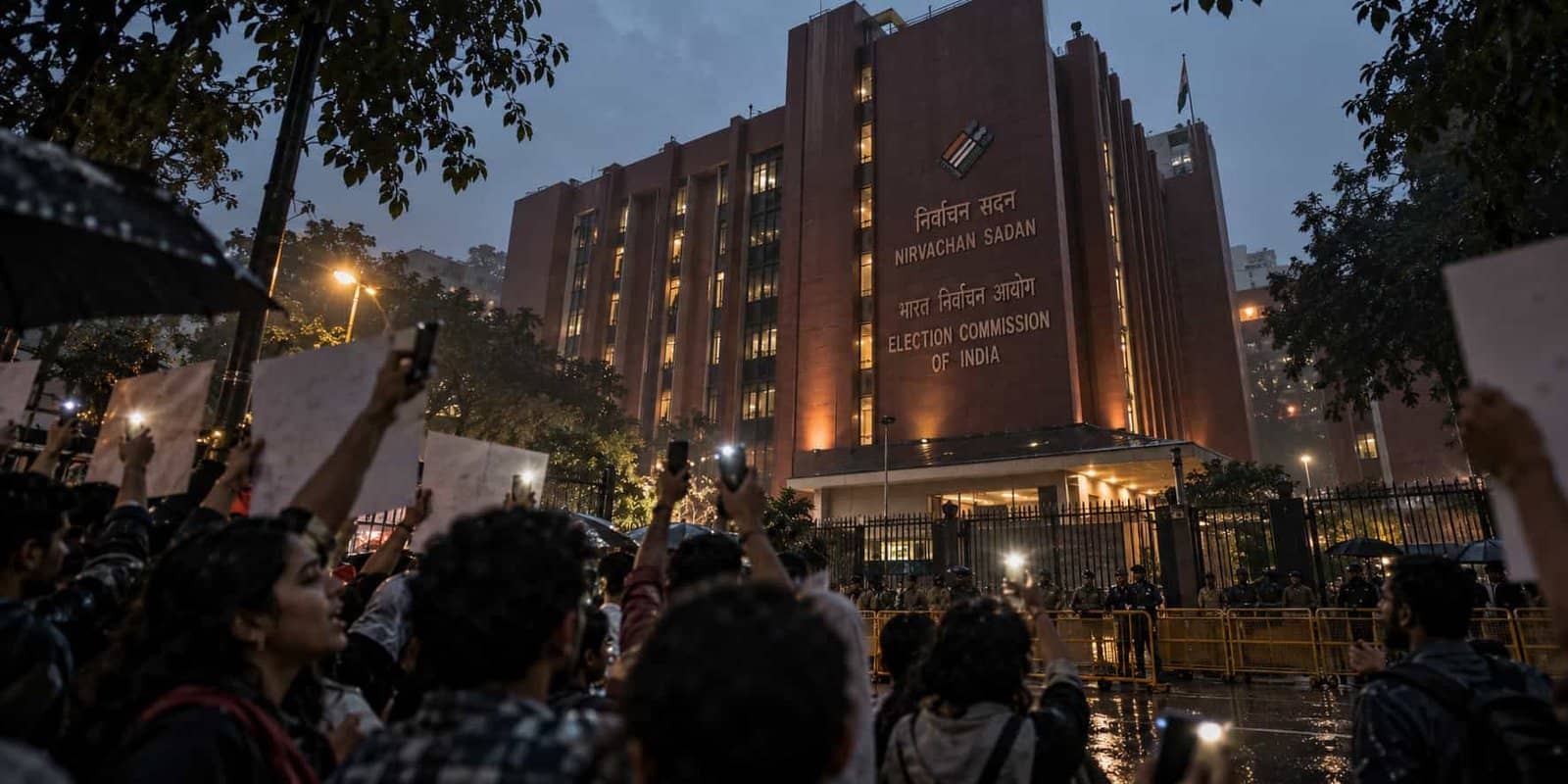
1. A Compromised Election Commission of India (ECI): She alleges that the ECI, the independent constitutional body tasked with conducting free and fair elections, has lost its neutrality. She claims it acted as an administrative extension of the ruling party at the center, turning a blind eye to massive violations and facilitating an uneven playing field. If the referee of the democratic exercise is perceived to be partisan, the entire legitimacy of the electoral apparatus falls into severe question.
2. Mass Electoral Deletion through SIR: A highly controversial and modern claim is the alleged weaponization of State Intelligence Reports (SIR) or systemic data algorithms to conduct targeted, mass deletions of voters from the electoral rolls. The allegation suggests that demographics known to favor the incumbent state government were systematically profiled and disenfranchised before polling day. This represents a digital-age form of systemic disenfranchisement that bypasses traditional booth capturing.
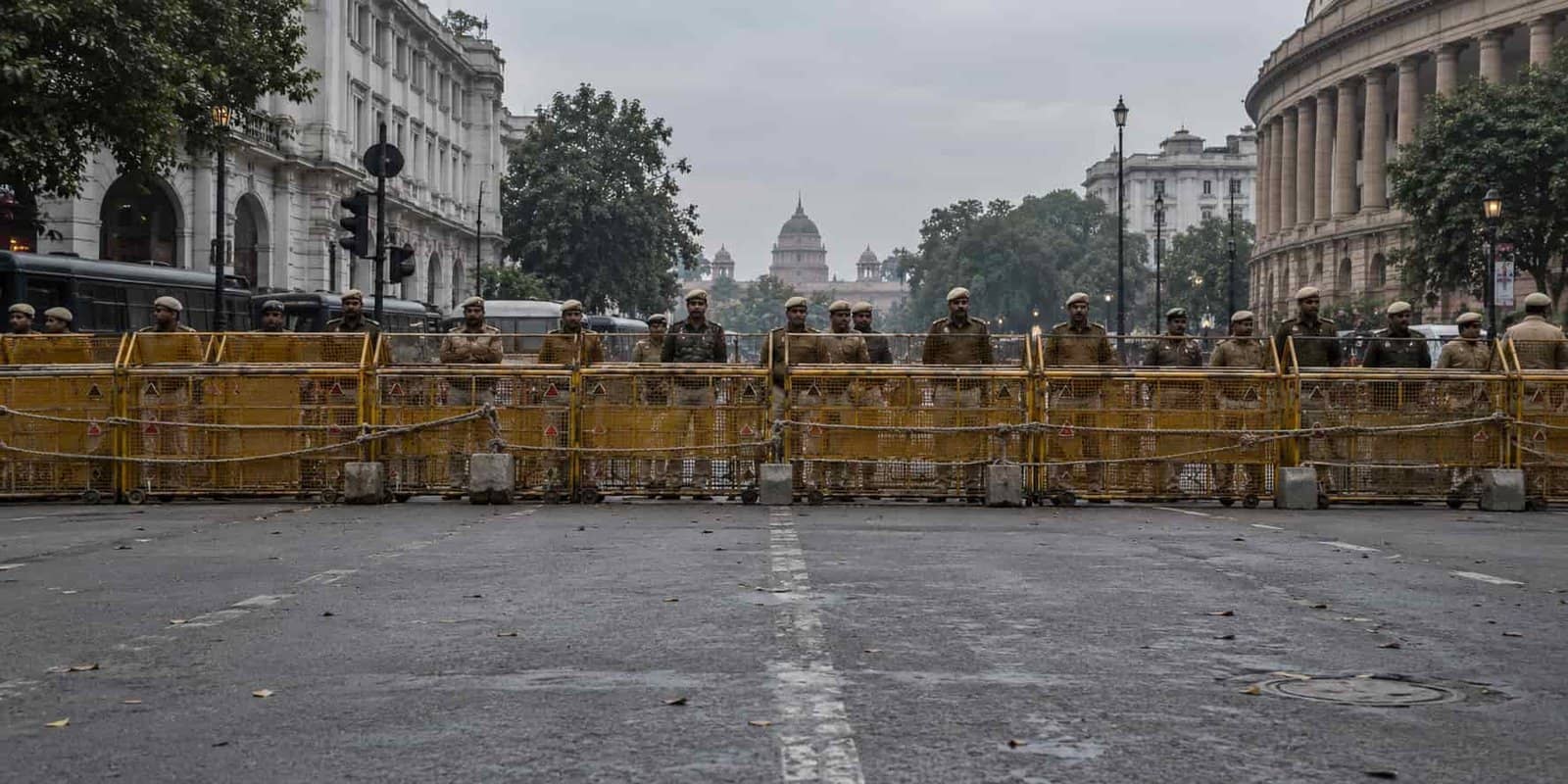
3. Weaponized Deployment of Security Forces: Banerjee argues that the unprecedented, staggering deployment of central paramilitary forces was not intended for maintaining law and order. Instead, she claims these forces were utilized to create an atmosphere of profound fear, intentionally suppress voter turnout in specific regional strongholds, and actively intimidate her party’s polling agents and grassroots workers.
By highlighting these three pillars, she is forcefully arguing that the election outcome was not a genuine reflection of the people’s will, but rather a manufactured administrative coup orchestrated through central institutions.
Q5: What happens legally and constitutionally on May 7th if she maintains her refusal to resign?
Answer: The constitutional machinery of India is entirely self-executing in this regard. On May 7th, the assembly will dissolve as dictated by Article 172(1). If Mamata Banerjee has not submitted her resignation letter to the Governor by that time, the Governor will have no alternative but to issue a formal notification dismissing her from the office of the Chief Minister. This dismissal will cite the expiration of the Assembly and the subsequent, necessary withdrawal of gubernatorial pleasure under Article 164(1).
Once dismissed, she will immediately and legally lose all administrative, executive, and police authority. The Governor will then proceed to either invite the leader of the party or coalition that has officially secured a majority in the newly concluded elections to form the government. Alternatively, if the election results are highly contested, officially delayed, or if there is a fractured mandate, the Governor may recommend the imposition of President’s Rule under Article 356 until a stable, recognized government can be formed.
Q6: If her claims are constitutionally untenable and she knows she will be dismissed, why is she doing this?
Answer: Mamata Banerjee is a veteran, astute politician who understands the framework of the Indian Constitution intimately. She fully knows that her legal claims to remain in power are untenable and that she will automatically be dismissed from the Chief Minister’s post on May 7th.
Therefore, her refusal to resign must be understood not as a viable legal strategy, but as a deeply calculated, high-impact political protest. As a leader whose political brand was built on street-fighting defiance against massive establishments, forcing a constitutional dismissal aligns perfectly with her narrative.
She is using the expiration of her term as a highly visible, national stage to protest against the palpable, controversial conditions under which these elections were fought. Her stance is a deliberate attempt to delegitimize the incoming government from day one and cast a long, dark shadow over the role of the ECI, the aggressive use of central forces, and the integrity of the digitized electoral rolls. It is a strategic transition from a lost electoral battle to a long-term optics war. She is signaling to her cadre and the entire nation that she has not been fairly defeated by the voters, but rather overthrown by a fundamentally compromised system.
Conclusion
The impending deadline of May 7th represents an immovable, unforgiving constitutional wall. Articles 164(1) and 172(1) work in powerful tandem to ensure that absolutely no state government can outlive its democratic mandate by even a single day. Mamata Banerjee’s tenure as Chief Minister will definitively and legally end when the clock runs out on the assembly’s five-year term.
However, her deliberate choice to force a gubernatorial dismissal rather than offer a customary resignation ensures that this transition of power will be remembered not as a peaceful democratic handover, but as a bitter, foundational dispute over the very integrity of India’s electoral machinery. While the Constitution ensures a mechanical transfer of power, her defiance highlights a deeper friction: the health of a democracy relies heavily on the loser’s consent to the fairness of the process. By loudly withholding this consent, Banerjee is forcing a national conversation on the systemic vulnerabilities of modern Indian elections.