Opening The Rift
therift
© 2026 The Rift. All Rights Reserved.
India’s Silence on the Iran War Exposes Its Global South Credibility Crisis
An Iranian warship returning from an Indian naval exercise was torpedoed by a US submarine 40 nautical miles off Sri Lanka. New Delhi said nothing.

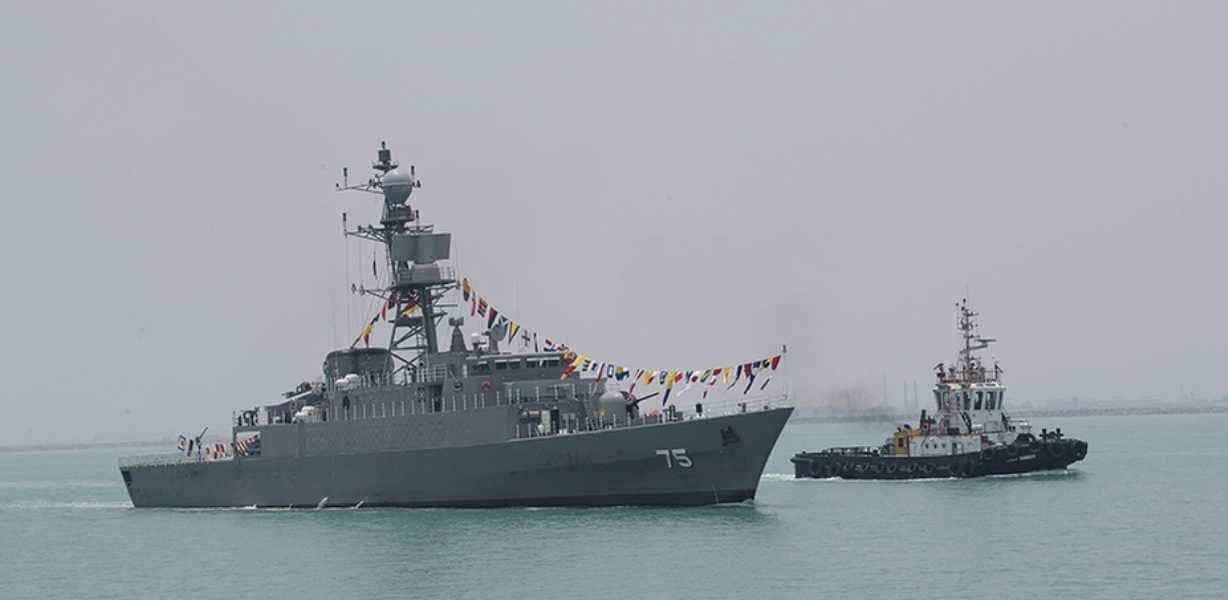
by wikimedia commons
Key Takeaways
1 of 3
Automatically generated. Read full article for complete context.
India’s silence on the Iran war is the story of a sovereign state watching its own sphere of influence get punctured and choosing to look away. On March 4, 2026, the USS submarine that torpedoed the Iranian frigate IRIS Dena did not do so in the Persian Gulf or the Strait of Hormuz, where a war was already raging. It did so 40 nautical miles south of Galle, Sri Lanka, in waters India has long considered its strategic backyard. The Dena was sailing home from MILAN 2026, a multinational naval exercise hosted by the Indian Navy at Visakhapatnam. India had invited the ship. The United States sank it.
Eighty-seven sailors died. Sixty-one remain missing. And from South Block, the sound was silence.
What Happened, and What It Means
The sinking of IRIS Dena was not an isolated naval engagement. It was one data point in a campaign that US CENTCOM commander Admiral Brad Cooper described with chilling directness: the goal was to sink “the entire Iranian Navy.” By March 4, the Pentagon confirmed the destruction of over 20 Iranian vessels and a submarine since Operation Epic Fury began on February 28. The Dena was the first surface warship torpedoed by an American submarine since World War II.
But what made the Dena’s destruction different was geography. This was not the Arabian Gulf battlespace. The torpedo struck in the Indian Ocean, within the operational area of the US 7th Fleet, hundreds of miles east of the combat zone. The ship was transiting international waters, returning from an exercise where it had operated alongside Indian, Sri Lankan, and a dozen other navies days earlier.
Why the Strikes Were Illegal
The legal case against Operation Epic Fury is not ambiguous. It is, by the consensus of international law scholars, former military officials, and UN rapporteurs, a textbook violation of the UN Charter.
Article 51 permits the use of force in self-defence only when an armed attack has occurred. Iran had not attacked the United States. The Trump administration invoked “imminent threat,” but the Intercept reported that Pentagon briefers told congressional staff on March 1 that Iran was not planning strikes on US forces unless Israel attacked first. Negotiations between Washington and Tehran, mediated by Oman, were ongoing when the bombs fell. The Omani mediator had described the talks as reaching a breakthrough the day before.
| Legal Standard | What It Requires | What Actually Happened |
|---|---|---|
| UN Charter Art. 51 | Armed attack must occur first | Iran had not attacked the US |
| Caroline Doctrine | Threat must be instant, overwhelming | Talks were ongoing; no imminent strike |
| War Powers Resolution | Congressional authorization | None obtained before strikes |
| Security Council | Must authorize use of force | No resolution sought or passed |
UN Special Rapporteur Ben Saul was unequivocal: “This is not lawful self-defence.” A retired US Air Force Lt. Colonel who served as chief of international law at CENTCOM called the operation a violation of the US Constitution, international law, and the War Powers Resolution simultaneously.
India’s Deafening Quiet
What India did not do is more telling. It did not condemn the assassination of Khamenei. It did not condemn the sinking of an invited guest ship in its own maritime neighbourhood. It abstained from UN resolutions condemning the strikes. Sonia Gandhi called it not neutrality but “abdication”, a betrayal of India’s balanced foreign policy tradition.
The timing made it worse. Modi had visited Israel on February 25, just 48 hours before the strikes, upgrading ties to a “Special Strategic Partnership.” Whether or not New Delhi had advance knowledge, the optics wrote their own headline across the Global South.
And then there is Chabahar. India has invested nearly $500 million in the port, its only reliable gateway to Afghanistan and Central Asia that bypasses Pakistan. The operational waiver from Washington expires April 26. With Iran under sustained bombardment and the bilateral relationship now radioactive, that investment sits in limbo.
50% of India’s oil imports and 60% of its LNG pass through the Strait of Hormuz, now effectively shut down.
The Global South Is Watching
India has spent a decade building its credentials as voice of the developing world, from the African Union’s G20 admission under its presidency to its NAM and BRICS positioning. That credibility rests on one principle: India speaks for sovereign equality and against the unilateral use of force.
When the world’s most powerful military alliance assassinated a head of state, sank a navy, and bombed nuclear facilities without Security Council authorization or evidence of an armed attack, India had a chance to be the voice it claims to be. It chose the phone call instead.
Strategic autonomy was never supposed to mean strategic silence. The question for New Delhi is whether the nations it wants to lead can tell the difference.