Opening The Rift
therift
© 2026 The Rift. All Rights Reserved.
Iran disallows Syria to Become a Weapon Against Hezbollah
Syria has changed sides, but it may not necessarily have chosen a side. It is choosing survival.

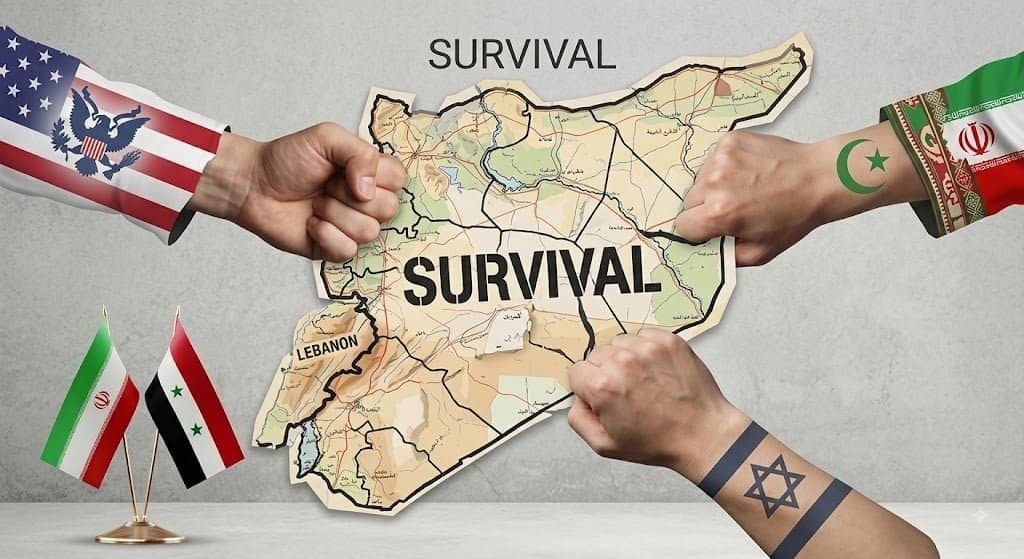
(Representative Image)
Key Takeaways
1 of 3
Automatically generated. Read full article for complete context.
The most revealing development in the changing Middle East may not be another Israeli strike or another American threat against Iran. It may be the extraordinary transformation of Syria. For decades, Damascus was the indispensable Arab partner of Tehran and the strategic bridge connecting Iran to Hezbollah in Lebanon. Syria provided Iran with geographical depth, political access and a conduit through which support could reach Hezbollah. The alliance survived wars, sanctions, diplomatic isolation and the Syrian civil war. Yet the fall of Bashar al-Assad in December 2024 fundamentally altered that equation. The government that now rules Damascus is seeking accommodation with Washington and the wider Western order, while Hezbollah, once a partner of the Syrian state, is increasingly being treated as a problem to be contained.
That transformation has created a remarkable strategic reversal. The question is no longer whether Syria will help Iran sustain Hezbollah. It is whether Syria might now be persuaded to help the United States and Israel weaken it. President Ahmed al-Sharaa has publicly ruled out a Syrian military intervention in Lebanon, despite repeated American pressure for Damascus to play a role in confronting Hezbollah. Yet the very fact that Washington has been pressing the new Syrian government to intervene tells us how dramatically the regional map has changed.
Reports emerging in recent days claim that Iran intervened to prevent a US-backed Syrian military operation against Hezbollah in Lebanon. The details of the reported Iranian warning, including claims about the consequences Tehran threatened to impose on Damascus, remain unverified and should therefore be treated as a report rather than an established fact. What is more firmly established is that Washington has been encouraging Damascus to take action against Hezbollah and that the Syrian leadership has so far resisted military intervention. The political significance lies precisely in that tension: Syria is being courted as a potential instrument against an organisation that was once protected by the Syrian state, while Iran is determined not to allow the transformation of Syria into an additional front against Hezbollah.
To understand why this matters, one has to look at what the fall of Assad actually meant for Iran. Syria was never simply another ally for Tehran. It was the territorial hinge of Iran’s regional strategy. Iran’s relationship with Hezbollah depended heavily on the ability to move personnel, weapons and supplies through Syrian territory. During the Syrian civil war, Hezbollah itself intervened militarily on the side of Assad, helping prevent the collapse of the Syrian government. Iran consequently regarded the survival of Assad’s Syria as part of the preservation of its wider regional security architecture. When Assad finally fell after his Russian and Iranian backers were distracted and weakened, Tehran suffered a strategic defeat of enormous proportions.
The new rulers in Damascus, however, inherited a Syria that could not afford to behave like Assad’s Syria. The country emerged from years of war economically shattered, institutionally fractured and militarily vulnerable. Its new leadership requires international recognition, reconstruction assistance, investment and relief from the economic restrictions that have strangled Syria for years. Washington possesses considerable leverage over many of these requirements. The logic of Damascus’s new foreign policy is therefore not necessarily ideological conversion. It is survival.
That distinction is important because it explains why Syria’s apparent realignment should not be interpreted as a simple decision to become an American ally. States emerging from prolonged war rarely have the luxury of acting entirely according to ideological preference. They bargain. They accommodate. They postpone confrontation. They search for room to manoeuvre. The new Syrian government is attempting precisely this: to move away from the old Iranian-Russian axis while simultaneously avoiding becoming an American military instrument.
Washington, naturally, sees opportunity in this vulnerability. President Donald Trump has spoken publicly about Syria taking action against Hezbollah, while American diplomacy has increasingly linked the Syrian and Lebanese questions. The United States is already pressing for the restructuring of Lebanon’s security environment and for Hezbollah’s weapons to be brought under state control. Trump has suggested that Syria could have a role in this process. The possibility of Syria becoming involved in Lebanon therefore fits into a broader American effort to reshape the balance of power across the Levant.
But what appears strategically attractive in Washington may look suicidal in Damascus.
A Syrian military intervention in Lebanon would not amount to simply sending troops across a border to confront Hezbollah. Syria and Lebanon have an extraordinarily complicated history, and the wounds created by Syria’s long military presence in Lebanon have not disappeared. Hezbollah, moreover, is not merely an armed organisation with a military wing that can be eliminated through conventional force. It is embedded in Lebanese politics and society and has accumulated decades of military experience. Any Syrian attempt to destroy it could therefore become a prolonged conflict with unpredictable sectarian and political consequences.
The risks for Syria would be particularly severe because the Syrian state itself is still fragile. Its leadership is attempting to consolidate authority over a country with competing armed groups, unresolved regional divisions and contested political loyalties. Opening a major military front in Lebanon could expose precisely those internal weaknesses that Damascus is trying to overcome. Recent analyses have consequently argued that a Syrian intervention would be extraordinarily costly and potentially destabilising for the new government.
This explains the careful language coming from Damascus. Al-Sharaa has explicitly said that Syria does not intend to intervene militarily in Lebanon. At the same time, his government has sought to establish a different relationship with its neighbour from the one maintained under Assad. Damascus wants control of its borders, wants to prevent armed groups from operating across them and wants Lebanon’s instability not to spill into Syria. It is therefore attempting to establish a relationship based on sovereign interests rather than the old model of Syrian dominance.
Iran’s dilemma is consequently much more difficult than it was under Assad. Tehran can no longer assume that Syria will provide Strategic depth for Hezbollah. It must now contemplate the possibility that Damascus could become strategically aligned with forces seeking to dismantle Hezbollah’s military capacity. The reported Iranian warning should be understood against this background. Even if the precise details of the alleged threat are eventually disputed, the underlying Iranian calculation is entirely intelligible: Tehran cannot easily tolerate the conversion of Syria from a strategic bridge into a platform for isolating and attacking Hezbollah.
For Iran, Hezbollah is not simply another regional partner. It represents a central element of the Deterrence structure that Iran has constructed over decades. Israel’s military superiority and America’s enormous regional presence make conventional Iranian deterrence extremely difficult. Hezbollah provides Tehran with strategic leverage close to Israel’s borders and therefore complicates any Israeli calculation about attacking Iran. Weakening Hezbollah is consequently not merely a Lebanese objective. It affects the wider balance between Iran, Israel and the United States.
This is why the struggle over Hezbollah cannot be separated from the struggle over Syria. If Hezbollah is cut off from its former Syrian strategic environment, its military position becomes more difficult. If Syria is then brought firmly into the American camp, Iran’s regional position suffers another major contraction. Tehran has therefore every reason to prevent Damascus from crossing a line from pragmatic accommodation with Washington into active participation in a campaign against Hezbollah.
But there is an irony here that Washington may underestimate. Syria’s dependence upon the United States does not necessarily mean that Syria will obey American wishes. A government concerned primarily with its own survival will calculate the cost of every military commitment. It may welcome sanctions relief, diplomatic recognition and reconstruction assistance while simultaneously refusing to fight America’s battles. That appears to be precisely the position Damascus is attempting to occupy.
The Syrian leadership therefore faces a classic dilemma of dependent states. External support can help secure survival, but it can also create expectations about what the recipient must subsequently do. The danger for Damascus is that today’s diplomatic patron could become tomorrow’s political commander. Syria may discover that accepting American assistance comes with pressure to undertake actions that expose it to Iranian retaliation, Hezbollah resistance, domestic instability or another prolonged war.
There is an additional complication. Israel itself remains deeply involved in the transformation of Syria. Since Assad’s fall, Israel has maintained military positions and carried out strikes inside Syrian territory, while Damascus has sought a security arrangement with Israel. Al-Sharaa has said that Syria wants diplomacy and a security agreement rather than confrontation, while continuing to insist on its claim to the occupied Golan Heights. Syria is thus being pulled simultaneously towards accommodation with Washington and Israel while trying to preserve enough independence to prevent itself from becoming a battlefield for other powers.
Lebanon makes the situation even more combustible. Israel’s continued military presence in southern Lebanon and the unresolved question of Hezbollah’s weapons have created a political stalemate. Hezbollah has resisted disarmament while Israel has linked its withdrawal to Hezbollah’s disarmament. Meanwhile, Israeli strikes continue despite the framework intended to stabilise the situation. On August 15, Israeli airstrikes in southern Lebanon killed at least 11 people, in the deadliest escalation since the June truce.
A Syrian intervention under such circumstances could therefore have consequences extending far beyond the immediate objective of confronting Hezbollah. It could internationalise the Lebanese crisis once again, deepen Sectarian tensions, destabilise the Syrian government and provide Iran with incentives to activate its remaining regional networks. A war intended to weaken Hezbollah could end up strengthening the very Regional resistance architecture that Washington and Israel are attempting to dismantle.
This is the fundamental contradiction in the American approach. Washington wants Syria to become strong enough to act against Hezbollah but sufficiently dependent upon Washington to follow its strategic direction. Yet a Syria that acquires the confidence and military capacity to intervene in Lebanon will also possess greater capacity to pursue its own interests. Conversely, a Syria still struggling to consolidate its authority may be incapable of fighting Hezbollah without endangering its own political survival.
Damascus appears to understand this contradiction. Its refusal to intervene militarily in Lebanon may therefore represent neither sympathy for Hezbollah nor a return to the Iranian alliance. It may simply be the assertion of a basic Syrian interest: the new government does not want to inherit another war before it has consolidated its own state.
That is precisely why the reported Iranian intervention is politically interesting. Tehran does not need Damascus to return to the old alliance immediately. It may only need to ensure that Syria does not become an active participant in the destruction of Hezbollah. Iran’s objective may therefore be defensive rather than restorative: having lost the Syria it once possessed, it wants to prevent the new Syria from being weaponised against its remaining strategic assets.
The deeper story, then, is not that Syria has suddenly become America’s ally or that Iran has somehow regained its old influence over Damascus. Neither proposition captures the complexity of the moment. Syria is attempting to escape dependence upon one set of powers without falling completely under the control of another. Iran is attempting to adjust to the loss of its Syrian ally without allowing that loss to become a platform for further strategic defeat. Hezbollah is trying to survive an unprecedented combination of Israeli, American and Lebanese pressure. And Israel sees an opportunity to alter the regional balance that has constrained it for decades.
What makes the present moment so dangerous is that all four calculations intersect in Lebanon.
Syria wants survival. Iran wants strategic depth. Israel wants Hezbollah permanently weakened. Washington wants a regional order in which Iran’s influence is sharply reduced. These objectives overlap in some places but collide in others. The temptation will therefore be for each power to believe that a little more pressure can produce the desired outcome. History suggests otherwise.
The Middle East has repeatedly demonstrated that political orders cannot be reconstructed simply by rearranging military alliances. Syria’s transformation itself is evidence of this. Assad’s government survived years of war with Iranian and Russian support, only to collapse with extraordinary speed when the circumstances sustaining it changed. The new Syrian leadership may now be tempted by Western support, but it has inherited the same geography, the same borders and many of the same regional pressures.
Syria can change its alliances much faster than it can change its geography. It remains the country through which the Levant connects Iraq, Lebanon, Turkey, Israel and the Mediterranean. Whoever controls Damascus therefore matters enormously to every regional power. But whoever rules Damascus must also live with the consequences of turning Syria into somebody else’s strategic instrument.
That is the real danger now.
Syria may have flipped sides because survival demanded it. But if Washington mistakes Syrian dependence for Syrian obedience, it may push Damascus into a war that the new government cannot afford. And if Iran mistakes its old influence over Syria for influence that still exists, it may equally miscalculate.
The reported Iranian warning, if accurately described, would therefore represent more than an attempt to save Hezbollah from a Syrian attack. It would signal Tehran’s determination to draw a line around the remaining elements of its regional strategic position. Iran has already lost Assad’s Syria. It may be prepared to accept that loss. What it is unlikely to accept is the transformation of that loss into an American-Israeli strategic victory in which the new Syria becomes the instrument for dismantling Hezbollah.
The great irony is that Syria’s political reversal may therefore produce a new form of regional confrontation rather than stability. The country that once served as the bridge between Iran and Hezbollah could become the contested ground over whether that bridge is finally destroyed. And Iran, having lost its old position in Damascus, may now find itself compelled to act precisely because Damascus is no longer on its side.
Syria has changed sides. But it may not necessarily have chosen a side. It is choosing survival. And in the Middle East, survival politics can be every bit as consequential as ideology.
“War does not create opportunism; it merely strips away the disguises that allow states to pretend that principle comes before survival.”
Disclaimer:The views and opinions expressed in this article are those of the author(s) and do not necessarily reflect the official policy or position of The Rift.