Opening The Rift
therift
© 2026 The Rift. All Rights Reserved.
NOW is The Time to Prepare for Saving Millions of Lives in Humanitarian Crisis Situations in 2027
Millions have already died due to the glaring inadequacy of humanitarian assistance, and if the situation does not change, millions more can die.

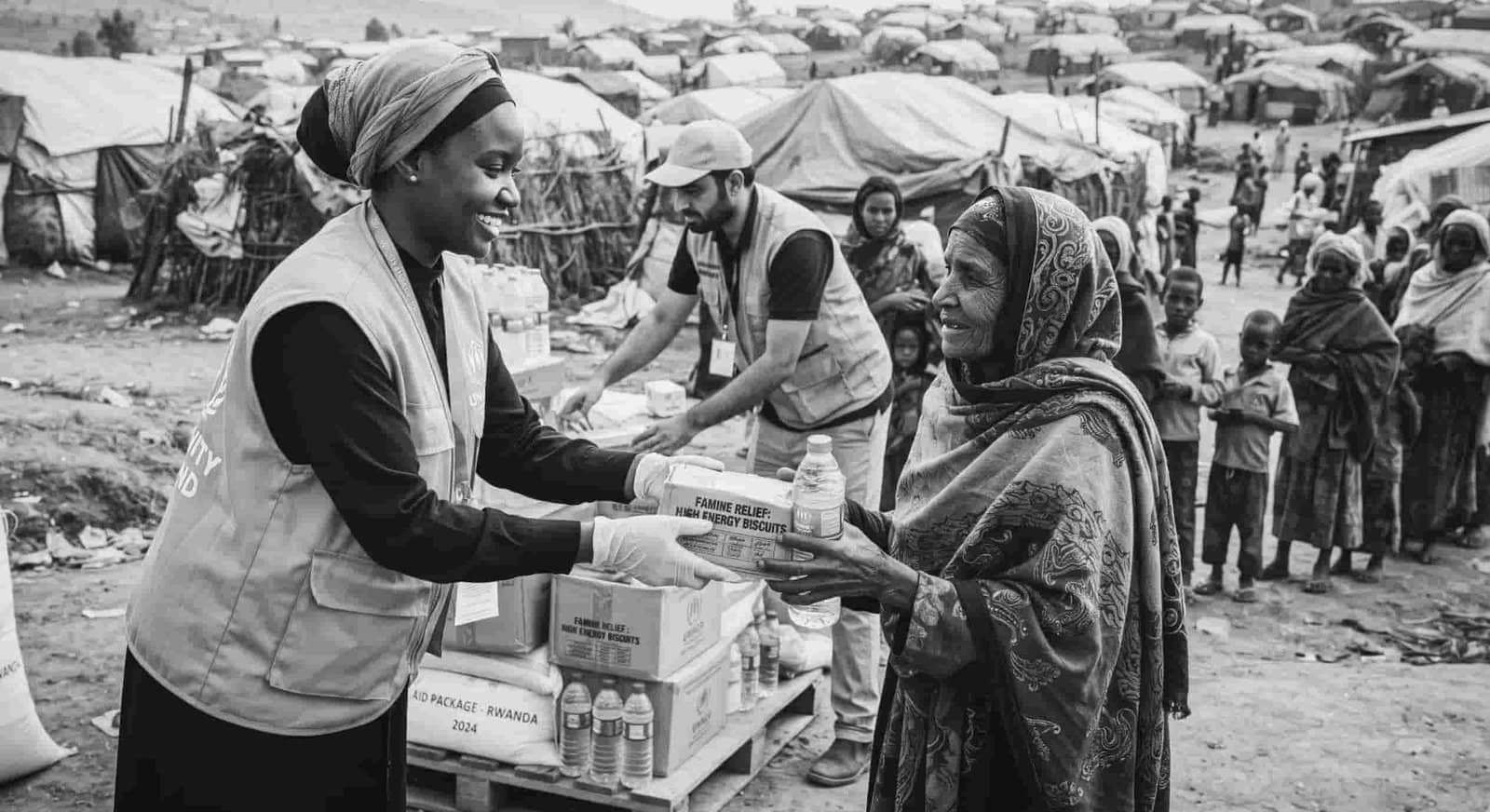
Representative Image
Key Takeaways
1 of 3
Automatically generated. Read full article for complete context.
For humanitarians all over the world this is a very crucial time of preparing to save millions of precious human lives in humanitarian crisis situations in the year 2027. The next year will inherit a very serious humanitarian crisis situation from the ongoing year 2026, and all possible efforts should be made to minimize distress and save lives in 2027.
While such efforts are often seen mainly in terms of saving human life, in addition the same efforts also strive to reduce the extreme distress and dangers faced by multiple millions of people in the form of extreme hunger and malnutrition, serious injuries, permanent harm (including harm to brain) and disabilities, exposure to weather extremes and other high risks.
The Global Humanitarian Overview (GHO) for a new year is generally released by the UN Office for the Coordination of Humanitarian Affairs (OCHA) sometime around the first week of the last month of the previous year. Hence we can reasonably expect to see the GHO for the year 2027 in early December this year (2026). It must be in the course of preparation now.
Those at OCHA and related organizations responsible for preparing this would no doubt have a strong sense of the deeply worrying, crushing situation they face. During the last three years the world of humanitarian crisis management has faced a double whammy—the scale and intensity of the problems have increased while the availability of funds has declined to an extent that could not have been imagined earlier.
This most difficult phase of humanitarian assistance started in year 2024 and is still continuing. A review of humanitarian aid decline experienced by the world in 2024 was published by the Carnegie Endowment for International Peace on December 10, 2025. Written by Allison Lombardo and Stewart Patrick this review titled ‘The Painful, Seismic Shift in Humanitarian Aid and What’s Next’ noted that while about 300 million people faced a humanitarian crisis, only about half of the funds targeted to be raised could become available (about 25 billion dollars instead of 49).
In a situation of funds crunch, a trend started of targeting only a part of the population affected by the humanitarian crisis. During 2024, out of the nearly 299 million people identified to be affected by humanitarian crisis, only 189 million were targeted by the OCHA-GHO relief effort. Ultimately, as the funds crisis worsened over the year, only 116 million people were actually reached.
In other words, while it was important for the humanitarian aid effort to reach about 300 million people, in fact 110 million were left out even to start with, and out of the 190 million that were targeted, only 116 million were reached.
Now even if you add sources outside the OCHA-GHO system, you see an overall significant decline from 2023 to 2024 of about 5 billion dollars or so. In fact there was a decline even in private sources, although to a lesser extent.
Commenting on the situation in year 2024 while presenting the outlook for 2025, the Emergency Relief Coordinator of the UNO system Tom Fletcher wrote at the end of 2024, “It has been a catastrophic year for the people we serve. It has also been a tough year for our humanitarians. We are under-funded, overstretched and under assault.” He also expressed concern that various crises are lasting longer, 10 years at an average. Now coming to the next year, in 2025 out of the nearly 305 million people identified to be affected by humanitarian crisis, the GHO planned to reach 190 billion people by raising 47 billion dollars. However faced with unprecedented funding cuts, led by the incoming Trump administration, there had to be a mid-year reduction of the targets. Now the GHO reduced itself just to ‘life-saving’ aid which amounted to 29.6 billion dollars for reaching 114 million people. However only 16.1 billion dollars could become available this year. In other words, even out of the revised minimal ‘life-saving’ budget, only just a little more than half was actually available.
Out of the ‘life-saving’ minimum of 114 million to be reached after reducing targets, about 16 million people were still left out as only 98 million people could be reached. What is more, we should remember that even while fixing downward revised targets, when originally 29.6 billion dollars were provided for 114 million people, this had meant that about 260 million dollars were being provided per million people, but when later only 16.1 billion dollars were provided for 98 million people, this meant that only 164 million dollars were actually available per million people. Thus while reaching the most vulnerable group where life-saving work was needed, not only were 16 million persons entirely left out but in addition among the 98 million people that were covered, per capita budget was reduced significantly from what was earlier considered to be life-saving—from 260 dollars per capita to 164 dollars per capita.
Let us also not forget that these 98 million people covered were less than one third of the 305 million identified at the beginning of the year 2025 in the GHO to be affected by the humanitarian crisis. In other words, 98 million were covered (on a significantly lower per capita basis compared to the desirable norm) and 207 million were left out. If we look at only the targeted population affected by humanitarian crisis, then also 92 million out of 190 million were not reached.
Incredibly big fall in humanitarian aid funding this year (2025) was to the extent of 81% by the USA, 76% by Germany, 41% by Saudi Arabia, 38% by Sweden, 35% by Japan and 34% by Canada. Thus some of the richest countries clearly contributed a lot to the worsening of the humanitarian crisis. The year 2025 has been called the worst humanitarian year on record in recent times (although 2026 may be emerging as even worse). Apart from the huge fund cuts, the safety of aid workers also suffered very badly. More aid workers were killed in 2025 compared to several previous years combined, the situation being the worst in Gaza and Sudan.
The changing situation was reflected in the fact that whereas in year 2019 nearly 64% of the projected needs were met, in year 2025 only 28% of the projected needs were met, as pointed out in a review by Sam Vigersky written for the Council for Foreign Relations.
Thus the year 2026 had started on a very grim note for the humanitarian crisis response. Keeping in view the low resource availability, the GHO gave a lower estimate of the people affected by humanitarian crisis situation at 239 million (despite there being hardly any indication that the numbers had come down from 300 million to 240 million following the extremely poor response in 2025). The task set out was to reach 135 million of these by raising 33 billion dollars. Then there was also the further sub-targeting of ‘life-saving’ effort to reach 87 million people at the cost of 23 billion dollars. However the latest estimate is that only around 15.7 billion dollars may be available by the end of year 2026. Thus it is likely that the number of people covered in 2026 turns out (at the end of the year) at an even lower level than the previous year, even though problems have increased in the course of new wars and conflicts affecting significant parts of Yemen, Lebanon, Iran and Ethiopia while the situation has worsened further in Ukraine, Sudan, South Sudan, the Sahel region, and some other places, while continuing at worrying levels elsewhere. Natural and climate related disasters too have continued at high levels.
Thus if we take an overview of the three years 2024-26, only about 30 to 40% of the populated affected by humanitarian crisis has been covered by the main UNO effort and those covered have received less than the needed budget, while other private and bilateral efforts, certainly commendable in themselves, have not significantly altered this situation of huge shortage in availability of humanitarian aid, except perhaps in a few areas of concentrated effort. During these three years the UN system made efforts to raise resources for only partial coverage, but even then these funds fell short drastically—instead of the nearly 130 billion dollars sought to be raised during these three years 2024-26 by OCHA and its partners for partial coverage (an amount much less than what is needed for complete coverage), only about 57 billion dollars could be raised. If we take only the even lesser estimates needed for the most urgently needed ‘life-saving work’, even then only about 32 billion dollars were available compared to the need for 52 billion dollars in the two years 2025 and 26.
In areas like Gaza and Sudan, due to the high insecurity of aid providers or too many restrictions or other difficulties in reaching the people most in need, even available aid could not reach people.
In these conditions life of millions of people caught in humanitarian crisis situations could not be saved. My estimate is that comparing a situation of good humanitarian assistance at world level for all people affected by humanitarian crisis with the situation that actually existed of huge shortfalls during the three years 2024 to 2026 (or 36 months), the excess of mortality is of about 20 million for three years. In other words, over 20 million human lives could have been saved during these three years 2024-26 if adequate humanitarian assistance in the form of nutrition, health, emergency life-saving care, shelter and some cash support was available to the nearly 300 million people affected by world-level humanitarian crisis.
In the context of the serious shortfalls with continuity for the last three years, it is highly likely that the condition of those suffering from longer term crisis has become even more precarious than before. Those who have been pushed into very serious situations in more recent times, when the ability to provide for new emerging humanitarian crisis situation was particularly weak, also face very difficult prospects. We cannot afford to ignore the results of several studies which have shown in the past that in such situations (such as in Rwanda and Somalia) mortality can sometimes rise very fast, much beyond the threshold for emergency situations.
This is the existing situation to cope with which the new GHO for 2027 should be prepared carefully. Keeping in view the huge tragedy that has been enacted in the course of the last three years, the new GHO must break new ground. It must clearly warn that millions have already died due to the glaring inadequacy of humanitarian assistance, and if the situation does not change in significant ways, millions more can die. Hence the GHO for 2027 should give a call for raising around 80 billion dollars for humanitarian assistance in the OCHA-GHO framework. In addition efforts to raise more from private and bilateral sources should also continue so that annual resources of about 100 billion dollars are available for humanitarian assistance in the year 2027. This may look like a lot of money in terms of what was available in the recent past, but this kind of resources can be raised by re-allocation of just 3 or 4% of the world’s military budget to the humanitarian cause, or if the top 10% income earners in the world (earning over $100,000 a year) agree to give one dollar every day during the next year, this too can be very helpful in meeting this urgent need. The UN-OCHA should of course strengthen its existing system, and make a strong plea to its existing donor base to increase funds available for humanitarian assistance, but in addition it should also broaden its base and reach out to many more people. The system of humanitarian assistance must improve in important ways with greater transparency, local involvement and decentralization, as well as improved safety and security for aid workers. Above all, maximum efforts are needed to strengthen peace efforts and peace movement at world level.
Disclaimer:The views and opinions expressed in this article are those of the author(s) and do not necessarily reflect the official policy or position of The Rift.