Opening The Rift
therift
© 2026 The Rift. All Rights Reserved.
The Destructive Legacy of Covert Regime Change: A Global South Perspective
Covert regime change operations are blatantly illegal under international law and constitute perhaps the greatest threat to world peace.

(Representative Image)
Key Takeaways
1 of 3
Automatically generated. Read full article for complete context.
The Iran invasion of February 2026 was preceded by quite open instigation of the people of Iran generally and certain ethnic or other groups, particularly, to rise against their government. This instigation, by the USA and Israel, was in turn preceded by years of more secretive efforts earlier, to use selected groups with their real or exaggerated grievances against the Iran regime as collaborators in various covert actions against the government and to harm the country.
As the situation worsened in recent times and the security threat from such actions increased, the Iran government launched strong actions against such hostile groups resulting in the death of many people. These actions were condemned in strong terms by several human rights groups, while the Iranian authorities said that their repressive actions were necessitated by security needs and were being misrepresented and exaggerated.
Although the instinctive response in any such case is to sympathize with the victim and extreme acts of causing avoidable pain and any injuries and deaths must almost always be condemned, nevertheless in such cases an additional question must be raised and answer to this question cannot be evaded even by human rights groups—doesn’t a legitimate government of a country from the Global SouthDefinitionA term used to refer to countries often characterized by lower income, higher poverty rates, and historical or ongoing experiences with colonialism and imperialism, primarily located in Africa, Asia, and Latin America. have the right to protect itself against the covert actions by the forces of imperialism (FI) when these actions pose high risks to the government as well as to the peace and stability of the country? After all, the conditions in which the repressive actions were taken arose only because of the covert actions of FI; thus, the latter need to be condemned equally, if not more. Secondly, even if a government decides to adopt the moral high ground in such a situation and refuses to take any repressive actions, can there be a guarantee that those collaborating with FI, given a free hand, will not act in even worse ways against those persons who are their targets?
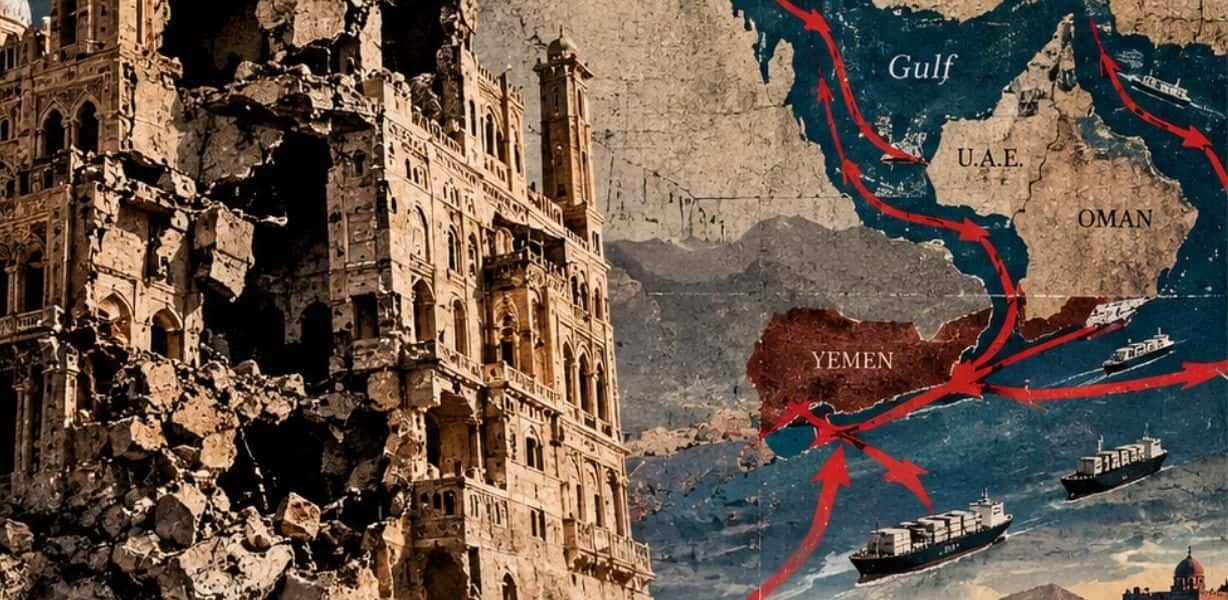
In Venezuela, we earlier saw a shocking form of regime change: the President and First Lady were kidnapped by an invading force and taken to the USA. While this was an arrogant display of power exercised in the most arbitrary way, this could work for FI to a considerable extent because of the many-sided covert activities that had been continuing earlier for a long time.
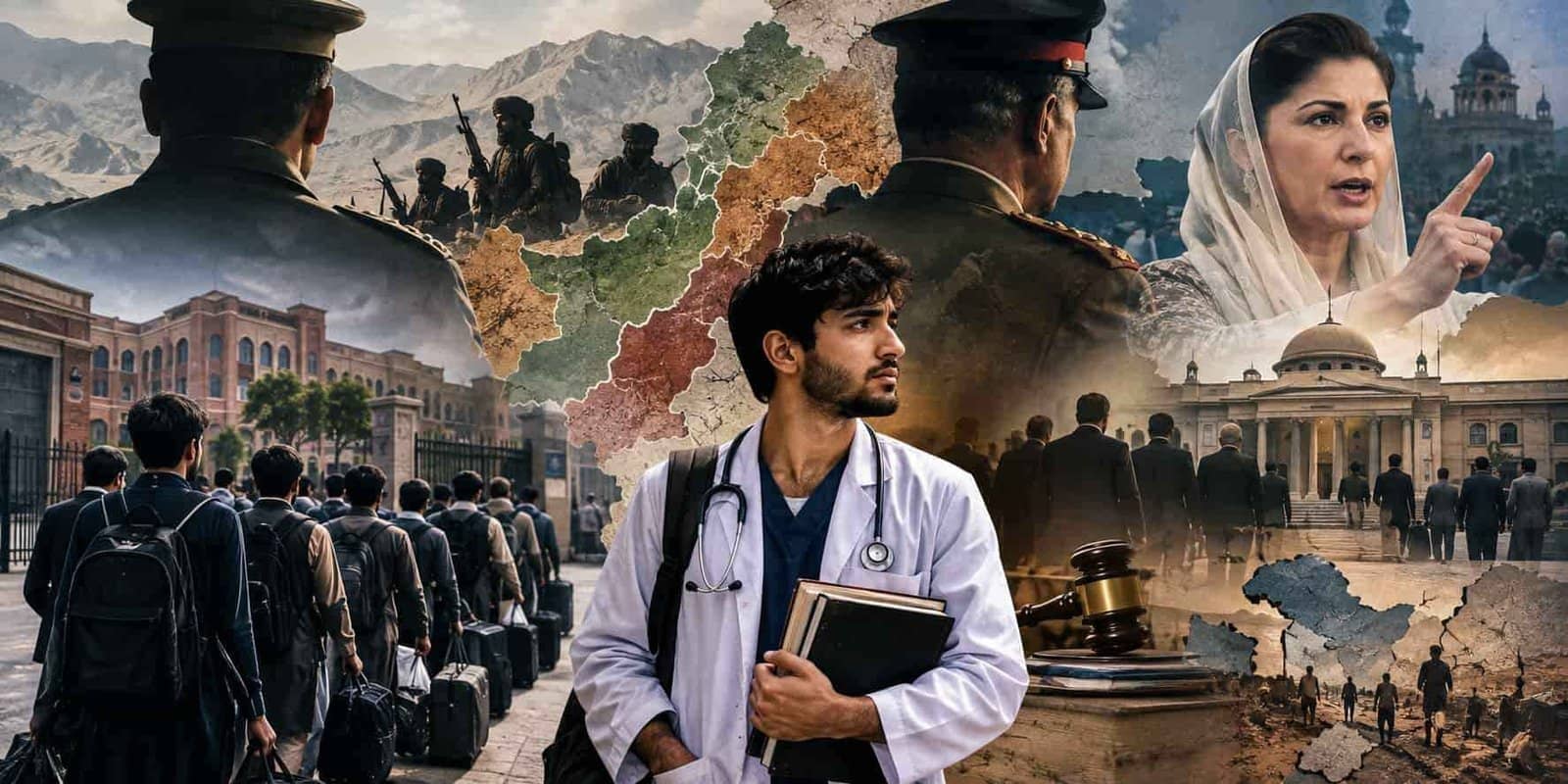
In South Asia in recent years, particularly in the context of recent regime changes in Bangladesh and Pakistan the suspected hand of FI is not so open or obvious as in Iran and Venezuela but nevertheless may have played a significant role, and in fact there have been allegations made by well-informed persons regarding this.
Earlier during the Cold War years both the USA, with or without allies, as well as the Soviet Union indulged in covert regime change and related operations. However, these operations by the USA are believed to have been more extensive.
In fact the extensive role and scope of the USA’s covert regime change operations was openly admitted in the National Security Council Directive 10/2Historical ContextA top-secret U.S. directive issued in 1948 that authorized the Central Intelligence Agency (CIA) to conduct covert operations, including propaganda, economic warfare, and subversion, against hostile states during the Cold War. in 1948 which stated, “Specifically, such actions shall include covert activities related to propaganda; economic warfare; preventative direct actions, including sabotage, anti-sabotage, demolition and evacuation measures; subversion against hostile states, including assistance to underground resistance movements, guerillas and refugee liberation groups, and support of indigenous anti-communist elements in threatened countries of the world.”
“the United States supported authoritarian forces in 44 out of 64 covert regime changes, including at least 6 operations that sought to replace liberal democratic governments with illiberal authoritarian regimes.”
According to research conducted by Lindsey A. O’Rourke, Professor of Political Science at Boston College (earlier at Chicago University), USA, there were 64 covert interventions for regime change by the USA during the Cold War years of 1947-89. These and other findings of this eminent researcher have been published in her book ‘Covert Regime Change—America’s Secret Cold War’. This book tells us that, in terms of the data base created by the author based on her research, 25 of USA’s covert operations saw a US-backed government assume power, whereas the other 39 failed to achieve this goal. As much covert regime change work is promoted in the name of democracy, it is very important to note from this book that “the United States supported authoritarian forces in 44 out of 64 covert regime changes, including at least 6 operations that sought to replace liberal democratic governments with illiberal authoritarian regimes.” Further this book tells us that 9 out of 13 US-backed military coup attempts successfully ousted their targets. The author adds, “I identified 16 cases where Washington sought to influence the result of a foreign election by covertly funding and spreading propaganda on behalf of its preferred candidates, often doing so beyond a single election cycle.”
US Covert Regime Change Operations (1947-1989)
64
Total Covert Interventions
25
US-Backed Govts. Assumed Power
39
Failed to Achieve Goal
44
Supported Authoritarian Forces
9/13
Military Coups Successful
16
Election Influence Cases
VISUALS BY THE RIFT
Regarding the impacts of regime change operations this book states, “For target states, the consequences are often catastrophic. Covert and overt regime changes have fuelled bloody civil wars, brought brutal dictators to power, and increased the odds of government-led episodes of mass killing.”
While this book is confined mainly to studying the Cold War years, the author emphasizes the continuity of regime change in the post-Cold War years. To quote, “Regime change is not just a Cold War phenomenon. On the contrary, each American administration in the post-Cold War era has embraced regime change, intervening overtly and covertly in places such as Haiti (1994), Afghanistan (2001), Iraq (2003), Libya (2011), and Syria (2012). This preference for regime change appears unlikely to change anytime soon.”
While the author should be complimented for doing her best within the constraints of US academia, this should not be taken to be a comprehensive account as there are important gaps such as those relating to Indonesia in the 1960s and South Asia in the 1970s.
Some regime change attempts of the last decade that have attracted more attention have been in the context of such important countries as Ukraine (2014), Pakistan (2022) and Bangladesh (2024), the first mentioned being the most harmful historically. My estimate is that the chain of tragic events initiated by the Ukraine regime change has, directly as well as through indirect impacts, already led to over a million deaths.
In terms of the subsequent tragic impact in the form of the loss of millions of lives, the assassination by FI of the great independence leader and the first Prime Minister of the Democratic Republic of Congo Patrice Lumumba in 1961 soon after the independence of the country cannot be forgotten. If Lumumba had been allowed to live and lead he could have provided much needed stability to a country very rich in natural resources, bringing much needed peace and prosperity to people who had suffered earlier from the most cruel form of colonialism, and in addition he would have contributed significantly to the progress of the entire African continent. However, FI not only assassinated him but also helped cruel dictators to rule the country for decades in ruthless ways, leading to civil wars and wider conflicts, resulting in the loss of millions of lives. What is more, there is evidence that the newly elected U.S. President John F. Kennedy was actually very sympathetic to Lumumba and would never have permitted his assassination. So, a particularly horrible man in the CIA hurried the early assassination of Lumumba before Kennedy could be firmly established in his new presidency and then hid it from Kennedy for quite some time. Kennedy was very sad when he heard this. Later, this same horrible man played a very important role in the assassination of President Kennedy, thereby striking the biggest blow to the forces of peace in the U.S. from which this country has still not recovered.
In Indonesia, during the ouster of President Sukarno in the 1960s, FI, through local collaborators, caused monstrous violence in which communists and their sympathizers were most heavily targeted, resulting in the killing of nearly 0.5 million to one million people in one of the cruelest mass murders ever. This was aimed at destroying President Sukarno’s base and preparing the way for decades of authoritarian rule under Suharto.
In country after country, regime changes have caused massive distress and disruptions. Whether the regime change objective was achieved in any country or not, the country and its people were definitely harmed, often in very serious ways. Democracy was also definitely harmed, as covert operations certainly violate the basic spirit of democracy.
In addition, often it is left or left-of-center forces/governments, as well as working classes, which are harmed the most in such covert operations (although sometimes covert regime change operations are also directed against right-wing nationalist regimes that insist on following independent policies in some important respects, including their foreign policy).
Left and democratic, as well as working-class forces, in the world suffered a big setback with the impeachment of Brazil’s President Dilma Rousseff in 2016, the imprisonment of front-line presidential candidate Lula da Silva in 2018, and the loss of PT (Workers’ Party) in the 2018 elections. A recent study has confirmed widespread allegations, appearing time and again in Brazil and elsewhere, that the U.S. played an important part in these events through its highly opportunistic use of the anti-corruption movement, also involving illegal actions directed against these leaders and their political party. This study is titled ‘Anti- Corruption and Imperialist Blind Spots—the Role of the US in Brazil’s Long Coup’ and is authored by Brian Mier, Bryan Pitts, Sean T.Mitchell, Rafael R. Ioris and Kathy Swart. This has been published in Latin American Perspectives.
This study states: A comprehensive examination of the evidence available, contained in U.S. government statements, English-language media accounts, and hacked Telegram chats among Brazilian prosecutors, indicates that the U.S. was widely involved in the ‘long coup’ that removed the left from power in Brazil in 2016 and secured the elections for the far right in 2018. This study concluded, “Over the past decade, continuing evidence has emerged that clearly demonstrates that the U.S. government, particularly the Department of Justice, under both Obama and Trump, played a key role in supporting Lava Jato’s politically motivated witch-hunt against the PT. The U.S. has long used invasions, insurgencies, and economic blockades to advance its interests in Latin America.’s politically motivated witch-hunt against the PT…The US has long used invasions, insurgencies and economic blockades to advance its interests in Latin America. Today it has added the tool of anticorruption to its arsenal.”
What should serve as a lesson to other developing countries is how U.S. operatives (using local collaborators) could achieve a government change and the imprisonment of highly popular leaders of the ruling party, even in a leading country. Another very disturbing aspect is how opportunistic use was made of anti-corruption rhetoric in a way that good leaders were targeted for corrupt practices while racketeers were celebrated as heroes. Thus, while opposing corruption in sincere and honest ways must be a very important aspect of any democracy, caution should be exercised clearly regarding the opportunistic use of any anti-corruption movements.
Covert regime change operations are blatantly illegal under international law (notably the Doctrine of Non-Intervention, as expressed, for example, in UN General Assembly Resolution 2025, 1970), and constitute perhaps the greatest threat to world peace, as they profoundly destabilize nations and often lead to wars and other civil disorders.”
All this is of increasing relevance for the people of South Asia which has seen several regime change operations over the years. Jeffrey D. Sachs, University Professor and Director of the Center for Sustainable Development at Columbia University, has written recently: “Covert regime change operations are blatantly illegal under international law (notably the Doctrine of Non-Intervention, as expressed, for example, in UN General Assembly Resolution 2025, 1970), and constitute perhaps the greatest threat to world peace, as they profoundly destabilize nations and often lead to wars and other civil disorders.”, as expressed for example in the UN General Assembly Resolution 2025, 1970), and constitute perhaps the greatest threat to world peace, as they profoundly destabilize nations, and often lead to wars and other civil disorders.”
Professor Sachs has written this in an article published in Common Dreams (and elsewhere) in mid- August 2024, titled ‘Accusations of US regime-change operations in Pakistan and Bangladesh warrant UN attention’. In this article, he has written that there is very strong evidence of a U.S. role in the toppling of Imran Khan’s government in Pakistan in 2022 and the likelihood of something very similar in the overthrow of Prime Minister Sheikh Hasina’s government in Bangladesh more recently in 2024. The two main leaders have themselves alleged such involvement of US role. Prof. Sachs writes, “Their grave accusations against the U.S., as reported in the world media, should be investigated by the UN, since, if true, U.S. actions would constitute a fundamental threat to world peace and regional stability in South Asia.”
In fact regime change operations in South Asia go much further back in history, particularly the 1970s. This decade had started with the liberation of Bangladesh, with the very valuable help of India and particularly India’s Prime Minister Indira Gandhi. U.S. foreign policy, guided by Kissinger under President Nixon, had strongly sided with Pakistan and supported its genocidal actions. They were extremely angry when Bangladesh emerged as an independent country. They were particularly angry with Mrs. Gandhi and raged at her growing international stature. When front-page photos emerged of Fidel Castro hugging a blushing Indira Gandhi at a summit of non-aligned countries, the anger of the duo passed all limits. Both Kissinger and Nixon were equally angry with the popularity of Bangladesh’s first Prime Minister, Sheikh Mujibur Rahman. To add to their discomfort, in Pakistan, Zulfiqar Bhutto was emerging as an independent leader with a mass base, while the U.S. increasingly needed a pliant leader there, particularly to support its plans in Afghanistan in the near future. Hence, the U.S.’s plans for this region in the 1970s were targeted against three top leaders: Indira Gandhi, Mujibur Rahman, and Z. Bhutto.
On August 15, 1975, in a cruel assault in Dhaka, Mujibur Rahman was killed along with most of his family members in a military coup that had links to FI. More details of this can be found in my article titled ‘Who was behind the killing of Bangabandhu Mujibur Rahman,’ published on March 26, 2021, which also mentions some important conclusions of Lawrence Lifschultz and his book, \Bangladesh—The Unfinished Revolution\. In Pakistan, the U.S. found its man in General Zia, who first imprisoned and then hanged Bhutto in a decision that shocked people in the country. Zia went on to play a close collaborative role with the USA regarding Afghanistan and in other ways.
Meanwhile, nonstop difficulties were being created for Mrs. Gandhi in India. While the ruling party Congress complained about ‘the foreign hand,’ many in right-wing parties tried to ridicule this, symbolized by a prominent right-wing politician wearing a badge saying ‘I am a CIA agent.’ An interesting situation emerged where the mobilization of sincere youth for real reforms existed side by side with FI-supported regime change. However, due to the impact of the latter, the resolution of problems became impossible, as FI was interested not in solutions but in the downfall of the Gandhi regime. A little later, when I started working as a reporter, some of these very sincere activists became my good friends and told me about their own frustrations when their idealism-driven activism appeared to be taken over by other forces.
In the midst of growing turmoil, Mrs. Gandhi declared an internal emergency. However, this clampdown on democracy, several wrong decisions, and the advent of unwise advisers resulted in her crushing loss in elections. She fought her way back to power, but FI continued to create problems for her with the support of hostile neighbors by supporting secessionist forces. All this ultimately ended in her assassination in 1984.
There is much to learn also from the more recent ouster of Prime Minister Sheikh Hasina from Bangladesh. As her parents and most family members had been killed in an earlier regime change operation, Sheikh Hasina was determined to stand up to regime change operations boldly. Of course, there were also genuine problems faced by students and youth, and once again, we could see movements of sincere youth coexisting with regime change operations. Whereas in the case of sincere social movements, Sheikh Hasina could have hoped to find solutions; this was not possible in the context of those bent on ousting her. Ultimately, she was ousted; her political party, which was the biggest one, was banned by authoritarian forces; and, in the end, the government that emerged has a much worse record than the ousted one.
Keeping in view all these happenings in the region, it would be advisable for the South Asian region to be more cautious. In particular, it is important for people to distinguish between genuine social movements and those involving regime change operations. In addition, precautions to avoid high-risk situations should be taken. If about a hundred thousand protesters gather in a sensitive or high-security place and only one percent want to create mischief, then this can easily lead to many innocent persons getting killed.
These are complex issues and easy answers are not available. However, the broad principle is clear: sincere social movements and peaceful protests should always be welcome in democracies, but they too must exercise certain responsibilities to avoid adverse and high-risk situations they also do not want. Such caution is particularly needed in places and times when the likelihood of regime change operations is high.
Let me end with two quotes from the ‘great grandfather’ of regime change operations, namely Henry Kissinger. In a clear declaration of his intentions at a time when popular support for Salvador Allende and his socialist agenda was increasing in Chile and elections there were due, Kissinger said, “I don’t see why we need to stand by and watch a country go communist due to the irresponsibility of its own people. The issues are much too important for the Chilean voters to be left to decide for themselves.” On another occasion, Kissinger said that while the U.S.’s enmity is, of course, dangerous, its friendship can be even fatal. This can be interpreted in various ways, but the more obvious explanation is that as the U.S. wants its friends to follow its own agenda, it is better to keep them weak and fragmented rather than strong and united, and the U.S. can lend a willing hand to ensure this. Kissinger said this many decades back, but today Trump may be happy to agree, even own the statement!
Disclaimer:The views and opinions expressed in this article are those of the author(s) and do not necessarily reflect the official policy or position of The Rift.
*GeopoliticsCold WarCovert OperationsGlobal SouthImperialismInternational LawLatin AmericaRegime ChangeSouth Asia