Opening The Rift
Israel’s Unfinished Struggle for Power, Legitimacy and National Unity
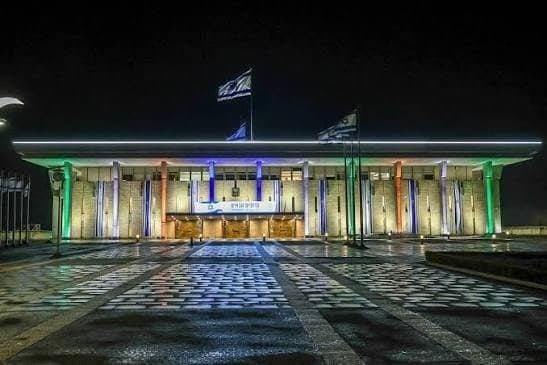
Israel’s political crisis is about a system trapped between survival and transformation, where power has become an end in itself.

Key Takeaways
1 of 3
Automatically generated. Read full article for complete context.
Israel’s Unfinished Struggle for Power, Legitimacy and National Unity
The collapse of negotiations between Benjamin Netanyahu’s Likud and Gadi Eisenkot’s Yashar party is not simply another episode of political disagreement in Israel. It is a revealing moment in a much deeper struggle over power, political legitimacy, ideological direction and the future character of the Israeli state. At a time when Israel is grappling with the consequences of the October 7 attacks, the devastation of the war in Gaza, growing international isolation, internal political fractures and questions about the credibility of its leadership, the failure to establish a broad-based government exposes the widening cracks within the country’s political establishment.
At first glance, the disagreement appears to centre on two questions: who should lead the next government, and whether far-right National Security Minister Itamar Ben-Gvir should be included in the proposed unity arrangement. Yet these questions are only the visible surface of a much more complicated political landscape. Beneath them lies a contest between political survival and national responsibility, between ideological conviction and pragmatic accommodation, and between the desire for a broader political consensus and the unwillingness of political actors to surrender the power that sustains them.
The negotiations between Likud and Yashar have consequently become a political theatre in which the language of unity is repeatedly invoked, even as the conditions for genuine unity remain elusive. The latest round of talks ended without substantial agreement, with the two sides continuing to disagree over leadership, the composition of the government, the October 7 inquiry, judicial reform and the role of the far-right within the political system. The agreement to continue discussions may suggest that the door remains open, but the fundamental contradictions between the two camps have not disappeared.
Unity without surrendering power
The central contradiction in the negotiations is that both sides speak of national unity while defining unity in terms that preserve their own political authority. Netanyahu’s willingness to discuss a unity government does not appear to involve a meaningful relinquishment of the premiership or a fundamental reorientation of the political agenda that has sustained his government. For Likud, unity seems to mean the incorporation of political opponents into a governing arrangement whose principal terms remain determined by Netanyahu and his allies.
Eisenkot, meanwhile, faces the difficult task of constructing an alternative government while attempting to avoid the appearance of compromising on the very principles that brought his political bloc together. His insistence that Netanyahu cannot simply continue in office as though the political crisis had never occurred reflects the conviction that Israel requires a change in leadership, accountability and a different political direction.
This is where the negotiations become more than a dispute over ministerial positions. They expose a fundamental question about Israeli democracy: can a political system that has become increasingly personalised around powerful leaders create a government capable of transcending partisan loyalties? Or has the pursuit of power become so deeply embedded in the political culture that even a crisis of national magnitude is incapable of producing genuine political renewal?
Netanyahu’s political longevity has been built on his capacity to navigate crises, divide opponents, construct alliances and transform political survival into an art. Yet the same strategy that has enabled him to remain at the centre of Israeli politics has also contributed to the country’s growing polarisation. His opponents increasingly view his continued leadership not simply as a political disagreement but as an obstacle to accountability and institutional restoration.
For Netanyahu, surrendering the premiership would therefore represent far more than a tactical concession. It could potentially undermine the political architecture through which he has maintained influence for years. The question of who occupies the prime minister’s office has become inseparable from the question of whether the political system can hold its leadership accountable for the failures of the past.
Ben-Gvir and the normalisation of the far-right
The dispute over Itamar Ben-Gvir’s inclusion in a prospective unity government is equally revealing. His presence has become a test of the boundaries of Israeli political legitimacy. For Eisenkot and sections of the opposition, Ben-Gvir represents an ideological trajectory that has moved Israeli politics increasingly towards the far-right, nationalist and exclusionary positions. His exclusion is therefore not merely a matter of coalition arithmetic but an attempt to draw a line around what should be considered acceptable political participation in a government seeking to represent a broad national consensus.
For Netanyahu, however, the demand to exclude Ben-Gvir threatens the cohesion of his political bloc and potentially the very political strategy through which he has survived. The far-right has become an indispensable component of the political ecosystem that sustains his leadership. To exclude Ben-Gvir would be to acknowledge that the political centre and the far-right cannot be treated as interchangeable partners in the pursuit of power.
This is an important distinction. Israeli politics has increasingly witnessed the normalisation of political positions that once existed at its ideological margins. The question is no longer simply whether far-right politicians are included in government, but whether their political influence has fundamentally reshaped the boundaries of mainstream political discourse.
Ben-Gvir’s political trajectory is emblematic of this transformation. His positions on Palestinian rights, the occupation, the use of force, policing and the treatment of Arab citizens have repeatedly generated controversy. Yet his political ascent demonstrates how electoral calculations can transform previously marginal ideological positions into governing priorities.
The negotiations therefore reveal an uncomfortable truth: political unity is being sought without necessarily addressing the ideological forces that have contributed to the divisions within Israeli society. Excluding Ben-Gvir from a particular government may alter the immediate political configuration, but it does not automatically dismantle the political constituency or ideological framework that has enabled his rise.
October 7 and the question of accountability
Perhaps the most consequential issue confronting the negotiations is the proposed inquiry into the October 7 attacks. The debate over the nature, scope and composition of such an inquiry is not simply an administrative disagreement. It strikes at the heart of the question of political accountability.
The October 7 attacks exposed catastrophic failures in Israel’s security, intelligence and political leadership. For families of those killed, for survivors of the attacks and for Israelis who continue to live with the consequences of the trauma, the demand for a comprehensive investigation is not a political luxury. It is a matter of national necessity.
Yet the establishment of an inquiry has become entangled in the political struggle over the future government. Questions about who would appoint the commission, what period it would investigate and whether its findings would implicate senior political and military leaders have become politically sensitive. The possibility of a state commission of inquiry has therefore emerged as another point of friction between Likud and Yashar.
A genuine inquiry cannot be designed to protect political leaders from scrutiny. Nor can its legitimacy depend on the willingness of those who may be investigated to determine the terms under which the investigation takes place. The credibility of such an inquiry must rest on its independence, transparency and ability to examine the failures of the political and military establishment without fear or favour.
If the October 7 catastrophe is reduced to another political bargaining chip, Israel risks deepening the sense of betrayal among its citizens. Accountability cannot be postponed indefinitely in the name of political stability. Indeed, the absence of accountability may ultimately prove far more destabilising than the political consequences of a truthful investigation.
The struggle over the inquiry also reflects a wider question: can Israel confront the failures of its own political and security institutions while continuing to insist that its military and political leadership remain beyond meaningful scrutiny?
The contradictions of national unity
The concept of national unity is particularly complicated in the Israeli context because it is frequently invoked without confronting the contradictions that define the political system. Unity is often presented as a consensus among Jewish political parties, while the position of Palestinian citizens of Israel and Arab political parties remains contested or marginalised.
The negotiations have also highlighted the difficult question of whether a government could be formed with the support of Arab parties. Some political leaders regard such cooperation as an unacceptable compromise, while others argue that the exclusion of Arab political representation is itself a contradiction of democratic principles.
The political arithmetic of the present crisis makes this question increasingly difficult to avoid. Israel’s parliamentary system may require alliances that cross traditional ideological boundaries if a stable government is to be formed. Yet political leaders continue to face pressure from constituencies that reject such arrangements.
The exclusion of Arab political parties from the mainstream conversation about national unity reveals the limitations of the concept itself. If unity is defined exclusively within the Jewish political spectrum, it cannot be described as a genuinely inclusive national consensus. It becomes a political arrangement designed to reconcile competing factions within one segment of society while leaving another segment outside the framework of national decision-making.
The contradiction is particularly striking in a country that repeatedly invokes democracy, citizenship and national security. The political legitimacy of a government cannot be measured only by the number of parliamentary seats it commands. It must also be measured by the extent to which it recognises the political rights and representation of all citizens.
At the same time, the divisions within the Jewish political establishment are profound. The disagreements over the ultra-Orthodox exemption from military service, judicial reform, the role of religious parties and the future of the occupation demonstrate that the Israeli political crisis is not simply a contest between Netanyahu and his opponents. It is a struggle over the very foundations of the state and the relationship between religion, nationalism, democracy and military power.
The unresolved ideological direction of Israel
The negotiations also expose the absence of a coherent consensus about Israel’s future. Even if Likud and Yashar were to reach an agreement on leadership and coalition composition, the deeper ideological divisions would remain.
The question of judicial reform continues to divide the political establishment. Netanyahu’s allies have sought to reshape the relationship between the judiciary, parliament and executive, while opponents see these efforts as a threat to democratic checks and balances. The debate has not disappeared; it has merely been suspended within the larger political negotiations.
The question of military service and exemptions for ultra-Orthodox men is another unresolved fault line. For many Israelis, particularly those who have served in the military or whose families have been directly affected by the war, the demand for a more equitable distribution of military responsibility has become increasingly urgent. Yet the political influence of ultra-Orthodox parties continues to complicate efforts to reform the system.
These disagreements point to a larger crisis of political identity. Israel’s political establishment is struggling to reconcile its competing visions of a Jewish state, a democratic state, a security state and a state governed by religious and nationalist imperatives. These visions are not always compatible, and the current negotiations have not demonstrated that political leaders are prepared to confront those contradictions directly.
The question of Palestinian statehood further illustrates the limitations of the proposed unity arrangement. Likud’s position remains firmly opposed to Palestinian statehood, while the broader political debate within Israel has increasingly been shaped by security considerations, territorial control and the political influence of settler movements. Even where opposition parties disagree with Netanyahu on leadership and governance, there is no guarantee that they represent a fundamentally different approach to the Palestinian question.
This is perhaps the most significant limitation of the current political debate. The struggle over who governs Israel is being conducted largely within the framework of Israeli political interests, with comparatively little attention to the consequences of those political choices for Palestinians living under occupation, in Gaza or within Israel itself.
The crisis of Israeli political legitimacy cannot be separated from the crisis of its policies towards Palestinians. The continuing war, the destruction of Gaza, the occupation, settlement expansion and the deepening humanitarian catastrophe have generated growing international criticism and intensified questions about Israel’s conduct. Yet the political negotiations appear primarily concerned with the configuration of power within Israel rather than the larger moral, political and international consequences of its actions.
A government may emerge, but will it resolve the crisis?
The immediate political future remains uncertain. The negotiations could yet produce a compromise, particularly if the parties conclude that another election would be politically costly or that the continuing deadlock is damaging their respective constituencies. A unity arrangement may offer temporary stability and could provide a mechanism for addressing some of the urgent domestic issues facing Israel.
But a government assembled through political compromise is not necessarily a government capable of resolving the country’s fundamental crisis. The difference between political stability and political legitimacy is crucial. A coalition may command a parliamentary majority while remaining deeply divided over its priorities, its leadership and its vision of the future.
The danger is that the language of unity becomes a mechanism for postponing difficult questions rather than confronting them. A government that avoids accountability for October 7, preserves the political influence of the far-right, continues to deepen the divisions surrounding judicial reform and refuses to address the structural inequalities within Israeli society may achieve temporary political stability without producing genuine national reconciliation.
Israel’s political crisis is therefore not merely about the personalities of Netanyahu and Eisenkot. It is about a political system increasingly trapped between the imperatives of survival and the demands of transformation. Netanyahu represents the continuity of a political order that has repeatedly prioritised power, security and ideological alliances over institutional accountability. Eisenkot represents an attempt to construct an alternative, but the extent to which that alternative can challenge the underlying political and ideological assumptions of the state remains uncertain.
The negotiations between Likud and Yashar may eventually yield a government. They may collapse and lead to another election. They may produce a compromise that temporarily bridges the political divide. But none of these outcomes, by itself, will resolve the deeper crisis.
The cracks within Israeli politics are not simply electoral cracks. They are ideological, institutional, social and moral. They reflect a society struggling to define its future while remaining deeply divided over its past and present. They reveal the limits of a political culture in which power has increasingly become an end in itself, while accountability, reconciliation and genuine democratic renewal remain elusive.
The unfinished struggle for national unity is ultimately a struggle over what kind of Israel will emerge from this prolonged crisis. Will it be a state capable of confronting its failures, recognising the limits of military power and rebuilding democratic institutions? Or will it continue to rely on political manoeuvring, ideological polarisation and the preservation of existing power structures?
The answer will not be determined solely by the negotiations between Netanyahu and Eisenkot. It will depend on whether Israeli society is prepared to confront the contradictions that lie beneath the surface of its political crisis—and whether it can recognise that genuine unity cannot be built merely by bringing political rivals together around a negotiating table.
Unity without accountability is merely an arrangement of power. Stability without justice is only a temporary pause in conflict. And political legitimacy cannot be restored through coalition arithmetic alone.
Israel’s unfinished struggle is therefore not simply about who will govern next. It is about whether the country’s political leadership can move beyond the politics of survival and confront the deeper questions of democracy, justice, accountability and the future of the state itself.

Ranjan Solomon is an author, researcher, and freelance writer focused on global and national justice. Over a 58-year career beginning at age 19, he has worked closely with oppressed and marginalized groups. A central pillar of his human rights advocacy has been his steadfast solidarity with the Palestinian struggle against occupation and apartheid. A regular commentator on socio-political issues, his articles frequently appear in major digital and print media, including the Tehran Times, The Palestine Chronicle, Middle East Monitor, The Wire, Clarion India, Janata Weekly, and ThePrint. He can be reached at ranjan.solomon@gmail.com.
Disclaimer:The views and opinions expressed in this article are those of the author(s) and do not necessarily reflect the official editorial stance of The Rift.
#*Israeli Politics#Accountability#Benjamin Netanyahu#Far-Right#Gadi Eisenkot#National Unity#October 7#Political Legitimacy