Opening The Rift
therift
© 2026 The Rift. All Rights Reserved.
Humanitarian Crisis Deepens for Evicted Families Amid Incessant Rain and Continued Non-implementation of OHRC Order
Odisha Vinoba Nagar (Subarnapur) Sampur Bhoodan Slum Families Endure Hardship as Odisha Human Rights Commission (OHRC) Order Remains Unimplemented by Bhubaneswar Development Authority(BDA)

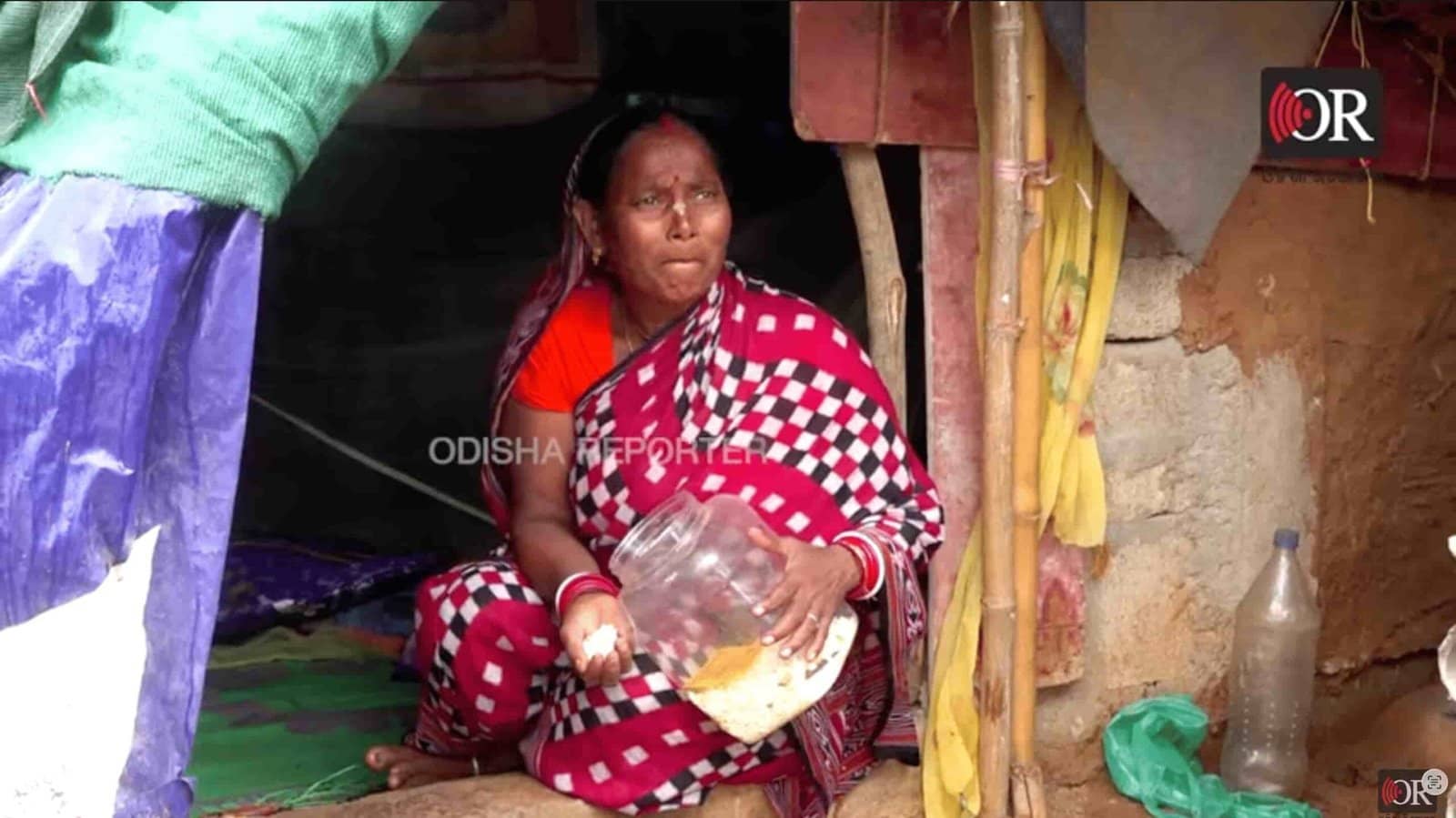
Evicted families face dire conditions amid relentless rain and inaction on OHRC order
Key Takeaways
1 of 3
Automatically generated. Read full article for complete context.
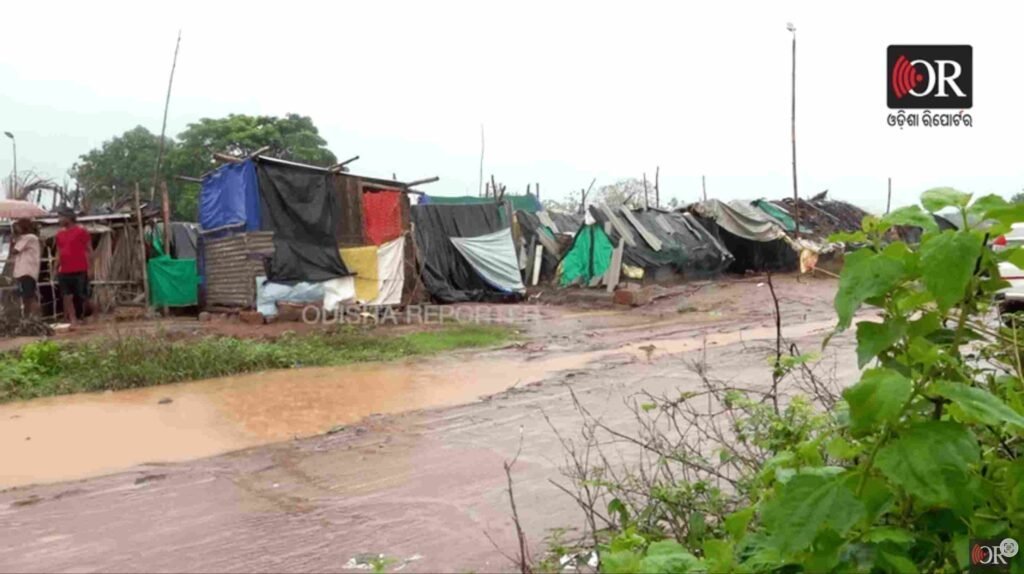
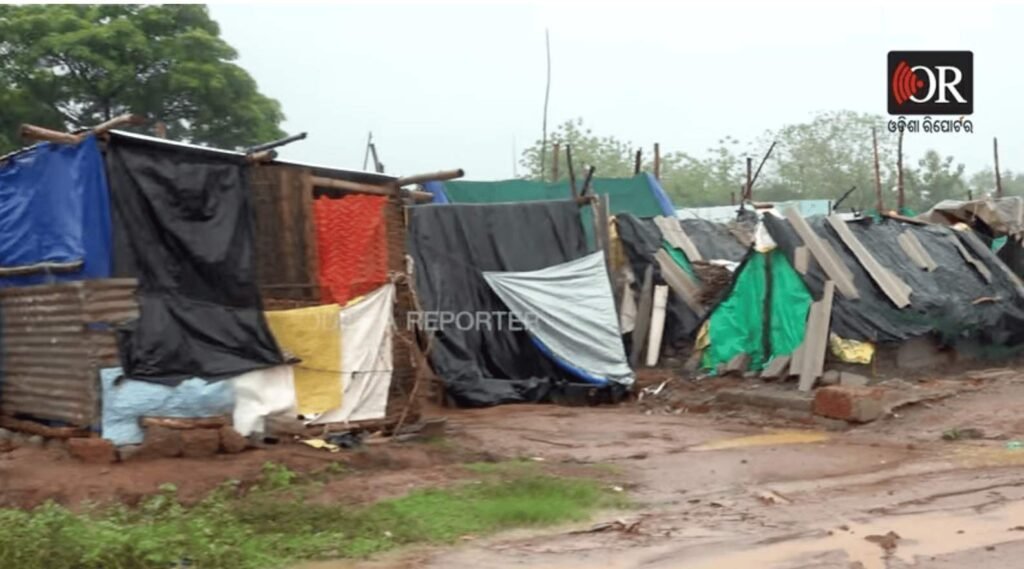
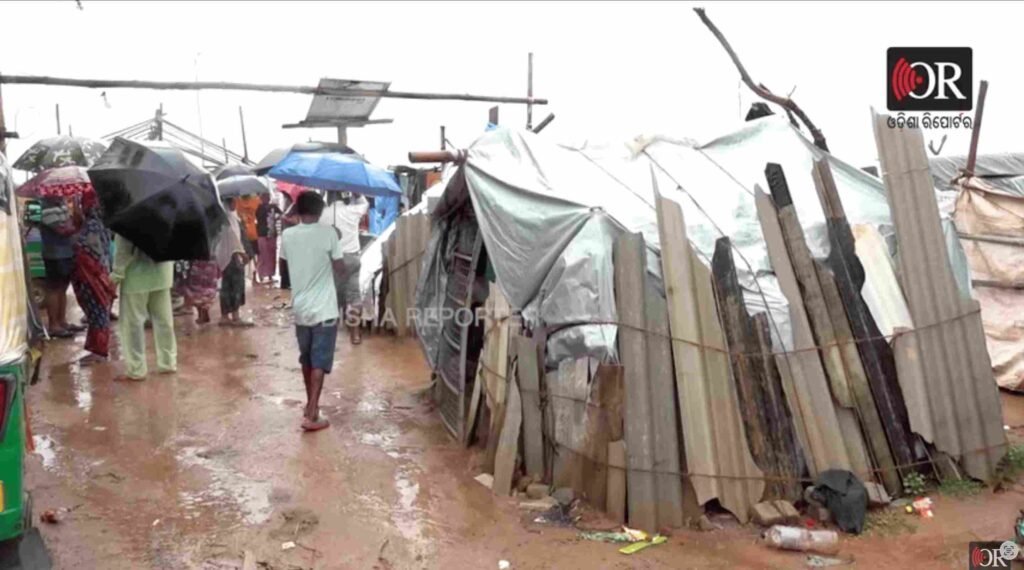
Bhubaneswar, Odisha : The condition of the families evicted from Odisha Vinoba Nagar (Subarnapur) Sampur Bhoodan Slum has become increasingly alarming. The Bhubaneswar Development Authority (BDA) has forcefully evicted them and demolished their houses without following due process of law and without issuing any prior notice. After being forced to endure extreme heat following their eviction and demolition of their houses on April 17 and 18, 2026, they are now struggling to survive due to continuous rainfall over the last three days.
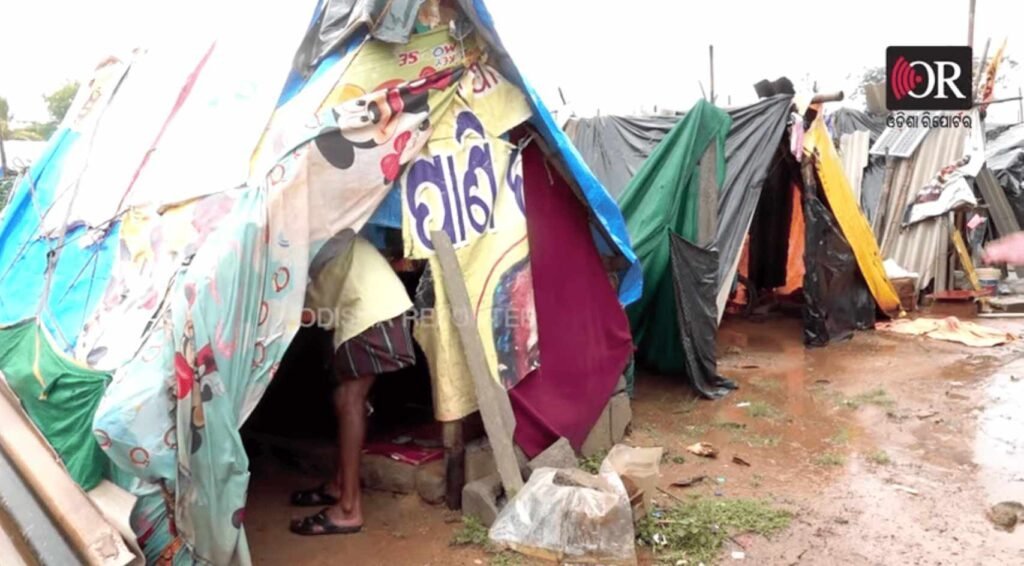
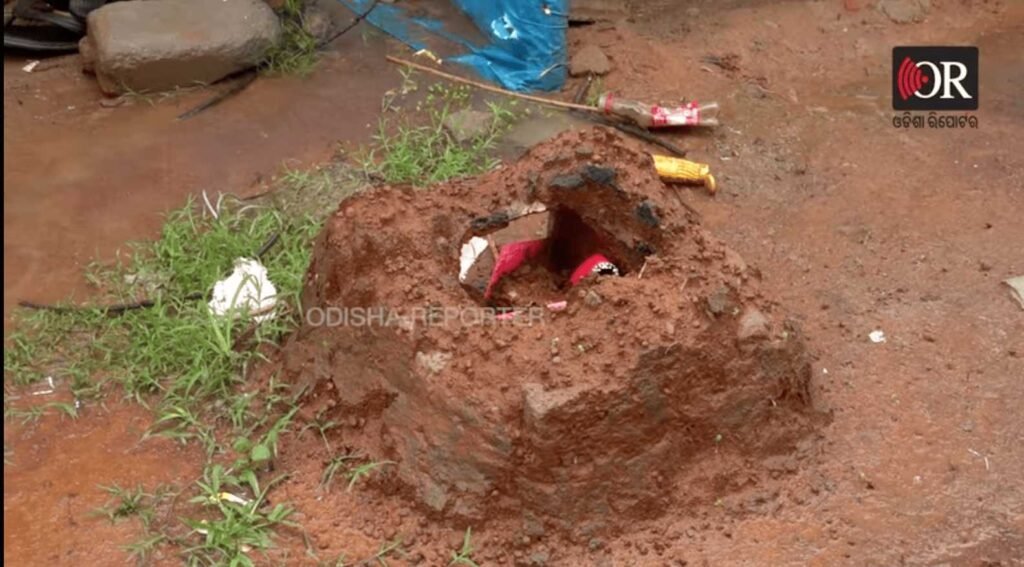
During the first week of July 2026, incessant rainfall has severely disrupted the daily lives of the affected families. Their makeshift shelters provide minimal protection, leaving no dry space for cooking or food preparation. The traditional earthen chulhas and stored firewood, kept in open areas, have become completely soaked and unusable due to continuous rain.
Timeline of Neglect: Odisha Eviction Crisis
April 17-18, 2026
Families forcefully evicted from Odisha Vinoba Nagar (Subarnapur) Sampur Bhoodan Slum by BDA without due process or notice. Houses demolished.
June 2, 2026
Odisha Human Rights Commission (OHRC) orders BDA to provide temporary rehabilitation with basic amenities to evicted families for at least one month.
First Week of July 2026
Incessant rainfall begins, severely disrupting lives of affected families living in makeshift shelters. OHRC order remains unimplemented.
Over a Month Later (July 2026)
OHRC order still not implemented, deepening humanitarian crisis for 300 families struggling without shelter, food, or medical access amid continuous rain.
VISUALS BY THE RIFT
As a result, most families have been unable to cook meals and are surviving primarily on flattened rice (chuda) and other dry food items. A section of the affected population is also dependent on the ₹5 meals provided at AHAR KendrasSubsidized Meal CentersGovernment-run or supported canteens in Odisha that provide affordable, subsidized meals (often at ₹5) to the public, especially daily wage earners and the poor., located at a considerable distance from the settlement, for their basic subsistence.
This situation reflects a serious humanitarian concern, as prolonged exposure to rain, lack of cooking facilities, and limited access to affordable food services collectively undermine the right to adequate food, health, and dignified living conditions.
Children, women, elderly persons, persons with disabilities, and those suffering from illnesses are bearing the brunt of this crisis. The absence of adequate shelter, safe drinking water, sanitation facilities, cooking arrangements, and access to medical care has further deepened their vulnerability, creating a grave humanitarian emergency that requires immediate government intervention.
Non-Implementation of the Order of the Odisha Human Rights Commission (OHRC)
Following the eviction and demolition, the affected families approached the Odisha Human Rights Commission (OHRC) challenging the actions of the Bhubaneswar Development Authority (BDA). After hearing both parties and considering the facts of the case, the OHRC, in Subhashree Pradhan vs. State of Odisha (OHRC Case No. 1611 of 2026) , passed an order on 2 June 2026, directing the following:
“The Commission is not inclined to accept the above objection of the B.D.A. Prima facie, it appears that the houses of the complainants were demolished without following due process of law and without issuing any prior notice. The affected families are presently living in extreme distress under polythene sheets in the scorching summer and rain, without access to basic facilities.
Despite sufficient opportunity having been given, the B.D.A. has not come forward with any appropriate response or proposal regarding interim relief/rehabilitation.
In view of the above, this Commission recommends to the B.D.A. to provide temporary rehabilitation to the evicted families (except those who have already approached the Hon’ble High Court or any Civil Court in this matter), for a period of at least one month, by arranging shelter there or in nearby suitable places with basic amenities such as water, electricity and toilet facilities. However, such arrangement of shelter, shall not enure to the benefit of the persons evicted to establish their right on the land where from they are evicted or place they are rehabilitated in any manner. The aforesaid is only a temporary arrangement. This arrangement be made unless any contrary order has been passed by any other competent authority or court. With the above direction, the cases are adjourned to 23.07.2026.”
Thus, the Commission directed the Bhubaneswar Development Authority to provide temporary rehabilitation to the evicted families, except those who had already approached the High Court or other civil courts, for at least one month. The Commission further directed that suitable temporary shelter be provided either at the same location or nearby, with essential facilities including drinking water, electricity, and toilets. It also clarified that such temporary rehabilitation would not create any legal right over the land and would remain purely interim, subject to the orders of competent authorities or courts.
No Respect for Human Rights
However, more than a month has passed since the Odisha Human Rights Commission (OHRC) issued its order, yet it has reportedly not been implemented by the Bhubaneswar Development Authority (BDA). As a result, the affected families continue to live in extremely difficult and inhumane conditions, with their hardships remaining unaddressed.
The continued non-implementation of the OHRC’s order raises serious questions about the government’s commitment to protecting human rights and upholding the rule of law. Despite projecting itself as the “Lokanka Sarkar” (People’s Government), the government led by Chief Minister Mohan Charan Majhi and the BJP’s “Double Engine” government appears to have failed to ensure compliance with the Commission’s directions. This inaction sends a deeply troubling message about the priority being accorded to the human rights, dignity, and welfare of the affected families.
Humanitarian Crisis Amid Continuous Rain
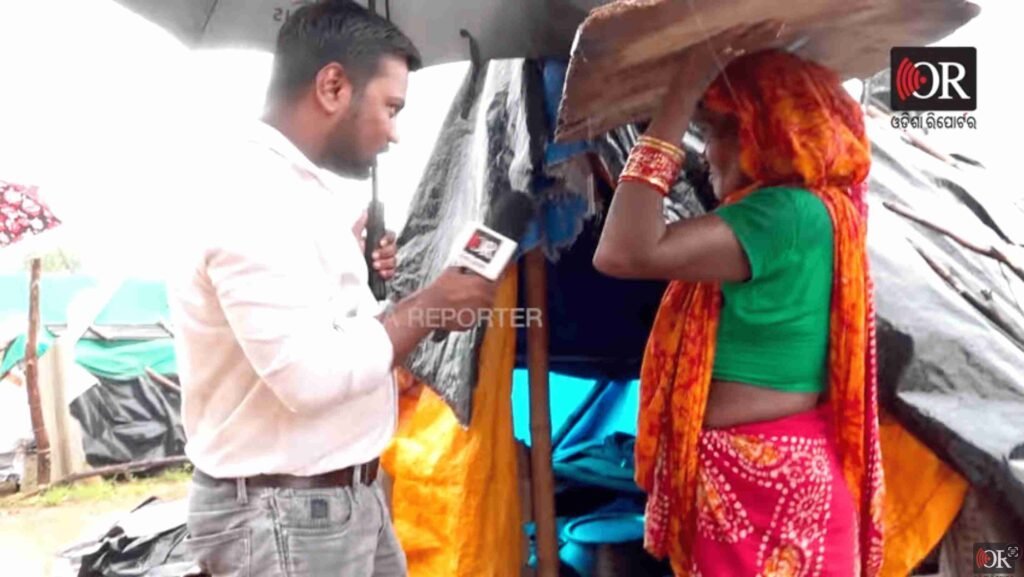
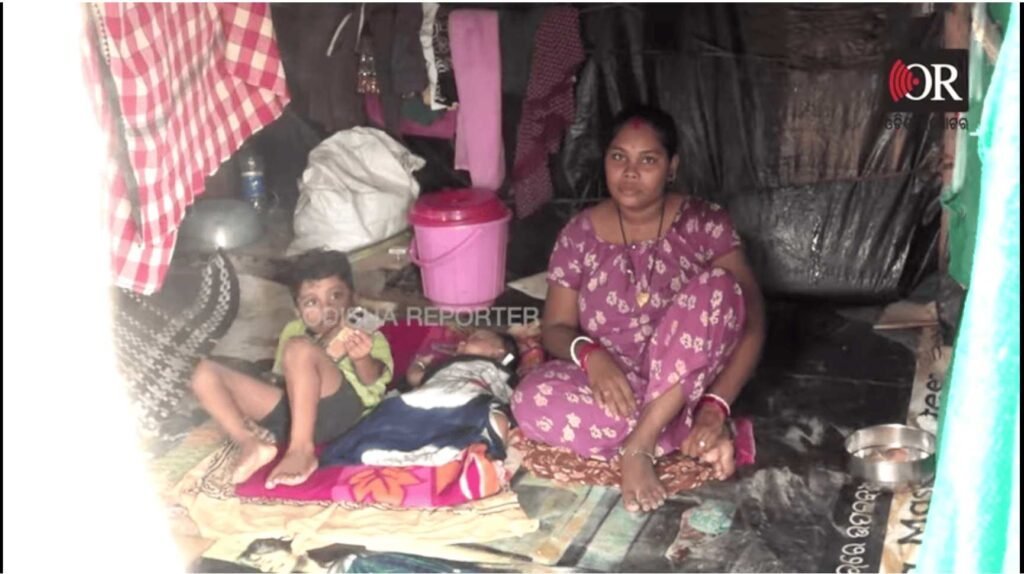
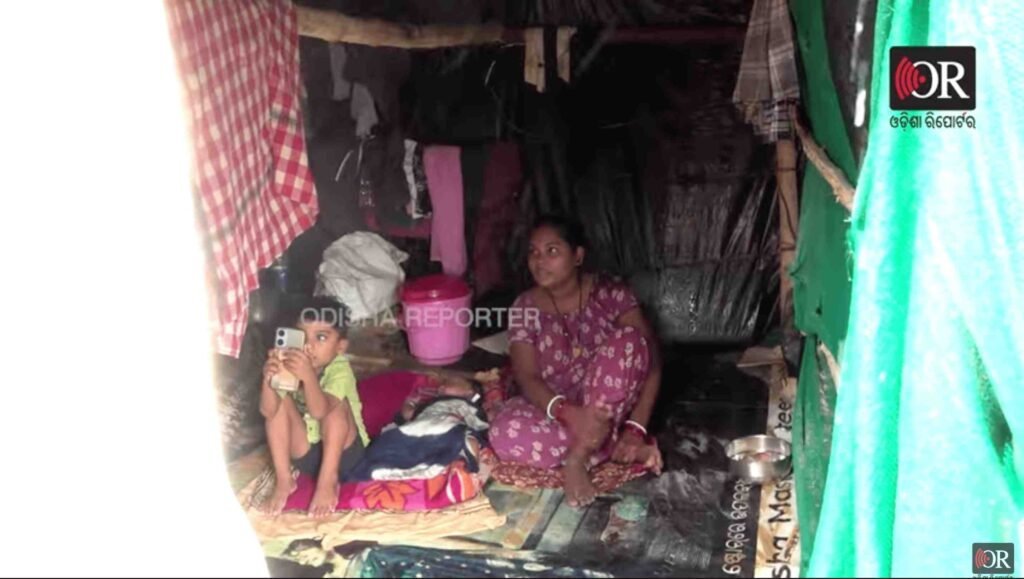
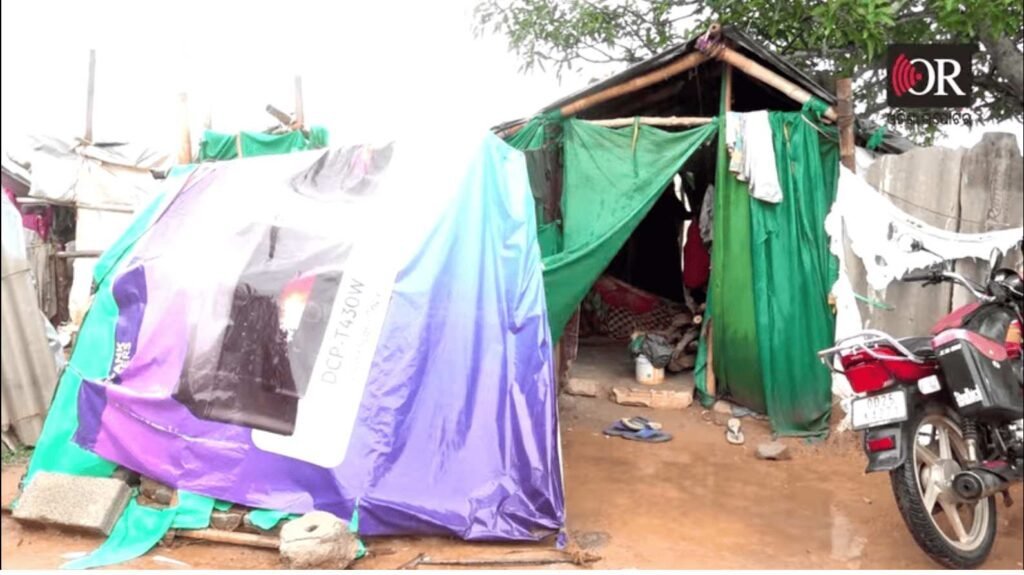
Further, the Odisha Reporter has reported the severe hardship faced by the affected families in its news coverage under the title “Flattened rice is only source of sustenance.” The report highlights the deplorable living conditions of the evicted 300 families in Subarnapur Sampur Bhoodan Slum. It is stated that rainwater has flooded the cooking area, while the living and sleeping spaces are covered in mud. The polythene roof of the makeshift shelter leaks profusely whenever it rains, forcing the family to place metal bowls beneath the dripping ceiling to collect the rainwater. Deprived of a secure roof over their heads, they continue to endure harsh conditions, surviving largely on flattened rice (chuda) as they struggle each day to meet even their most basic needs
Holding a handful of flattened rice (chuda) inside her fragile polythene shelter, 60-year-old Malati Das fought back tears as she described her family’s struggle to survive. “This is all we have eaten for the last three days,” she said softly. “The continuous rain has made it impossible to cook.”
“Our traditional earthen chulha is filled with rainwater, and the firewood is completely soaked. We have no way to light a fire or prepare a meal. During the rains, it is impossible to find dry firewood,” she explained.
Pointing to the tiny makeshift shelter covered with plastic sheets, Malati said all five members of her family were forced to live inside the cramped space. “For three days, we have survived only on flattened rice because we have no other option,” she said, her voice reflecting the despair of a family stripped of even the most basic necessities.
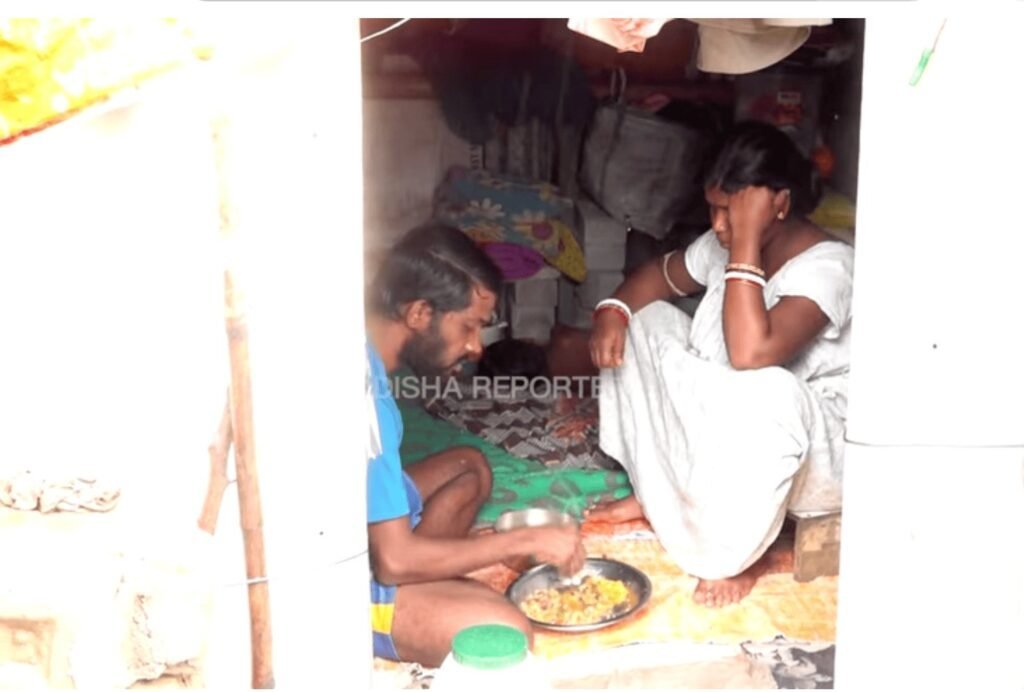
For 33-year-old Bipini Bihari Mahala, the makeshift polythene shelter is not a choice but the only refuge left for his family. “What else can we do?” he asked. “I have no income during the rainy season and cannot afford to rent a house. We are simply trying to survive.”
Sitting beside his 31-year-old pregnant wife, Rebati Senapati, Bipini spoke with visible anxiety and helplessness. Looking at her with deep concern, he said, “She has been suffering from severe stomach pain, but I have not been able to take her to the hospital because the roads leading out of our settlement have become impassable due to the continuous rain.”
He lives in constant fear for his wife’s health and the safety of their unborn child. If her condition deteriorates, he does not know how he will get her to a hospital. Cut off by incessant rain and muddy, impassable roads, with no means of accessing medical care, the family remains trapped in a cycle of uncertainty and distress. Every passing day deepens their anxiety and helplessness as they pray that no medical emergency arises before help can reach them.
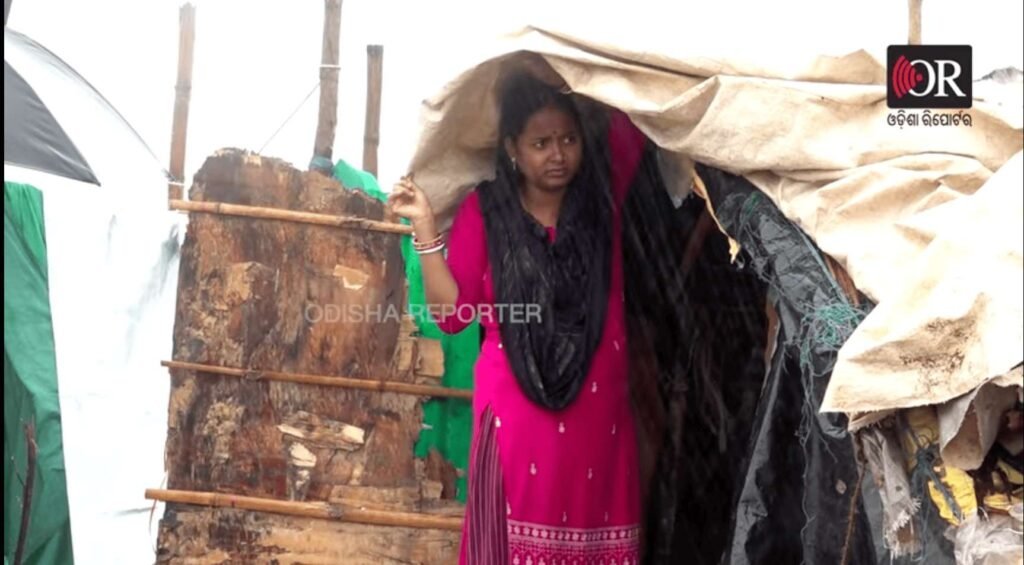
The plight of 23-year-old Minati Mohanty, a lactating mother of a four-month-old infant, is equally heartbreaking. Left homeless after her house was demolished, she now struggles every day to protect her baby from the relentless rain and harsh living conditions.
Her baby was asleep inside the fragile makeshift polythene shelter when Minati slowly came to the broken doorway. She spoke in a faint voice, her tired eyes reflecting days of hardship and sleepless nights. “It has been raining continuously, and the nights have become unbearably cold,” she said. “Yet I have no choice but to stay here with my baby because we cannot afford to rent a house.” undefined
“We spent all our savings to build our small home. We even borrowed money, hoping our family would finally have a secure place to live. But everything was demolished. Now, during the rainy season, there is hardly any work, and we have no income,” she added.
As rainwater seeped through the ground and dripped from the torn polythene sheet above, she described their sleepless nights. “Whenever it rains heavily, water enters from below and leaks through the roof. We spend the entire night holding our baby in our arms, trying to keep the child dry and safe. No parent should have to watch their child grow up in such conditions, but this is the reality we are forced to endure.”
Their stories are not isolated accounts of hardship. They reflect the daily struggle of hundreds of displaced families who continue to live without adequate shelter, food, drinking water, healthcare, electricity, or sanitation—conditions that raise profound humanitarian and human rights concerns.
Violation of Article 21 of the Constitution of India
The right to shelter and livelihood is an integral component of the right to life guaranteed under Article 21 of the Constitution of India. The present condition of the evicted families, as reported and observed, constitutes a continuing violation of their fundamental and human rights. This situation has been further aggravated by the non-implementation of the Hon’ble Odisha Human Rights Commission Order dated 2 June 2026, thereby prolonging their hardship and denying them timely humanitarian relief and protection.
The affected families deserve immediate humanitarian assistance and protection to safeguard their fundamental rights, dignity, and well-being. Immediate action by the concerned authorities is essential to prevent further hardship and ensure that the order of the Odisha Human Rights Commission are implemented without delay.
Reaction of human rights activists
Eminent human rights defender Biswapriya Kanungo stated that the eviction was neither carried out in the public interest nor conducted in a reasonable or humane manner, as it took place during a period of severe heatwave.
He further stated that, following the eviction and during the subsequent heavy rains, the Bhubaneswar Municipal Corporation (BMC) failed to provide essential relief and welfare measures. As a result, hundreds of displaced persons—including infants as young as four months old, pregnant women, elderly persons, and individuals suffering from serious illnesses—were forced to live under polythene sheets without adequate food, safe drinking water, healthcare, or sanitation facilities.
Mr. Kanungo expressed concern that the self-proclaimed “Lokanka Sarkar” (People’s Government) failed to ensure compliance with the Odisha Human Rights Commission’s order directing the Bhubaneswar Development Authority (BDA) to provide temporary shelter with basic amenities, including drinking water, electricity, and toilets. According to him, this continued inaction raises serious questions about the government’s commitment to protecting and upholding human rights and safeguarding the dignity of the affected families.
He further stated that, when these actions and omissions are viewed cumulatively, they culminate in a pattern of governance that reflects not a welfare-oriented State but what he described as a “bulldozer rule” approach—one that prioritizes land use and development in furtherance of corporate interests over the protection of human rights, the dignity of vulnerable communities, and the constitutional promise of social justice.
He, along with other human rights activists, asserted that a truly welfare-oriented government must place the lives, dignity, and rights of its citizens above all other considerations.
Appeal of the Affected Slum Dwellers and Activists for Humanitarian Assistance
The affected slum dwellers, human rights activists and concerned citizens earnestly appeal to the Hon’ble Chief Minister of Odisha, the Hon’ble Minister, Housing & Urban Development Department, the Hon’ble Chief Secretary of Odisha, and all other concerned authorities to direct the Bhubaneswar Development Authority (BDA) to immediately implement the Odisha Human Rights Commission’s (OHRC) order dated 2 June 2026 in Subhashree Pradhan vs. State of Odisha (OHRC Case No. 1611 of 2026) without any further delay.
Their appeals are as follows:
- To direct the Bhubaneswar Development Authority to immediately implement, in its true letter and spirit, the Odisha Human Rights Commission’s Order dated 2 June 2026 passed in OHRC Case Nos. 1611/2026, 1609/2026, and 1498/2026, without any further delay.
- To ensure that temporary shelters with adequate protection from rain and other weather conditions are immediately provided to all affected families without delay.
- To direct the concerned authorities, including the Bhubaneswar Development Authority (BDA) and other implementing agencies, to provide urgent humanitarian relief, including temporary shelter with adequate protection from rain, cooked food, dry ration kits, safe drinking water, cooking fuel, electricity, toilet facilities, blankets, essential medicines, and necessary medical assistance to all affected families.
- To direct the concerned authorities to make special provisions for children, pregnant and lactating women, elderly persons, persons with disabilities, and individuals requiring urgent medical care.
- To direct senior officers of the Housing and Urban Development Department and the Bhubaneswar Development Authority to monitor the implementation of relief measures on a daily basis until the humanitarian situation is fully stabilized.
- To take immediate steps for rehabilitation, including provision of alternative housing or resettlement in accordance with applicable rehabilitation policies and human rights standards.
- To initiate an inquiry into the circumstances of the eviction carried out on 17–18 April 2026, to determine compliance with due process of law and applicable human rights safeguards.
- To pass any other appropriate orders or directions deemed just, proper, and necessary in the interest of justice, equity, and protection of the fundamental rights of the affected citizens.
They also urge the Government to extend immediate humanitarian assistance and take all necessary measures to safeguard their fundamental human rights, dignity, and well-being until the Commission’s directions are fully implemented.
Disclaimer:The views and opinions expressed in this article are those of the author(s) and do not necessarily reflect the official policy or position of The Rift.