Opening The Rift
therift
© 2026 The Rift. All Rights Reserved.
Community Mobilization Helps in Resolving Rural Water Supply Problems
Community mobilization, led by women volunteers, is proving crucial in overcoming challenges and ensuring equitable access to tap water in rural India.

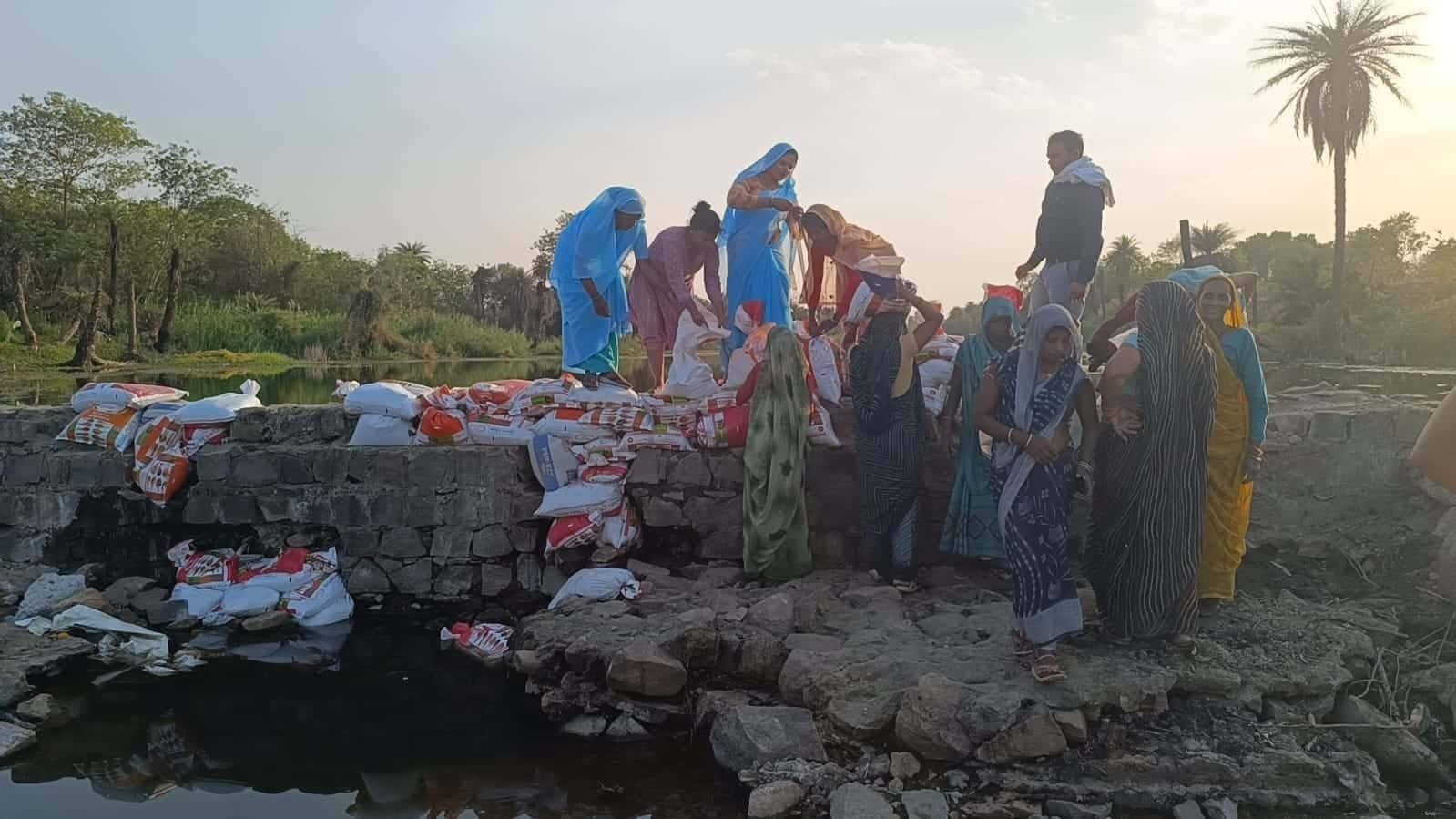
Villagers particularly women unite to tackle rural water supply problems, demonstrating the power of community-led initiatives
Key Takeaways
1 of 3
Automatically generated. Read full article for complete context.
In Niwari district of Madhya Pradesh, as tap water brought by a new network of pipelines and tanks is reaching more and more villages, this is resulting in great relief for villagers, particularly women, who are released from the burden of fetching water daily. At the same time the transition is not smooth and several problems keep appearing. Many villages still have not received water in their taps, while in others, some hamlets or households have been left out.
Jaipal Singh Yadav, sarpanchVillage HeadThe elected head of a village-level local self-governance institution (Gram Panchayat) in India. of Kulua village in Niwari district (Madhya Pradesh) says, “From early morning, I start getting calls from this part or that of the village—’Sarpanch Ji, there is no water in my tap today.’ If one person is getting water, another is not. In this situation, often I am helpless but I am supposed to solve the problem immediately. Tell me, what exactly can I do?”
After a short pause he adds, “The fact is that in villages which do not have adequate water source of their own, five villages have been grouped together for supply from a common big source. Often, the village where the big tank is located gets the prior supply, while those supplied later or located at a greater distance receive less water, and some households may even be deprived. Then there are also local problems within the village as someone who is more influential may try to withdraw more water. On the other hand, at the time of paying maintenance charges, the same person may say, ‘Don’t you know I am a leader?’”
Keeping these problems in view, it is important to involve community members in the implementation of the Jal Jeevan Mission (JJM) and its water supply work, which plans to take piped tap water to all households. In hundreds of villages of Bundelkhand region this important role has been greatly facilitated by Jal SahelisWomen Water VolunteersA cadre of women volunteers, often mobilized by NGOs, who play a crucial role in community-led water management, maintenance, and advocacy in rural areas of India., a cadre of women volunteers mobilized and trained by Parmarth voluntary organization for taking forward water and sanitation initiatives in rural areas.
Lakshmi Kushwaha, a jal saheli from Bahera village of Niwari district, says, ‘The pipeline in our village became choked at an early stage.’ So we jal sahelis made significant efforts for timely repair. Finally, the problem was sorted out by removing some external elements which had somehow gotten stuck in the pipelines.”
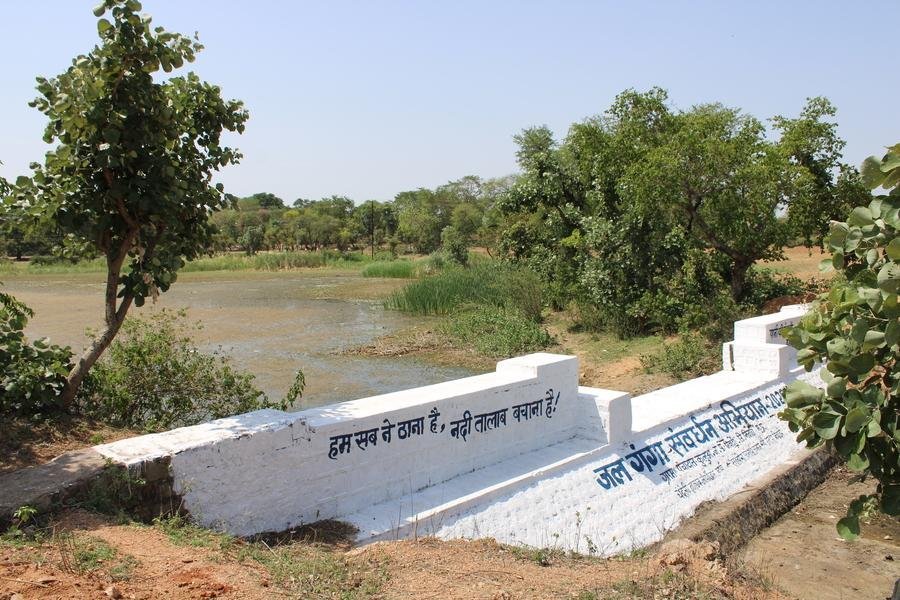
Sudha Ahirwar from Churari village says, ‘Somehow, the pipeline work was being delayed in our village, although the reasons for this were not very clear.’ So we mobilized people for a dharna, or sit-in, and we went back home only after getting a firm promise for pipeline and other water supply work to be taken up at an early stage.’ or a sit-in and we went back to our home only after getting firm promise for pipeline and other water supply work to be taken up at an early stage.”
Sudha added that after this, progress was satisfactory, but some households were left out for various reasons, and so jal sahelis continued their efforts so that these households could also access water supply.
Sometimes, there are difficulties in taking water supply to adivasi settlements in some villages, as these often tend to be located in more remote, hilly, or higher locations where it is more difficult for water supply to reach. settlements of some villages as these tend often to be located in the more remote or hilly or higher locations where it is more difficult for water supply to reach. In the adivasi hamlet of Baghaura, in Babina block (Jhansi district, Uttar Pradesh), I found that several women were fetching water from a hand-pump. On inquiring, I was told that pipelines have been installed, but only three households in this hamlet are getting water. Why are all the others not getting water? It appeared that an influential person in another settlement had tampered with the valves to stop most of the water supply here.
However, in Anthodhna village of this block, it was nice to see that the adivasi hamlet was the first to get tap water. However, most of the villagers here are still waiting for water in their taps, and Jal Sahelis, as well as the wider water council or pani panchayat formed by them with the help of other community members, are gearing up to ensure that water reaches all households in a satisfactory way.
It is also important to continue to take steps for protecting the water sources of the villages. When tap water reaches villages, sometimes the care for water sources decreases, as it is felt that these are not so important now. However, these continue to have an important role in maintaining water security, meeting needs at the time of any disruption of pipeline water, meeting the needs of animals, meeting irrigation needs, and helping in maintaining the water table. Sanjay Singh, Secretary of Parmarth, says, ‘We have always emphasized the protection of water sources in all our work and trainings.’ Jaipal Yadav adds, ‘Any village that neglects the protection and maintenance of its water sources is actually sowing the seeds of its own destruction.’
It is in the context of water conservation and protection of water sources that the role of jal sahelis is even more important as they have received training for this and have been involved in many actions to save and protect water sources.
Disclaimer:The views and opinions expressed in this article are those of the author(s) and do not necessarily reflect the official policy or position of The Rift.
*Water SecurityCommunity MobilizationIndiaJal Jeevan MissionMadhya PradeshRural DevelopmentUttar PradeshWomen Empowerment