Opening The Rift
therift
© 2026 The Rift. All Rights Reserved.
India’s Hunger Paradox: Beyond the Glitter of Development
Ensuring that every child gets adequate and nourishing food is not a matter of charity; it is their right.

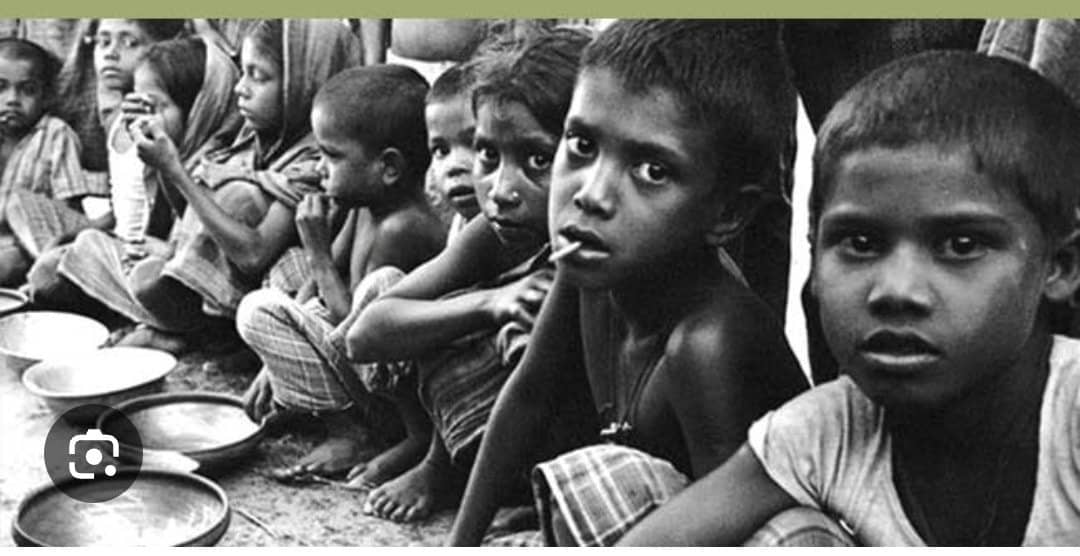
Representaive Image
Key Takeaways
1 of 3
Automatically generated. Read full article for complete context.
We proudly say that India is one of the fastest-growing economies in the world. At the same time, in the Global Hunger Index 2026, India stands at the hundredth position in a list of 122 countries. In this report, released on 14 October 2026, India’s score is 24.1, and the country falls in the “serious” category. India has been in this same category since 2012. Last year, India was ranked 102nd among 123 countries, meaning it has improved by two places this year. But this marginal change in rank is no reason to feel satisfied. Behind these figures are malnourished children, mothers exhausted by anaemiaAnaemiaA condition in which the blood lacks healthy red blood cells, often caused by iron deficiency. It leads to fatigue, weakness, and impaired cognitive function., and families in tribal hamlets struggling to get two square meals a day.
This index is published every year by Concern Worldwide and Welthungerhilfe. Four indicators are used to measure hunger: the proportion of undernourishedUndernourishmentA state where a person’s caloric intake is insufficient to meet their minimum energy requirements, leading to weight loss, fatigue, and increased susceptibility to illness. people in the population, stuntingStuntingLow height for age, indicating chronic undernutrition, typically measured in children under five. It reflects long-term nutritional deprivation. among children under five, low weight for height (wastingWastingLow weight for height, indicating acute undernutrition. It signifies recent and severe weight loss, often due to illness or lack of food.) among children of the same age group, and child mortality before the age of five. The score is calculated on a scale of zero to a hundred. The lower the score, the better the situation. The world’s average score is 18.1 and the South Asian average is 23.5. India’s score of 24.1 is worse than both averages. In other words, our condition is below the world average, and even within our own region it is not satisfactory.
In 2006, India’s score was around 37; it has now come down to 24.1. The proportion of undernourished people in the country was 18.4 percent in 2000. It has now come down to 9.8 percent. In the previous reference period, this proportion was 10.5 percent. Stunting among children, which stood at fifty percent in 2000, has come down to 29.3 percent. The mortality rate of children under five has fallen from 9.2 percent to 2.7 percent. This became possible due to the expansion of immunisation, institutional deliveries, maternal and child health services, and food grain distribution. But if we look beyond this success, about ten percent of the people in the country still do not get enough food, and nearly three out of every ten children are stunted for their age. Considering India’s population, these numbers run into crores.
The most worrying aspect of this report is the prevalence of child wasting, that is, low weight for height. It has risen from 16.9 percent in the previous reference period to 19 percent. This is the highest rate in South Asia. According to the report’s observation, this proportion has remained extremely high in India in every reference year. That means we have not made much progress on this front in the last two decades, and in fact the situation has worsened further this year. Wasting is considered a sign of acute malnutrition. Such children have weak immunity, fall ill repeatedly, and if they do not receive treatment in time, even their lives are at risk. The fact that nearly one in every five children is in this condition is serious for the country.
A comparison with neighbouring countries makes the picture even clearer. Nepal ranks 72nd with a score of 14.5. Bangladesh stands at 84th with a score of 19.2. Both of these countries are in the “moderate” category. Sri Lanka is also in the moderate category. Pakistan is at 106th place with a score of 25.5, so it is behind us. Afghanistan’s situation is also worse than ours. In Bangladesh, stunting among children has come down from 54.9 percent in 2000 to 24 percent. The rate of wasting there is 12.9 percent, whereas in India it is 19 percent. A country once considered poorer than India has moved ahead on these measures. The emphasis placed on women’s health, sanitation, and community-level nutrition programmes is considered one of the reasons for this.
COMPARATIVE ANALYSIS
Global Hunger Index 2026: India vs. Neighbors
India
100th
Score: 24.1
Serious
Nepal
72nd
Score: 14.5
Moderate
Bangladesh
84th
Score: 19.2
Moderate
Pakistan
106th
Score: 25.5
Serious
VISUALS BY THE RIFT
The Government of India has objected to this index every year. The argument is that three of the four indicators relate to children under five, thus not representing the entire population. Questions are also raised about the methodology. No index is perfect, and these points may have some merit. But the high prevalence of wasting is not visible only in the global index. It has also been visible for a long time in India’s own National Family Health SurveysNational Family Health Surveys (NFHS)Large-scale, multi-round surveys conducted in India that provide data on health, family welfare, and other indicators, including child nutrition and maternal health.. That means the problem has not been created by number-crunching; it exists on the ground. Instead of spending energy arguing over the index’s methodology, it would be wiser to accept the reality and act on it.
Notably, there is no scarcity of food in the country today. Food grain production is at a record high. Under the National Food Security ActNational Food Security Act (NFSA)An Act of the Parliament of India which aims to provide subsidized food grains to approximately two-thirds of India’s population. It legally entitles beneficiaries to receive food grains., more than 81 crore people receive free grain through the public distribution systemPublic Distribution System (PDS)An Indian food security system that distributes subsidized food and non-food items to India’s poor. Major commodities distributed include wheat, rice, sugar, and kerosene.. Schemes such as anganwadisAnganwadisRural child care centres in India established under the Integrated Child Development Services (ICDS) program to combat child hunger and malnutrition. They provide supplementary nutrition, pre-school education, and health services., the midday meal, and the Poshan AbhiyaanPoshan Abhiyaan (National Nutrition Mission)India’s flagship program to improve nutritional outcomes for children, pregnant women, and lactating mothers. It aims to reduce stunting, undernutrition, anaemia, and low birth weight. run across the country. Analysts say that the expansion of grain production and the safety net was important in reducing undernourishment. Even so, child malnutrition persists. The reason is that filling the stomach and receiving nutrition are two different things. Rice, wheat, sorghum, and millet provide calories. However, if nutritious foods such as pulses, vegetables, fruits, eggs, milk, and oilseeds are absent from the diet, children’s growth is stunted. Poor and rural families cannot afford such a diverse diet. The report has highlighted issues such as the quality of diets, the distribution of food within households, child-rearing practices, and the price of nutritious food.
Malnutrition often begins even before a child’s birth. If a mother has not received adequate nutrition, suffers from anaemia, was married at a young age, and did not get proper care during pregnancy, she gives birth to a low-birth-weight baby. That baby remains malnourished, and if it is a girl, she grows up to continue the same cycle. Many rural women toil in the fields, manage the household, and eat whatever is left after everyone else in the family has eaten. This situation does not change much even during pregnancy. That is why the question of child nutrition cannot be separated from women’s health, education, and decision-making power. Only if the nutrition of adolescent girls, marriage at the right age, regular check-ups during pregnancy, and guidance on breastfeeding are addressed together can this cycle be broken.
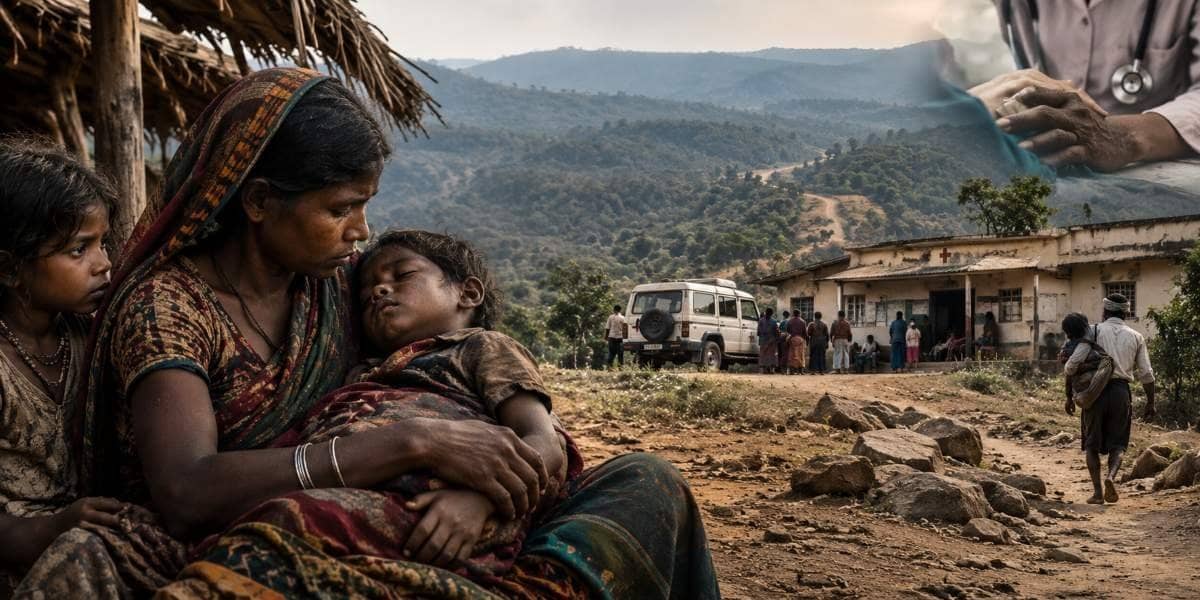
Behind the national average, much harsher conditions in many regions remain hidden. Rates of malnutrition appear higher in tribal hamlets, hilly and remote areas, forest-dependent villages, and among migrating families. Areas such as Melghat, Nandurbar, Gadchiroli, and Gondia in Maharashtra, as well as tribal-dominated belts in Madhya Pradesh, Rajasthan, and Gujarat, exemplify this. In these places, the problem is not only about food. There is also a lack of roads, health centres, clean water, and sanitation. Tubers, wild vegetables, mahua flowers, and traditional coarse grains obtained from forests used to be part of the tribal diet. Restrictions on forest rights, changing agriculture, and the decline of traditional crops have reduced this diversity. Due to seasonal migration for employment, children do not regularly receive anganwadi services, vaccinations, and nutritious meals. Such areas need separate interventions suited to local needs. If traditional foods and coarse grains from those regions are included in nutrition programmes, they will be more effective. If women’s self-help groups are linked with the supplementary nutrition provided at anganwadis and local food production, both nutrition and livelihoods can be achieved.
This year’s report has given one more warning. The report refers to the India Meteorological Department’s forecast of a 60% probability of below-average rainfall in the monsoon belt. This belt covers most of the country’s rain-fed farming area. If rainfall becomes erratic, production falls, farmers’ incomes decline, food prices rise, and poor families are the first to bear the brunt. The title of the report is “No Security Without Food Security.” Hunger is rising in the world because of conflict, climate change, economic instability, and inflation. Since 2018, the hunger situation has worsened in 32 countries worldwide. In these changing circumstances, it is essential to support rain-fed agriculture with irrigation, crop insurance, and climate-resilient seeds. If the cultivation of coarse grains is encouraged, it will strengthen both the food security of villages and the incomes of farmers.
The paradox between economic growth and hunger also needs to be looked at seriously. The country’s total income is growing, but its benefits do not reach everyone equally. Workers in the unorganised sector, landless farm labourers, small and marginal farmers, women, and Dalit and tribal communities cannot afford nutritious food amidst rising inflation. The yardstick of development cannot be economic growth alone. Whether every child gets adequate nutrition is equally important. A child who is malnourished today becomes a citizen with reduced capacity tomorrow. Their education remains incomplete, their income remains low, and the burden of illness grows. The country has to pay the price for this, generation after generation. Therefore, spending on nutrition is not an expense; rather, it is the most profitable investment in the country’s future.
To find a way out, we must first focus on nutrition rather than merely distributing grain. The inclusion of pulses, eggs, milk, oilseeds, leafy vegetables, and coarse grains must be increased in the public distribution system and in anganwadi and school meals. If locally grown food is given priority, costs will remain under control and local farmers will find a market. For the early identification and treatment of severely malnourished children, regular weight-and-height check-ups and, where necessary, treatment in nutrition rehabilitation centres must be effectively implemented. must be implemented effectively. In this, anganwadi workers and ASHA workersASHA Workers (Accredited Social Health Activists)Community health workers instituted by the Government of India’s National Rural Health Mission. They act as a bridge between the community and the public health system, providing health education and facilitating access to services. are the most important link. They must be given proper honorariums, training, and equipment. Clean water, sanitation, and health services must also be added, because a child who suffers from repeated diarrhoea or infections does not get sufficient benefit from the food they eat. Social audits of schemes, the participation of gram sabhas, and reliable data will make it possible to check whether benefits reach the real beneficiaries. Voluntary organisations and community organisations have a valuable role in this work.
Hunger and malnutrition are not problems that can be ended by government schemes alone. Society must also take part. Avoiding food waste, promoting local and nutritious food, taking note of needy families in the neighbourhood, and participating in the work of schools and anganwadis are things we can do as citizens. The media too should not discuss the index for a few days after it is released and then stop. News about malnutrition should be presented throughout the year, along with the actual conditions in rural areas.
The Global Hunger Index 2026 tells us two things. The first is that India has made real progress in the last two decades. The score has come down from 37 to 24.1, stunting has declined, child mortality has fallen sharply, and undernourishment has been nearly halved. The second is that this progress has slowed, and the prevalence of child wasting has risen again. Reaching the hundredth position is not a moment for pride but a moment for introspection. Neighbours like Nepal and Bangladesh have shown that with the right policies and effective implementation, malnutrition can be overcome even with limited resources. India has the grain, the machinery, and the experience. What is needed is a move from filling stomachs to providing nutritious food, and from announcing schemes to delivering actual results. Ensuring that every child gets adequate and nourishing food is not a matter of charity; it is their right. Only if the government, society, and organisations come together to make this right a reality will the dream of a hunger-free and malnutrition-free India come true.
INDIA’S NUTRITION INDICATORS
Progress & Setbacks (2000 – 2026)
Undernourished Population
9.8%
from 18.4% (2000)
Child Stunting (under 5)
29.3%
from 50% (2000)
Child Mortality (under 5)
2.7%
from 9.2%
Child Wasting (under 5)
19%
up from 16.9%
VISUALS BY THE RIFT
Disclaimer:The views and opinions expressed in this article are those of the author(s) and do not necessarily reflect the official policy or position of The Rift.
*Global Hunger IndexChild MalnutritionFood SecurityIndiaNutritionPublic Distribution SystemStuntingWasting