Opening The Rift
therift
© 2026 The Rift. All Rights Reserved.
Millions of people are not just threatened by humanitarian crisis, they are already dying
Millions of people are actually dying and have died over the last two years due to humanitarian crises and a failure to provide timely assistance.

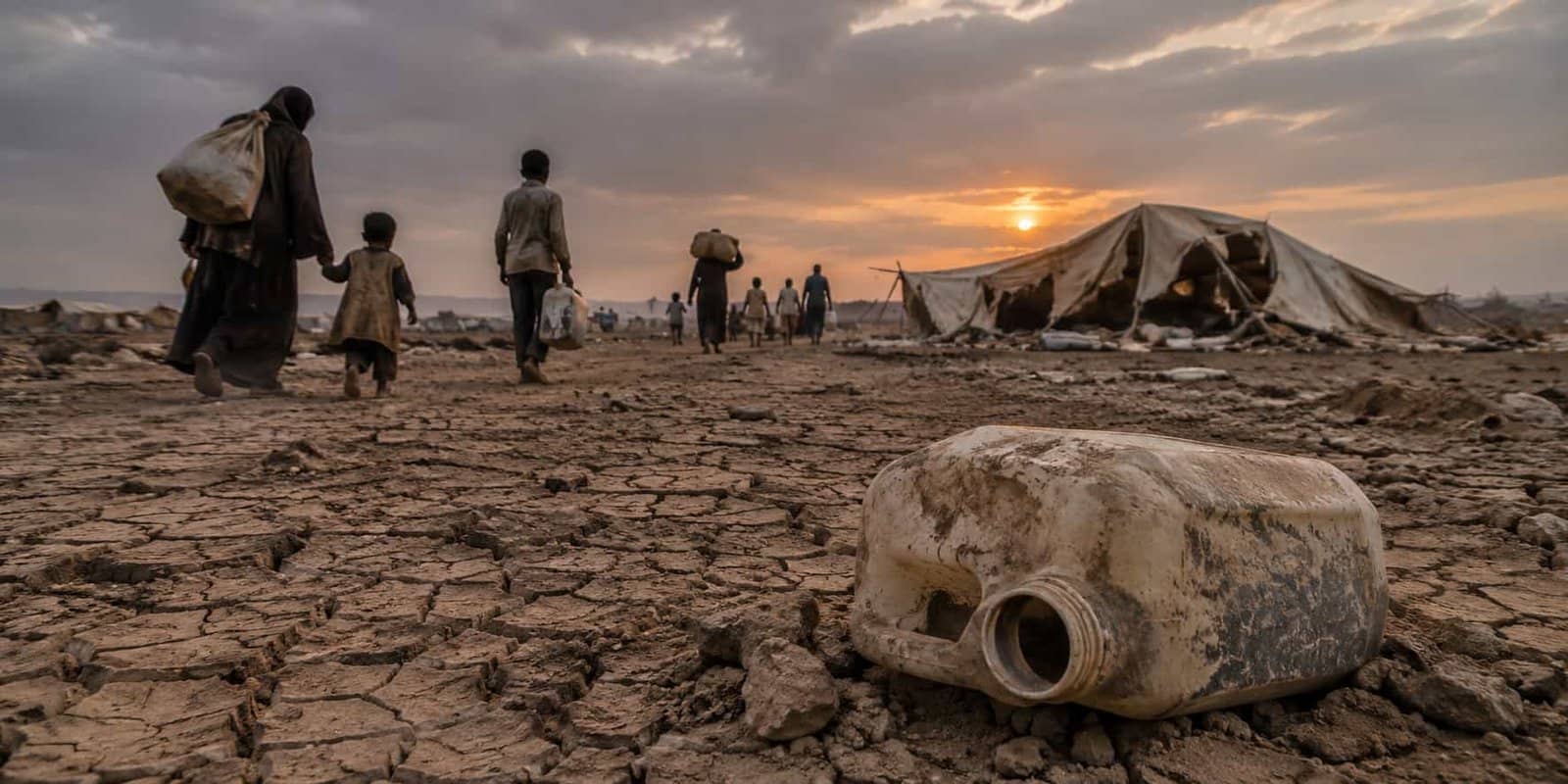
The devastating human toll of escalating humanitarian crises, where millions face dire conditions and death. (Representative Image)
Key Takeaways
1 of 3
Automatically generated. Read full article for complete context.
Recent times have witnessed a very distressing human tragedy—on the one hand people affected by humanitarian crisis situations are being recorded at very high levels, on the other hand the availability of funds for helping them is falling far short of their needs, even declining at a fast pace.
This has led to several concerned persons and humanitarian aid organizations warning that the life of millions of people is threatened due to a combination of these two factors. Despite this warning being given several times, no estimates have been provided yet of people who may have already died due to the combination of these two factors. This article goes a step further and argues that millions of people are actually dying and have died over the last two years or so as the combined result of a very large number of people caught in humanitarian crisis situations and the failure to provide the necessary funds, resources and safe conditions to make available timely life-saving assistance to them.
This article, after drawing attention to this silent and hugely distressing tragedy, with actual mortality estimates, then makes a strong plea for immediately raising much more resources for the humanitarian assistance effort and for significantly improving it in other ways also.
In year 2025 about 305 million people were identified as needing humanitarian assistance in the GHO (Global Humanitarian Overview) document issued by the UN Office for the Coordination of Humanitarian Affairs (OCHA). However in view of resource constraints only about 190 million were targeted and even lesser number were placed in a separate highest priority category. For this GHO funding requirement was placed at around 46 billion US dollars.
However as funds availability reduced drastically this year, particularly due to very huge cuts by the USA and Germany, only about 35% of this could become available (while funds availability outside of GHO did not increase). Hence in terms of GHO, only 16 billion dollars could be available in place of the projected 46 billion dollars or so, or only about 35% of the target was met. This effectively meant that only the most prioritized could be helped, and even in their case the assistance fund available per capita had to be reduced and as a result their needs could not be met as per satisfactory norms.
Keeping in view this sad experience of reduced funds availability, both the targets of fund raising and the people to be covered were reduced significantly in the GHO issued for the next year 2026. Thus it was said that about 239 million people are affected by the humanitarian crisis and among them efforts to reach about 135 million will be made. These figures rose subsequently to 250 and 143 million in some documents. A very high priority sub-category of around 87 or 88 million people was also identified. It was stated that about 33 billion dollars will be needed for this effort, later reduced to about 30 billion dollars. Here it should be emphasized that the reduction of estimates and targets compared to initial estimates and targets set in the previous year was not due to the improvement of the humanitarian crisis situation, existing or projected. It was due to the fact that funds availability in year 2025 had already reduced so substantially that it was considered proper to work on the basis of more realistic projections of what can be done.
As things have turned out in the year 2026, against GHO requirement of about 30 to 31 (initially mentioned at 33) billion dollars, according to the latest data available now in early November, about 12.4 billion dollars have been actually received. In other words first the GHO target was reduced from 46 billion dollars in year 2025 to 31 billion dollars, and even for this highly reduced estimate only about 40% was received. In such a situation, most of the funds went to the highest priority category of 88 million people. In mid-year, of the 10.2 billion dollars available till June, 9.8 billion dollars had gone to the 88 million priority category, leaving only about 0.4 billion for the remaining 55 million people (out of the total of 143 million targeted).
Thus the situation for 2026 appears to be—total affected by humanitarian crisis—250 million (itself an underestimate), targeted by GHO funding—143 million, actual priority reach (but not adequate due to paucity of funds)—88 million, part of targeted population that was largely ignored due to non-availability of funds—55 million, not targeted at all due to resource constraints—107 million (250 minus 143).
Of course a more precise situation will emerge only at the end of the year, but the main trend for the year is clear at the time of writing this in early November.
Thus the overall result of this statistical analysis is that nearly 150 million or more people affected by the humanitarian crisis were more or less left out of the main GHO covered system in 2025 as well as in 2026. As for those who could get assistance, in most cases it was below satisfactory norms due to funds constraints (except in a few high visibility and most favored areas).
What is more, this was not made up by other funding like bilateral or Red Cross which did not increase during these two years or may have decreased somewhat.
In addition we find shortfalls in the funding for the high vulnerable group of refugees. In the context of the funds for the UNHCR or UN Agency for Refugees funding of 8.5 billion dollars was needed for 2026 but till 31 July only 2.7 billion dollars was received.
Even when funds are available, sometimes it has been becoming difficult to take timely help to people due to conditions being very unsafe. Even humanitarian aid personnel have been attacked, harmed or even killed in increasing numbers. Elsewhere there are constraints of important materials or equipment not being available due to a number of reasons. Another factor is that the system of humanitarian aid has declined in some respects in recent times so that the role of local persons and of decentralized functioning has reduced, reducing prospects of better implementation based on good understanding of local needs and conditions. While maintaining the assistance system in areas where it is already well-established may be easier, funds constraints make it very difficult to provide a timely response in new fast emerging areas of great need (like Yemen), in perpetually neglected areas of great need (like DRC Congo and parts of the Sahel Region), and in areas of great need not favored by important decision makers at present (like Afghanistan and Lebanon).
In the context of areas of great need for humanitarian assistance, we are mostly dealing with highly vulnerable people who are very weak, undernourished and malnourished, many of them diseased or more prone to diseases or having injuries from conflicts, having been exposed to extreme distress or stress or trauma.
The GHO for 2026 spoke of the last lifeline available for millions being snapped in several ways in situations of acute fund shortages and related factors–health centers closed, nutrition outreach halted, food rations cut, protection services ceased, cash payments stopped, water deliveries ended and shelters remaining unrepaired. It cannot be denied that for the most highly vulnerable people, any of this or other similar adversities can be life threatening.
On the basis of the factual situation described above, we can ask a simple question—to what extent the mortality levels are likely to increase if, compared to a situation of a reasonably satisfactory humanitarian assistance system, instead we have two different situations of firstly, there being hardly any humanitarian assistance available worth the name in some places and secondly, humanitarian assistance being available in some other places but at low levels or much below satisfactory norms?
We may assume here that if a reasonably efficient and adequate humanitarian assistance systems exists, then despite the weakness and vulnerability of the population covered by it, the mortality can be kept to around 1 to 1.5% of the covered population in a year. On the other hand if the quality of the humanitarian assistance systems goes down due to funds shortage or other factors, then mortality may increase to around 3% of the affected population. Further if humanitarian assistance system (with its food, nutrition, medicines, health services, shelters, protection etc.) does not exist at all or exists only to a negligible extent, then the mortality rate can go up to 6 to 7% of the population or more. This I think is a reasonable assumption to make.
Calculating on this basis for a situation in which about 150 million or so people caught in humanitarian crisis are not getting any humanitarian assistance worth the name, and the bulk of the remaining affected people, almost the same number, are getting much less than adequate assistance due to resource constraints plus other factors, then, despite locals pitching with their own efforts to do what they can, the excess mortality attributed to non-availability or inadequacy of humanitarian assistance is likely to have been close to about 17 or 18 million deaths at the level of the entire world during the period of 22 months from January 2025 to October 2026 (close to about 9 million in one year).
In other words we are saying is that if satisfactory humanitarian assistance was available to all affected people needing this at the world level, then about 17 million people could have been saved from death during these 22 months. In addition a multiple number of these people could have been saved from serious disease, disability, hunger, depression and trauma.
For further clarity, let me reframe what I am saying in four sentences. Firstly I am saying that for a 300 million plus highest vulnerability population of people caught in humanitarian crisis situations during the 22 months from January 2025 to October 2026, it was of the highest urgency to provide a good, robust, reliable system of humanitarian assistance. Secondly, if this was in place in all such situations at world level, then deaths among the 300 million plus affected people could have been kept at around 3 million or so in a year. Thirdly, due to the absence or inadequacies of the humanitarian assistance effort in this population group of around 300 million in these recent times the actual mortality during a year is likely to have been around 12 million. Fourthly, hence the excess mortality that can be attributed to inadequacy of world-level humanitarian assistance and sharp cuts in funding assistance is about 9 million for one year and about 17 million for 22 months January 2025 to October 2026.
Further, my estimate is that during these 22 months availability of about 80 billion dollars more for humanitarian assistance (above what was actually made available) along with some significant reforms in the humanitarian assistance system would have led to saving about 17 million lives, apart from reducing in significant ways the distress of about 300 million people placed in the most difficult situations.
Incidentally this additional amount of 80 billion dollars is less than 2 per cent of the world’s military expenditure for these 22 months, and less than 3 per cent of what the world spent on alcohol during these 22 months.
My recommendation is for a great effort of all people of the world committed to reducing distress to get together and make three great efforts. The first one is for raising at least 70 billion dollars for humanitarian assistance in the next year 2027, and about 140 billion dollars for the next two years 2027 and 2028. Secondly, there should be some reforms in the existing system of humanitarian assistance. In particular reform is needed for adequate response in vast neglected areas and new areas of great need, as well as for closer involvement of local people and communities and ensuring best possible utilization of available resources in conditions of transparency and democracy. Thirdly, the efforts for peace should involve us all in a much bigger way. Without reducing conflicts more humanitarian aid is like pouring water in a leaking bucket. Hence deep and firm commitment to peace and nonviolence and to reducing all conflict and violence is very important.
Disclaimer:The views and opinions expressed in this article are those of the author(s) and do not necessarily reflect the official policy or position of The Rift.
*Humanitarian CrisisAid ReformFunding ShortfallGlobal Humanitarian OverviewMortality EstimatesPeaceUN OCHA