Opening The Rift
therift
© 2026 The Rift. All Rights Reserved.
Odisha must find Path of Mining that Integrates Protection of Environment, Livelihoods and Human Rights
Odisha must find a path of mining that integrates protection of environment, livelihoods, and human rights, not one driven by profit maximization.

Key Takeaways
1 of 3
Automatically generated. Read full article for complete context.
Odisha must find a Path of Mining that Integrates Protection of Environment, Livelihoods, and Human Rights
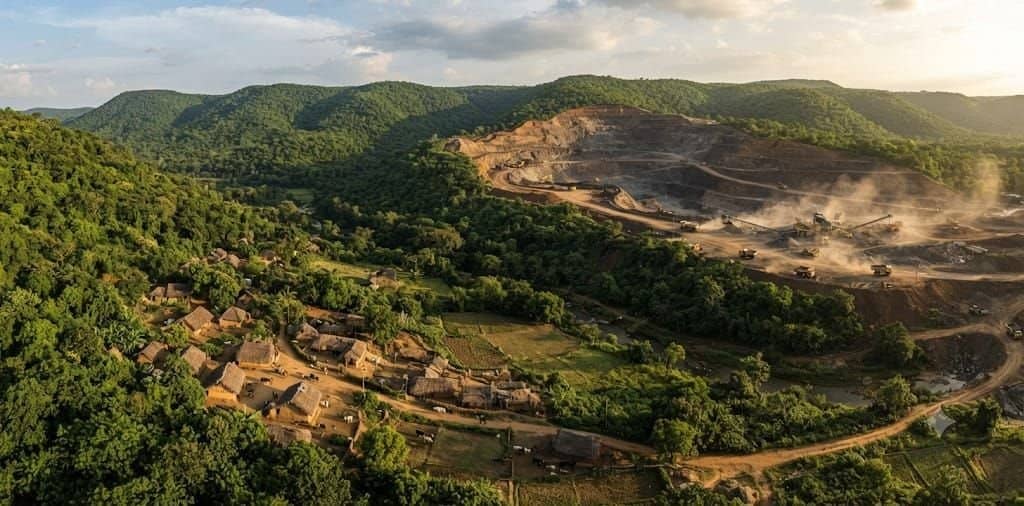
It is a cruel irony that in many parts of the world where valuable minerals have been found and exploited, significant sections of local people experience increased distress and disruption instead of benefiting from the new economic boom. This is particularly true of rural people, farmers, pastorals or those with forest based support systems, who may find farms, pastures and forests devastated by indiscriminate mining.
At times, an entire region may be devastated to such an extent that its capacity to support people in sustainable ways is destroyed within a few decades of indiscriminate mining. The harm to water sources and rivers in particular may extend to a much wider area. Thus a system capable of protecting environment and providing sustainable development for hundreds of years, in the past and in the future, can be destroyed within a few decades of indiscriminate mining on a scale and using methods that are beyond the carrying capacity of a region.
The concept of carrying capacity is very important, particularly for ecologically fragile regions, and even more so in times of climate change. We must recognize the value of a system being stable in the sense of the time honored practices of its communities, having evolved in tune with local environmental conditions, being sustainable and having the ability of continuing to support life patterns considered satisfactory for the most part by people, without transgressing critical environmental boundaries in various contexts. Any distress experienced by people within this stable system, for example in the form of drought or other forms of adverse weather or various minor disruptions can be reduced or overcome with community support or help from the welfare state.
When much bigger interventions like large-scale mining are to be introduced in such systems, then the first question that needs to be asked is—what scale, location and methods can be allowed so that the essential stability and sustainability of the existing system is not disturbed. Having explored this question in satisfactory and democratic ways with the local communities as to the extent and type of mining that can be allowed and safeguards relating to this, the government can then allow, assist or pursue mining in accordance with this.
This of course is very different from auctioning huge mines and then allowing big mining companies to carry out mining according to their profit maximization practices, regardless of local and wider environmental impacts. On the basis of past experiences, this can lead to immense harm to local sustainable livelihoods and life-patterns and beyond that to water sources and environment over a much wider area. This can lead to disruption of time honored community life of great value and to increasing possibilities of widespread social discontent.
All this is of great relevance in the context of the ongoing debates relating to bauxite mining in Odisha’s Rayagada-Kalahandi-Koraput belt which has the biggest deposits of bauxite in India, concentrated in ecologically fragile Eastern Ghats region with a significant population of tribal communities. Most of this area has significant constitutional and legal protections for Fifth Schedule areas, the law extending Panchayati Raj or rural decentralization governance to such areas (PESA), and protective forest rights law for tribal communities (FRA), which provide a good base in India for the protection of people’s livelihoods, in turn based on the protection of the environment and natural resources., law of extending panchayati raj or rural decentralization governance to such areas (PESA), or protective forest rights law for tribal communities (FRA) which provide a good base in India for protection of livelihoods of people, in turn based on protection of environment and natural resources.
A lot of media attention has been focused on distress experienced by these communities during droughts or in other adverse times. While well-intentioned, this may have diverted attention from the wider reality that people here value their sustainable livelihoods and self-reliant life patterns, and more problems are caused to them when they drift away from this, often due to external factors. Of course help is needed and appreciated to overcome some difficult situations. Activities of the welfare state are appreciated. However it is important to emphasize that while people need and welcome genuine help, they do not want any disruption of their time honored life and livelihoods. When I visited several villages of this region several years ago, I documented farming practices of several families which could be improved further with thoughtful ideas aimed at strengthening of such livelihoods and climate resilience.
The government in recent times has often emphasized the importance of higher and better production of millets and legumes. Here in this region, we have many farmers, particularly women farmers, who can teach us a lot regarding this. The government talks rightly of promoting improved self- reliance and climate resilience and here again these farmers including women can teach us a lot as their farming has traditionally been ecologically protective and based mostly on better use of local resources. We talk a lot about biodiversity and protection of diverse seeds, having crop rotations and mixed farming systems that are in tune with soil and water conservation needs of any village; in the traditional system here we already have a lot of this. We talk of protecting nature and environment, here in many villages we have the best of this based on regarding forests and water sources arising from there as sacred.
Unfortunately, as huge mining blocks are sanctioned and huge amounts of money is involved, there is a tendency on the part of some of the most powerful persons to ignore all these considerations and push only the large-scale mining interests.
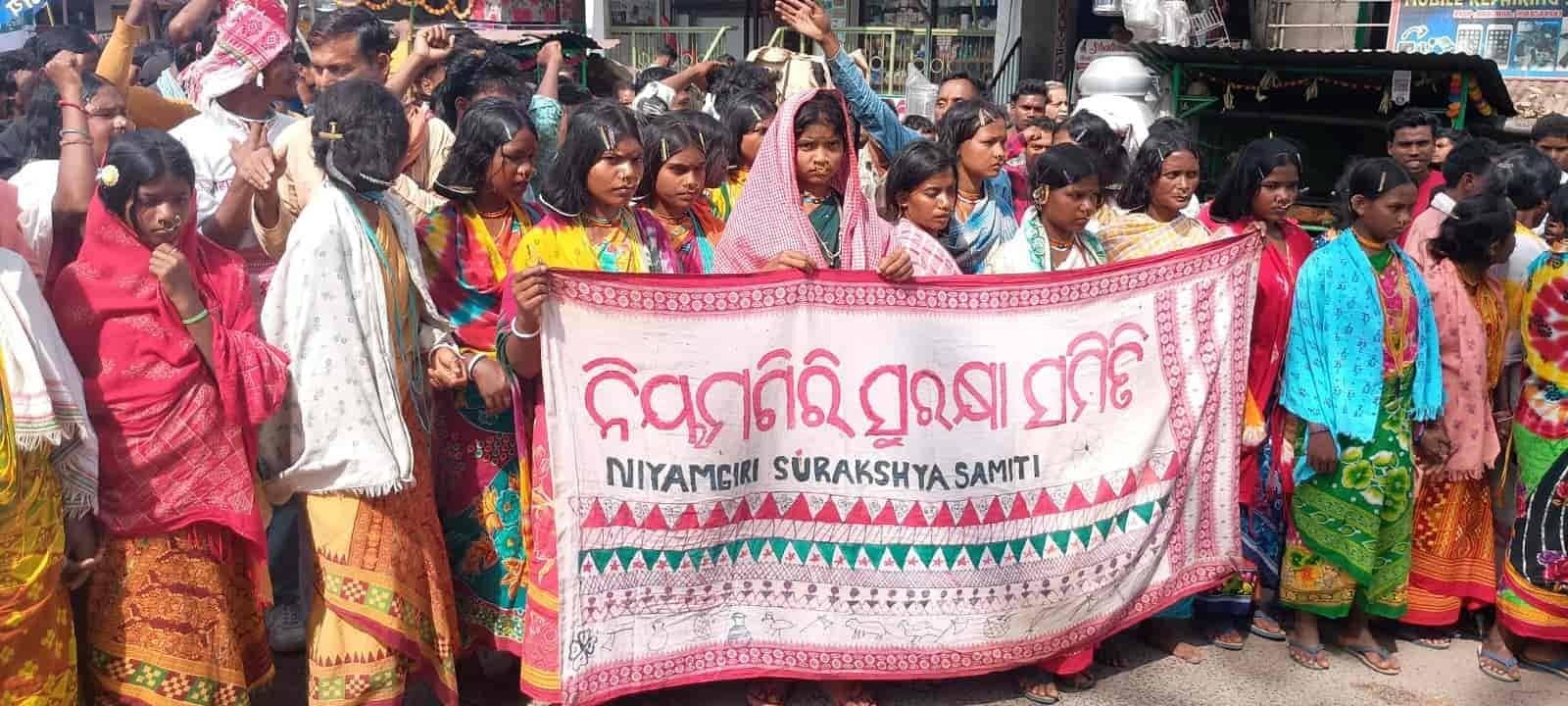
This has already led to a very distressing situation in the Odisha mining belt. Things can be done in a very different way with due emphasis being given to environment, people and all forms of life. The Indian and Odisha democratic systems revealed earlier that they are capable of truly great democratic achievements when about a decade back, during 2013-16 or so, the state and union governments, social and environmental activists, all guided by the Supreme Court could achieve highly democratic processes resulting in decisions to avoid destructive mining practices and protect tribal communities in Niyamgiri. This was a clear victory of protective precepts over money power, a victory of the humble tribal hut over the mansions of the mining billionaires, a victory guided by the Supreme Court of India (over a decade back) which won praise and appreciation all over the world. Now these earlier achievements can be crushed in the new mining areas or even the old protective decisions can be reversed (efforts are already being made for this) if the ongoing acts of repression continue. In the same wider region or neighboring areas where Supreme Court protected village community (gram sabha) decision making had achieved great democratic victory in the context of Niyamgiri earlier, it has been deeply disturbing to hear about reports of faking public hearings and consent of people in recent times.
Several disturbing developments of recent times include arbitrary arrests of community members and activists, even a doctor deeply committed to serving the people (Dr. Randall Sequeira). As per reports, a delegation of senior citizens, comprising retired civil servants and police officers, met the Odisha chief minister in August to check the relentless spread of indiscriminate mining, ignoring essential safeguards to protect concerns of local communities and environment. The government at the highest level should not only heed this advice, but in addition also seek the help of some of these experienced officials to make overdue reforms, starting with the release of arrested community members, social and environmental activists as well community leaders (such as Laxman Naik, Lingaraj Azad and Ladda Sikaka) and of course also Dr. Randall Sequeira. The government rightly calls upon doctors to serve the poor in remote rural areas, it should not at the same time arrest and humiliate those who voluntarily decide to serve the poor in remote villages in the middle of many difficulties. Cases should be withdrawn. Everyone should strive sincerely to make a new beginning to ensure justice based policies in the mining area of Sijimali (also known as Tijimali), Kutrumali and elsewhere.
With the help of communities and activists, retired officials who have demanded reforms in the mining policy, the legal experts who helped with the earlier report of the Centrally Empowered Committee for the Supreme Court on Niyamgiri as well as those scholars who have studied areas like Sijimali, the government should prepare a new mining policy that meets the most essential concerns of the people as well as environment.
The Odisha government should live up to this responsibility. In the past the state government won well-deserved international praise for saving human life in disaster situations. Its officials have shown that they can rise to meet big challenges. Now the challenge is to have a mining policy that can integrate the concerns of protecting livelihoods, environment and human rights. Odisha has the wisdom and capabilities, the officials and the communities and the civil society to achieve this. The Odisha government should be known widely in the near future for such achievements and not for equating spread of mining with repression. Will the state government, helped by the national government, rise to this challenge? Will the courts also continue to live up to the great democratic achievement of the Supreme Court much earlier in the context of Niyamgiri?
Disclaimer:The views and opinions expressed in this article are those of the author(s) and do not necessarily reflect the official policy or position of The Rift.
*Mining PolicyEnvironmental ProtectionFRAHuman RightsNiyamgiriOdishaPESASustainable Developmenttribal rights