Opening The Rift
therift
© 2026 The Rift. All Rights Reserved.
Protective Steps Needed to Save Ken River and Livelihoods of Nearby Villagers
Excessive sand mining and proposed river linking projects threaten the Ken River, jeopardizing local livelihoods and the region’s ecological balance.

Key Takeaways
1 of 3
Automatically generated. Read full article for complete context.
The Ken river is a very important river for the Bundelkhand regionBundelkhand RegionA geographical and cultural region in Central India, divided between the states of Uttar Pradesh and Madhya Pradesh, known for its historical significance and often facing water scarcity. in Central India. This river is also an important tributaryTributaryA river or stream flowing into a larger river or lake. of the Yamuna river and hence of the Ganga-Yamuna system. It is regarded as a lifeline by several villages, particularly by those riverside communities known for their special skills for growing vegetables and fruits near the river. This river is also known for many spots of great beauty and for heritage sites.
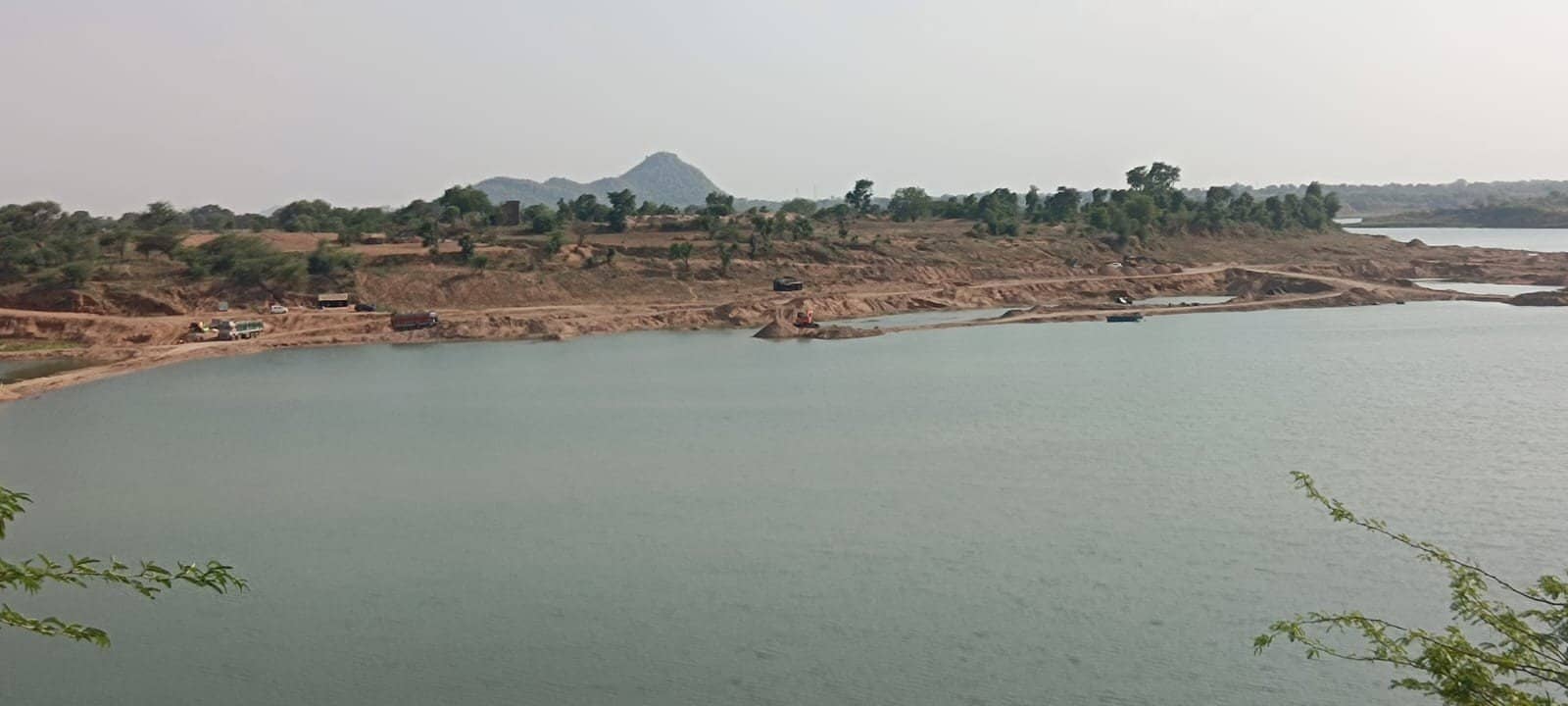
In recent years, the Ken River and its several tributaries have been badly ravaged by sand mining. What is more, in future the river faces the possibility of heavy withdrawal of water for a river linking project even though the existence of surplus water has not been established and low availability during lean season is already seen frequently. While this river has also seen some destructive floods in recent decades, the low availability of water in dry season is also a reality. In fact, in several contexts, floods in the rainy season and water scarcity in the lean season are aggravated by man-made factors, and excessive sand mining contributes to both these adversities.
Sand mining has been taking place in this river for several years at much beyond sustainable levels. Various rules and precautions of ecologically sustainable, relatively safer mining have been violated with ruthlessness and those who question or challenge this have been threatened with violence.
While small-scale mining carried out manually with care for river protection may not cause much harm to the ecology what has happened in reality is that very large-scale and indiscriminate mining is done using heavy machinery. Instead of confining to river-bank or flood-plain area the heavy machinery digs deep into the river-bed and for this temporary bund-making is carried out. This has several impacts, which can deplete water in the dry season while simultaneously increasing the threat of erosion and floods during the rainy season. The capacity of the river to absorb and retain water and to replenish aquifers is adversely affected.

The increasing turbidity created by machinery, bund-making, removal of sediments are all bad for diversity of aquatic life and fish as well as other species may perish in large numbers or suffer a gradual decline. The fulfillment of the irrigation and water needs of human beings, farm and domesticated animals, as well as wildlife around the vast area of river banks, is also adversely affected. This has particularly adverse effects in Bundelkhand region where the number of stray cattle is very high and for them dependence on river water for quenching their thirst can be quite acute. Large scale mining can create conditions in which animals cannot access the river safely for quenching their thirst. If river is badly depleted in the pre-monsoon summer months then this can be disastrous for a large number of stray animals, while at the same time difficulties for other animals also increase.
Hence it is important to take steps to check highly destructive sand mining on Ken river. Very powerful mafias are active in this mining work who use massive corruption as well as threats to others to go on violating existing rules and even law court directives. While some mining leases may be obtained legally, a lot of illegal mining is also done, and the truckloads of sand carried away are much in excess of any sustainability norms. While traveling on these roads in recent years, I have seen huge mounds of extracted river sand and long rows of loaded or about-to-be-loaded trucks, even at times when severe restrictions on mining are supposed to be in place.
While highly destructive sand mining is taking place in several stretches of Ken river, matters came to a head some years back in a river-bank village called Kolawalpur Raipur (located in Mahuwa block of Banda district). On the one hand, the river was being ravaged by mining carried out on a very large scale using heavy machines; on the other hand, wages of several workers were not paid, and compensatory payments were not made to farmers whose fields were converted into roads for the trucks carting sand away from the river site.
Villagers presented a mix of demands which combined curbs on destructive mining practices with payment of proper wages to workers and compensation payment to farmers. Heavy mechanization was opposed and there was a demand to change the mining methods so that river is better protected and at the same time workers using manual methods get more employment. When their demands were not accepted, villagers gathered at the river bank. A leading role was played by women. Several of them entered the river-water and stayed there for a long time shouting slogans and offering prayers, asserting their determination to protect the river.
Later, when the protesters moved towards the road, people of other nearby villages joined them. The fear of a fast growing protest led at last to rapid action on the part of the authorities and most of the demands of this river struggle or jal satyagraha were accepted. However this was only a success at one mining site as indiscriminate and heavy mining continued at several other sites. Wider efforts are certainly needed to protect and save this river.
In particular it is important for the government to protect the livelihoods of riverbank communities like the Kewats (who also find an honorable mention in mythological literature), who have been known for their excellent skills and knowledge of cultivating vegetables and fruits in riverbank conditions, but whose livelihoods have suffered massive loss due to indiscriminate sand mining. (who also find an honorable mention in mythological literature) who have been known for their excellent skills and knowledge of cultivating vegetables and fruits in river bank conditions but whose livelihoods has suffered massive loss due to indiscriminate sand mining.
What is more, several of these problems can increase further in future due to the plans for diverting a lot of the water of this river for a river link project, using a new dam and canal to be constructed for this purpose. This will also involve the felling of about three million trees. Several well-informed persons, including former officials and scientists who have made a special study of this region, have stated that the availability of excess water in the Ken River is not at all well-established, and instead, the shortage of water in the lean season has been clearly seen in several years.
The threat faced by the Ken river increases further due to the fact that several tributaries of the Ken river are also facing serious problems due to sand mining as well as overall environmental degradation. In fact the very survival of some of these smaller tributaries is in question.
Keeping in view all these factors there is clearly a need for a sustained, evidence-based campaign to protect the Ken river and the livelihoods and safety of people who live close to this river. A well formulated plan for saving and protecting the Ken river and its tributaries is needed which is integrated with the protection of livelihoods as well as of heritage and natural beauty sites. There is also scope for green tourism based on heritage sites and naturally beautiful sites, and this should provide livelihood support to local villagers. This plan and its implementation should be in cooperation with the local people, particularly the weaker and vulnerable sections who need more help.
Disclaimer:The views and opinions expressed in this article are those of the author(s) and do not necessarily reflect the official policy or position of The Rift.