Opening The Rift
therift
© 2026 The Rift. All Rights Reserved.
President Lula’s Great Democratic Victory Achieved despite Persistent US Efforts for his Defeat
The US has long used invasions, insurgencies, economic blockades, and now anti-corruption as tools to advance its interests in Latin America.

Key Takeaways
1 of 3
Automatically generated. Read full article for complete context.
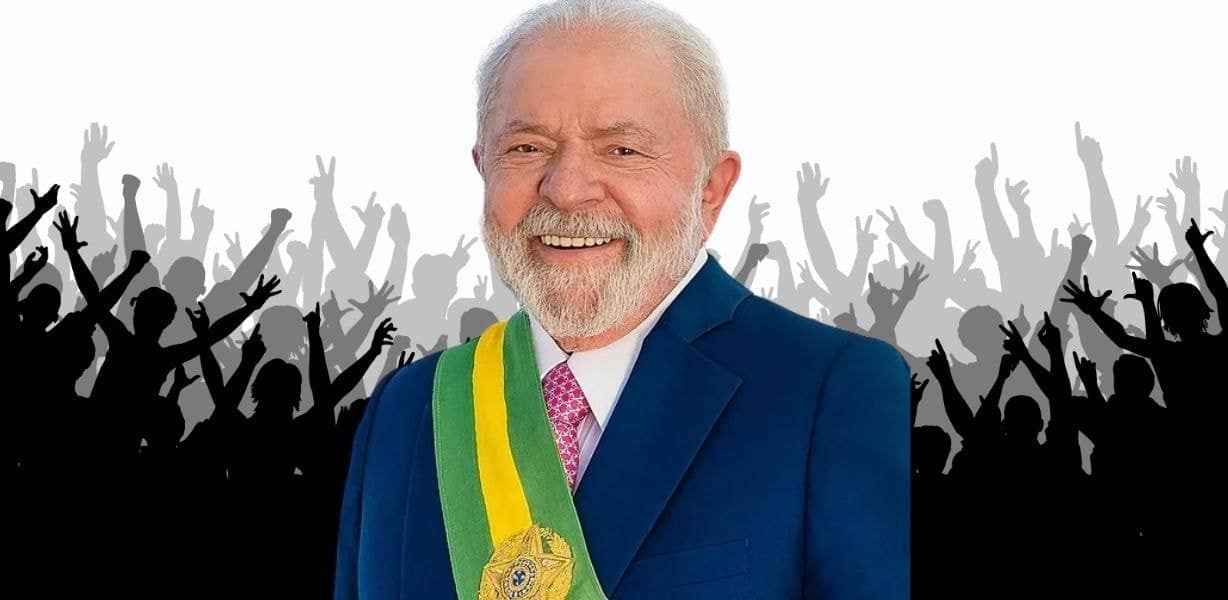
In one of the most welcome news in recent times for democracy, Lula da SilvaLuiz Inácio Lula da SilvaA prominent Brazilian politician who served as the 35th President of Brazil from 2003 to 2010 and was re-elected for a third term in 2022. He is a co-founder of the Workers’ Party (PT). has achieved a great democratic victory in a keenly contested runoff against Flavio BolsonaroFlávio BolsonaroA Brazilian politician, lawyer, and businessman who currently serves as a Senator for the state of Rio de Janeiro. He is the eldest son of former President Jair Bolsonaro., son of former President Jair BolsonaroJair Messias BolsonaroA Brazilian politician who served as the 38th President of Brazil from 2019 to 2022. He is known for his right-wing populist views. now serving 27 year jail term for coup attempt earlier against President Lula. The results of this election were eagerly awaited not only in Brazil but all over the world as this election was also being seen globally as a struggle between imperialism’s interference and autonomous choice, given the USA’s persistent hostility towards President Lula, both currently and historically.’s interference vs. autonomous choice due to the persistent hostility of the USA now and in the past against President Lula.
Despite the involvement of Jair Bolsonaro in a coup plot after losing an earlier election, the USA had continued to support his family members and close associates in Brazil politics. Some of these close associates pleaded in the USA for punishing steps against their own country, allowing their hostility towards President Lula’s leadership to even overwhelm their concern for the country’s essential interests. Subsequently when US President Trump arbitrarily increased tariffs in a very big way for Brazil’s exports to the USA, these persons openly expressed their happiness.
Subsequently, during the election, both overt and covert US support for Bolsonaro was clearly evident. There was a lot of discussion over the boosting of pro-Bolsonaro content over pro-Lula content by MetaMeta Platforms, Inc.An American multinational technology conglomerate based in Menlo Park, California. It is the parent organization of Facebook, Instagram, and WhatsApp, among other products and services. on its social media platforms.
In a Reuters report published in The Times of India (October 26 2026, Chandigarh edition) under the title ‘Did US campaign to tilt Brazil polls towards Bolsonaros’?, it has been stated, “Two US state department officials led a campaign to restore Brazil’s right-wing Bolsonaro clan to power and pushed for sanctions intended to tilt the presidential elections in its favor, according to 10 current and former US officials with direct knowledge of the matter.” Before the election campaign started, these two officials, Beattie and Pita, had told US diplomats that US policy was to restore Jair Bolsonaro as Brazil’s leader. Subsequently, this support was concentrated on his son Flavio in the presidential election.
Further this report states, “Since last year, the officials have advocated punitive measures designed to weaken Lula and boost the Bolsonaros, the 10 sources said.” These steps included sanctioning Supreme Court Justice Alexandre de Moraes who led investigations into Jair Bolsonaro. In July 2025, the USA revoked eight Brazilian Supreme Court justices’ visas and imposed 50% tariffs on Brazilian goods. Some of the punitive measures were diluted later following widespread criticism.
However, it would be entirely wrong to blame only these officials for anti-democratic interference in Brazil, as such interference and covert regime change efforts go back much, much further and among other things, can be seen in the impeachment of Brazil’s President Dilma RousseffDilma Vana RousseffA Brazilian politician who served as the 36th President of Brazil from 2011 to 2016. She was the first woman to hold the office and was impeached in 2016. in 2016, the imprisonment of Presidential candidate Lula da Silva in 2018 and the loss of PT (Workers Party) in 2018 elections.
An important study later confirmed widespread allegations appearing time and again in Brazil and elsewhere that the USA played an important part in these events through its highly opportunistic use of the anti-corruption movement, which also involved illegal actions directed against these leaders and their political party.
This study is titled ‘Anti- Corruption and Imperialist Blind Spots—the Role of the US in Brazil’s Long Coup’ and is authored by Brian Mier, Bryan Pitts Sean T.Mitchell and others. This was published in Latin American Perspectives.
This study states: ‘A comprehensive examination’ of the evidence available, contained in US government statements, English language media accounts and hacked telegram chats among Brazilian prosecutors indicates that the US was widely involved in the ‘long coup’ that removed the left from power in Brazil in 2016 and secured the elections for the far right in 2018.
The leading role in this was played by an anti-corruption movement called Lava Jato or Operation Car Wash. This movement was preceded by large gatherings that educated and trained potential participants in ‘anti-corruption’ activities designed to target public sector companies and political leaders, and to secure international cooperation, particularly from the US.
Brazil had discovered new big oil deposits and this may have instigated foreign attempts to harm its public sector oil and petroleum interests, to pave the way for higher private sector role. President Rousseff’s efforts to curb private bank profits may have been another reason for targeting her. A bigger reason may have been the strong role played by the governments of Lula and later Rousseff in protecting trade interests of developing countries, as well as their refusal to toe the US line in developing relations with countries such as Iran, China, and Russia. The independent stand taken on Palestine may also have irked the USA. Obama’s personal dislike for Lula may have been an aggravating factor, as was the general hostility to any left-wing government.
As the study by Brian Mier et al. indicates, in June 2019, the evidence of US interference via Lava Jato was already so strong that the PT leader in Congress, Paulo Pimenta, was able to provide a dossier full of information. It included names of US prosecutors, public statements by government officials, proof of parallel meetings and events, official schedules, evidence of informal violations in collaboration with national sovereignty laws, and US officials in Brazil gaining unrestricted knowledge of government authorities.
In 2020 Intercept journalists published Telegram communications which revealed that the Lava Jato team had repeated secret meetings with 17 (US) FBI agents bypassing national laws and regulations.
On the day that leading presidential candidate Lula was arrested in 2018, a prominent leader of Lava Jato was heard commenting: ‘This is a gift from the CIA.’
While leading US media kept quiet about the US role in all this, the leaders of Lava Jato were given very good coverage to boost their image and present them as great heroes.
Adding up all the evidence, this study concluded, “Over the past one decade, continuing evidence has emerged that clearly demonstrates that the US government, particularly the Department of Justice, under both Obama and Trump, played a key role in supporting Lava Jato’s politically motivated witch-hunt against the PT.”
Further this study states, “The US has long used invasions, insurgencies and economic blockades to advance its interests in Latin America. Today it has added the tool of anticorruption to its arsenal.”
The PT government made significant contributions in reducing poverty and inequalities, but these gains were rapidly rolled back within a few years of their ouster, with the income share for the bottom 50% diminishing significantly and the income share for the top 1% increasing substantially. What should serve as a lesson to other developing countries is how US operatives (using local collaborators) could achieve a government change and the imprisonment of highly popular leaders of the ruling party, even in a leading country. The legal and other aspects of anti-corruption international agreements were used to strengthen this capacity and this study quotes documents regarding the use of anti-corruption movements to destabilize US competitors and perceived enemies.
Another very disturbing aspect is how opportunistic use was made of anti-corruption rhetoric, turning good leaders into targets for corrupt practices while celebrating racketeers as heroes. Thus, while opposing corruption in sincere and honest ways must be a very important aspect of any democracy, caution should be clearly exercised regarding the opportunistic use of any anti-corruption movements.
Disclaimer:The views and opinions expressed in this article are those of the author(s) and do not necessarily reflect the official policy or position of The Rift.