Opening The Rift
therift
© 2026 The Rift. All Rights Reserved.
As elections approach in Punjab, It is time to focus attention on the state’s most urgent issues
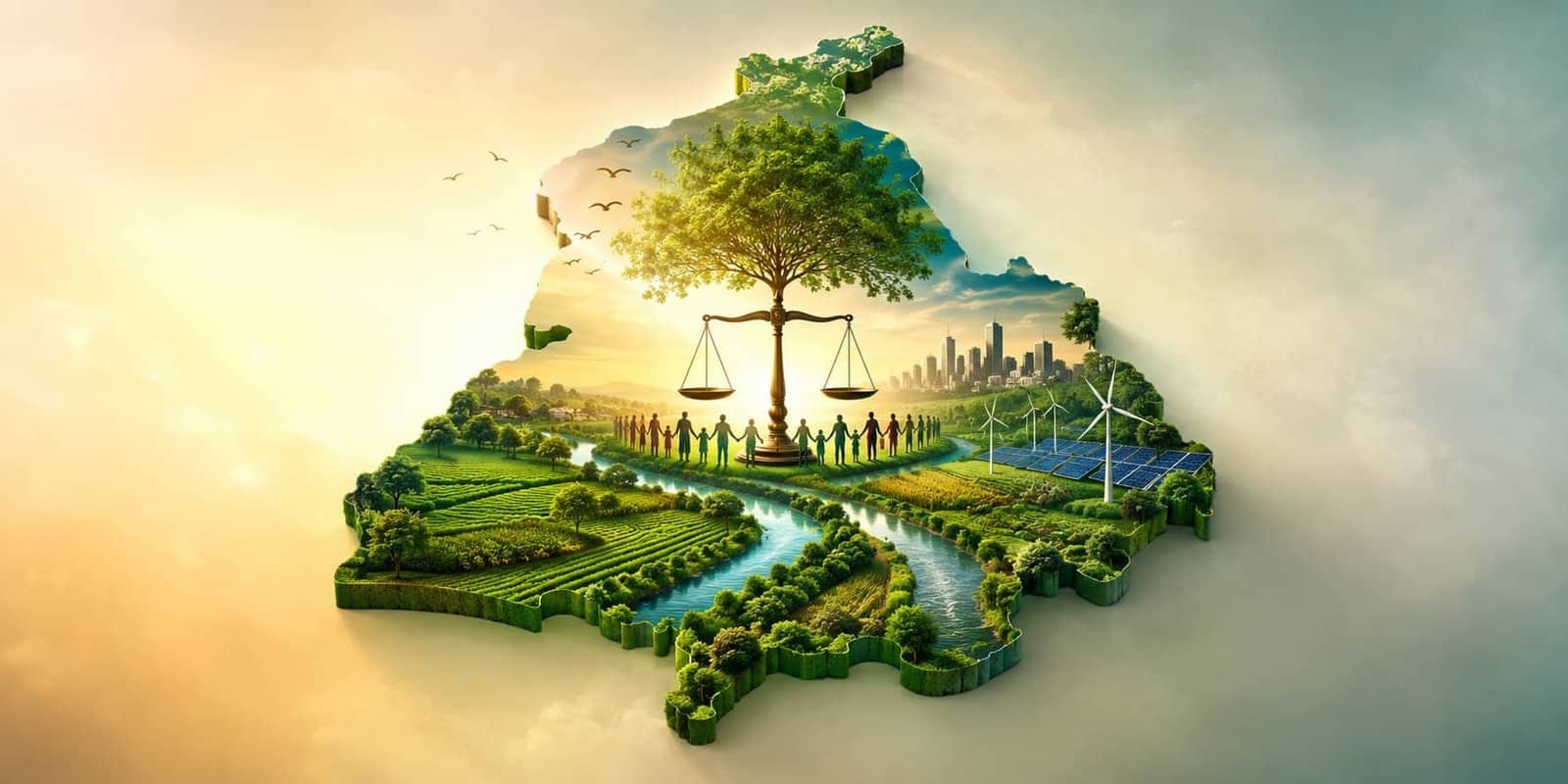
The future path of progress for Punjab should be firmly based on justice, equality and environment protection.


Key Takeaways
1 of 3
Automatically generated. Read full article for complete context.
With state assembly elections due in February 2027, Punjab is already in the middle of its election season, starting months in advance. Both the ruling and the opposition parties are increasingly looking at various issues in terms of their election time potential. While various political parties are grappling with internal problems, there is talk also of the possibilities of new alliances emerging. At the same time, various sections of the population including government employees are raising their demands with added vigor, hoping to get more favorable decisions in the election season.
All this is along expected lines in a vibrant democracy. However, it should be remembered that in a healthy democracy it is also important to keep away from narrow sectarian trends. This is particularly true at a time of approaching elections. Punjab has suffered a lot due to this in the not-too-distant past. People remember the acute distress of those times and do not at all want to return to those times. Yet some forces of instigation are always trying to do some mischief or the other, and it is best to be on guard against any such efforts or trends.
On the positive side, can the important time before elections be utilized for drawing more attention to the most serious problems as well as for discussing the most promising solutions for these problems? The actions and promises of leading political parties being focused highly on getting votes in the next elections tend to be more in terms of short-term gains while at the same time ignoring more complex and longer-term issues. Hence it can be very useful to prepare a comprehensive agenda of solutions and reforms that are most urgently needed by the state and its people. Here it is also important to remember that several reforms have been discussed a lot in the past without leading to any truly meaningful changes. To give just one example crop diversification has been discussed a lot, while most recent reports suggest that the area under paddy in this Kharif seasonKharif SeasonThe monsoon cropping season in India, typically from June to October, for crops like paddy, maize, and cotton. may be at a record high. Moreover, crop diversification can be very different when seen from the eyes of big agribusiness interests (who would see this in terms of their requirements) compared to what it would mean from an agro-ecological perspective, which is what is really needed as the problems of water overexploitation and highly depleted fertility of soil are involved. Several experts tuned to agribusiness interests often dictate the farming change discourse, using ecological concerns as a cover to push their agenda instead of pursuing a true agenda of sustainability and agro-ecologyAgro-ecologyA scientific discipline, a set of practices, and a social movement that studies and promotes sustainable food systems based on ecological principles, social equity, and local knowledge.. This is why real solutions do not emerge.
This is tragic, as Punjab’s spiritual heritage makes it particularly suitable for a people based program of agro-ecology. Instead of becoming a leader of the ecologically harmful ‘Green RevolutionGreen RevolutionA period of rapid agricultural development in the mid-20th century, characterized by the introduction of high-yielding crop varieties, synthetic fertilizers, and pesticides, significantly increasing food production but also raising environmental and social concerns.’ which involves serious problems of health and sustainability, Punjab should have been a leader of agro-ecology.
Such important issues hardly even figure in the official agenda. In other contexts also there is a highly selective agenda. In the highly publicized drive against addictions, some addictions are emphasized but the issue of very high consumption of alcohol in Punjab has been almost entirely ignored despite its very high health, social and economic costs for people.
The people of Punjab have been known for their large-heartedness and capacity for making great sacrifices for noble causes, for justice and fairness, as seen during the freedom movement. The Punjabis as the people of a crucial border state have been in the forefront of protecting their country at the times of various wars.
However somewhere along the lines some mistakes were made, some wrong trends were also seen which were further aggravated by forces beyond the borders of India. This led to a lot of avoidable stress, distress and violence. Distortions appeared also in the development path, which increased the problems of the peasantry in particular, reflected in the increasing indebtedness of a large number of farmers, culminating in many cases in very tragic suicides. According to a study of the Punjab Agriculture University, there were close to 9300 suicides of farmers between 2000 and 2018 in just six districts, about 90% of which were driven to a large extent by debt (reported in Mint).
Farmer Suicides in Punjab (2000-2018)
Total Suicides Reported
9,300+
Across 6 Districts
Driven by Debt
~90%
Primary Cause
VISUALS BY THE RIFT
Learning from past mistakes, Punjab must carefully choose its future path. There has been an unfortunate tendency that sometimes a lot of problems of the past are admitted but then the solutions and future course of action suggested for future are along the same lines! Clearly such tendencies should be avoided. The future path of progress for Punjab should be firmly based on justice, equality and environment protection.
The path of justice should imply that various steps for creating a more equal society are given a high priority at various levels. The various government schemes which can be very useful for this should be strengthened and expanded. At the same time the government should introduce new schemes to fill in important gaps. In particular the neglected task of providing at least some land for the landless should receive attention, and despite the existing constraints there can be several creative ways of taking this forward. Welfare of local rural and urban workers and also of migrant workers should get more priority. Urban housing schemes should be reformed to give much more attention to the housing needs of the urban poor (also the middle class), while any demolitions without providing alternative, preferably better, housing should be avoided.
The people of Punjab have shown their commitment to living with peace and unity despite several provocations. During difficult times several social forces particularly some left forces stood up very bravely to protect peace and unity. Despite this, the past experience indicates that in certain conditions those with a narrow sectarian agenda can suddenly appear to have a larger presence. Hence it is better to be cautious instead of becoming complacent. What is really important is that there should be strong peace movements at the grassroots which should work with continuity instead of working only as a firefighting force.
In addition, it is extremely important that Punjab should make a very significant shift in favor of a path of progress which is based on environment protection and ecological regeneration. This path of environment protection should be based on promoting sustainable and creative livelihoods at the same time. Elitist environmentalism which is alienated from the concerns of common people including peasants and workers should be avoided.
Important aspects of environment protection should be protection of groundwater, ponds and rivers, water conservation and recharge, protection of soil, reduction of air pollution, promotion of natural farming and carrying forward climate change adaptation and mitigation in ways that are in keeping with the protection and strengthening of sustainable livelihoods of people. Government schemes should be best pursued in ways that allow the objectives of justice for the poor and environment protection can be taken up in a big way, strengthening sustainable livelihoods while at the same time providing short term relief to those who need this the most.
Some environment protection movements have been emerging in Punjab, such as those protesting against deforestation in Mattewara or against pollution by a distillery in Zira, or Jive Sarluj effort to protect the Satluj river or other scattered efforts. Such emerging movements should be encouraged and hopefully broader efforts of people will also emerge.
Once a shift to ecologically protective farming is being made, the cause of incentivizing it more and more by ensuring a very fair price for farmers should be taken up vigorously. Additionally, the shift towards ecologically protective farming should be supported by providing specific subsidies and various kinds of help, instead of spending limited government resources in ways which end up accentuating harm to soil and water sources and other ecological ruin, as has often happened in the past. Additional funds related to climate change mitigation and adaptation should also reach farmers. Unfortunately the government has so far been following a reductionist approach–sometimes starting a scheme to discourage stubble burningStubble BurningThe practice of intentionally setting fire to the straw stubble and other plant residue after harvesting crops, often done to clear fields quickly for the next planting season, but contributing significantly to air pollution., and sometimes implementing measures to protect against more hazardous chemicals. Instead a more holistic approach is needed in which various problems can be tackled not in a half-hearted, piecemeal and isolated way but instead as part of an integrated approach based on environment protection and sustainable livelihoods. Natural farming systems and mixed cropping systems that grow a much greater diversity of healthy food crops should be taken forward further on the path of value addition by encouraging village level food processing units which can provide healthy food directly to urban consumers.
At a wider level there must be much greater encouragement for small industrial units which have practical possibilities and advantages for meeting various daily needs in relatively more labor-intensive ways without requiring very large capital investments. Industries that already had a sound base in various parts of Punjab but suffered setbacks in recent times due to various factors should be helped to regain their strength.
Important initiatives based on real needs of society should be taken up particularly for education and health sectors. Youth should get all-round support for finding livelihoods based on creative solutions for society’s numerous problems, and their education must also equip and encourage them suitably for such a role. The unfortunate trend of the unfortunate trend of seeking better prospects only by going abroad should be addressed.
Governance must improve in very significant ways. Corruption and wasteful spending must be checked and significantly reduced. Governance should be based on the proper prioritization of various tasks and responsibilities. For the state government to make its significant contribution, its fiscal healthFiscal HealthThe financial well-being of a government or entity, typically assessed by its revenue, expenditure, debt levels, and ability to meet financial obligations. should be restored and maintained.
In fact, a big initiative to get the priorities right is needed to correct various distortions and imbalances that have emerged, apart from improving the overall fiscal health of the state. Once the priorities are properly identified, this will also be helpful for the Punjabis scattered all over the country and the world who have resources to help their beloved Punjab, its villages and cities, make their contributions in accordance with the proper priorities.
While such thinking regarding sincere, genuine reforms will always be relevant, the months before elections are a particularly suitable time to bring the most important issues and solutions to the forefront, and to focus public attention on them.
Disclaimer:The views and opinions expressed in this article are those of the author(s) and do not necessarily reflect the official policy or position of The Rift.