Opening The Rift
therift
© 2026 The Rift. All Rights Reserved.
Learnings from the Inspirational Role of the Family of Bhagat Singh
To understand the ‘making of Bhagat Singh’ we need to understand the equally remarkable family in which Bhagat Singh was born and brought up.

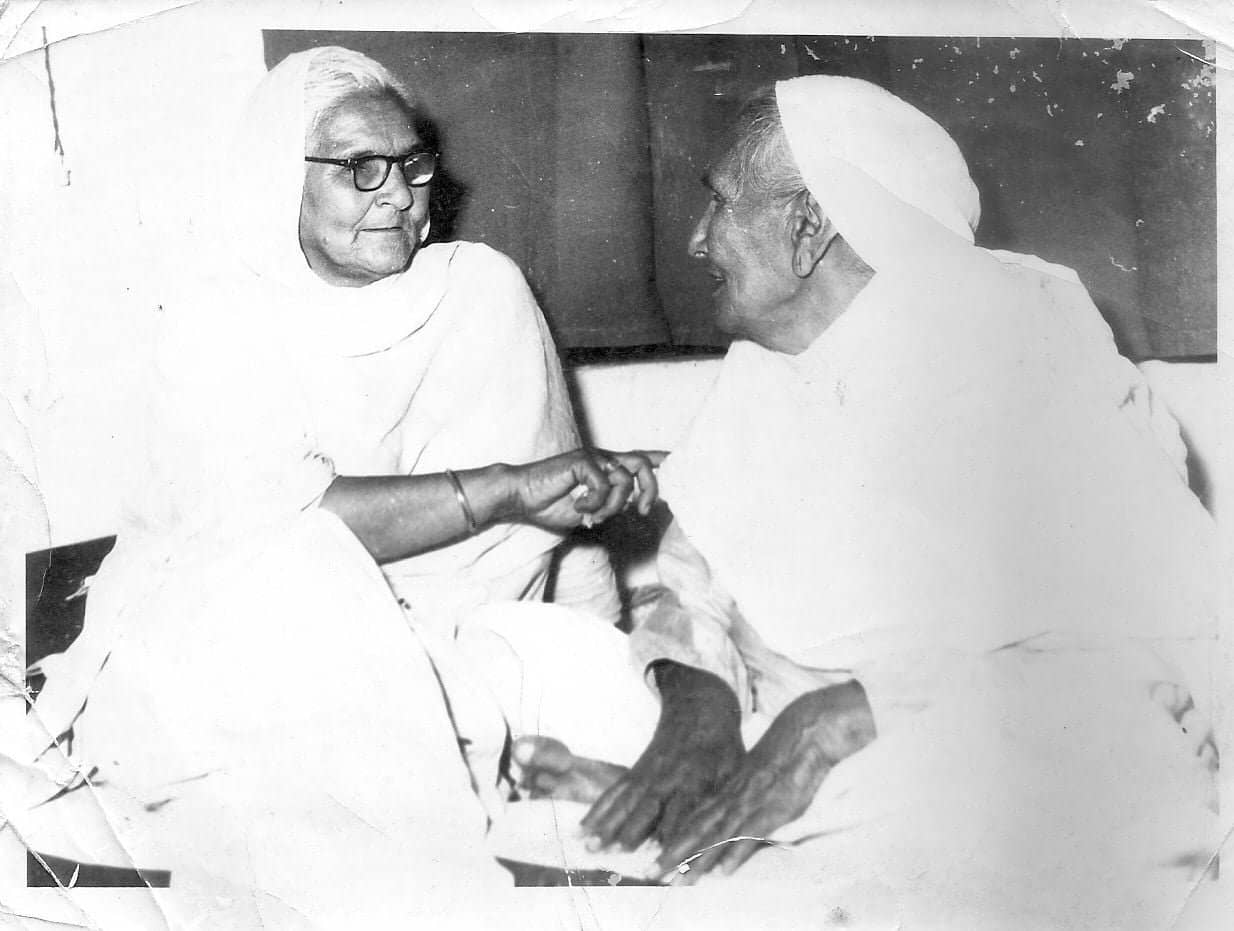
Bhagat Singh’s mother, Mata Vidyavati (Bebe Ji), with his sister, Bibi Amar Kaur (wearing glasses)
Key Takeaways
1 of 3
Automatically generated. Read full article for complete context.
Shahid Bhagat Singh, India’s great martyr and freedom fighter, was hanged by colonial rulers in a most unjust way at only 23 years old. Although 95 years have passed since then, the inspirational impact of his life has continued to grow in India. Along with Mahatma Gandhi, he is today the most inspirational figure in India. This inspirational role has its roots in Shahid Bhagat Singh’s many acts of great courage and determination, his firm resolve in remaining true to his ideals in the middle of the most difficult situations and also the great maturity he showed at a very young age in raising and exploring the most relevant questions, continuing his intense study and deep reflections even in very difficult conditions so that he could leave important messages of enduring value for people even at a very young age.
However, it appears that the sources of influence and inspiration which helped to create the greatness of Bhagat Singh have not received adequate attention. In particular, the family influences which made this possible have not been adequately explored. Bhagat Singh’s remarkable consciousness and yearning for justice even at the age of 12 to 14 have been frequently cited. We must know what made this possible and contributed to this.
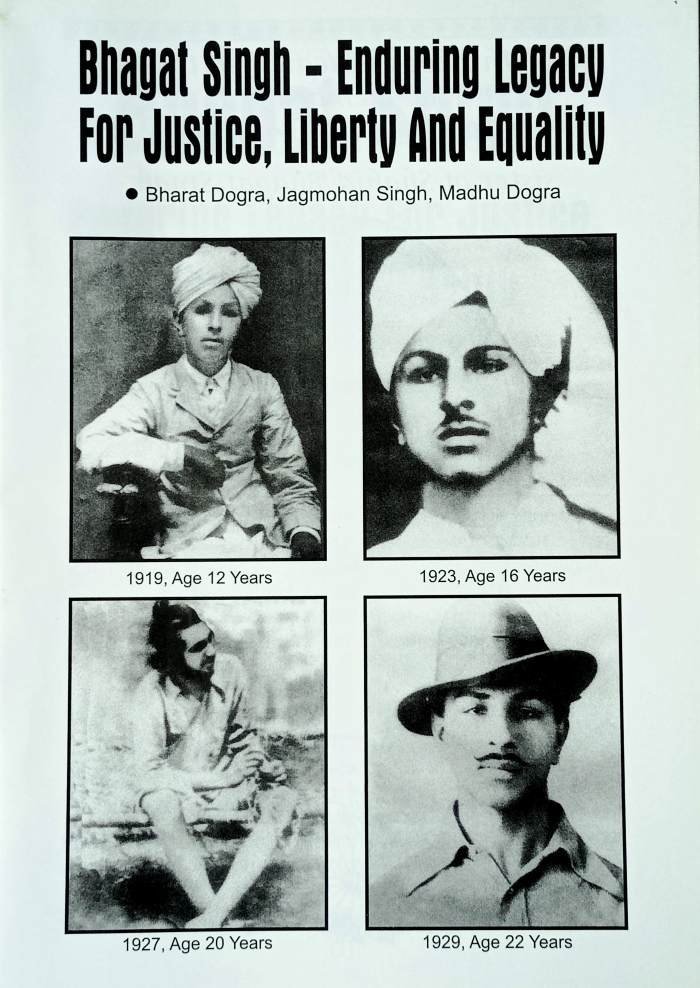
Bhagat Singh was born on September 28, 1907 at Banga Village (now in Lyallpur district of Pakistan). At age 9 he heard about the efforts of the Gadar PartyRevolutionary OrganizationA revolutionary organization formed by Indian expatriates in the early 20th century, primarily in the United States and Canada, with the aim of liberating India from British rule through armed rebellion. in which 8000 emigres returned from America, Canada and Southeast Asia to liberate India, particularly its 19 year old leader Martyr Kartar Singh Sarabha who became a source of great inspiration. In 1919 many innocent people were killed by security forces in the most cruel way at Jalianwala Bagh, Amritsar. At the age of 12 years Bhagat Singh insisted on going to Amritsar to pay his homage to those who were killed and brought back a handful of blood soaked soil from the sight of massacre. With his sister Amar Kaur he put flowers on this soil, as if paying homage to those who had died. At the age of 14 we find him observing closely the massacre at Nanakana Sahib, the birth place of Guru Nanak. In November the same year we find him writing (in a letter to his grandfather) about the preparations of an impending railway strike. At the age of 14 we also see him getting involved in the Non-cooperation movement and participating in activities like burning bonfire of foreign cloth. In keeping with the spirit of the movement and in fact marching one step ahead he left school in tenth class and studied hard to join one of the national colleges that had been set up as a part of the nationalist movement. At the age of 15-16 we see him trying to establish contacts with revolutionaries and immersing himself in studying revolutionary literature. At the age of 16 we see him leaving home for some time with a message for his father that his life is now dedicated to the freedom of India. Around this time, At the age of 17, he translated a book My Fight for Irish Freedom by Dan Breen into Hindi so that this could be read by more people in India.
KEY MILESTONES
Bhagat Singh’s Formative Years: A Timeline of Early Activism
AGE 9
Learned about the Gadar Party’s efforts to liberate India.
AGE 12
Insisted on visiting Jallianwala Bagh to pay homage to massacre victims, collecting blood-soaked soil.
AGE 14
Observed Nankana Sahib massacre; wrote about impending railway strike; participated in Non-cooperation Movement, burning foreign cloth; left school for national college.
AGE 15-16
Established contacts with revolutionaries; immersed himself in studying revolutionary literature.
AGE 16
Left home, dedicating his life to the freedom of India.
AGE 17
Translated Dan Breen’s “My Fight for Irish Freedom” into Hindi.
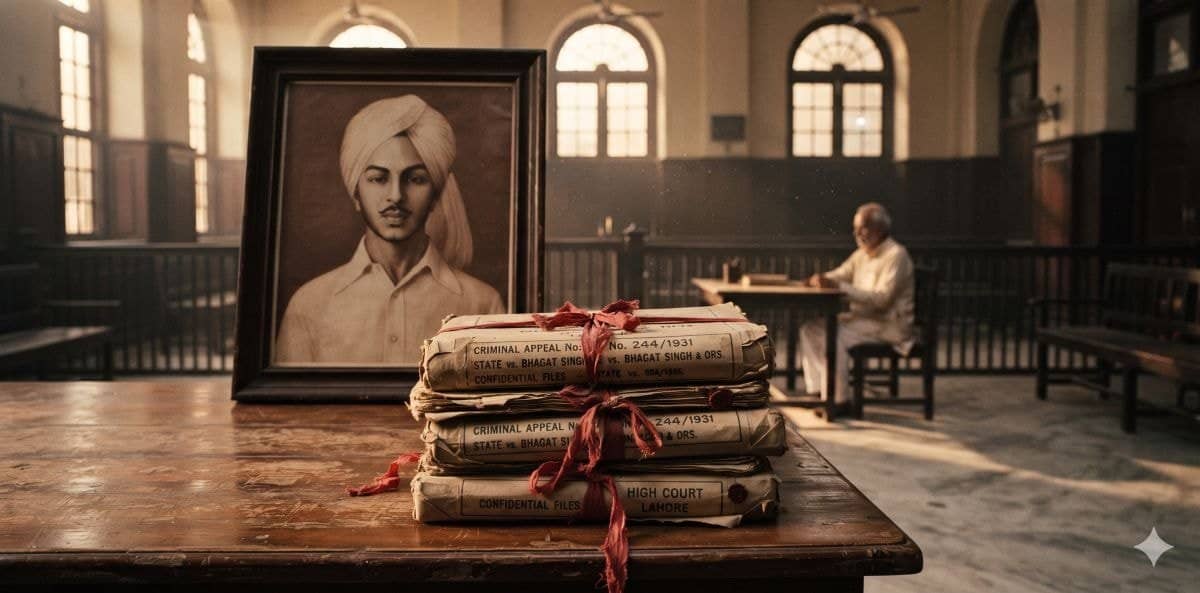
VISUALS BY THE RIFT
This was quite an extraordinary childhood and adolescence. To understand the ‘making of Bhagat Singh’ we need to understand the equally remarkable family in which Bhagat Singh was born and brought up.
Bhagat Singh’s grandfather Arjun Singh was a man of strong feelings for social reforms as well as freedom of India. In his family he often told stories of his own grandfather Fateh Singh who had helped Muslim tenants to get land rights and later unlike other big landowners, refused an offer to get more land by entering into a deal with the British. This happened at the time of the great struggle for independence in 1857. Refusing the offer Fateh Singh said that the teaching of Guru Gobind is that as a principle we should stand with the struggle for justice.
Arjun Singh carried this tradition further and provided conducive conditions for his three sons to join freedom struggle and reform movements. He set high standards for good relationships with farm workers. He provided free medical care to the needy and encouraged his wife Jay Kaur also to do so. At a time when education of girls was frowned upon, he gave the name ‘Vidyawati’ (translated as devoted to education) to his eldest daughter in law (mother of Bhagat Singh). He encouraged his daughters-in-law to carry out various constructive activities to help villagers in several ways like educating girls and providing a helping hand to the needy. He along with his wife and other family members supported the upbringing of about 22 orphan children, most of whom later contributed to the freedom movement with dedication.
At the time of the thread ceremony of his two grandsons Jagat Singh and Bhagat Singh he said, “I dedicate them to the freedom struggle of the nation.”
The eldest son of Arjun Singh was named Kishan Singh (father of Bhagat Singh). At a young age he worked with great dedication for earth quake , flood and drought relief work. (Bhagat Singh also later worked with great dedication in flood relief work in Kanpur). Then he joined the freedom struggle with equally strong resolve, helping Gadar Revolutionary Party effort, going to jail several times and enduring much hardship. He was also active in the efforts for improving jail conditions. (Again a role that was taken up further by his illustrious son Bhagat Singh).
Kishan Singh’s wife Vidyawati supported her husband bravely in his various activities, apart from helping in bringing up many orphan children. At a later stage, her courage and firm resolve received nationwide admiration. When her son Bhagat Singh had been hanged and her two other sons Kulbir and Kultar as well as daughter Amar Kaur had been arrested, she challenged the colonial government saying, “You can kill me but you can’t bend me.”
No less inspiring for Bhagat Singh was his uncle Ajit Singh. In cooperation with other leading freedom fighters like Sufi Amba prasad, Lala Hardayal and Lala Lajpat Rai , he quickly took forward many initiatives like farmers’ movement against unjust taxes and publication of inspiring literature. (Both these aspects were later emphasized also by Bhagat Singh). He led a successful public agitation popularly known as Pagri Sambhal Jatta , which forced the colonial rulers to withdraw unjust tax rules imposed on farmers. Ajit Singh impressed freedom movement’s leader Lokmanya Tilak so much that he said when India becomes free, Ajit Singh should be the first President of India. However due to his brilliance and rapid progress the colonial government was expected to take strong action against Ajit Singh. So at the age of 26 he had to leave India and for 37 years he worked for freedom of India in various countries outside India. Bhagat Singh cherished memories and anecdotes about his uncle.
Ajit Singh’s wife Harnam Kaur came from a family with strong sufi influences. She helped villagers with educational and medical services, and took to spinning a lot of Khadi yarn (this was an integral part of the various constructive works taken up by freedom movement).
Arjun Singh’s third son (and Bhagat Singh’s younger uncle) was named Swaran Singh. He started his social activities with working for orphans and for drought and earth quake relief efforts. Then he participated very actively in the freedom movement including publication of freedom literature. He was arrested and became seriously ill in jail. On his release he couldn’t recover and died at the young age of 23. His wife Hukam Kaur continued to help in the family’s many struggles.
Soon after this death, in July 1910, a daughter was born in the family. She was named Amar meaning immortal. This reflected Baba Arjun Singh’s thinking of preparing the family to overcome grief following the sacrifice of a badly missed son by greeting the arrival of daughter as immortal (at a time when feelings of joy were often avoided if the newborn was female).
As a child, Bhagat Singh sympathized with both his aunts. Harnam’s husband had to leave the country he loved so deeply. Hukam had lost her husband at a very young age. Thoughtful child that he was, Bhagat linked his family tragedies to the oppressive foreign rule.
Growing up in such a family, Bhagat Singh was constantly exposed to stories of glaring injustices of foreign rule, the extreme distress of the people, and the valor of those who opposed this injustice. The family had a rich collection of literature on these issues and Bhagat Singh started reading all this at a very young age.
From this family, which challenged prevailing social and religious norms and supported reforms Bhagat Singh got a strong sense of rationality and reasoning based on reality and facts.
This was a family which despite suffering many sided oppression and economic loss continued to care for workers, poorer families and orphans. Bhagat imbibed from here strong concerns for siding with the poor and deprived.
This family had tried to embrace what was best in many rich traditions as well as reform movements and freedom movement, and all this contributed to the very remarkable qualities seen in Bhagat Singh at a very young age.
It should be added here that even after the independence of India, highly inspirational role of some of these family members continued. In particular, mention may be made here of the highly inspirational role of Bhagat Singh’s mother, Bebe Ji Mata Vidyawati, and his younger sister, Bibi Ji Amar Kaur. Bibi Ji was involved in several activities of social awakening and constructive work till her last days, walking firmly on the path her great brother had shown.
Disclaimer:The views and opinions expressed in this article are those of the author(s) and do not necessarily reflect the official policy or position of The Rift.