Opening The Rift
therift
© 2026 The Rift. All Rights Reserved.
Sambhal Mosque Verdict: A thwart to Selective Governance
By demanding the resignation of officials who treat worship as an inherent threat, the Allahabad High Court has exposed the deepening rot of selective administrative intimidation.

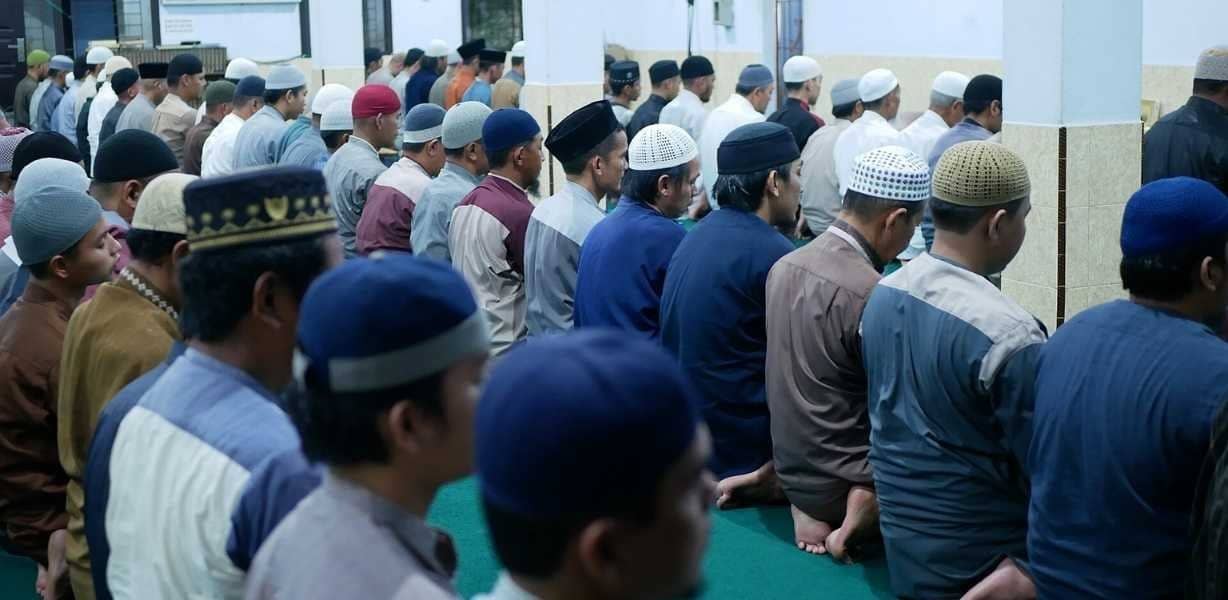
Illustrative Image via Wikimedia Commosn
Key Takeaways
1 of 3
Automatically generated. Read full article for complete context.
The Allahabad High Court’s recent verdict in Sambhal is more than a legal victory for a local mosque. It is a profound indictment of a governance style that has replaced civic management with communal signaling. On March 14, 2026, the court quashed an order by the Uttar Pradesh administration that had limited the number of worshippers at a Sambhal mosque (Gata No. 291) to just twenty people during Ramzan. The court’s message was unambiguous: if the District Magistrate and Superintendent of Police view the act of communal prayer as an unmanageable “security issue,” they are unfit for their roles. This judgment pierces through the administrative pretense of “maintaining peace” to reveal a reality of targeted intimidation that increasingly defines the minority experience in the state.
The decision to cap worshippers at twenty in an established place of worship is not a security measure; it is a disciplinary one. In Sambhal, the administration attempted to justify this restriction by citing “law and order concerns” during the holy month of Ramzan. This logic conveniently ignores the fact that thousands of citizens routinely gather for other religious festivals across the state without such arbitrary numerical ceilings.
The High Court’s rebuke—stating that officials should resign or seek a transfer if they cannot enforce the rule of law—strikes at the heart of this double standard. When the state begins to count heads inside a mosque, it is no longer managing public space; it is policing faith.
Selective Discipline
There is a reasonable consensus that public roads should not be obstructed for religious activities—a rule that should apply universally. However, the Sambhal model of enforcement reveals a jarring asymmetry. While the Kanwar Yatra or Ganesh Visarjan are facilitated with state-sponsored flowers and special traffic lanes, the offering of namaz on a roadside—often a result of overflowing, underserved mosques—is met with threats of FIRs, and now, arbitrary caps on indoor attendance.
The issue is not the regulation of public space, but the manner in which it is done. Proper governance requires a “humane and dignified” approach that balances public convenience with religious freedom. In Uttar Pradesh, however, this has been replaced by a climate of “warning and intimidation” aimed exclusively at one particular faith. When the police force is used to issue dire warnings about consequences for praying, the administration ceases to be a neutral arbiter of the law and becomes a participant in communal gaslighting.
From Mosques to Private Homes
Although the Sambhal order specifically protected the right to worship at a mosque, it cannot be viewed in isolation from the broader harassment of worshippers in their most intimate spaces. Previously, reports from Bareilly describe how Haseen Khan was allegedly stopped from offering namaz even on his private property, facing threats of demolition if he did not comply. Similarly, in Moradabad, eleven men were arrested earlier this year for praying in a private home. In both the cases, the high court made it clear that holding prayers in a private property is allowed by law and order.
The Sambhal judgment serves as a necessary, albeit late, roadblock to this cascading overreach. By asserting that the state’s duty is to ensure peaceful worship rather than restrict it, the court reminded the UP executive that Article 25 of the Constitution is not a conditional permit subject to a District Magistrate’s whim. The security issue tag is being used as a blanket excuse to override fundamental rights, creating a two-tier citizenship where the very act of visibility is treated as a provocation.
The path forward for Uttar Pradesh requires a fundamental shift in mindset. If the administration wants to clear roads for traffic, it must do so for all processions and all faiths with the same rules and the same courtesy. Discipline without dignity is merely oppression.
The Allahabad High Court has laid down the gauntlet: the state cannot hide behind its own incompetence to justify the suppression of a minority faith. A government that finds a 20-person prayer meeting an insurmountable security challenge is not a government that is “strict” on crime; it is a government that has failed at its most basic duty—the protection of civil liberties for all. The Sambhal rebuke is a call for a return to equitable governance, where the law is a shield for the citizen, not a sword in the hands of the executive.
Disclaimer:The views and opinions expressed in this article are those of the author(s) and do not necessarily reflect the official policy or position of The Rift.