Opening The Rift
therift
© 2026 The Rift. All Rights Reserved.
SC Quashes NSA Order Against Mulla Afroz And Slaps Rs 10 Lakh Costs On UP
The Supreme Court held that preventive detention was used punitively to subvert judicial bail orders, quashing the NSA detention and imposing costs.


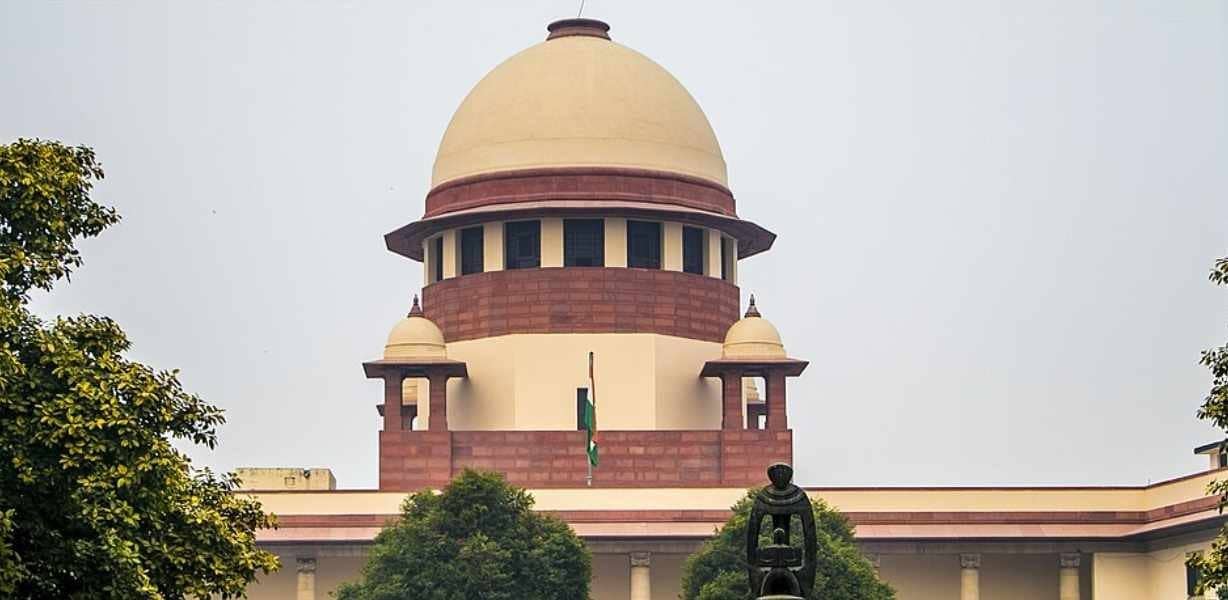
Representative Image Only
Key Takeaways
1 of 3
Automatically generated. Read full article for complete context.
PREFACE
At a time when some very senior and eminent top lawyers of Supreme Court like Mr Kapil Sibal and Mr Prashant Bhushan among others openly and quite vocally keep questioning the decisions of Supreme Court in one case or the other, I must point out here that I am definitely most delighted to read that while not hesitating to catch the bull by the horns and stepping forward to set strict constitutional boundaries pertaining to administrative detention, the Supreme Court in a most learned, laudable, landmark, logical and latest judgment titled Mulla Afroz vs Union of India and Ors. in Criminal Appeal No. 4310 of 2026 \[Arising out of SLP (CRL.) No. 12534 of 2026\] and cited in Neutral Citation No.: 2026 INSC 1067 that was pronounced most recently on September 29, 2026 while setting side an order of the Allahabad High Court has not only just quashed the detention and confirmation orders that had been passed under the National Security Act, 1980 (NSA) against Sambhal violence accused Mulla Afroz but also directed his forthwith release according utmost importance to right to personal liberty as enshrined in Article 21 of Constitution! Not only just this much, the top court has also stepped forward to slap costs of Rs 10 lakhs on the State of Uttar Pradesh to be paid to the appellant within one month after finding that preventive detention had been used punitively to subvert judicial bail orders. It was also made indubitably clear by the top court that a confessional statement recorded by the police cannot, by itself, form the subjective satisfaction required to sustain an order of preventive detention.
IN MEMORIAM
At the very outset, this brief, brilliant, bold and balanced judgment authored by Hon’ble Mr Justice Dipankar Datta for a Bench of Apex Court comprising of himself and Hon’ble Mr Justice Sheel Nagu sets the ball in motion by most touchingly putting forth in para 1 that, “Human life is fragile. Yet, in the ordinary course of living, we seldom pause to recognise just how fleeting it is; and when life finally confronts us with that fragility, the realisation often comes too late. On that note, at the very outset, we begin on an unconventional premise. One of our dearest Law Clerks-cum-Research Associates, Ritwik Deswal, left for his heavenly abode 4 days short of his 27th birthday, which happens to be today. As we pronounce this judgment, which bears the quiet and indelible imprint of his final labours, we wish to record our deep appreciation for the invaluable research assistance rendered by him in the build-up to the preparation of this judgment. His untimely demise has left an excruciatingly deep void in our lives. Even in his final hours, his thoughts remained firmly anchored in the pursuit of truth and the service of justice. It is, therefore, with profound personal sorrow and grief that we dedicate this final collaboration to his memory, his integrity, his enduring commitment to the law, his love for academia, and his other great qualities of head and heart.”
THE CHALLENGE
As we see, the Bench then discloses in para 2 stating that, “This appeal, by special leave, challenges the judgment and order dated 8th June, 2026 (impugned judgment) whereby the High Court of Judicature at Allahabad (High Court) dismissed the writ petition (Habeas Corpus Writ Petition No. 179 of 2026) filed by the appellant. An order dated 13th October, 2025 (detention order) issued by the District Magistrate, Sambhal, Uttar Pradesh (detaining authority) ordering the appellant’s preventive detention under the National Security Act, 1980 (NSA) assailed in the writ petition was thus upheld.”
FACTUAL MATRIX
To put things in perspective, the Bench envisages in para 3 laying bare that, “The genesis of the present proceedings lies in an incident that occurred on 24th November, 2024 in connection with survey of a mosque at Sambhal. During the course of the survey, violence erupted resulting in the death of 4 (four) persons. An FIR, being Case Crime No. 333 of 2024, came to be registered on the same day. Subsequently, several other FIRs (Case Crime Nos. 306, 337, 338, 339 and 340 of 2024) were also lodged in relation to the said incident. Although the appellant was not named in Case Crime No. 333 of 2024, he was arrested approximately 54 (fifty-four) days later, on 17th January, 2025 to be precise, and was also taken into custody in connection with the other FIRs. During the course of such custody, a confessional statement of the appellant is stated to have been recorded. Pursuant thereto, a .32 bore pistol was allegedly recovered.”
While elaborating further, the Bench then specifies in para 4 stating that, “On 9th September, 2025, the appellant was granted bail by the High Court in connection with Case Crime No. 340 of 2024. However, while the appellant continued to remain in judicial custody in relation to the other FIRs, the detaining authority exercising power conferred by Section 3(2)8 of the NSA passed the detention order on 13th October, 2025. Appellant thereafter submitted a representation against the detention order from the district jail, which came to be rejected by the detaining authority on 31st October, 2025 on the ground of delay in its submission. The representations thereafter preferred before the State Government as well as the Central Government also met the same fate.”
Furthermore, the Bench then observes in para 5 that, “Subsequently, upon receipt of the report of the Advisory Board, the State Government exercising power under Section 12 of the NSA confirmed the detention order and directed continuance of the detention for a further period of 12 (twelve) months vide its order dated 28th November, 2025 (confirmation order). In the meantime, and by June, 2026, the appellant had secured bail from the High Court in all the criminal cases wherein he had been implicated.”
Quite ostensibly, the Bench then reveals in para 6 disclosing that, “Aggrieved by the order of detention which he perceived to be illegal and in breach of law, the appellant invoked the writ jurisdiction of the High Court assailing both the detention and confirmation orders. He prayed for issuance of a writ of habeas corpus directing his release from custody forthwith upon quashing of the orders impugned in the writ petition.”
Be it noted, the Bench notes in para 7 that, “Before the High Court, the appellant raised several contentions assailing the detention order. It was urged that a bare perusal of the communication addressed by the detaining authority to the Superintendent of Jail would reveal that neither the detention order nor the grounds of detention had been furnished to the appellant, in breach of the mandate of Article 22 of the Constitution and the procedural safeguards engrafted in the NSA. It was further contended that the appellant had been falsely implicated in the criminal cases solely on the basis of an extra-judicial confession allegedly extracted by the police through torture and threats to his life. The appellant also questioned the recovery of a .32 bore pistol pursuant to his arrest, contending that the same did not accord with the medical evidence relating to the deceased persons, whose deaths were attributed to .315 bore bullets.”
Most astoundingly, we see that the Bench then lays bare the decision of Division Bench of Allahabad High Court in para 8 disclosing that, “The writ petition, however, came to be dismissed by a Division Bench of the High Court by the impugned judgment. While so dismissing, the High Court examined the scope of Article 22 of the Constitution and relied upon several decisions of this Court governing preventive detention. It observed that whether a particular act threatens the maintenance of public order or the security of the State is necessarily a question to be determined on the facts and circumstances of each case. It further held that since an order of preventive detention is founded on an apprehended threat and not on proof of guilt, no rigid or objective parameters can be prescribed, and the power of detention is to be exercised on the subjective satisfaction of the detaining authority. It also observed that an order of preventive detention partakes the character of an administrative action and, therefore, judicial review is confined to examining the decision-making process and the application of mind by the detaining authority rather than the correctness of the satisfaction recorded. Applying the aforesaid principles, it was held that the subjective satisfaction recorded by the detaining authority was justified and did not disclose non-application of mind. It further noticed that the appellant himself had admitted in the writ petition that 22 (twenty-two) documents forming the basis of the detention order had been supplied to him. On such reasoning, the High Court concluded that the detention order and confirmation order were founded on relevant and objective material and that no case had been set up warranting exercise of its extraordinary writ jurisdiction.”
Needless to say, the Bench then states in para 9 that, “Aggrieved by the aforesaid judgment of the High Court, the appellant has carried the same in appeal before this Court.”
Do note, the Bench notes in para 29 that, “It has been the consistent case of the appellant, both before the High Court as well as before this Court, that he was subjected to torture and threats of death; and, it is under this compulsion that he made the confessional statement. We have perused the reply affidavit as well as the written submissions submitted on behalf of the respondents to trace their response. Neither in the reply affidavit do we find such averment of the appellant being refuted nor do the written submissions shed any light on this aspect. Therefore, by no stretch of imagination, can the confessional statement of the appellant be seen as voluntary in nature.”
Most commendably, the Bench while pursuing the right line of reasoning underscores in para 50 holding that, “The detaining authority appears to have proceeded on the footing that the filing of the chargesheet confirms the involvement of the appellant in the commission of the incident, including the alleged murders, and consequently establishes disturbance of public order. We are unable to subscribe to such line of reasoning. The mere filing of a chargesheet is nothing more than the culmination of an investigation and the opinion of the investigating agency that sufficient material exists to proceed against the accused. It neither amounts to a finding of guilt nor can it be treated as conclusive proof of involvement in the alleged offences. How the filing of a chargesheet, by itself, can be said to “confirm” either the participation of the detenu in the crime or the disturbance of public order has not been explained by the detaining authority. At best, it is a “suspicion” that merely looms large. In the absence of any such reasoning, the said circumstance does not appear to furnish a cogent ground more so when the appellant has been enlarged on bail by the competent court.”
Most significantly, the Bench while referring to paragraphs 12 to 15 of the grounds of detention encapsulates in para 52 what constitutes the cornerstone of this notable judgment postulating precisely that, “In the said paragraphs, reliance has been placed upon information allegedly received from police officials regarding secret discussions taking place within the jail amongst persons connected with the Sambhal riots. According to the said information, the appellant had moved an application for bail and, upon securing release, was allegedly planning to indulge in large-scale violence. Proceeding on this premise, the detaining authority assumed that there existed a strong likelihood of the appellant disturbing public order having secured a release from custody; and alive to the possibility of the detenu continuing his prejudicial activities, recorded its satisfaction accordingly. What is evident therefrom is that the impugned detention is an attempt to frustrate the judicial order granting bail, and to keep the detenu in custody by another route. Such a detention is not preventive but punitive and appears intended to subvert the order granting bail.”
Equally significant is that the Bench points out in para 53 that, “We must also notice an additional significant circumstance which bears upon the validity of the detention order. Appellant has since been granted bail in all the criminal cases wherein he had been implicated. Although such orders were passed subsequent to the detention order, it cannot be overlooked that even prior thereto, the appellant had already secured bail on 9th September, 2025 in Case Crime No. 340 of 2024, nearly a month before the order of detention came to be passed on 13th October, 2025. This assumes importance because where a person is already in custody and preventive detention is sought to be invoked, the scrutiny of the detention order must necessarily be more exacting. The existence of a prior order granting bail in one of the connected cases was a relevant circumstance which required due consideration by the detaining authority. In such circumstances, the matter cannot be viewed in isolated compartments. The detention order must be assessed holistically, having regard to the entirety of the material available at the relevant point of time.”
For sake of clarity, the Bench clarifies in para 66 stating that, “We make it clear that we express no opinion whatsoever on the merits of the criminal case(s), which shall proceed in accordance with law uninfluenced by any observation contained in this judgment. Nevertheless, where the ordinary criminal process has already been set in motion and is being pursued on the basis of the same incident, the invocation of the extraordinary power of preventive detention must satisfy a correspondingly higher degree of scrutiny.”
CONCLUSION AND RELIEF
As a corollary, the Bench then directs and holds in para 67 that, “For the reasons recorded hereinabove, we are of the considered opinion that the impugned judgment and order of the High Court, as well as the detention order and confirmation order cannot be sustained in law and are, accordingly, set aside. Appellant shall be released forthwith, unless his custody is required in connection with any other case. The appeal is, accordingly, allowed on the aforesaid terms.”
Most forthrightly, the Bench points out in para 68 propounding that, “The detention order was passed on 13th October, 2025 and confirmed on 28th November, 2025 for a period of 1 (one) year and is now set to expire soon. Appellant has already suffered considerable loss of liberty, even while being granted bail in all the cases relating to the incident in which he featured as an accused. In such circumstances, the process was made the punishment.”
Most rationally and so also most remarkably, it would be instructive to note that the Bench then hastens to add in para 69 directing and holding that, “We consider it prudent to impose costs of Rs.10 lakh on the State for being made over to the appellant within a month from the date of this judgment.”
Finally, the Bench then concludes by directing and holding in para 70 that, “Pending miscellaneous application(s) if any are also disposed of.”
All told, we thus see that the Apex Court has made it indubitably clear that there will be zero tolerance for wrongly indulging in preventive detention of any person accused of any offence. It is entirely in order that the top court quashed the detention and confirmation orders that was passed under the NSA Act against Sambhal violence accused Mulla Afroz. And directed his immediarte release and slapped a cost of Rs 10 lakh on the State of UP after finding that preventive detention had been used punitively to subvert judicial bail orders. Very rightly so!
Disclaimer:The views and opinions expressed in this article are those of the author(s) and do not necessarily reflect the official policy or position of The Rift.
*Preventive DetentionArticle 21Habeas CorpusMulla AfrozNational Security ActSupreme CourtUttar Pradesh