Opening The Rift
therift
© 2026 The Rift. All Rights Reserved.
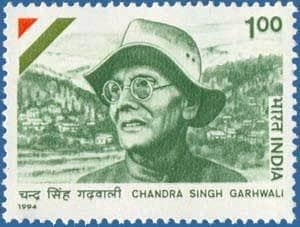
Chandra Singh Garhwali—the Conscientious Soldier Who Refused to Fire on Freedom Fighters, Accepted Long Years in Jail
He and his fellow soldiers will always be remembered by the world peace movement for their courage and sacrifice in refusing to fire on peaceful protesters.

Key Takeaways
1 of 3
Automatically generated. Read full article for complete context.
At a time of increasingly arbitrary wars being waged to bring death and destruction to a large number of innocent people, the role of conscientious soldiers is becoming increasingly important. A conscientious soldier is no less a patriot than anyone else, is no less willing to risk his (or her) life compared to anyone else for the protection of his country, but he is at the same time a thoughtful and deeply sensitive human being who would not like to be used wrongly in a deeply unethical way to kill innocent civilians or to kill persons who did not attack or harm his country and would not like to be sent to fight highly unjust wars.
The stand taken by such soldiers and their acts of courage become very important at the time of unjust wars and earlier these used to be very important in times of colonial wars and waves of repression launched against freedom movements. In such situations often these actions have resulted in saving the life of many innocent persons as well as sending a strong message to people regarding the seriousness of the injustice taking place.
The fact that such soldiers are exceptionally ethical, compassionate and deeply sensitive human beings is self-evident as often their actions to save the life of others is taken in full knowledge of the fact that they’ll face long years in prison and in some places in certain conditions can even be sentenced to death.
The highly inspiring story being told here is of one such soldier who was likely to face a death sentence but still he refused to fire on freedom fighters (of the freedom movement of India led by Mahatma Gandhi) and refused to order the soldiers under him to do so.
This story relates to Peshawar region of undivided India (now this region is in Pakistan) in the year 1930 when the nonviolent freedom movement was moving towards one of its peak periods, particularly in this region.
It was a tense day in April in Peshawar in 1930.The freedom movement under the guidance of Badshah Khan and the overall national leadership of Mahatma Gandhi was progressing from strength to strength. The Khudai Khidmatgars (literally those who have committed themselves to serving God through service to humanity) organized by the Badshah ( literally king, so called as he ruled the hearts of Pathans and others, although he personally lived the most frugal and simple life) had proven themselves to be true to their name. In terms of their commitment to non-violence these Pathans, who were earlier known for their violent feuds and revenges, had proven themselves closest to the ideals of non-violence as proclaimed by Mahatma Gandhi.
While the colonial regime sent soldiers armed by the latest weapons to curb them, the Khudai Khidmatgar protestors stood up bravely to them, unarmed and with prayers and freedom slogans on their lips.
Several Indian soldiers who had been brought to suppress them were from Garhwal. They were known as very brave and hardy soldiers from Garhwal region of the Western Himalayas. They had proven themselves capable of winning several tough battles. But here when they were being asked to fire on their own unarmed brothers, they were becoming distressed and tense. How long can this go on? During holidays when they went to their villages, they heard about the great freedom movement progressing under the leadership of Mahatma Gandhi and they felt happy and proud about this. But here they had been brought, as soldiers known for their loyalty, to suppress the same freedom movement in which their family members took pride and which attracted them too with its nobility and well justified demands. What should they do?
On the other hand the freedom fighters were clear about their great commitments and were ready for sacrifice and hence were not as tense as the soldiers were. The freedom fighters were happy with what they were planning to do (despite all its risks) but the soldiers were not at all happy with what they were being asked to do.
One unit of the soldiers was led by Chandra Singh Garhwali (1891-1979), a thoughtful soldier who had risen in ranks due to his skills, bravery and leadership qualities. The soldiers placed a lot of their faith and trust in him, and looked up to him to guide them in situations of uncertainty such as the one they faced now. Chandra Singh Garhwali (also known as Chandra Singh Bhandari) had been discussing the fast developing situation with his Garhwali soldiers, and while no firm decisions had been made yet, enough words had been exchanged to convince Chandra Singh that many other soldiers of his unit were as almost as disturbed and distressed as he was about the possibility of being asked to fire on unarmed, non-violent protestors and freedom fighters.
Finally the moment of reckoning came. The unarmed freedom fighters stood before the soldiers bravely and calmly while the British commander gave the soldiers the order to fire. Chandra Singh Garhwali was supposed to repeat this order but instead he shouted—Do not fire. Cease fire. The soldiers followed the command of Chandra Singh and not of the much more senior British officer. The news spread like wild fire and brought unprecedented new hope to the freedom movement.
Chandra Singh had no intention of a full-scale rebellion. He knew that his handful of soldiers stood no chance against the huge colonial force. He and his unit soldiers were content with their very important decision to refuse to fire on unarmed, peaceful protestors. Chandra Singh told the British commander very firmly that even if you blow us up with your cannons we will not fire on the unarmed, peaceful protestors.
Needless to add, Chandra Singh and his fellow-soldiers all got very long and stringent imprisonments, even though his case was keenly contested by capable lawyers to avoid death sentence, and later a further reduction of prison sentence could be worked out after a lot of efforts. After his release in 1941 following 11 years in prison, Chandra Singh involved himself in diverse struggles and constructive activities. He also spent some time with Mahatma Gandhi in his ashram and later participated in the Quit India Movement as well, a very important phase of the freedom movement, leading to another prison sentence of three years.
After independence in 1947 he was also involved with the communist movement for some time. In his last days he was involved in preparing a people-based development plan for a part of the Himalayan region. He had to endure a lot of economic hardships. He died after a life of many struggles and constructive activities in 1979 at the age of 88 following illness. His memory was honored in several ways by the government and people.
He and his fellow soldiers will be always remembered by the world peace movement for their courage and sacrifice in refusing to fire on peaceful protesters offering nonviolent resistance.
As he and his soldiers were Hindus and the overwhelming majority of the freedom fighters at this particular site were Pathan Muslims, Chandra Singh and his soldier mates also became a powerful symbol of inter-faith harmony, and remain so to this day.
Rahul Sanskritayan has written a detailed and great biography of Chandra Singh Garhwali in Hindi. Still his noble sacrifice is not as well-known at world level as it deserves to be known, and his story should be told to a larger world audience.
Disclaimer:The views and opinions expressed in this article are those of the author(s) and do not necessarily reflect the official policy or position of The Rift.
*Chandra Singh GarhwaliChandra Singh GarhwaliConscientious ObjectionFreedom MovementKhudai KhidmatgarsMilitary EthicsNonviolencePeshawar