Opening The Rift
therift
© 2026 The Rift. All Rights Reserved.
Supreme Court Electoral Intervention: How the Returning Officer Became the Ultimate Judge
By strictly applying Article 329(b) to dismiss Meenakshi Natarajan’s petition, the Supreme Court has reaffirmed that once an election begins, the bureaucracy holds absolute, unreviewable power.

Key Takeaways
1 of 3
Automatically generated. Read full article for complete context.
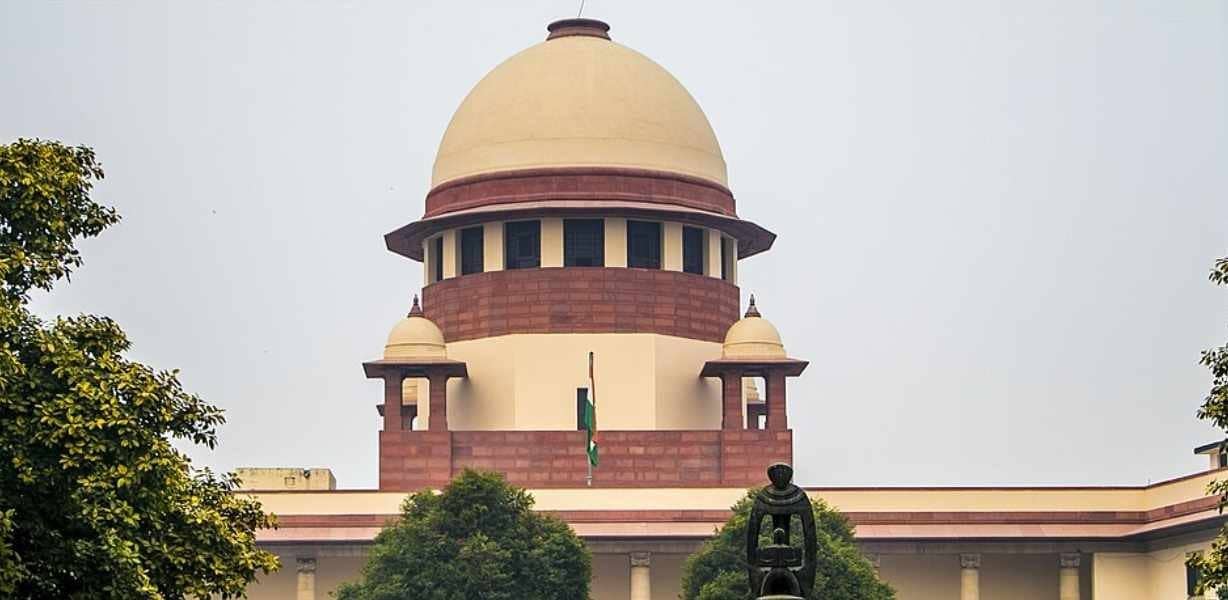
On June 12, 2026, the Supreme Court dismissed a writ petition from Congress leader Meenakshi Natarajan. She had knocked on the court’s doors after a Returning Officer abruptly tossed out her nomination papers for the Madhya Pradesh Rajya Sabha election just three days earlier.
The rejection hinged on a pure technicality. The Returning Officer claimed she failed to mention a pending private complaint in Hyderabad on her election affidavit. Her lawyer, Senior Advocate A.M. Singhvi, pushed back, arguing that under Section 33A of the Representation of the People Act, 1951, she didn’t actually have to disclose it because no formal charges had ever been framed.
But the Vacation Bench consisting of Justices Prashant Kumar Mishra and A.S. Chandurkar didn’t even weigh the merits of that argument. Instead, they pulled up a constitutional firewall, effectively shielding the Returning Officer’s decision from any immediate scrutiny.
The Article 329(b) Shield
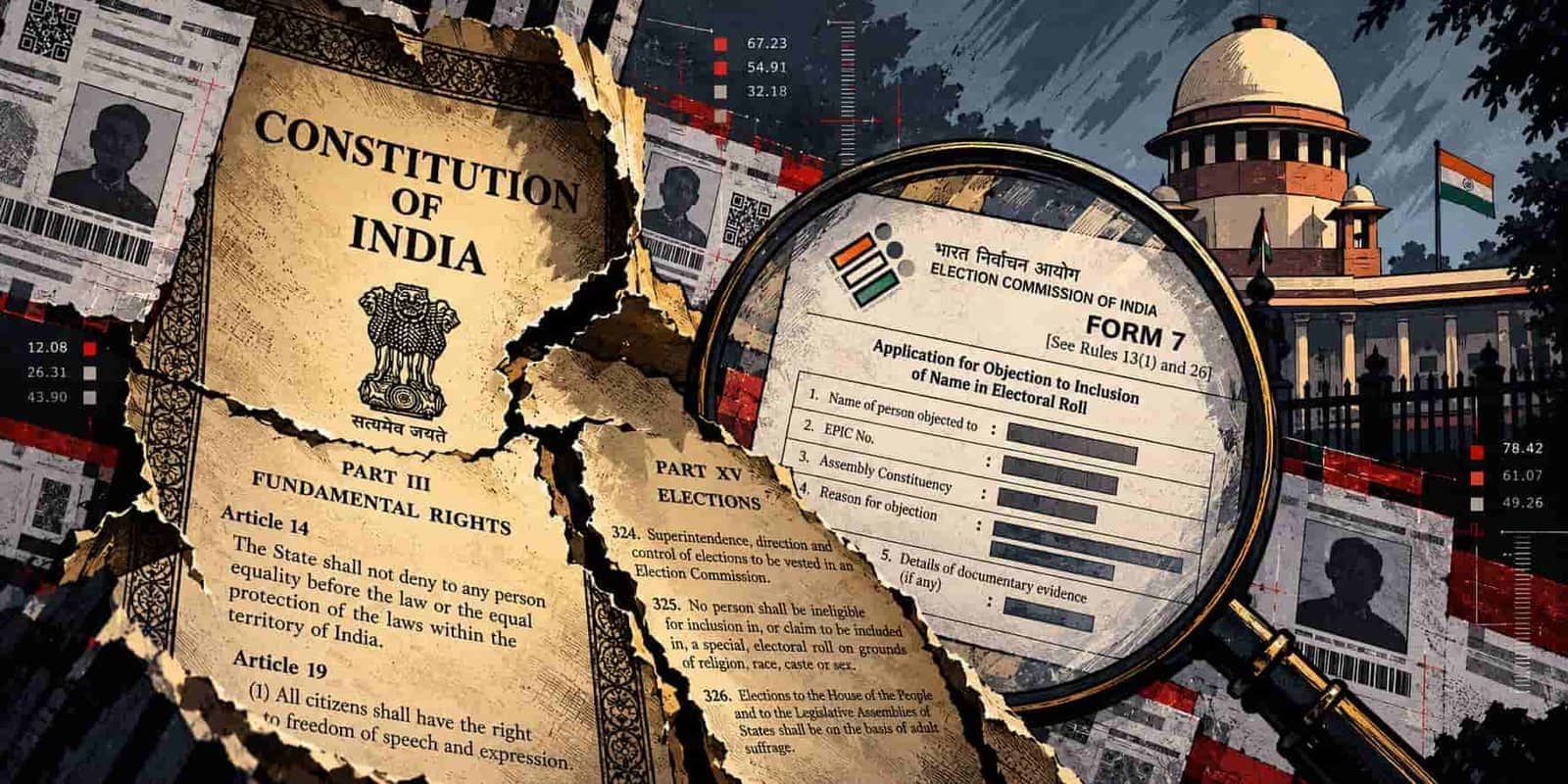
The Court leaned heavily on Article 329(b) of the Constitution. This rule states that you simply cannot question an election to Parliament or a state legislature except through a formal “election petition.”
This creates an absolute blackout on judicial interference once the electoral wheels start turning. Going by historical precedents all the way back to the 1952 N.P. Ponnuswami case, the term “election” covers the entire process from the first notification to the final result. Because of this, the judiciary has to keep its hands strictly tied during this window.
The rigid application of Article 329(b) ensures that the electoral machinery runs without judicial interruption, but it simultaneously grants Returning Officers unchecked authority at the crucial gateway of democracy especially at a time when the credibility of ECI is at its lowest.
The Petitioner’s Argument
Statutory Overreach
The rejection was legally flawed as Section 33A of the RPA does not mandate disclosure for private complaints without framed charges.
The Constitutional Bar
Article 329(b)
Courts lack jurisdiction to intervene in an ongoing electoral process. Any grievance must wait until the results are declared.
The Legal Remedy
The Election Petition
A formal petition filed only in the High Court after the election concludes, a process that frequently takes years to resolve.
VISUALS BY THE RIFT
The Supreme Court basically told Natarajan to file a formal election petition with the High Court after the dust settles and the election is over. While this follows the Constitution by the book, it exposes a massive, glaring vulnerability in how our democracy operates.
Think about it: an election petition is notoriously slow. It grinds along like a full civil trial, complete with heavy evidence and cross-examinations. By the time a High Court finally decides if a Returning Officer made a mistake, the “winning” candidate might have already completed half their term. Sometimes, the term completely expires before the courts even reach a verdict.
This sluggish reality transforms the Returning Officer from a simple desk administrator into an incredibly powerful gatekeeper. If an officer makes a mistake—deliberate or accidental—the candidate instantly loses their right to contest. The system is designed to prioritize the uninterrupted flow of the election over fixing a bureaucrat’s error.
The judiciary’s refusal to intervene under Article 32 apparently because contesting an election is not a fundamental right, cements the Returning Officer’s decisions as practically final for the duration of the election.
When an erroneous bureaucratic decision cannot be challenged until after the political damage is done, the administrative state holds the ultimate veto over democratic participation.
And this unchecked power raises a much more dangerous question. What happens if the bureaucracy starts taking sides playing favorites? Just look at the another parallel case in Jharkhand. When objections were raised over missing criminal declarations in the nomination papers of Parimal Nathwani, an Independent candidate heavily backed by the ruling BJP, the Returning Officer didn’t just toss out his candidacy. Instead, they put his nomination on hold and gave him explicit time to fix the errors.
It begs the question: why does a ruling-party-backed candidate get a grace period to fix his paperwork, while an opposition candidate in Madhya Pradesh gets summarily rejected over a technical defect?
When the Election Commission itself is already operating under a heavy cloud of institutional decay and public suspicion, the Supreme Court’s rigid adherence to Article 329(b) stops looking like a constitutional shield. Instead, it starts looking like a win for the incumbent ruling party. If Returning Officers apply the rules selectively giving a free pass to one side and showing zero tolerance to the other and the courts refuse to step in until years later, the electoral playing field is fundamentally rigged before the race even starts. Where will the opposition candidates go to seek justice in such partial cases?
The Natarajan case isn’t just a procedural hiccup rather it exposes a deep, structural flaw. It proves that an administrative officer’s stroke of a pen can seamlessly strip a candidate the right to contest an election without any immediate judicial remedy available. This is critical specially in the wake of severe suspicion raised over the integrity of the Election Commission by the Opposition parties consistently.
The question now isn’t whether the Supreme Court read Article 329(b) correctly. It is quite clear. The real question is whether a modern democracy can afford an electoral system where a single bureaucrat can disenfranchise a candidate without any immediate avenue for a legal fix especially when there is serious trust issue with the Election Commission of India. Ironically, the Constitutional insulation which primally stems from reposing the utmost faith in the Independence of the Election Commission to handle such issues might just end up protecting the “process” at the expense of actual political participation.