Opening The Rift
The Architecture of a Republic Reclaimed: Dismantling Structural Siege Through Constitutional Majority
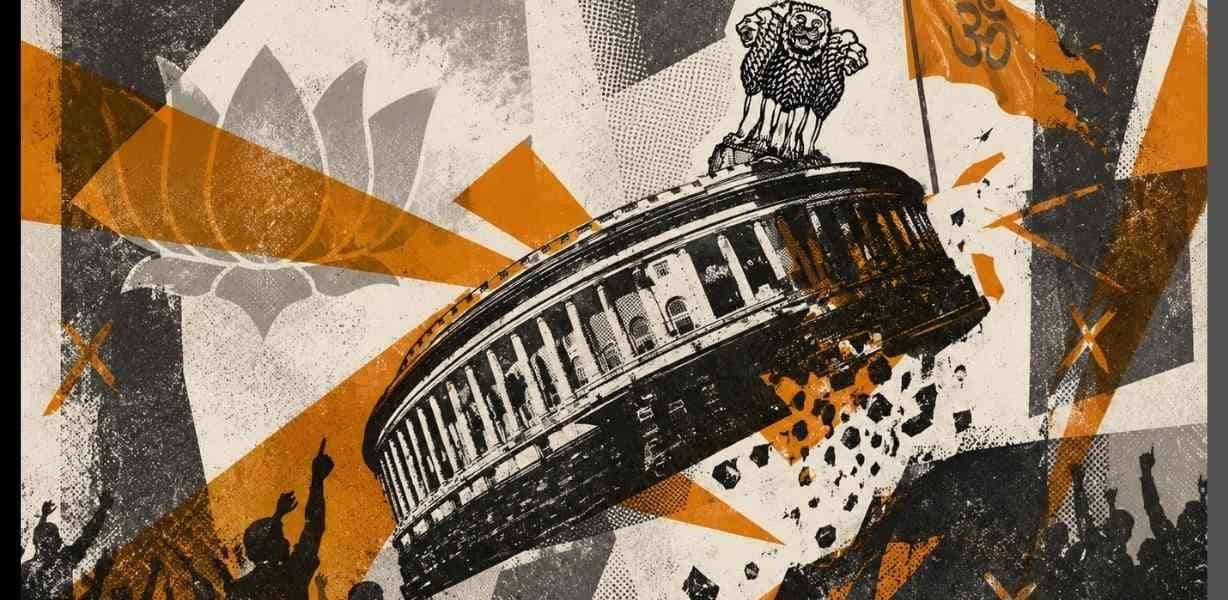
India faces a structural siege eroding citizenship; a fragmented constitutional constituency can reclaim the republic by organizing as a non-electoral social front.

Key Takeaways
1 of 3
Automatically generated. Read full article for complete context.
Philosophical Crisis : From Constitutional Compact to Conditional Citizenship
A republic does not perish in a single cataclysm : it erodes through the quiet normalization of exceptions. In the classical tradition of constitutional philosophy : from Immanuel Kant’s conception of a juridical state, in which the state exists to secure equal external freedom under universal law, to B.R. Ambedkar’s warning in the Constituent Assembly on 4 November 1948 that constitutional morality is not a natural sentiment and has to be cultivated : a democracy is judged not by the triumphs of its dominant majority, but by the inviolability of its most vulnerable citizen. When the coercive apparatus of the state ceases to operate as a neutral arbiter and instead becomes an instrument of majoritarian discipline, citizenship ceases to be an unconditional birthright under Articles 14, 15, 21, and 25 of the Constitution. It degenerates into a revocable license, contingent upon cultural conformity, political quiescence, and social invisibility.
India stands precisely at this historical and philosophical inflection point. Beneath the formal continuity of periodic elections, legislative debates, and judicial pronouncements lies an empirical pattern of synchronized pressure across every sphere of civic, economic, educational, and spiritual existence. To examine any single episode : a zoning demolition in Uttar Pradesh or Madhya Pradesh, a classroom exclusion in Karnataka, a lynching in Haryana or Odisha, or a deferred constitutional hearing in New Delhi : in isolation is to fall prey to the administrative alibi of “isolated law-and-order incidents” or “routine municipal compliance”. When these phenomena are aggregated and mapped across sectors, however, they cease to be episodic. They reveal the anatomy of a structural siege.
Yet, within the very arithmetic of Indian society lies the democratic antidote to this siege. A majoritarian dispensation does not govern because it commands an organic demographic majority; it governs because the broad constitutional constituency of India : comprising secular Hindus, Muslims, Christians, Sikhs, Parsis, Scheduled Castes (Dalits), Scheduled Tribes (Adivasis), and Other Backward Classes (OBCs/EBCs) who have been systematically kept out of real governance : remains institutionally fragmented.
The central thesis of Hindustaan Hamaara: The Constitutional Equality Alliance is that when this latent constitutional constituency organizes itself not as another fractious political party competing for spoils, but as a disciplined, evidence-driven non-electoral social front, it acquires decisive swing power.
By commanding the electoral arithmetic necessary to install governments and defeat any formation premised on divisive politics, such a citizen consortium can compel progressive, constitutional governance : and, crucially, press for a transparent appointments process, applied by the Collegium under a published Memorandum of Procedure, in which demonstrated fidelity to secularism and constitutional morality is an express criterion for elevation.
Anatomy of a Siege: Empirical Evidence Across Seven Pillars of Civic Life
To understand why episodic resistance has failed, one must confront the sheer scale and multi-sectoral synchronization of the assault on minority and marginalized life documented in published reports, revealing the patterns of an unstated siege.
Across the instances documented here, spanning physical security, education, housing, sacred spaces, the judiciary, public political discourse, and democratic accountability : alongside parallel attacks on Christian churches, missionary institutions, and prayer gatherings : the pattern demonstrates that pressure is applied simultaneously to body, livelihood, shelter, intellect, faith, and legal remedy :
| Sector / Pillar of Civic Life | Period | Empirical Manifestations & Institutional Mechanisms |
| 1. Physical Security & Mob Vigilantism | 2019–2026 | Killings and assaults of cattle transporters, meat traders, a migrant ragpicker and an eatery owner, including in Balasore (Odisha, Jan 2026), Charkhi Dadri (Haryana, Aug 2024), Nashik (Maharashtra, Jun 2023) and Biswanath (Assam, Apr 2019), and the abduction and killing of two men from Rajasthan whose burnt bodies were found in Bhiwani (Haryana, Feb 2023); in some cases victims were forced to chant religious slogans or to eat pork. |
| 2. Education & Bodily Autonomy | 2022–2025 | Students barred from classrooms in Udupi and Kundapur (Karnataka, 2022); heckling of a hijab-wearing student on a college campus in Mandya (2022); and the public removal of a Muslim AYUSH doctor’s hijab by the Chief Minister of Bihar at an official appointment-letter ceremony in Patna (Dec 2025). |
| 3. Housing & Livelihood (“Bulldozer Justice”) | 2022–2024 | Demolition of homes and shops soon after criminal accusations : punishing families without trial : in Prayagraj, Khargone, Jahangirpuri, Saharanpur and Khambhat (2022), Nuh (2023), and Udaipur and Chhatarpur (2024). |
| 4. Religious & Educational Institutions | 2020–2026 | Repeal of the state madrasa education law and conversion of state-run madrasas in Assam; closure orders for 252 madrasas in West Bengal (Sep 2026) and sealing of over 200 in Uttarakhand (2025); demolition of a madrasa in Haldwani and of the Akhoondji Mosque in Delhi; and surveys or restrictions affecting worship at Gyanvapi, Bhojshala, and Sambhal, and at Friday prayer sites in Gurugram. |
| 5. Parallel Targeting of Christian Minorities | 2022–2023 | Destruction of a large number of churches during the 2023 violence in Manipur; the vandalising of a church in Narayanpur (Chhattisgarh, Jan 2023); and the displacement of Adivasi Christian families from villages in Narayanpur and Kondagaon districts in December 2022. |
| 6. Public Hate Speech & Riot Case Withdrawals | 2013–2025 | Inflammatory rhetoric by senior office-holders framing minorities as “infiltrators” or as engaged in “land jihad”, including the Prime Minister’s April 2024 campaign speech at Banswara, which the opposition called hate speech and of which he later said he had not referred to Muslims; and the withdrawal by the Uttar Pradesh government of 77 Muzaffarnagar riot cases without stated reasons, as reported to the Supreme Court by its amicus curiae in 2021. |
| 7. Democratic & Institutional Subversion | 2014–2024 | The 2022 toppling of Maharashtra’s elected government and the split of the Shiv Sena; and 25 opposition leaders facing central agency probes who joined the BJP or its allies after 2014, 23 of whom saw their cases closed (3) or stalled (20), according to an Indian Express investigation published on 3 April 2024. |
The Philosophical Logic of the Siege : Five Mechanisms of Subjugation
Why does this empirical constellation constitute a siege rather than ordinary political friction?
- Totalizing Vulnerability (Elimination of Safe Harbor): A siege succeeds when defenders cannot retreat from one bastion to another. When a community’s physical safety is threatened by vigilantes, its livelihood in the cattle and meat trades is endangered, its family homes are razed by bulldozers, its daughters are turned away from classrooms, and its places of worship are demolished, sealed or subjected to survey litigation, there remains no autonomous sphere of security.
- The Inversion of Due Process: In a constitutional state, punishment follows conviction after a fair trial. Under the siege, punishment precedes trial for the marginalized : homes are demolished soon after an FIR, and accused activists in the 2020 Delhi riots UAPA case have spent years in prison as undertrials : while delayed FIRs, the acquittal of all accused (Babri demolition, Naroda Gam), premature remissions (Bilkis Bano), and executive withdrawals of prosecution have left victims of majoritarian violence without effective redress.
- Institutional Green-Lighting via Political Speech: When holders of the highest public offices normalize tropes such as “infiltrators” and “land jihad”, street-level vigilantes come to see themselves not as outlaws, but as informal deputies of state ideology.
- Weaponized Time and Judicial Deferral: In constitutional adjudication, time is never neutral. When existential challenges : such as those to the Citizenship Amendment Act (CAA), the 2019 UAPA amendment, state anti-conversion laws, and the Karnataka hijab ban (on which the Supreme Court split in October 2022) : are left pending for years, judicial delay has the effect of entrenching executive action. By the time a court speaks : or refuses to speak : detention, academic years, and altered religious sites have become irreversible faits accomplis.
- Collective Guilt and Cultural Erasure: From razing a rented house in Udaipur over a juvenile’s alleged crime to stripping visible markers of Muslim identity in public spaces and erasing medieval history from textbooks, liability is shifted from the individual citizen to the collective identity.
Judicial Bottleneck : Deferral and Executive Leverage Hollow Constitutionalism
In the separation of powers that Montesquieu theorised, an independent judiciary is the safeguard when majoritarian passions capture the legislature and the executive. Yet the record shows how that safeguard has been weakened through two interlocking mechanisms: adverse rulings and prolonged deferrals on one hand, and executive leverage over judicial appointments and transfers on the other.
The Jurisprudence of Deferral and Entrenchment
Across a series of adverse verdicts : ranging from the November 2019 Ayodhya title judgment (awarding the entire 2.77-acre site to Ram Lalla despite finding the 1949 idol placement and 1992 demolition illegal) and the December 2023 validation of Article 370’s abrogation, to lower and High Court orders permitting surveys at the Gyanvapi, Shahi Idgah, Bhojshala, and Sambhal sites and Hindu worship in the Gyanvapi cellar, notwithstanding the Places of Worship Act, 1991 : the outcomes repeatedly favoured the majoritarian position. Equally consequential are the instances of prolonged deferral, where refusal to grant interim stays on the CAA Rules (March 2024) and on Hindu prayers in the Gyanvapi cellar (April 2024), alongside multi-year bail delays for UAPA undertrials, allowed contested status quos to harden into permanence.
The Executive Choke-Hold on Judicial Elevation
Why does the appointments process matter so much to the check on executive overreach? Consider the instances where judges and advocates recommended by the Supreme Court Collegium faced prolonged executive stalling, supersession, or transfer:
- Justice Akil Kureshi, who in 2010 sent Amit Shah, then Gujarat’s Minister of State for Home, to CBI custody in the Sohrabuddin Sheikh case, saw his 2019 recommendation as Chief Justice of the Madhya Pradesh High Court changed to Tripura after the Union government twice referred the recommendation back, and was never elevated to the Supreme Court before his retirement in March 2022.
- Justice S. Muralidhar had his transfer from the Delhi High Court to Punjab & Haryana, recommended by the Collegium on 12 February 2020, notified by the Union government late on 26 February 2020, the day on which he had held a midnight hearing directing Delhi Police to ensure safe passage for the injured and had questioned police inaction over hate speeches, and later had his recommendation as Madras High Court Chief Justice withheld until the Collegium recalled it.
- Justice Jayant Patel, who ordered a CBI probe into the 2004 Ishrat Jahan encounter case, resigned in September 2017 after being transferred from Karnataka, where as senior-most judge he was in line to be Chief Justice, to Allahabad months before his retirement.
- Justice K.M. Joseph, who quashed President’s Rule in Uttarakhand in 2016, had his January 2018 Supreme Court elevation returned and delayed until August 2018, with his seniority lowered.
- Brilliant practitioners from the Bar : Senior Advocate Saurabh Kirpal (stalled for over seven years; the Collegium’s January 2023 statement records the government’s objections as relating to his partner’s nationality and his openness about his orientation), Advocate R. John Sathyan (flagged by the Intelligence Bureau for sharing an article critical of the Prime Minister), and Advocates Amitesh Banerjee and Sakya Sen (stalled despite repeated Collegium reiterations) : were left in limbo for years while juniors were elevated ahead of them. Advocate Somasekhar Sundaresan, objected to for his social media commentary, was appointed to the Bombay High Court only in November 2023, over 18 months after the Collegium recommended him, and lost seniority as a result.
With 341 of 1,122 sanctioned High Court posts vacant as on 1 July 2026 (nearly one-third of the bench) the executive’s pocket veto remains a live concern. When elevation and transfer remain subject to an opaque and untimed executive process, the resulting incentive structure is incompatible with the appearance of judicial independence that the Constitution demands.
Demographic Paradox : Divided Majority Enables “Cohesive Minority Rule”
The profound irony of India’s political crisis is that majoritarian rule does not rest on a genuine social majority. It rests on the artificially engineered fragmentation of the many millions of Indians who gain nothing from majoritarianism and lose everything when constitutional governance is dismantled.
The 2011 Census, the most recent, and the Government of India’s official projection of 142.3 crore people as on 1 March 2026 (Technical Group on Population Projections, National Commission on Population) give the following picture. The 2026 column applies 2011 shares to the projected total; no census has measured shares since 2011.
| Social / Demographic Constituency | Share in Census 2011 | At 2011 share, of 142.3 crore projected for 2026 | Structural Relationship to Governance & Electoral Dynamics |
| Muslims | 14.23% | 20.26 crore | Primary target of the structural siege. Census 2011 count: 17.22 crore. |
| Christians, Sikhs, Buddhists, Jains & Parsis | 5.09% | 7.25 crore | Christians 2.30%, Sikhs 1.72%, Buddhists 0.70%, Jains 0.37% (Census 2011). Parsis numbered 57,264 in 2011, down from 69,601 in 2001. Christians have faced attacks on churches and prayer gatherings (see above). |
| Scheduled Castes (Dalits) | 16.6% | 23.63 crore | Census 2011 count: 20.14 crore. The Census records Scheduled Castes only among Hindus, Sikhs and Buddhists; Dalits of other faiths are not counted as Scheduled Castes. |
| Scheduled Tribes (Adivasis) | 8.6% | 12.24 crore | Census 2011: 8.6% of the population. About 71 lakh Scheduled Tribe members reported tribal faiths such as Sarna rather than a listed religion, making up most of the Census category ‘other religions and persuasions’. |
| Other Backward Classes (OBCs & EBCs) | Not counted | Not counted | The Census has not counted OBCs since 1931, and caste-wise figures from the 2011 Socio-Economic and Caste Census have not been published. There is therefore no official OBC count. |
| Secular Hindus who believe in the Constitution | Not counted | Not counted | The Census records religion, not belief in secularism, so there is no official count. Survey indication only: in Pew Research Center’s survey of 29,999 adults (fieldwork late 2019 to early 2020, published 2021), 64% of Hindus said being Hindu is very important to being truly Indian, so 36% did not give that answer; and 84% of all respondents said respecting all religions is very important to being truly Indian. This group overlaps with Hindu Scheduled Castes, Scheduled Tribes and OBCs, so it is not added to the Census floor below. |
The Arithmetic of a Decisive Swing Bloc
Look closely at the arithmetic :
- The Census Floor: In Census 2011, people not enumerated as Hindu were 20.2% of the population, Scheduled Castes 16.6% and Scheduled Tribes 8.6%. Every Scheduled Caste person is enumerated as Hindu, Sikh or Buddhist, and Sikhs and Buddhists together were only 2.42% of the population, so at least 14.2% of India is Hindu and Scheduled Caste. Religious minorities and Hindu Scheduled Castes together are therefore at least 34.4% of India, before counting Scheduled Tribes enumerated as Hindu, OBCs, whom the Census does not count, or the secular Hindus of every caste who believe in the Constitution, whom no census measures.
- The Winning Threshold: In India’s First-Past-the-Post (FPTP) electoral system, a ruling coalition needs well short of half the national vote to win a parliamentary majority: in 2024 the BJP won 240 seats on about 36.6% of the vote, and the NDA 293 seats to the INDIA bloc’s 234. Most seats are also won by narrow leads. The Association for Democratic Reforms analysed 542 of the 543 seats in 2024 (Surat was uncontested) and found that 253 winners, nearly half (46.7%), won by a margin of victory of less than 10%, and 420 (77.5%) by less than 20%; only 50 won by more than 30%. The typical (median) seat was therefore won by a margin of between 10% and 20%.
- The Strategic Consequence: A constituency of more than a third of the population, before Hindu Adivasis, OBCs and secular Hindus are even counted, does not need unanimity to decide who governs. In nearly half the seats in 2024 the winner’s margin was under 10%, and in more than three seats out of four under 20%; wherever a cohesive bloc is larger than that margin and votes together, it holds the balance in that seat. If it votes as a disciplined bloc, and is joined by sidelined Dalit, Adivasi and EBC voters through a concrete charter of shared material dignity, reservation security, educational access, and anti-bulldozer due process : not through abstract ideological sermons : it can decide the outcome in a system where governments are formed on well under half the vote.
As the November 2026 elections in Texas showed : where a Governor who had designated the largest Muslim civil-rights organisation a “terrorist” group and barred it from buying land was unseated, and the Governor-elect has promised to reverse that designation : the ballot box remains the swiftest instrument to dismantle state-sponsored bigotry. An administration committed to the Constitution can undo by executive order what litigation may take years to dislodge.
Absent that approach, mere reliance on judicial remedies can take decades, as we have seen at heavy Constitutional cost to the Republic and to all of us.
Hindustaan Hamaara : Operationalizing the Non-Electoral Social Front
Why have previous attempts at minority-Dalit-OBC unity faltered? Because they were conceived as electoral parties. The moment a coalition enters the electoral arena as a party, it is consumed by seat-sharing rivalries, ticket distribution, ego clashes, and the compromises of power. Furthermore, a minority-led party is easily stigmatized by majoritarian propaganda as sectarian, consolidating the opposition vote against it.
Hindustaan Hamaara : The Constitutional Equality Alliance solves this structural dilemma by establishing the missing institution in Indian democracy: an organized, permanent, non-electoral social front.
1. Core Design Principles
- A Social Front, Not a Political Party: It fields no candidates, seeks no ministerial offices, and admits no political party or party office-holder into its membership. By standing outside the race for office, it eliminates internal seat-sharing friction among secular Hindus, Muslims, Christians, Sikhs, Parsis, atheists, Dalits, Adivasis, and Backward Classes.
- A Federation of Autonomy, Not a Merger of Identities: Co-founded by organized Muslim, Christian, and Dalit streams and open to every citizen, it preserves the institutional autonomy of participating religious, caste, labour, and civic organizations. Individual citizens join the Society; institutions cooperate through legally compliant civic programmes without risking regulatory or FCRA/tax exposure.
- Radical Internal Democracy: An alliance demanding equality from the State must practice equality within itself. Its 21-member National Governing Council features rotating leadership across co-chairs, one-third representation for women at every tier, and 50% representation within each stream for its most marginalized sub-groups : ensuring genuine leadership for Pasmanda Muslims, Dalit Christians, and diverse SC sub-castes (such as Madigas and Malas) alongside OBC/EBC federations. An “Agreed-to-Differ Register” ensures that on sensitive internal matters (personal laws, religious practices), the Alliance speaks only with the consent of the affected stream, preventing external wedge-driving.
2. The Four-Stage Accountability Engine
Rather than begging political parties for concessions, Hindustaan Hamaara alters the electoral incentives under which all parties operate:
- The National Citizens’ Policy Charter: Drafted by a permanent National Policy and Research Secretariat staffed by constitutional scholars, economists, sociologists, and retired civil servants using verified Census, NCRB, and judicial data. It translates constitutional rights (Articles 14–17, 21, 25–30, 325–326) into measurable demands across education, healthcare, employment, agriculture, housing, anti-defection reform, and civil rights.
- Identical Pre-Election Questionnaires: Ahead of every state and parliamentary election, every political party is handed the exact same written questionnaire demanding binding, costed, time-bound commitments.
- Public Constituency Scorecards & Swing-Bloc Mobilization: Parties’ written answers : and their legislative track records : are audited by experts and published as National and Constituency Policy Performance Scorecards. Disseminated through district civic coordination groups, mosques, churches, gurdwaras, Ambedkarite associations, trade unions, and resident welfare associations, these scorecards direct the consolidated swing vote toward responsive candidates and away from divisive ones.
- Inter-Election Compliance & RTI Audits: Between elections, legal and transparency desks monitor legislative votes, budget disbursements, scholarship releases, and police FIRs, ensuring parties cannot abandon their written pledges once in office.
Judicial Primacy : Accountable Government Ensures Constitutional Elevation
The ultimate strategic link between electoral power and judicial independence lies in a constitutional reality: under India’s appointment architecture (Articles 124 and 217, governed by the Second and Third Judges Cases and the Memorandum of Procedure), the elected executive wields decisive leverage over who ascends to the High Courts and the Supreme Court. While the Collegium initiates recommendations, the Union government forwards intelligence inputs, controls the timeline of notification, exercises the power to return files, and shapes the Memorandum of Procedure.
When an ideological majoritarian government controls the executive, it uses this leverage to stall or object to the elevation of independent judges, as the experience of Justices Kureshi, Muralidhar, Patel, and Joseph illustrates. Conversely, when a government is installed by : and remains electorally dependent upon : a consolidated secular-pluralist vote bank, the incentive structure of judicial appointments is fundamentally transformed.
Through the Citizens’ Policy Charter and pre-election binding commitments, the Alliance can enforce five structural reforms on any government it helps install :
- Secular Commitment and Constitutional Morality as Primary Elevation Criteria: Require every political party seeking the Alliance’s endorsement to commit to an unambiguous institutional standard in the Memorandum of Procedure (MoP): demonstrated fidelity to constitutional secularism, equal citizenship, and minority/social-justice jurisprudence : alongside social diversity reflecting Dalits, Adivasis, OBCs, religious minorities, and women : must be an explicit, non-negotiable criterion for elevation to the High Courts and the Supreme Court. Candidates with a record of communal bias, majoritarian partisanship, or contempt for due process must be disqualified at the threshold. These criteria are to be applied by the Collegium through a published, reasoned process, not by executive preference.
- Strict, Binding Timelines to Eliminate the Executive Pocket Veto: Mandate fixed statutory/MoP deadlines (e.g., 30 to 60 days) within which the Union government must either notify a Collegium recommendation or return it with recorded, verifiable reasons. Once reiterated by the Collegium, appointment must be deemed automatic within 15 days, ending the years-long limbo inflicted on candidates like Saurabh Kirpal, R. John Sathyan, and Amitesh Banerjee.
- Transparent, Reasoned Selection and Narrowed “National Security” Veto: End the opacity of closed-door executive vetoes by requiring that any Intelligence Bureau or Law Ministry objection be placed in writing before the Collegium and judged against a narrow, judicially reviewable constitutional standard rather than ideological dissent or social media commentary.
- Anti-Retaliation Protections Against Punitive Transfers: Enforce strict transparency rules under Article 222 requiring public disclosure of the objective “public interest” justification for any transfer of a High Court judge, so that no transfer can be perceived as a response to a judge’s rulings during communal crises.
- Dedicated Constitutional Benches and Time-Bound Fundamental Rights Disposal: Press the legislature and executive to fund full judicial strength (eliminating High Court vacancies of nearly one-third) and establish dedicated constitutional and liberty benches with mandatory deadlines for deciding habeas corpus, bail, and constitutional stay applications : ensuring that executive laws like the CAA, UAPA amendments, or anti-conversion statutes can never again entrench irreversible harm through years of judicial deferral.
The Synthesis : From Vulnerable Margins to Constitutional Sovereign
Philosophically, the struggle mapped across visible patterns of a siege and the vision of Hindustaan Hamaara is a contest between two incompatible visions of India. It is a critique of a political ideology, not of any faith or its followers; secular Hindus stand at the heart of the constitutional majority described here.
One vision seeks to reduce the Republic to an ethnic democracy in which an engineered majority governs while minorities and subordinate castes are pushed to the margins, backed by a compliant bureaucracy and an appointments process open to executive leverage.
The other vision : enshrined in the Preamble’s indivisible quartet of Justice, Liberty, Equality, and Fraternity : insists that India survives only when every citizen stands as an equal co-owner of the state.
The empirical record proves that neither isolated legal petitions nor fragmented community protests can halt a synchronized siege. Yet the demographic and electoral arithmetic proves equally that the politics of division commands only a numerical minority, however loudly it claims to speak for the nation.
When secular Hindus, Muslims, Christians, Sikhs, Parsis, Dalits, Adivasis, and Backward Classes recognize that their destinies are bound by the same constitutional thread : and organize their collective strength through a disciplined, evidence-based, non-electoral social front : they cease to be passive victims of majoritarian arithmetic.
They become the decisive sovereign of Indian democracy: the unified constituency capable of installing constitutional governments, defeating divisive politics at the ballot box, and securing a fearless, secular judiciary that defends the national interest of every Indian without fear or favour.
Jai Hind

Shafeeq R. Mahajir is a distinguished legal practitioner and advocate based in Hyderabad.
Disclaimer:The views and opinions expressed in this article are those of the author(s) and do not necessarily reflect the official editorial stance of The Rift.