Opening The Rift
therift
© 2026 The Rift. All Rights Reserved.
The Courage to Break the Zionist Political Deadlock
The question is no longer whether Israel can afford to take the political risk of a Jewish-Arab coalition; it is whether Israel can afford not to.

via [Ariel Schalit/AP]
Key Takeaways
1 of 3
Automatically generated. Read full article for complete context.
A Jewish-Arab Coalition Could Test the Politics of Exclusion and affirm Coexistence
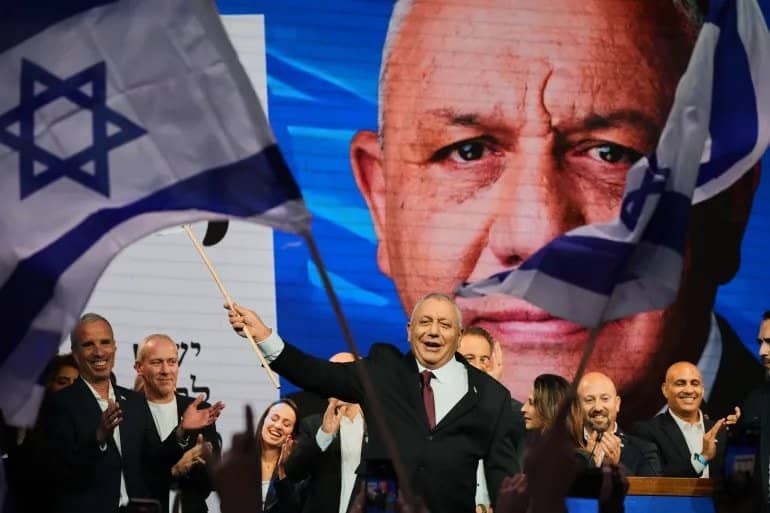
Israel’s October 2026 elections have produced a political paradox that the country can no longer afford to ignore. Benjamin Netanyahu’s Likud remains the largest single party, but his governing bloc has fallen to 53 seats in the 120-member Knesset. The opposition bloc led by Gadi Eisenkot has 48, while the Arab-led Joint List and Ra’am together command 19 seats. Neither of the principal Jewish political blocs can form a government independently. A parliamentary majority requires 61 seats, making Arab political participation potentially decisive. The arithmetic is clear; the political implications are far more profound. Israel must now decide whether its political future will be determined by the familiar exclusions of Zionist politics or whether the moment has arrived to attempt something genuinely transformative.
HYPOTHETICAL KNESSET SEAT DISTRIBUTION
Path to Majority: The 120-Seat Knesset Breakdown
Netanyahu’s Bloc
53 seats
Opposition Bloc
48 seats
Arab-led Parties
19 seats
Majority Needed
61 seats
VISUALS BY THE RIFT
Could a coalition of Jewish and Arab parties become the beginning of a new political paradigm in Israel? The question is no longer theoretical. It is the challenge confronting Eisenkot and every other politician who claims to offer an alternative to Netanyahu. If the opposition cannot overcome its reluctance to work with Arab representatives, it may discover that defeating Netanyahu electorally is considerably easier than dismantling the political culture that has sustained him.
Also read: Arab Parties Emerge as Kingmakers, Presenting Zionist Opposition with a Fateful Choice
The stakes extend well beyond the formation of the next government. They concern the meaning of democracy in a state that defines itself as Jewish, the place of Palestinian citizens within its political system, and the possibility of ending a conflict that has brought unbearable suffering to Palestinians and profound insecurity to Israelis. The opportunity demands political courage. It also demands a willingness to challenge assumptions that Israeli politics has treated as virtually inviolable.
The trilemma that Israel refuses to confront
Israel’s predicament can be understood through a fundamental trilemma: the difficulty of maintaining a Jewish national identity, preserving democratic equality, and exercising indefinite control over Palestinian territories simultaneously.
These three objectives are not inherently incompatible in every conceivable political arrangement. The contradiction emerges when maintaining a Jewish demographic majority becomes a justification for denying equal political rights, or when territorial control is pursued at the expense of Palestinian freedom and self-determination.
Israel can preserve its Jewish national identity while guaranteeing equal citizenship to Arab citizens. It can maintain democratic institutions while recognising the national rights of Palestinians. What it cannot credibly sustain indefinitely is the combination of permanent territorial domination, unequal rights and an uncompromising insistence that the existing political order represents a complete democracy.
The occupation is therefore not simply a security problem. It is a political and moral crisis that reaches into the foundations of Israeli statehood. Millions of Palestinians living under Israeli control cannot be treated as a permanent exception to the democratic principles that Israel claims for itself. Nor can the question of Palestinian freedom be indefinitely postponed while settlements expand and the possibility of a viable Palestinian state diminishes.
The contradiction becomes particularly stark when Israel’s democratic credentials are invoked internationally while political arrangements that deny Palestinians sovereignty, freedom of movement and equal rights remain entrenched. Within Israel itself, the independence of the judiciary, the authority of the attorney general and the limits of executive power have become fiercely contested questions. These conflicts reflect a wider struggle over whether democracy means merely holding elections or also respecting institutions, minorities and fundamental rights.
Netanyahu did not create every dimension of this crisis, but his political survival has depended heavily on alliances with nationalist and religious parties that have resisted meaningful compromises over Palestinian statehood. Replacing him without confronting those deeper commitments would change the occupant of the prime minister’s office while leaving much of the underlying political architecture intact.
The election has exposed the limits of Jewish-only coalition politics
The election results have delivered a message that Israel’s political establishment cannot indefinitely evade. Netanyahu’s bloc has lost its parliamentary majority, but the opposition has not secured one either. The 19 seats won by Arab-led parties are enough to transform the balance of power, provided the opposition is prepared to negotiate with them.
Yet the central difficulty is ideological rather than numerical. Several Jewish opposition leaders have resisted cooperation with Arab parties, even as they seek to remove Netanyahu from office. Avigdor Lieberman, for example, has ruled out partnering with the Arab-led parties. Such positions sharply restrict the opposition’s options and could make another Netanyahu-led government, or a fresh election, more likely.
This is the paradox of Israeli opposition politics. Parties may disagree bitterly over Netanyahu’s leadership, the conduct of the Gaza war, judicial reform, religious influence and the country’s international standing. Yet when the possibility of sharing political power with Arab citizens arises, some of these differences appear less important than the common instinct to preserve a political boundary between Jewish and Arab leadership.
Also read: Israel’s Election: The Battle Between Change and Anti-Palestinian Sentiment
If that boundary is never challenged, what exactly has changed?
An opposition that defines itself primarily by its rejection of Netanyahu, but remains unwilling to reconsider the exclusions embedded in the existing system, risks becoming a caretaker of the same political assumptions under a different leadership. It may offer better administration, restore damaged international relationships and moderate certain policies. These would be worthwhile changes. But they would not amount to a new political paradigm.
The opportunity before Eisenkot is therefore not simply to assemble 61 votes. It is to demonstrate that Israel’s parliamentary democracy can recognise Arab citizens as legitimate partners in governing the country.
The Arab citizen is not the enemy
The distinction between Palestinian citizens of Israel and Hamas is indispensable to any serious discussion of a Jewish-Arab coalition.
Hamas’s October 7, 2023, attack involved the killing and abduction of civilians, among other atrocities. Those crimes cannot be excused by invoking Palestinian suffering, just as Israel’s subsequent military actions cannot be exempted from scrutiny because Israelis suffered a devastating attack. The principles of civilian protection and accountability must apply universally.
But it is equally indefensible to treat Arab citizens of Israel as collectively responsible for Hamas or to regard their political representatives as inherently disloyal because of their ethnicity.
The statement supplied for this article makes an important point: Arab citizens also suffered during the October 7 attack, and Arab communities have experienced casualties and injuries during the subsequent regional conflicts. Individual experiences and the responses of particular political leaders must be assessed on their own merits, but the broader principle is undeniable. Citizenship cannot be made conditional on ethnic identity, and collective suspicion is no substitute for evidence.
Arab citizens of Israel have the right to participate in elections, enter parliament, represent their constituents and seek influence over government policy. Their legitimacy comes from their citizenship and democratic mandate, not from the approval of Jewish political leaders.
A coalition agreement must, of course, address substantive questions about security, the rule of law and the treatment of civilians. Arab parties cannot demand that their positions be immune from criticism, any more than Jewish parties can expect their policies to escape scrutiny. Political cooperation requires mutual accountability. It does not require ideological uniformity.
The test of a democracy is not whether citizens who share the dominant ethnic identity can govern together. It is whether citizens who differ in ethnicity, religion and national experience can exercise political rights without being permanently excluded from power.
Eisenkot’s test: Principles or political convenience?
Eisenkot has articulated conditions for participation in a future government that include recognition of Israel as a Jewish and democratic state, adherence to the values of the Declaration of Independence, and military, national or civilian service. He has also insisted that Hamas’s military and governing power in Gaza must be dismantled. These conditions establish important points of departure for negotiations, although their practical application will determine whether they facilitate a broader coalition or restrict it.
The most consequential question concerns the relationship between Israel’s Jewish character and its democratic commitments. Can the Declaration of Independence, with its promise of equality irrespective of religion, race or sex, be treated as a universal democratic commitment? Or will its principles remain subordinate whenever equal participation challenges established political preferences?
Eisenkot must decide whether these conditions are intended to establish common democratic ground or to preserve a political distinction that Arab parties can never fully overcome.
Consider the demand for military or civilian service. A state may legitimately discuss how citizens contribute to public life. But a civilian-service framework must be genuinely voluntary or fairly designed, free from ethnic discrimination, and respectful of the historical and political circumstances of the communities concerned. It cannot become a disguised instrument for demanding political conformity.
Similarly, a commitment to democracy must mean more than accepting Israel’s existing constitutional identity. It must include protecting the rights of minorities, respecting lawful political opposition and accepting the legitimacy of elected representatives whose constituencies challenge prevailing national narratives.
If Arab parties are invited to participate only after demonstrating that they will not question any fundamental assumption of the Jewish political establishment, the invitation will be hollow.
Eisenkot has an opportunity to establish a different standard: not agreement on every question of national identity, but agreement on democratic government, equal citizenship, public accountability, civilian protection and a credible political future for Palestinians.
That would require negotiations conducted in good faith, with clearly defined responsibilities and enforceable commitments. It would also require Jewish opposition parties to explain to their own constituencies why political cooperation with Arab citizens is not a betrayal of Israel but a test of its democratic maturity.
Mansour Abbas and the difficult politics of accommodation
Mansour Abbas, leader of Ra’am, has already demonstrated that Arab political participation need not depend on the wholesale rejection of Israel’s existing state identity. He has acknowledged Israel’s Jewish character, describing it as a reality imposed on Arab citizens, and has supported an Arab-led civic-service arrangement without military ties. At the same time, he opposes the existing national-service framework. These positions offer a possible starting point for negotiations, not a complete political settlement.
There are legitimate questions about Abbas’s refusal to publicly designate Hamas a terrorist organisation. His position can create suspicion among Jewish voters, particularly after October 7. The reported remarks of Ra’am parliamentarian Yasser Hujirat, who described Hamas as having both charitable and political dimensions, have also raised concerns. Such statements deserve direct examination rather than automatic acceptance or dismissal.
A political coalition cannot function if its members are unwilling to condemn attacks on civilians or recognise the basic security concerns of their partners. Equally, no party should be required to abandon its commitment to Palestinian rights as the price of being recognised as a legitimate political participant.
The answer lies in a transparent coalition agreement that establishes common standards: unequivocal opposition to attacks on civilians, rejection of political violence against innocent people, respect for democratic procedures, and a commitment to resolving the Israeli-Palestinian conflict through a political process that guarantees freedom, security and self-determination.
These principles must be reciprocal. Security cannot become a euphemism for permanent domination, and resistance cannot become a justification for targeting civilians.
The Joint List and Ra’am are distinct political formations, and their participation need not take the same form. A party may join a governing coalition, support a government from outside it, or negotiate agreements on budgets and legislation without assuming ministerial responsibility. These are legitimate parliamentary arrangements. The immediate objective should be to create a government capable of governing responsibly, rather than demand ideological uniformity before negotiations even begin.
Is secular Israel disappearing?
The electoral predicament also raises a difficult question about secularism and the growing influence of religious-nationalist politics.
It would be simplistic to suggest that Israeli society is uniformly religious or that secular Israelis have disappeared. Israel contains diverse political, cultural and religious communities, and its voters do not divide neatly into religious and secular camps. Yet the influence of religious-nationalist and ultra-Orthodox parties has become a structural challenge for governments seeking to balance national identity, public services, military obligations and individual freedoms. The election results also demonstrate the continuing strength of nationalist politics, even as Netanyahu’s bloc has lost seats.
The problem is not religion itself. It is the use of religious identity to determine who belongs, who enjoys political legitimacy and whose national aspirations can be recognised. A genuinely democratic state must protect religious freedom while preventing any religious or ethnic constituency from claiming an exclusive entitlement to political authority.
Secular and liberal Israelis, Arab citizens and religious Jews who support equality may have more common ground than their political leaders acknowledge. They may disagree over theology, national identity and historical narratives, but they can still agree on judicial independence, civil liberties, accountable government and the protection of human life.
The challenge is to translate these shared concerns into a political programme. Without such a programme, secular voters may remain fragmented, Arab citizens may continue to be marginalised, and religious-nationalist parties may retain disproportionate influence over the country’s direction.
The high-stakes gamble Israel must take
Would a Jewish-Arab coalition bring down Israel?
The more pertinent question is whether Israel can preserve its long-term stability without confronting the political exclusions that weaken its democratic legitimacy and perpetuate conflict.
A coalition involving Jewish and Arab parties would not automatically end the occupation, dismantle settlements, resolve the refugee question or produce Palestinian statehood. Nor would it guarantee political stability. The disagreements would be formidable, the public reaction uncertain, and the coalition vulnerable to attacks from those who regard cooperation with Arab representatives as an unacceptable compromise.
Yet political transformation rarely begins when every participant feels comfortable. It begins when the cost of maintaining the existing order becomes greater than the risk of changing it.
Eisenkot and his allies should therefore consider a coalition based on a defined set of priorities: restoring institutional checks and balances, protecting equal citizenship, ending discriminatory practices, addressing the needs of Arab communities, rejecting annexation, restraining settlement expansion, and creating a credible pathway towards Palestinian self-determination. These commitments would need to be negotiated, publicly explained and translated into measurable government action.
A coalition of this kind would not require Jewish and Arab parties to erase their differences. It would require them to accept that their differences must be managed through democratic politics rather than permanent exclusion.
Nor should Arab leaders be expected to bear the entire burden of reconciliation. Jewish politicians must take the political risk of defending their participation. They must challenge the claim that Arab representation threatens the state, and demonstrate that equality strengthens rather than diminishes democratic government.
This is where leadership matters. A politician who merely calculates which coalition will keep him in office is a manager of the existing system. A politician who risks his own political future to widen the boundaries of democratic participation has the potential to change it.
Netanyahu’s possible departure would be significant, but it should not become the sole measure of political renewal. The deeper test is whether the next government can break with the assumption that Jewish political parties alone possess the unquestioned authority to determine Israel’s future.
Coexistence is not a concession. It is the only credible future.
Israel’s political crisis presents a choice between two paths. One leads towards another unstable coalition assembled through familiar ideological compromises, with Arab citizens once again treated as outsiders whose votes are useful but whose participation is unacceptable. The other begins with the recognition that a democratic state cannot indefinitely ask a substantial section of its citizens to remain politically marginalised.
A Jewish-Arab coalition would be a gamble, but so is the continuation of a political order in which every election reproduces the same contradictions. The country cannot expect security through military superiority alone, democratic legitimacy through elections alone, or international acceptance while denying Palestinians a credible future of freedom and self-determination.
Coexistence is not an act of generosity by one community towards another. It is a political necessity founded on equal human dignity. It requires Israelis to recognise the rights of Palestinians, Arab citizens to exercise their full democratic agency, and political leaders on all sides to reject the idea that one people’s security must depend on another people’s permanent subordination.
The 19 seats held by Arab-led parties have created an opening. Whether that opening becomes a historic turning point depends on the courage of those who claim to represent an alternative to Netanyahu.
The question is no longer whether Israel can afford to take the political risk of a Jewish-Arab coalition. It is whether Israel can afford not to.
If its leaders retreat once again into the familiar politics of exclusion, they may succeed in forming another government, but they will have missed an opportunity to redefine the country’s future. If they dare to cross the ideological divide, they could begin the difficult work of building a democracy in which citizenship is not diminished by ethnicity and coexistence is not treated as surrender.
That would not be Israel’s downfall. It could be the beginning of its political renewal—and a necessary step towards a future in which Israelis and Palestinians can live with dignity, freedom and security.
Disclaimer:The views and opinions expressed in this article are those of the author(s) and do not necessarily reflect the official policy or position of The Rift.
*Israeli PoliticsCoexistenceIsraeli DemocracyJewish-Arab CoalitionKnessetPalestinian RightsPolitical Deadlock
Related Stories
Opinion
Electoral Genocide: Deletion as Ontological Murder
Rev. Immanuel Nehemiah
Opinion
Trump Went to Iran for Regime Change. Iran Delivered It in Washington.
Prof. Junaid S. Ahmad
History
Legacy of Mahatma Gandhi for Our Deeply Troubled World
Bharat Dogra
Culture
Exposing “Speechless” Islamophobic Distortion
Shafeeq R. Mahajir