Opening The Rift
therift
© 2026 The Rift. All Rights Reserved.
The Disappearing Millions: Inside India’s Mass Electoral Roll Purge
Over 3.13 crore voters vanished from India’s electoral rolls in a single revision cycle. We break down the numbers, the chaos for citizens, and the uncomfortable question of who benefits.

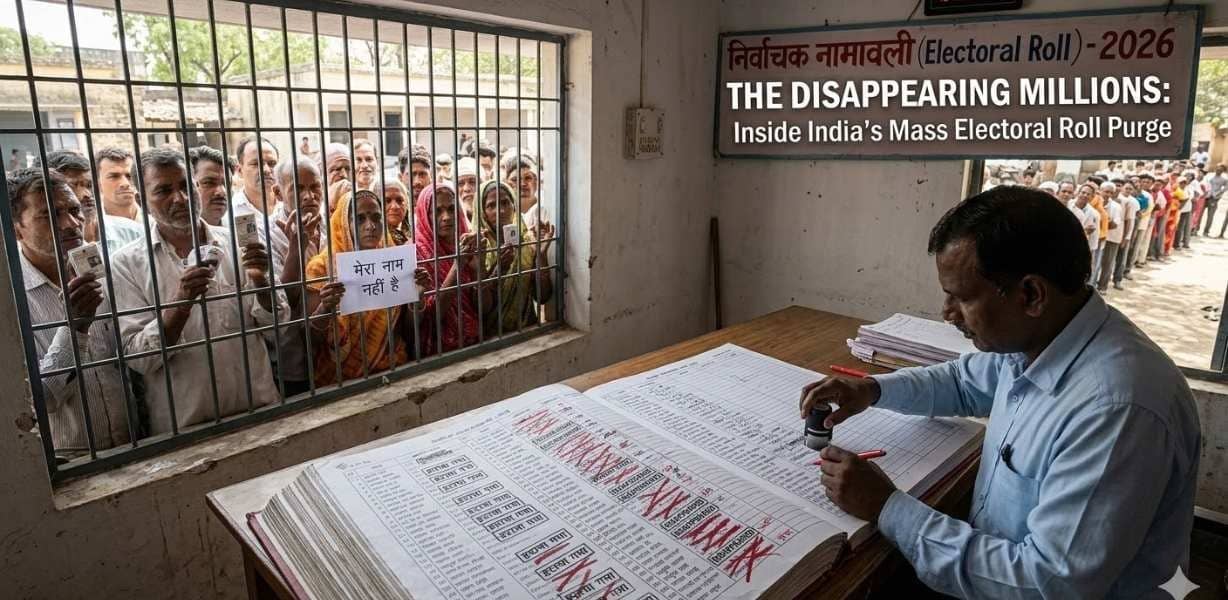
Illustrative only
Key Takeaways
1 of 3
Automatically generated. Read full article for complete context.
Special Intensive Revision electoral rolls are not a phrase most Indian voters have encountered. But for roughly 3.13 crore citizens across eight states and three Union Territories, the consequences of this bureaucratic exercise have been devastatingly real: their names have been struck from the voter rolls between 2025 and 2026, reducing the combined electorate in these regions from 36 crore to 32.87 crore. The process is mandated under Section 21(3) of the Representation of the People Act and officially targets duplicate, dead, or shifted entries. So why has it generated panic among millions of ordinary citizens, triggered Supreme Court interventions, and drawn accusations that the ruling dispensation is engineering its electoral advantage?
What Exactly Is the SIR?
The Special Intensive Revision is a door-to-door verification exercise far more aggressive than the Election Commission’s routine annual updates. Booth Level Officers visit every registered address, physically verify voter presence, and flag anyone categorized as “Absent, Shifted, or Dead.” The second phase alone covered approximately 51 crore electors across 12 states and Union Territories. Chief Election Commissioner Gyanesh Kumar formally announced it on October 27, 2025, and final voter lists for most states were published by February-March 2026, just weeks before state Assembly elections were scheduled.
The scale of the resulting deletions is extraordinary. Here is what the final rolls look like after SIR
| State | Deleted Voters | Reduction |
|---|---|---|
| Tamil Nadu | 70.00 lakh | 11.50% |
| Bihar | 68.66 lakh | 8.70% |
| Gujarat | 68.12 lakh | 13.40% |
| West Bengal | 63.66 lakh | 15.90% |
| Madhya Pradesh | 34.25 lakh | 5.97% |
| Rajasthan | 31.36 lakh | 5.74% |
Those numbers add up to a reduction greater than the entire population of Australia.
Why Citizens Are in Chaos
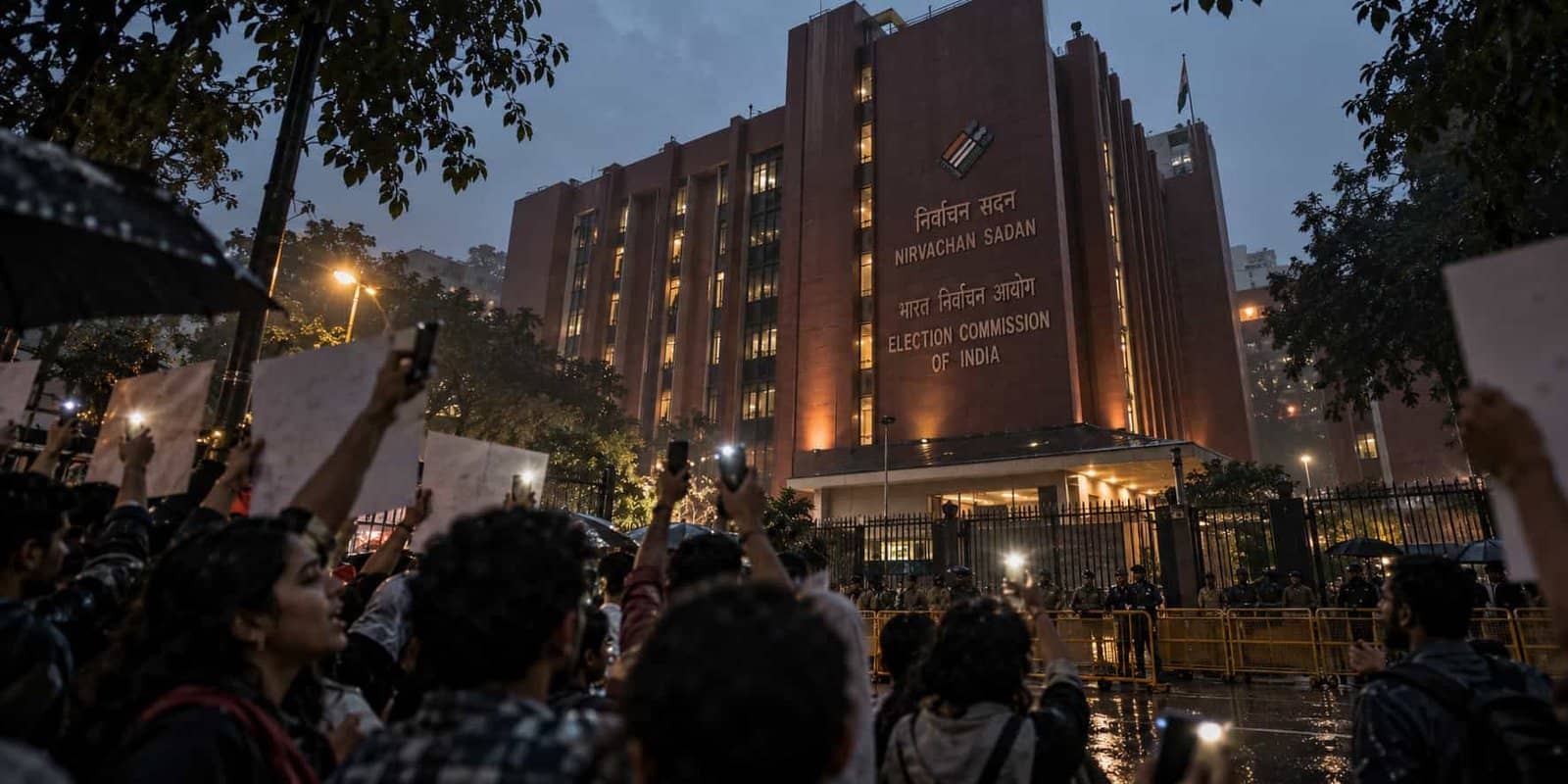
The Election Commission provides multiple avenues for affected voters to file objections: the NVSP portal, the voter helpline at 1950, or direct contact with Booth Level Officers. In practice, the process has been anything but smooth.
In Uttar Pradesh, over 70 lakh applications for inclusion were filed alongside 2.68 lakh deletion objections, overwhelming the administrative machinery. In Kerala, affected citizens could not even access lists of deleted names until the Supreme Court ordered the Election Commission to publish them. Reports from multiple states flagged errors in the Election Commission’s software, including what media described as “AI-generated mistakes” that inserted incorrect characters into voter names, rendering legitimate records unrecognizable.
The burden of these errors falls on the most vulnerable citizens. Migrant laborers in cities like Surat, Chennai, and Jaipur, whose transient housing makes physical verification unreliable, are frequent casualties. In Bihar, the Supreme Court issued a directive after civil society groups flagged that female voters were being disproportionately deleted. The problem: “marriage migration”, where women are struck from their original constituency after relocating post-marriage but face bureaucratic hurdles re-registering in their new district, leaving them effectively voiceless. An additional 3.66 lakh voters in Bihar were classified as “ineligible” simply for failing to produce documentation during the narrow verification window.
For millions of Indians, a Voter ID is not just an electoral document. It is the foundational gateway to subsidized rations, banking, and welfare. Losing it means losing access to the state itself.
The Election Timing Question
The timing of the SIR is where inconvenience becomes suspicion. The revision was announced in October 2025 and concluded by early 2026, directly ahead of Assembly elections in states including West Bengal, Tamil Nadu, Kerala, Assam, and Puducherry. Final voter rolls were published mere weeks, sometimes days, before the election machinery began formal preparations. This left citizens with a vanishingly small window to discover their deletion, navigate the claims process, and get reinstated before polling day.
Opposition parties have framed this as deliberate. West Bengal Chief Minister Mamata Banerjee alleged that the voter deletions are a political tactic to divide the state and “disenfranchise Bengal voters.” The TMC accused the Election Commission of conspiring with the ruling BJP at the Centre.
Who Benefits?
This is where this becomes uncomfortable. The BJP has explicitly claimed credit for a large portion of these deletions in West Bengal. National president Nitin Nabin stated that 50 lakh “infiltrators” were removed from Bengal’s rolls. Union Home Minister Amit Shah publicly promised to replicate Assam’s “detect, delete, and deport” model in the state, framing the mass deletion as a victory over illegal immigration.
But compare that framing to Gujarat, a BJP-ruled state, where 68.12 lakh voters were also deleted, or Tamil Nadu, where 70 lakh names vanished. In those states, the deletions are attributed to routine administrative cleanup. The question that no official explanation has reconciled: why is the same bureaucratic process celebrated as a national security triumph in opposition-ruled states and dismissed as housekeeping in states the ruling party already controls?
Critics, including a coalition of civil rights groups, have described the SIR as an “underhand citizenship survey” or “backdoor NRC” designed to disproportionately affect minority and marginalized communities. The ruling dispensation’s ability to frame the same administrative data as either “cleanup” or “infiltrator removal” depending on the political landscape of the state involved raises a question that goes well beyond paperwork.
The facts on the ground suggest a deeply asymmetric process: 31 million voters erased, a claims process that collapses under the weight of its own scale, and election timelines that leave no realistic window for correction. Whether this amounts to a rigorous democratic exercise or an engineered reshaping of the electorate before a critical electoral cycle depends entirely on whether you are the one doing the counting, or the one being counted out.