Opening The Rift
therift
© 2026 The Rift. All Rights Reserved.
Trojan Horse in the Lok Sabha: How Delimitation Killed the Women’s Bill
If the government is serious about the reform, it will bring this bill. If it does not, the midnight defeat of April 17 will be remembered not as a federalist veto but as a deliberate delay dressed in the language of progress.


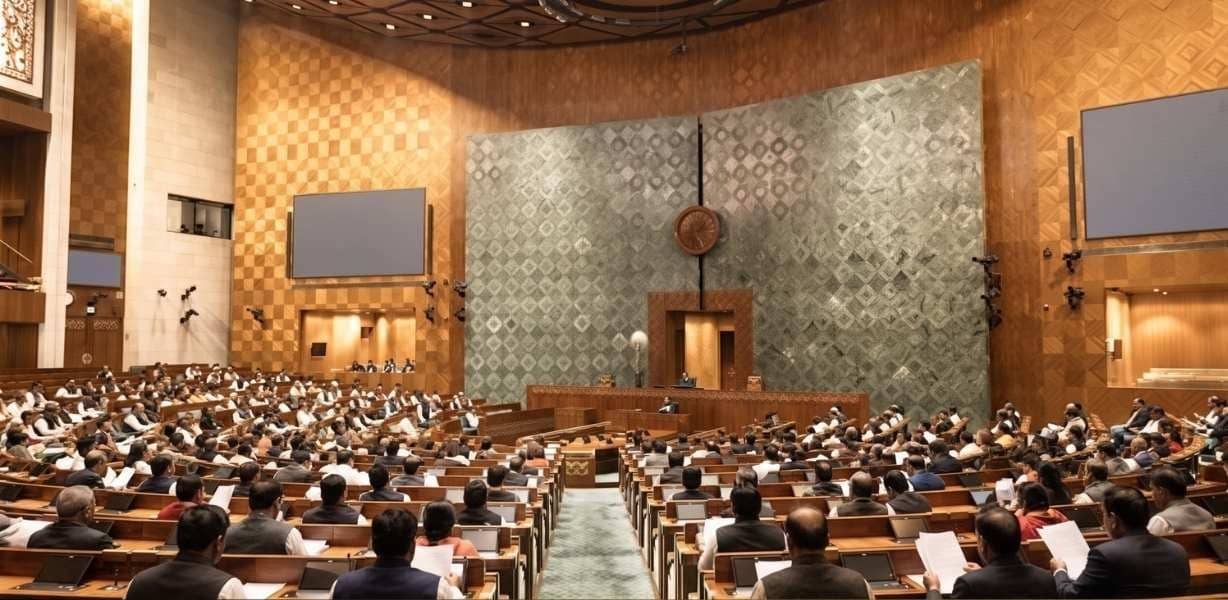
Representative image via sansad.in/ls/media-gallery
Key Takeaways
1 of 3
Automatically generated. Read full article for complete context.
The Lok Sabha scoreboard on the night of April 17 told a story that no anchor dared to headline. For the first time in years, a flagship social reform bill met a wall that had nothing to do with gender politics. What stopped the 131st constitutional Amendment, which would have reserved 33% of parliamentary seats for women, was not opposition to women’s representation. It was a federalist veto, triggered by two words buried in the bill’s fine print: census and delimitation. The night exposed a fault line in Indian constitutional politics that the government had either failed to anticipate or chosen to ignore.
The 131st Amendment was never just a women’s bill. Linked to Article 82 of the Constitution, it made the operationalisation of women’s reservations contingent on a fresh census and a subsequent delimitation exercise, a redrawing of parliamentary constituency boundaries. In constitutional law, Article 82 is the third rail of Indian politics: touch it, and you do not merely change seats, you rewire the arithmetic of power between states. By packing women’s reservations inside a delimitation trigger, the government effectively hid a second, far more explosive bill inside the first. That is the Trojan horse. Women were the shield: delimitation was the weapon.
Figure 1 The electronic tally board in the Lok Sabha often mirrors the narrow divides and constitutional requirements that characterize the political future of India. Lok Sabha TV Archive / Public Domain.
The Women’s Reservation Bill debate of 2023 had already surfaced these concerns. Yet the government pressed with the same structural flaw intact. In their efforts, the opposition parties from the southern region were not trying to be obstructionists; they were interpreting the numbers correctly. Recalibration on the basis of the results from the census done in 2021 will be effective in such cases as those in the regions with very fast-growing populations. This is evidenced by the fact that the state of Uttar Pradesh is likely to gain around 40 more Lok Sabha seats, while Tamil Nadu, Keralam, Andhra Pradesh, and Telangana would lose their share. As The Hindu’s delimitation analysis has noted, the North-South imbalance under any population-based delimitation is not marginal; it is structural. The bill, in effect, punished demographic responsibility.
Figure 2 The demographic shift: An Indian state-based map of population density demonstrates the political imbalance that could result from delimitation without regard to the freeze of 2026. Census of India
There is a counterintuitive argument to be made here: the bill’s defeat is not a failure of Parliamentary democracy; it is evidence that the system is working. Constitutional amendments of this magnitude, ones that simultaneously alter the federal balance, the composition of the Union, and the political rights of half the population, cannot be guillotined through Parliament in a single session without a Joint Parliamentary Committee review, without deep federal consultation, and without the cross-party consensus that Article 368 demands in spirit, if not always in strict letter. The opposition states did not kill women’s reservation. They killed a badly designed bill that used women’s reservations as cover for a far larger constitutional restructuring. That distinction matters enormously if the government is serious about the reform rather than its optics.
There is a more general trend underlying the procedural objections raised. Looking at the Lok Sabha session records, it appears that the discussion surrounding constitutional amendments has come to be increasingly limited to brief windows of opportunity within the legislative process. If the government decides to bring forward a constitutional amendment without going through the committee stage, this means one thing: that it has no confidence and expects the judiciary or state legislatures to make things right. That is not governance; it is deferred accountability.
The solution is not to abandon women’s reservation. It is to decouple it entirely from delimitation. The government must table a clear-cut amendment, stating that 33 percent of seats in the Lok Sabha and state legislative assemblies will henceforth be reserved for women, effective immediately on the existing seat structure, irrespective of future censuses and delimitations.
This amendment would stand scrutiny from the legal, federal and political perspectives. It asks nothing of state boundaries and takes nothing from Southern states. It simply delivers what was promised.
If the government is serious about the reform, it will bring this bill. If it does not, the midnight defeat of April 17 will be remembered not as a federalist veto but as a deliberate delay dressed in the language of progress. Indian women have waited long enough to be told that their reservation depends on a Census exercise with no fixed timeline. The clean bill is not a compromise; it is the only version of this reform that is constitutionally honest.