Opening The Rift
therift
© 2026 The Rift. All Rights Reserved.
The US-Israel War on Iran is a Threat to India’s Gulf Interests
While Washington and Tel Aviv pursue catastrophic regime change in Tehran, India’s economic survival and the safety of millions of diaspora workers in the Gulf hang in the balance.

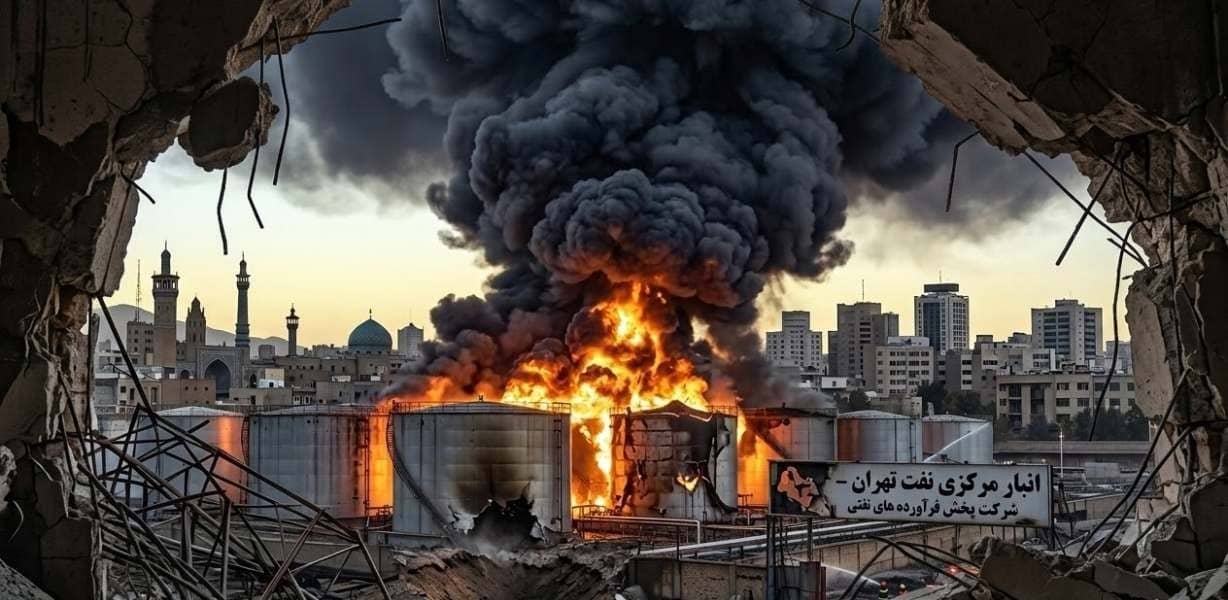
Illustrative Only
Key Takeaways
1 of 3
Automatically generated. Read full article for complete context.
When the United States and Israel launched their coordinated assault on Iran in late February 2026, the justification offered was a familiar blend of non-proliferation rhetoric and regional security. Code-named Operation Epic Fury, the strikes reportedly targeted Iranian leadership and nuclear infrastructure with brutal precision. But this largely illegal military adventurism has predictably engulfed the wider Middle East. The world is effectively being held hostage to the shared American and Israeli goal of dismantling the Iranian state, with profound and dangerous consequences for the Gulf, the global economy, and critically, India.
For New Delhi, the escalating conflict is not a distant geopolitical spectacle. It is a direct and present threat to national security. We share very valuable, strategic ties with both Washington and Tel Aviv, encompassing everything from critical technology sharing to a projected $10 billion in defence trade. However, these connections cannot, and must not, replace our vital interests in the Persian Gulf. The staggering indifference with which the US and Israel have unleashed an all-out war that imperils their own Arab allies and by extension, Indian economic interests, demands a fundamental reassessment of who truly guarantees regional stability in 2026.
A Betrayal of Gulf Allies
The most glaring revelation of the past few weeks is how little concern Washington has for the catastrophic consequences its actions have inflicted on its own partners. Over the last year, the United States aggressively fortified its defense architecture in the Gulf, signing pacts that promised unquestionable security. In September 2025, President Donald Trump signed an executive order pledging that an armed attack on Qatar would be treated as a threat to American security itself. Barely two months later, a landmark Strategic Defense Agreement formally designated Saudi Arabia a “major non-NATO ally”.
Yet, when the US and Israel initiated their preemptive strikes on Iran, they knowingly placed these same Gulf states directly in the line of retaliatory fire. Iran, backed into a corner, predictably lashed out at American military installations hosted by these Arab nations. How did Washington honour its ironclad security commitments? On March 2, the State Department abruptly issued a “Level 3: Reconsider Travel” advisory for Bahrain, Qatar, and the UAE, ordering the sudden departure of non-emergency American personnel.
While Washington and Tel Aviv pursue catastrophic regime change in Tehran, India’s economic survival and the safety of millions of diaspora workers in the Gulf hang in the balance.
The message from Washington was brutally clear. We will gladly use your bases to launch our wars, but when the missiles return, you are on your own. The Gulf states, having purportedly relied on the American security umbrella for decades, are now left exposed to the radioactive fallout of a conflict they resolutely did not start. Qatar’s Emir Sheikh Tamim bin Hamad Al Thani has repeatedly and desperately warned of “dangerous consequences” arising from this unprovoked escalation. Meanwhile, Saudi Arabia’s frustration is palpable, with Riyadh issuing fiery statements warning that Tehran would be the “biggest loser” if it continues its retaliatory strikes. But the underlying, uncomfortable reality is that the entire region is already losing. The US has deserted the very allies it swore to protect.
The Global Economic Shockwave
If the geopolitical risks are alarming, the economic ramifications are existentially terrifying. The immediate and most severe casualty of the conflict has been the Strait of Hormuz, a critical maritime chokepoint through which approximately 20% of global oil and an equally significant portion of liquefied natural gas (LNG) transits daily. With maritime traffic effectively grinding to a halt following Iranian military warnings, the global energy architecture faces a crisis unprecedented since the oil shocks of the 1970s.
Brent crude prices surged past the psychologically damaging $100 a barrel mark within days of the initial strikes. Market analysts are now darkly forecasting spikes up to $150 if the de facto blockade persists. For the global economy, still stubbornly fragile and acutely sensitive to inflationary pressures, this presents a perfect storm. The US and Israel, insulated to varying degrees by robust domestic production and immediate, singular security imperatives, have essentially gambled with global economic stability.
India’s Existential Stakes
The impact on India is profound, multifaceted, and immediate. We are not a passive, distant observer in this crisis; we are one of its primary victims. Despite laudable and sustained efforts to diversify our energy portfolio, India continues to import nearly 53% of its crude oil requirements from Middle Eastern nations. A sustained disruption in the Strait of Hormuz, coupled with astronomical price hikes, will simply blow out India’s current account deficit. It will inevitably drive up domestic fuel costs, inflate the entire logistics supply chain, and severely decelerate our ambitious GDP growth targets at a critical juncture.
But oil is only one part of the equation. The human and social capital India has invested in the Gulf is immense, and it is largely unprotected. An estimated 9.5 million Indian nationals currently live and work across the Gulf Cooperation Council (GCC) countries. Over 4.1 million reside in the UAE alone, forming the backbone of their workforce. Their physical safety is paramount. Furthermore, the billions in remittances they send home annually are a vital, stabilizing component of India’s foreign exchange reserves. A protracted war that forces a panicked mass evacuation, or structurally damages the Gulf economies, would be a demographic and economic disaster for India.
Our strategic, long-term investments are also crumbling under the weight of this conflict. For years, India has meticulously cultivated access to Central Asia via the Shahid Beheshti terminal at Chabahar Port in Iran. We have pledged over $120 million to develop this vital node, which completely circumvents Pakistan and opens up landlocked markets. Yet, a crucial US sanctions waiver allowing India to operate the port is abruptly set to expire in April 2026. Amid the current, blinding hostility, the prospect of its renewal is exceedingly grim. The US and Israeli war on Iran has effectively torpedoed India’s most significant geostrategic leverage in the region.
The Refusal to be Collateral Damage
Prime Minister Narendra Modi’s defining foreign policy mantra over the past four years has been that “this is not an era of war.” He articulated this forcefully to Russia regarding Ukraine, and the underlying logic bears even greater relevance to the Middle East today. Military adventurism alone can never resolve the deeply entrenched security paradoxes of the region.
While India’s evolving, multifaceted partnership with Washington, and our deepening defence and technological collaboration with Tel Aviv, are undeniably valuable assets, they must be weighed against brutal reality. These ties simply cannot replace our structural, demographic, and energy dependencies in the Gulf. Yet, despite these mounting strategic stakes, the current political dispensation in New Delhi appears astonishingly oblivious to the immediate risk. By aligning its public demeanour and policy actions too closely with the American and Israeli camp, the government is charting a course that will have far-reaching, detrimental consequences for its own regional influence. We cannot allow our vital national security to become acceptable collateral damage in the US and Israel’s relentless pursuit of regime change in Tehran.
The immediate requirement for New Delhi is a clear-eyed diplomacy that prioritizes the cessation of this illegal conflict. We must articulate unambiguously to our friends in the United States and Israel that their cavalier disregard for the stability of the Gulf is a direct disregard for the economic survival of their allies. India will suffer greatly if this war continues on its current trajectory. The world cannot, and absolutely should not, be held hostage to the destructive, myopic ambitions of a few, regardless of the security pretexts invoked.
Disclaimer:The views and opinions expressed in this article are those of the author(s) and do not necessarily reflect the official policy or position of The Rift.