Opening The Rift
therift
© 2026 The Rift. All Rights Reserved.
Between being Odia and being Muslim
Perhaps the question is not about choosing between being Muslim or being Odia, but about recognition. Can the identities co-exist without one overshadowing the other?

Key Takeaways
1 of 3
Automatically generated. Read full article for complete context.
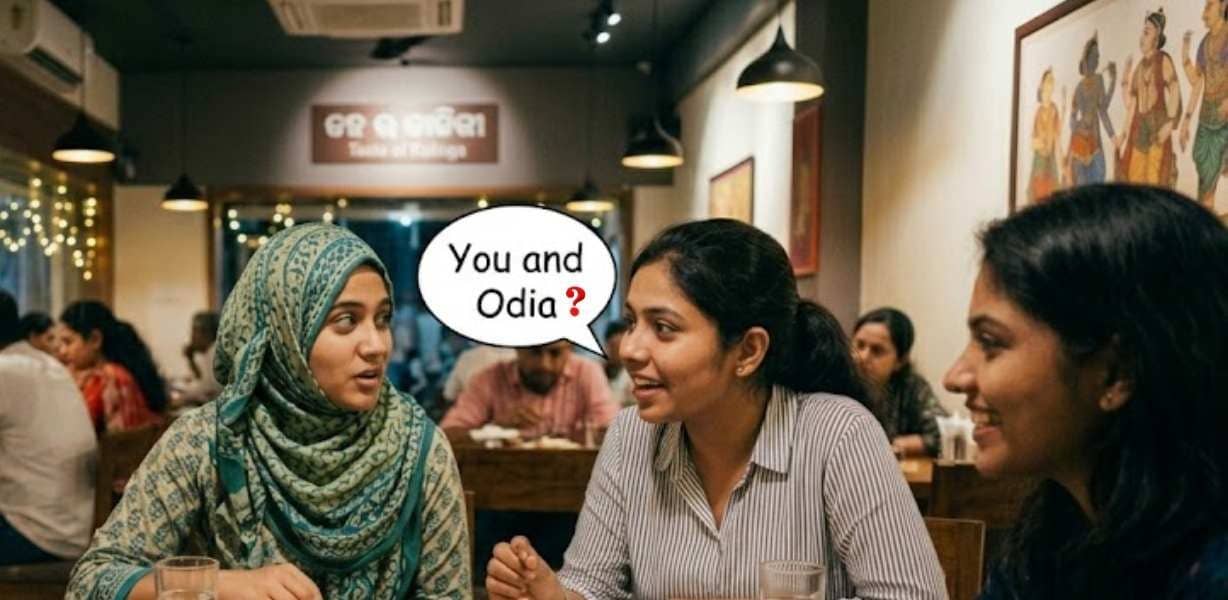
At a dinner table, during a casual discussion about cultural identity, I said, “At my place, Odia and Muslims share…”
Immediately one of my colleagues interrupted: “You and Odia? Aren’t you Odia? You’re from Odisha, right?”
I paused. For the first time, I found myself unable to answer a question that had never seemed important before.
If I belong to Odisha, why am I not automatically considered Odia? And who, then, is included in this identity?
My village is a shelter for many castes and communities. From Brahmanas to PanosPanosA Dalit community in Odisha, historically marginalized and traditionally associated with weaving or drumming., Muslims to Christians, all of us live together, and everyday life is shared. In more than two decades of my life, I have seen and felt a strong sense of brotherhood and solidarity among the village members. Festivals, gatherings, and village JatrasJatrasTraditional folk theatre and village festivals in Odisha, characterized by open-air performances and communal gatherings. are celebrated together. Not only do we celebrate, but we also contribute; in fact, all the members are expected to give ChandaChandaA voluntary financial contribution or communal donation collected for festivals and community events.. Despite different religious identities, Muslims never hesitate to participate nor contribute. I never felt that being Muslim set me apart. Since childhood, my surroundings gave me an identity that lived quietly, not constantly questioned.
It was only after moving to Delhi to pursue higher studies that identity became something I had to think about. The discourse on identity, identity politics, identity questions and especially identity crises is not new in the capital city. It made me reflect on something I had taken for granted. Back home, I had always thought of society in simple terms: there were Muslims, and then there were “Odia” — not Hindus. It seemed natural then. But now it raised uncomfortable questions. If I am from Odisha, speak the language, and share its culture, why am I not included in that category?
Part of this confusion also lies in how Muslims are often referred to in Odisha. All the Muslims are collectively referred to as ‘Pathana’, regardless of their background. Historically Afghans are an ethnic community known as Pathans/Pashtuns, but now it denotes residents of Afghanistan. According to Prof. Imtiaz Ahmad, in light of the Muslim caste system, “Pathan” is the higher caste among Muslims, who use “Khan” commonly as their surname. However, after Afghans started residing in Odisha, the name ‘Pathan’ got popular among Odia masses. While it seems like a cultural label or casual term, it also reflects subtle segregation. It may mark Muslims as somewhat distinct, even when they have been part of the region over the years.
The presence of Muslims in Odisha dates back to 1568, when the Sultan of Bengal, Sulaiman KarraniSulaiman KarraniThe Sultan of Bengal from 1565 to 1572, who invaded Odisha in 1568, marking the beginning of Muslim rule in the region., invaded the region. Over time, many settled here not as outsiders but as a part of the local society. By adopting the local language and participating in shared cultural practices, food, and festivals, they helped create a syncretic cultureSyncretic CultureA cultural blend formed by the merging of different religious, cultural, or social traditions into a new, harmonious whole. across the region. Yet, despite the long history and shared culture and everyday interactions, the identity of Muslims in Odisha often remains seen as separate, not fully merging into being Odia.
This liminalityLiminalityThe psychological or cultural state of being on the threshold or boundary between two different identities or phases. of being an Odia Muslim is constantly negotiated between two identities: religious and regional. However, this may not always feel like conflict in everyday life, especially in spaces where co-existence is natural. But living outside the land sometimes makes those gaps more visible.
At the same time, it is pleasing to recognise that, when compared to many parts of the country, Odisha has maintained a communal ease. The fraternity, mutual co-operation and syncretic culture continue to exist. Yet, one must not neglect the question of identity.
Perhaps the question is not about choosing between being Muslim or being Odia, but about recognition. Can the identities co-exist without one overshadowing the other? Being Muslim should transcend religious boundaries, just as being Odia does not take away from belonging to a religion.
Disclaimer:The views and opinions expressed in this article are those of the author(s) and do not necessarily reflect the official policy or position of The Rift.