Opening The Rift
therift
© 2026 The Rift. All Rights Reserved.
Five Decades of Tireless Efforts: Bhartendu and Shobhna Prakash’s Journey in Village Science and Genuine Development
Bhartendu Prakash chose a less-taken path, dedicating over five decades to serving villages, combining traditional wisdom with modern science for genuine development.

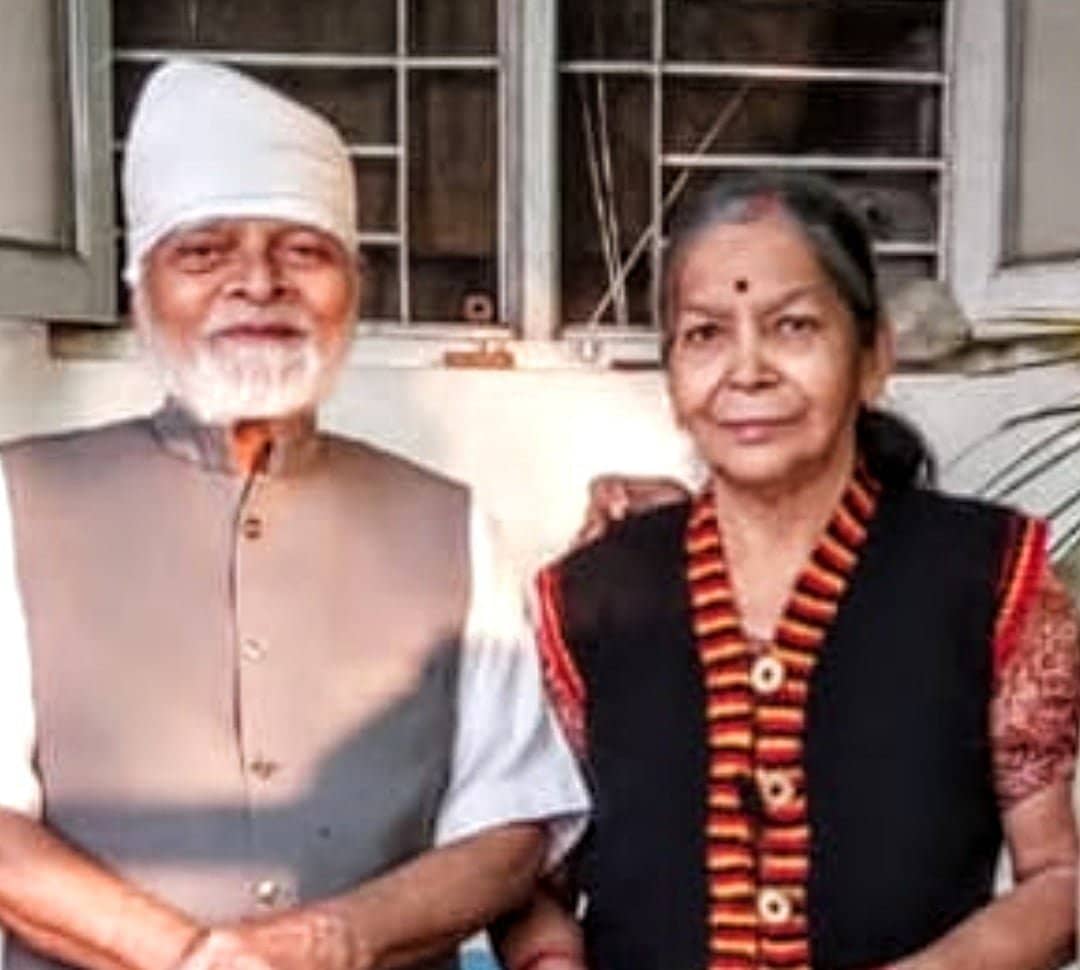
Bhartendu and Shobhna Prakash
Key Takeaways
1 of 3
Automatically generated. Read full article for complete context.
It was more than 50 years ago, in 1974, that Bhartendu Prakash, a 30-year-old Senior Research Associate at IIT (Indian Institute of Technology), Kanpur faced a difficult decision—whether to continue with the promising career opportunities here, or to move in the direction of a different, less taken path of serving in villages. On the one hand he felt strongly that he would be able to contribute better by serving in villages, but on the other hand there were questions regarding whether he and his family could find economic support. He was married to Shobhna, and the couple had a small daughterer.
Bhartendu came from a rural background, and his higher education and research in Allahabad University and IIT Kanpur had been supported by scholarships. He had already worked with highly reputed chemistry scientists at a young age, and a promising career beckoned.
Finally, he discussed all matters in detail with Shobhna and the young couple moved with their daughterer close to the ancestral village (Terahimaafi, in Banda district, UP, a part of BundelkhandBundelkhand RegionA geographical and cultural region in central India, divided between the states of Uttar Pradesh and Madhya Pradesh, known for its historical significance and often facing challenges like water scarcity. region) of Bhartendu. While they had wider plans, the most immediate assignment taken up in Atarra, a small town surrounded by paddy fields, was also promising. This was to take forward the research of Dr. P.C. Kapur at IIT Kanpur on making cement from paddy husk. Bhartendu accepted the challenge of using this technology in actual village conditions. He achieved considerable success. Looking back at this experience, he says that there was promising scope for combining livelihood support with environmental protection, but established industries did not want this to emerge as a serious alternative. However this technology still retains its relevance, he says.
Both Bhartendu and Shobhna had a keen interest in exploring more creative aspects of school-level education, particularly science education. They helped to set up and improve some educational institutions. One very important institution they created was Vigyan Shiksha Kendra (VSK, translated as Science Education Centre) in 1974, which has remained active despite numerous challenges and experiences. Several young activists received their first training here, and later I found several of them playing important roles in various parts of Bundelkhand.
With the help of NCERT, the young couple started a school science program to popularize science teaching based on learning by doing in villages. They also took up a program of documenting village-based traditional technologies in various sectors. VSK soon became an important place for rural development-related training, including training of trainers (TOT). Their work on khadiKhadiA hand-spun and hand-woven natural fiber cloth, primarily cotton, promoted by Mahatma Gandhi as a symbol of self-reliance and rural employment in India. and handlooms was in accordance with their respect for Gandhian ideas, and they also made an important contribution to the promotion of organic farming and other activities at Gandhi ashram in Chhatarpur and elsewhere.
Among various issues that interested them, three emerged as high priority areas—organic farming, medicinal plants, and village-level food processing for livelihood support and healthier food. Apart from working on these issues at the local level, Bhartendu and Shobhna, particularly the former, started increasing participation in these concerns at the national and regional levels. Thus Bhartendu was elected twice elected President of a national organization for promoting rich indigenous traditions of health and healing called Lok Swasthya Parampara Samvardhan Samiti. He was Director of the Organic Farming Association of India (North India) during 2008-2012. Very few people remember today that Dr. Bhartendu Prakash was also the President of the first executive committee of the Centre for Science and Environment, which has become a very big and famous organization today. He made an important contribution to the planning of Gramodaya University in Chitrakut.
Subsequently, while working with OxfamOxfam InternationalA confederation of 21 independent charitable organizations focusing on the alleviation of global poverty and injustice. and some other organizations VSK was more involved with several justice-based issues and legal aid for the weaker sections, as well as providing help to flood victims. VSK was increasingly involved in the issue of floods and droughts in the Bundelkhand region, as well as the water scarcity experienced almost every year in many villages here. This led to a very important study involving several top experts on the Problems and Potential of Water Resources in Bundelkhand Region, brought out in collaboration with IIT Delhi. The growing fame of the work of VSK led to several visitors from abroad coming here to learn about various aspects of its work, while Bhartendu and Shobhna also attended several international conferences and get-togethers. Throughout this time, they were also bringing together several publications related to their work, some of which still remain an important reference source. Bhartendu also published two books of his deeply sensitive Hindi poetry.
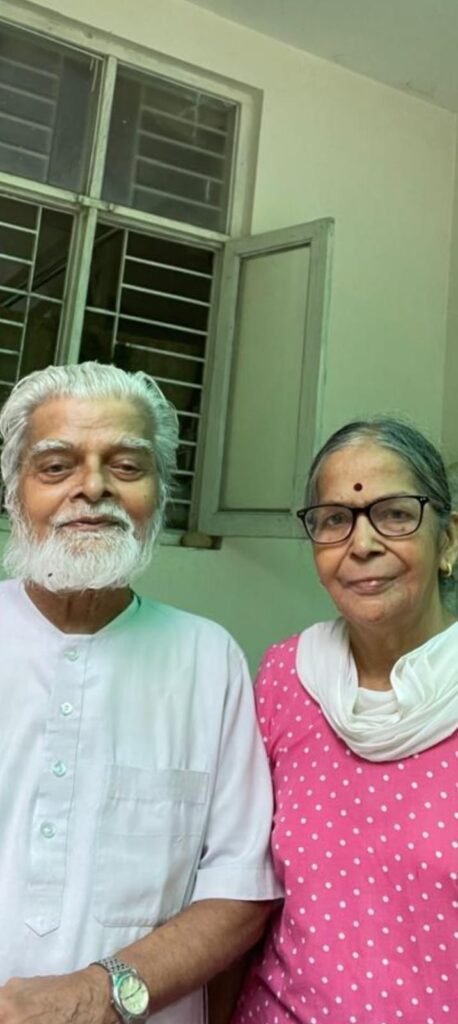
In 2008, Bhartendu and Shobhna took an important step of setting up a new regional research center by forming the Bundelkhand Resource Study Centre. Around the same time, Dr. Bhartendu Prakash received the Vikram Sarabhai fellowship from the Madhya Pradesh Council of Science and Technology, Bhopal. This work involved their move from Banda district (Uttar Pradesh) to Chhatarpur district (Madhya Pradesh). Since then they have been spending more time here, while maintaining links with the Banda establishment they created over the years and also occasionally visiting the families of their son and daughter in and around Delhi.
The work taken up under the Vikram Sarabhai fellowship, building further on the earlier study done in cooperation with IIT Delhi, has been of great significance as it leads to an alternative path for ensuring water security and adequacy sustainably for Bundelkhand region. This path combines traditional wisdom with modern science, and emphasizes the protection of natural resources, avoiding indiscriminate exploitation, and steering clear of highly flawed projects.
Dr. Bhartendu, who is 82 now, has increasingly faced health problems but carries on bravely with his never-ending study and research, helped in a big way by the constant, helpful efforts of Shobhna. As I recently travelled to their home to spend a quiet day with them, I realized in the course of these conversations what a great source of strength Shobhna has been to these tireless efforts over the past five decades.
Shobhna told me a very interesting aspect of their life—they have never quarreled in their over 55 years of married life! Of course they have differences from time to time but, as Shobhna says, it is important not to have an argument immediately and allow some time for better understanding and then have a mature discussion.
Shobhna related that at times they had no funds for essential family needs but somehow they could overcome such difficulties.
May their good work for the cause of village science and genuine development continue for many more years!
Disclaimer:The views and opinions expressed in this article are those of the author(s) and do not necessarily reflect the official policy or position of The Rift.
*Bhartendu PrakashBundelkhandIn-focusIndiaOrganic FarmingRural DevelopmentScience EducationSocial WorkWater Security