Opening The Rift
therift
© 2026 The Rift. All Rights Reserved.
The Death of the Human Within
If that human being dies, no law, no government, no ideology and no technological advancement will be able to rescue civilisation from itself.

Key Takeaways
1 of 3
“Beyond the calculated cruelty and state-sponsored violence of kings, emperors and sultans, violence has always existed within society itself.”
Automatically generated. Read full article for complete context.
The day or the date hardly matters. Pick up any newspaper—particularly one of the mass-circulation Hindi dailies—and what confronts you, in the name of news, is an endless catalogue of murder, assault, communal violence, rape and countless other grim episodes, often narrated with a disturbing degree of sensationalism. Human life seems to have become so cheap that destroying it, or extinguishing it altogether, no longer demands much thought or hesitation.
Why are our tender sensitivities drying up with such alarming speed? Why does the human being within us appear to die a little more each day? There must be a reason why we have become so self-centred, so indifferent to the suffering of others.
Violence, of course, is an intrinsic human impulse. History offers abundant examples of its most brutal manifestations. Beyond the calculated cruelty and state-sponsored violence of kings, emperors and sultans, violence has always existed within society itself. That cannot be denied. Yet it is equally true that, for the most part, such tendencies remained confined to individuals with criminal dispositions or to professional offenders.
Today, however, the landscape has changed dramatically. A schoolboy conspires with his classmates to murder another child over a trivial disagreement. A young woman pushes her fiancé off a mountain. Another kills her own parents in the hope of securing a government job on compassionate grounds. A young husband murders his wife, dismembers her body and stores it in a freezer while methodically planning to dispose of the remains. A minor altercation over parking or overtaking ends in someone being shot dead. The examples are endless. Selling narcotics to schoolchildren or adulterating food and medicines are equally manifestations of the same moral corrosion. Taken together, these incidents reinforce an unsettling conclusion: the human being within us is steadily dying.
Much like corruption—which is often said to trickle down from the top—the origins of violence too may well lie among those who occupy the highest rungs of power, those entrusted with steering the nation and shaping its moral and political direction. They are our lawmakers, our policy-makers, the people from whom society expects leadership and example.
About a decade ago, during a conversation in Lucknow, a senior Hindi newspaper editor mentioned something that has stayed with me ever since. Before elections, several candidates would personally request him to describe them in news reports with epithets such as bahubali (strongman) or dabang neta (fearless strongman). The overwhelming presence of politicians with criminal records—from village councils to municipal bodies, state legislatures and even Parliament—is evidence enough that such individuals continue to enjoy broad public acceptance. A society that repeatedly elects such people cannot itself be entirely untouched by the allure of violence.
Once violence becomes a marker of success and social legitimacy, it is only natural that the law, public morality and the ethical restraints of a civilised society begin to lose their meaning. The first casualty of violence is always the moral fabric of society itself.
An example may help illustrate this transformation. Five or six decades ago, many middle-class families hesitated to establish matrimonial alliances with households whose members worked in government departments notorious for bribery. Today, the situation is almost the exact opposite.
Imagine, for a moment, the predicament of a young Indian Police Service (IPS) officer. Fresh from the academy, having taken an oath to uphold the Constitution and the rule of law, he finds himself saluting and providing security to a legislator or parliamentarian with a history of rape, murder, extortion or incitement to communal violence, now cloaked in the respectability of the title “Honourable”. What must that do to his conscience? How difficult must it be to preserve the moral convictions and professional ideals instilled during training? If not impossible, it must certainly be an uphill struggle.
Perhaps this explains why, over time, the conscience of many within the police force ceases to protest when they extort money from truck drivers, publicly humiliate ordinary citizens, manipulate the contents of a murder or rape complaint in exchange for a bribe, or even become perpetrators of custodial violence themselves. What begins as moral discomfort gradually gives way to accommodation, and eventually to acceptance.
At its core, violence often springs from the belief that one is somehow superior to others—more important, more entitled, more secure, and therefore exempt from the rules that govern everyone else. Once this illusion hardens into conviction, ethics, civility and restraint are discarded with astonishing ease. We encounter this psychological disorder all too often. News clips, social media videos and public events routinely parade before us elected representatives and bureaucrats whose conduct betrays an astonishing contempt for the dignity of ordinary citizens. To them, the feelings, honour or rights of the common person scarcely matter.
The tragedy, however, does not end there.
The ordinary individual, burdened—perhaps unconsciously—by this hierarchy of imagined superiority, often seeks compensation in the only way available to him. He bullies a street vendor over a few rupees, shouts at a rickshaw puller, humiliates a labourer, quarrels with a neighbour or a fellow traveller simply to reassure himself of his own importance. And if no such opportunity presents itself, even kicking a stray dog on the roadside may momentarily satisfy his bruised ego.
Later that evening, after returning home, I heard a senior public figure remark on television that “two or four protesters should simply be hanged in public.”
I have been in Delhi these past few days. Two days ago, while stepping out on an errand, I had to turn back from Connaught Place because the area had become tense owing to a public demonstration initiated by Gen Z. I watched the protesters carrying placards, the language of the slogans. I listened to their conversations, their speeches and their slogans. I observed the reactions of the uniformed personnel deployed there. Later that evening, after returning home, I heard a senior public figure remark on television that “two or four protesters should simply be hanged in public.”
I am, by temperament, an entirely non-political person. I have no particular affinity for any political party. In fact, I often refrain from voting—not because I consider voting unimportant, but because I have rarely been able to persuade myself whom I ought to vote for, or why. Yet after witnessing these events firsthand, one question has refused to leave me: where is this pervasive violence—expressed in our language, our thoughts and our actions—ultimately taking our society?
Against the backdrop of this accelerating social transformation, the market has discovered that violence sells. Computer games, cartoons, toys, films, television serials, streaming content and even televised debates increasingly package aggression as entertainment. Speed, hostility, relentless confrontation and shamelessness have become powerful selling points. Perhaps this is only my prejudice, but whenever I see the latest generation of motorcycles and cars racing along our roads, I cannot help noticing their sharply drawn headlights, aggressively sloping windscreens and muscular body panels. Behind their design, I often sense a predatory imagination—as though these machines aspire not merely to move through traffic, but to dominate and consume everything before them.
These are only a few examples. Anyone who observes the world around them with a measure of detachment will soon realise how subtly, and how relentlessly, the marketplace conditions us to normalise aggression.
The German philosopher Friedrich Nietzsche famously argued that the advance of modern science, rationalism and the Enlightenment would eventually render God and organised religion increasingly irrelevant. In declaring that “God is dead”, he was not announcing the death of a deity so much as the collapse of the moral framework upon which civilisation had long rested. Once that foundation disappeared, he believed, society would be left without any universally accepted standard of right and wrong. Life itself would begin to lose its meaning, and humanity would drift towards a profound moral emptiness.
It is difficult not to wonder whether we are already approaching such a moment.
Nietzsche also envisioned the emergence of the Übermensch—the “Overman” or “Superman”—an individual who would transcend conventional morality and create new values for humanity. His metaphor of “philosophising with a hammer” was an invitation to test and challenge inherited beliefs, not a celebration of physical violence. Yet, in our own age, the metaphor appears to have acquired an unsettling literalness. Every street, every neighbourhood, every city seems eager to produce its own self-appointed “strongman”—individuals convinced of their exceptional status, impatient with restraint and contemptuous of institutions. Others, we are repeatedly told, are still waiting in the wings, destined to reshape the world through displays of brute strength rather than moral courage.
One cannot help feeling that history is knocking insistently at our closed doors. Whether it heralds renewal or catastrophe depends entirely on the choices we make today.
Violence does not begin with the pulling of a trigger or the raising of a weapon. It begins much earlier—in the words we choose, in the contempt we nurture, in the small humiliations we inflict upon those weaker than ourselves, in the applause we reserve for power divorced from morality, and in the indifference with which we witness the suffering of others.
The gravest victim of violence is not the individual who loses his life. It is the society that gradually loses its conscience.
When that happens, murder becomes just another headline. Cruelty becomes entertainment. Aggression becomes aspiration. And compassion—once the defining mark of our humanity—comes to be dismissed as weakness.
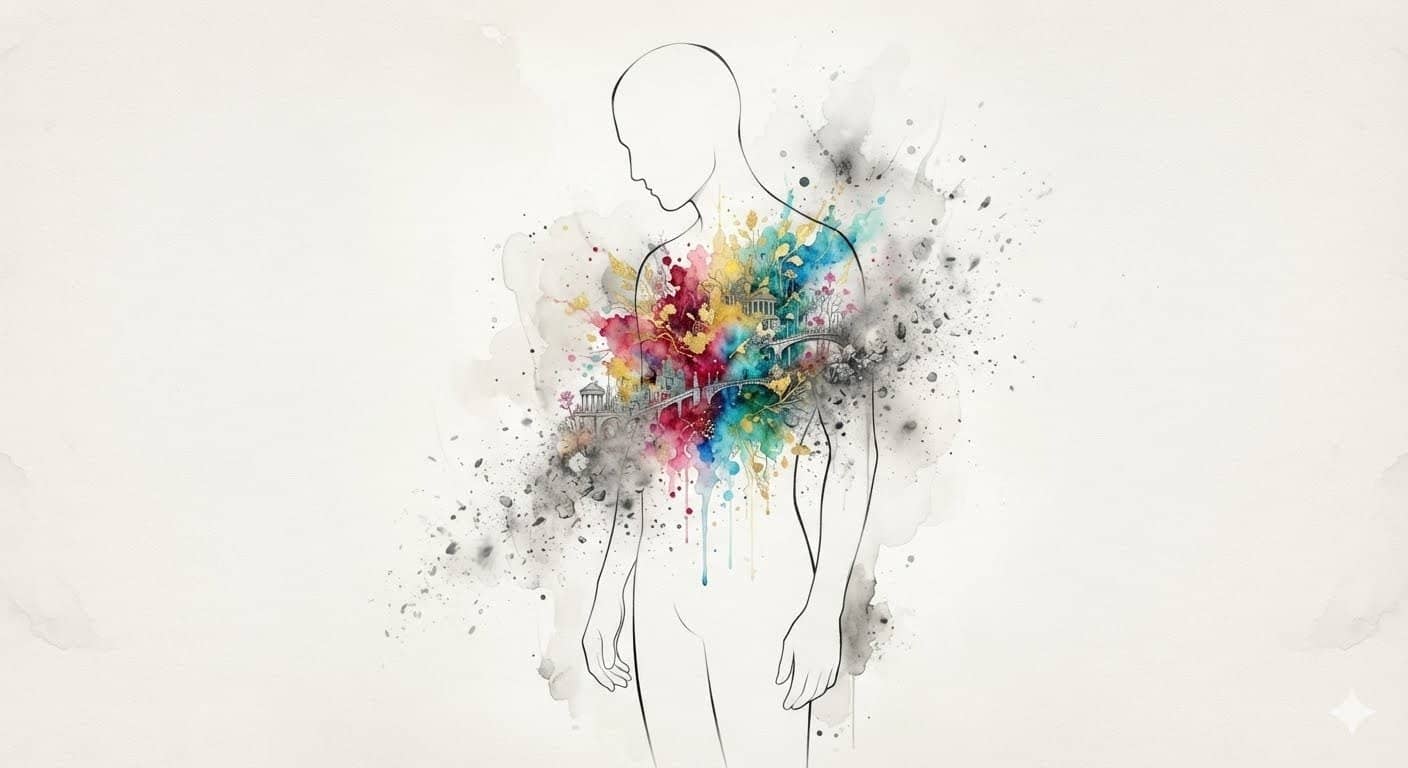
The most troubling question, therefore, is not whether violence is increasing. The real question is whether the human being within us is quietly disappearing.
If that human being dies, no law, no government, no ideology and no technological advancement will be able to rescue civilisation from itself.
Disclaimer:The views and opinions expressed in this article are those of the author(s) and do not necessarily reflect the official policy or position of The Rift.