Opening The Rift
therift
© 2026 The Rift. All Rights Reserved.
Khamnor’s Clean Sweep: Dignity, Responsibility, and the Future of Sanitation in Rajasthan
It is only in the middle of such changes at a wider level that sanitation workers can get an identity based on recognizing the dignity of their work and respecting it.

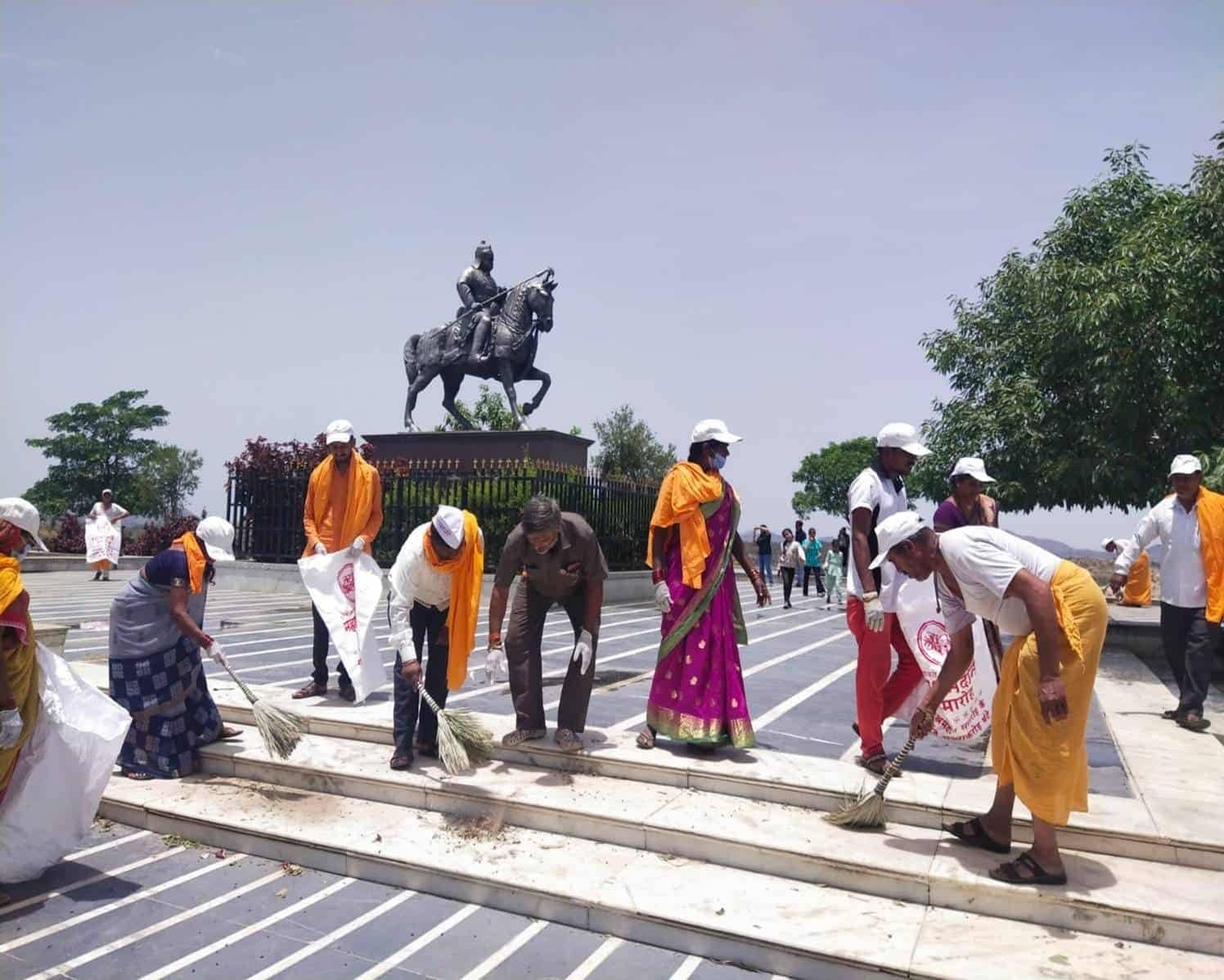
Khamnor’s Clean Sweep initiative aims to revolutionize sanitation in Rajasthan, promoting dignity and responsibility
Key Takeaways
1 of 3
Automatically generated. Read full article for complete context.
Sanitation has been a particularly weak link in the development efforts of peri-urban areas, and the small town of Khamnor in South Rajasthan reflected this reality till about five years back with garbage scattered here and there in plenty, even clogging water sources.
However, this situation has improved significantly in recent times, as seen in the cleaner market, residential areas, and water sources. This improvement is all the more welcome as this small town is located close to the historically important site of Haldighati which attracts many visitors.
As Rekha Khatik, a woman of this town says, “In recent times people here have got together again and again to contribute voluntary labor for keeping clean the streets, markets and water sources of our town. Meetings are held and the time and site of the next gathering for voluntary work are decided as per needs. A bawdiTraditional Water SourceA traditional stepwell or pond, often serving as a community water source in India. (water source) was clogged so highly with dirt accumulating for several years that to clean it appeared to be a very formidable task, but once we got together to share responsibilities we made the very difficult work appear easier.”
A particularly encouraging aspect of this voluntarism is that youth have contributed a lot to this, bringing their energy and sincerity to this highly important aspect of constructive work which was emphasized so much by Mahatma Gandhi but has not received adequate attention in recent times.
Important as this voluntary work has been for making Khamnor cleaner, the change taking place has been much bigger, and has involved changing people’s attitudes towards sanitation in more basic ways. A commonly seen situation in many places is that people emphasize the need for sanitation but conveniently stay away from becoming a part of the solution. In Khamnor there appears to be a basic change of attitude towards sanitation in terms of getting involved in the task of creating a cleaner town. This may not be true for all people but this is true for a significant number of people living here.
Jyotsna, who has been in the forefront of such efforts as a member of the solid waste management team of a leading voluntary organization, Seva Mandir says, “About four years ago we along with several community members started coordinated efforts for improving sanitation here, and a vikas samitiDevelopment CommitteeA development committee, typically formed at the local community level in India to address local issues and implement development initiatives. or development committee was formed. People of all communities and all stake holders ranging from shopkeepers to sanitation workers were involved in this. These efforts led to identifying the bigger problem areas and calls for voluntary work which received a good response.”
Shiv Narain, another team member, says, “The earlier contract system for cleaning was not working well, so efforts to move to a better system and a better team were made, leading to better results. At the same time, it was ensured that the earnings of workers increased.”
Rimjhim Pandey, coordinator of these efforts in Seva Mandir, says, “In all such work, an important aspect of our efforts is that sanitation workers should be able to work in conditions of dignity and justice. So increase in earnings is just one aspect; the other aspect is to give dignity to the labor of workers who do the difficult work. Hence we refer to them as Arogya MitraFriends Who Protect from DiseaseA term coined by Seva Mandir, translating to ‘friends who protect from disease,’ used to refer to sanitation workers to emphasize their dignity and crucial role in public health. (translated as friends who protect from disease) and we try our best to ensure discriminative attitudes towards them end and they they should get well-deserved respect for their important contribution to society.”
Hence the wider effort of Seva Mandir has been to change the attitude towards sanitation work and the result can be seen when people wield the broom with some pride when they come for voluntary cleaning work or shramdanVoluntary LaborThe act of voluntary labor or contribution of physical effort for community welfare, often without monetary compensation, a concept popularized by Mahatma Gandhi.. It is only in the middle of such changes at a wider level that sanitation workers can get an identity based on recognizing the dignity of their work and respecting it.
Yes, says Bharat, an Arogya mitra, there has been significant improvement in people’s attitudes towards us since the work of Seva Mandir started here. His younger sister Poonam who wants to study further to become a nurse strongly endorses what Bharat has said. However an elderly lady, Devi, says that the socio-economic improvement of the community should have been much higher. Even now, not everyone thinks in terms of equality.
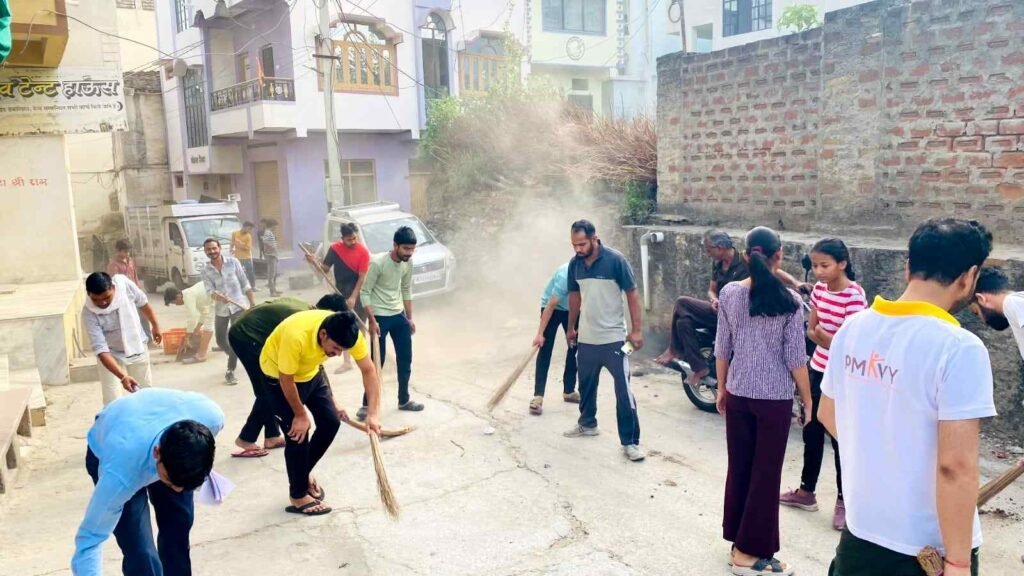
However, there is wider agreement that important gains in income and overall socio-economic improvement have been made in recent years but very recently these have been threatened due to several Arogya mitras not getting their payments from the panchayat for for three to five months. This has happened here, as well as in some other panchayats. Bharat said that his family will have to borrow at high interest rates to survive if this continues. In addition to creating severe problems for sanitation workers, this also threatens some of the important achievements made here for improving sanitation.
Therefore, it is important that the issues which have led to payments stopping be resolved soon. At the time of my visit, I found a senior member of Seva Mandir collecting scattered information on this issue so that it can be taken up with the concerned government authorities.
This draws attention to another important role of the efforts here as a link between the government, its programs, and people so that on the one hand, any emerging problems can be resolved at an early date and on the other hand, better utilization of government schemes is also possible. While some of the sanitation improvements here were made by voluntary work, others could be achieved by work done earlier under MG-NREGARural Employment Guarantee ActMahatma Gandhi National Rural Employment Guarantee Act, an Indian labor law and social security measure that aims to guarantee the ‘right to work’ to enhance livelihood security in rural areas..
As a combined impact of various initiatives, garbage accumulating at some points could be cleared. Public campaigns, like those on avoiding polythene resulted in reduced generation of garbage. More of the dry waste became available for resource recovery and recycling.
Due to increasing community involvement, there is increasing hope of these gains becoming more durable. What is more, these are also being extended to some neighboring villages, where at times, significant success has been achieved.
These efforts are part of Seva Mandir’s wider initiatives of solid waste-management which have been achieving encouraging results on a similar pattern. Some of these, like in Delwara and Kelwara have added value by being located close to heritage sites and have been helpful in providing clean environments close to heritage sites. The work in Kelwara advanced to segregating dry waste into 13 categories and significantly increasing recycling possibilities significantly and generating earnings from this that could be ploughed back into improving sanitation or helping Arogya mitras.
While changing basic attitudes towards sanitation has been an important aspect of these initiatives, sometimes giving attention to small matters has also yielded encouraging results. Providing masks, gloves, shoes, and jackets to sanitation workers, or arranging health check-ups and care for them, was a good way of saying that society cares for them. Merely changing the time of the van that collects garbage helped to ensure that much of the garbage being left out could now be collected. Organizing visits of local people to other areas known for good solid waste management practices opened the eyes of local people to several new possibilities.
Disclaimer:The views and opinions expressed in this article are those of the author(s) and do not necessarily reflect the official policy or position of The Rift.